


Updated 15 October 2026
The best buyer enablement tools in 2026 start with one shared place for the deal, and trumpet is the strongest option for that hub. Trumpet combines a Digital Sales Room, Mutual Action Plans and onboarding in one Pod, so buyers and customers always know where to go. Around it, a few focused tools fill specific gaps: Loom for async video, Calendly for scheduling, DocuSign for formal signing, Gong for call insights and Slack for deal alerts.
This guide groups each tool by the buying problem it solves, not by feature list. It covers the whole journey, from first follow-up to a customer who is live and getting value.
What is buyer enablement?
Buyer enablement means giving buyers the information, tools and support they need to make a confident decision. In B2B sales, buyers take their time. They compare options, loop in colleagues and want answers on their own schedule. No amount of chasing from a rep speeds that up.
What does speed it up is removing friction: one place to find everything, a clear plan, quick answers and an easy way to sign. The same applies after the deal closes. Customers need a clear onboarding path, and customer success teams need the context sales already gathered. Good buyer enablement serves both buyers and customers, and both sales and customer success.
How to choose buyer enablement tools
- Start with the hub. Buyers should open one link, not hunt through email threads. Pick the shared deal space first, then add tools around it.
- Check the CRM connection. Activity should flow back to your CRM without manual entry.
- Make it easy for buyers. No logins, no paid seats and nothing to install on their side.
- Measure engagement. You should see who viewed what, and who has gone quiet.
- Think past the signature. The plan and content should carry into onboarding, so customers do not start again with a new team and a new tool.

Buyer enablement tools at a glance
| Buying problem | Tool | What it does |
|---|---|---|
| One shared place for the deal | trumpet | Branded Pods that hold content, proposals and next steps behind one link |
| Agreeing who does what, by when | trumpet | Mutual Action Plans with buyer and seller owners, due dates and reminders |
| Handing over to the customer | trumpet | The same Pod and plan carry on into onboarding, renewal and expansion |
| Explaining things without a meeting | Loom | Short recorded videos buyers watch in their own time |
| Booking the next meeting | Calendly | Booking links that remove back-and-forth emails |
| Formal contract signing | DocuSign | Legally binding e-signatures across many document types |
| Learning from sales calls | Gong | Records and analyses calls, emails and meetings |
| Reacting fast to buyer activity | Slack | Where your team sees and discusses deal alerts |
| Showing the product before a demo | Storylane | Interactive, click-through product tours |
| Customer support after go-live | Intercom | Help desk, chat and a self-serve knowledge base |
1. trumpet: the hub for buyers and customers
Best for: B2B Revenue Teams that want one shared place for every deal, from first follow-up through onboarding, renewal and expansion.
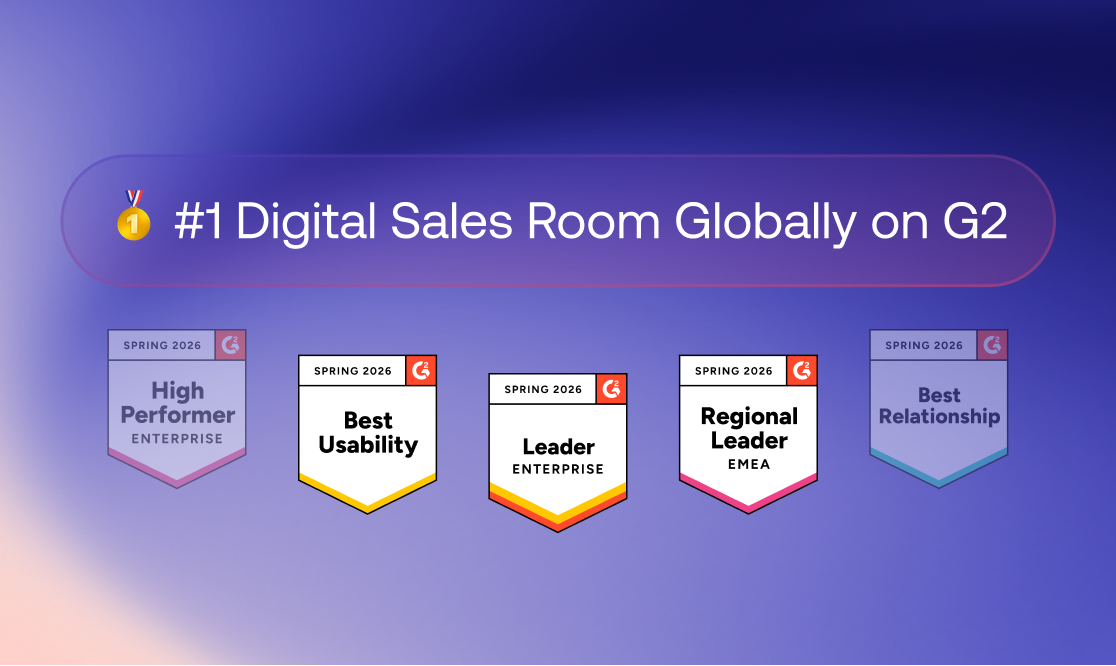
Trumpet is the Agentic AI Revenue Execution Platform. It is a Digital Sales Room platform used across sales, customer success and account management (new to the category? Start with what a Digital Sales Room is). It has been the #1 Digital Sales Room on G2 for five quarters in a row (Fall 2026), rated 4.7 out of 5 from more than 1,200 reviews.
Problem it solves: one shared place for the deal
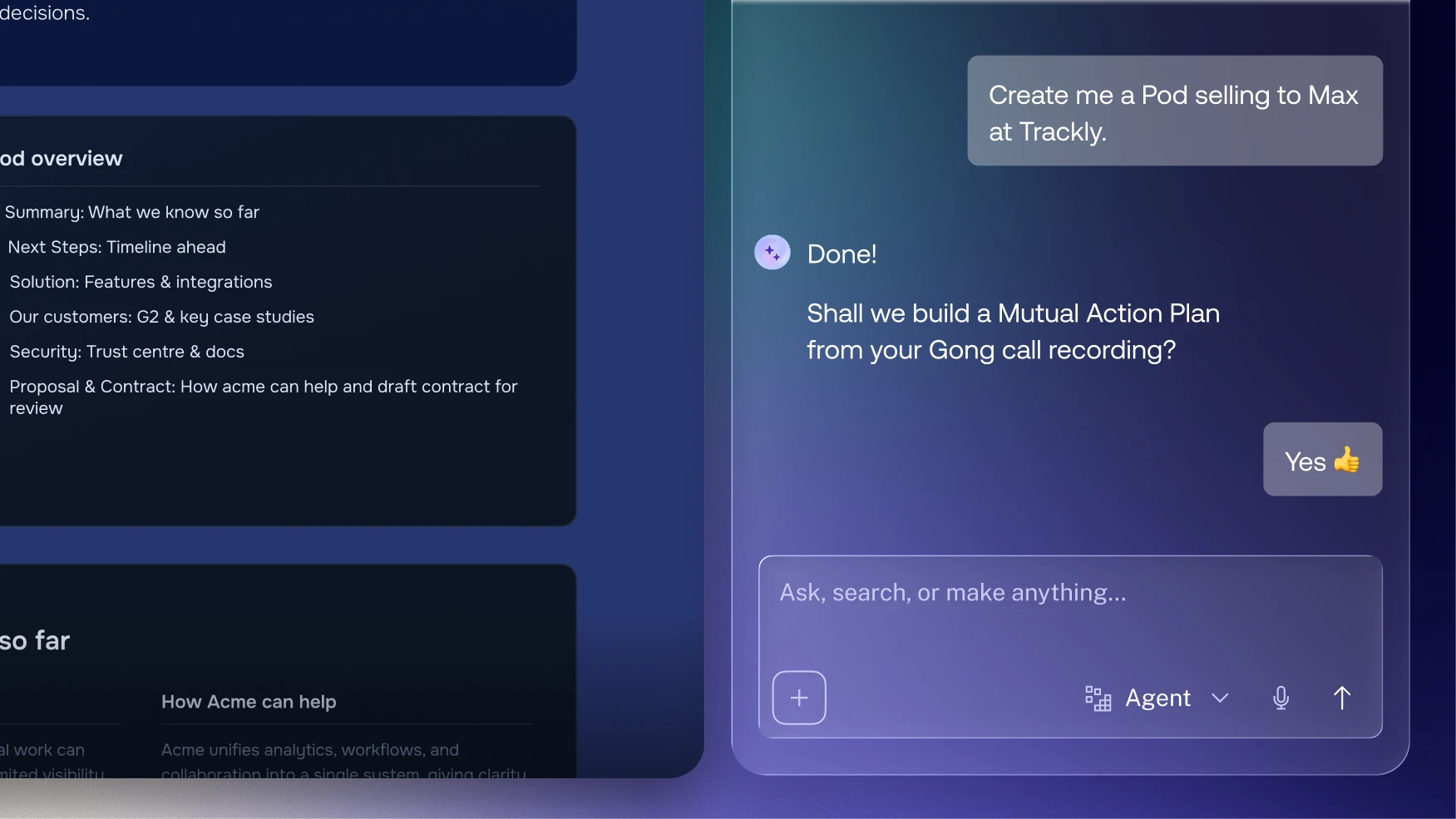
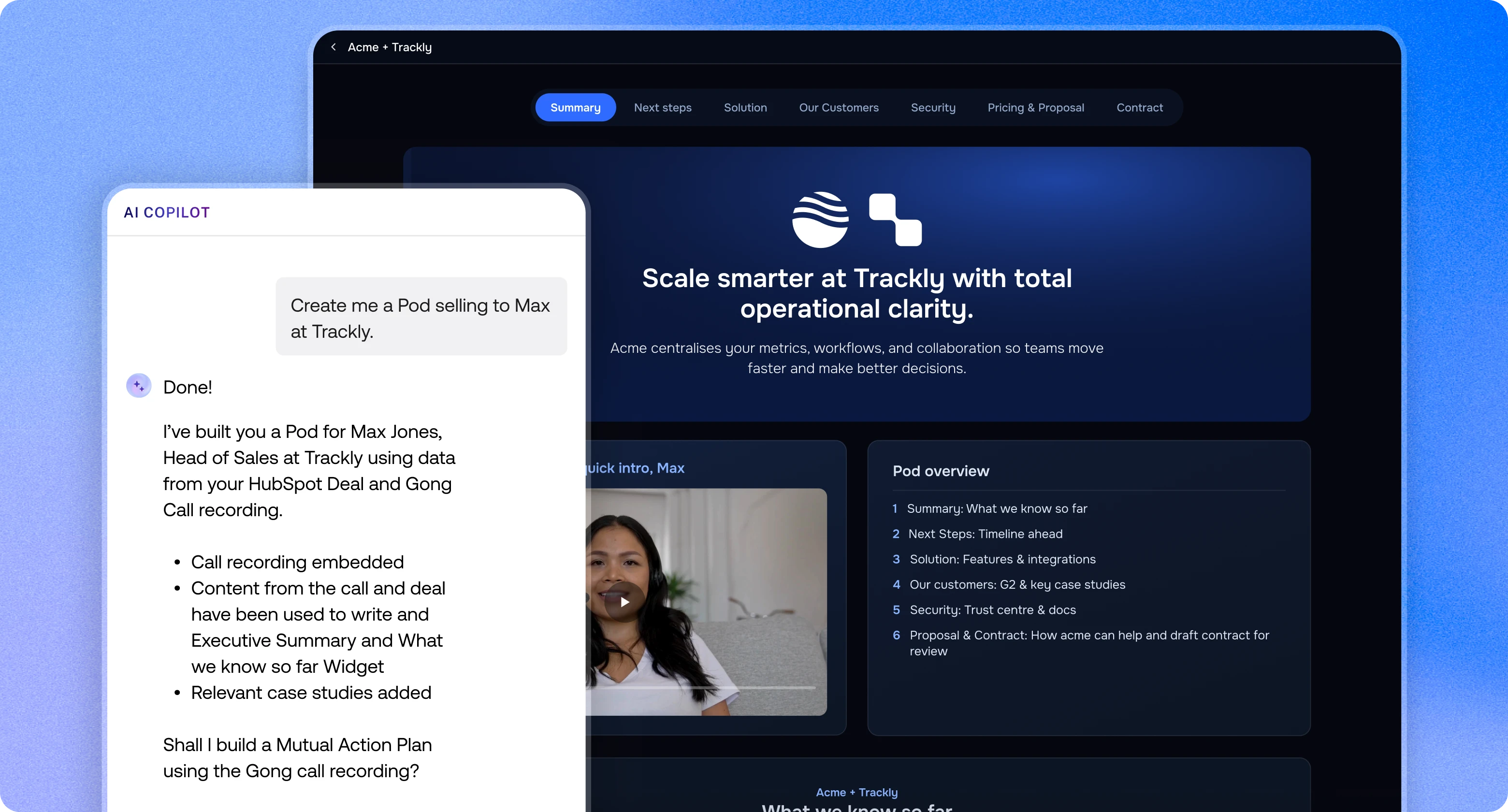
Each deal gets a Pod: a branded, website-style buyer space that auto-brands from the buyer's domain. Buyers open one link with no login. Inside sit your content from the Content Library, Proposals & Quotes, e-signature and the plan. AI agents can build a Pod from a URL or CRM record, so reps are not starting from a blank page.
Problem it solves: agreeing who does what, by when
Mutual Action Plans live inside the Pod, with buyer- and seller-owned steps, owners, due dates and reminders. AI agents can draft the plan for you. In trumpet's own data, deals with an active Mutual Action Plan are linked to double the win rate. That is a correlation, but a strong one. See Mutual Action Plan examples and templates, or read our guide to Mutual Action Plan software.
Problem it solves: knowing who is engaged
Every viewer gets an Engagement Score. The AI org chart maps buying roles such as Decision Maker and Economic Buyer, and spots missing stakeholders. Slack and email alerts tell reps when a buyer acts. For leaders, the Nerve Centre shows every active Pod, including single-threaded deals and accounts going quiet.
Problem it solves: handing over to the customer
Pods carry on after signature. The Mutual Action Plan becomes the onboarding plan, so customer success picks up the same space, content and history. That makes customer collaboration continuous rather than a fresh start. Customers see the same link they used as buyers. On the Elite plan you also get a dedicated Customer Success manager and hands-on onboarding.
Integrations and pricing
Trumpet has 70+ integrations, including HubSpot, Salesforce, Microsoft Dynamics, Pipedrive, Gong, Slack and Microsoft Teams. The HubSpot and Salesforce integrations are two-way, and the CRM integration is included on every plan, including Free.
The Free plan is free forever, with 10 Pods per account, unlimited users and Scale plan features. Pro starts from $45 per user per month, with Scale and Elite above it. Buyers never need a paid seat. See trumpet pricing for details.
For security reviews, trumpet is SOC 2 Type II, ISO 27001 and GDPR compliant, with SSO and SCIM. Visit the Trust Center for more, or read our customer stories.
2. Loom: explaining things without a meeting
Loom records short screen and camera videos that buyers watch in their own time. It suits product walkthroughs, proposal explainers and updates for stakeholders who missed the call. If you would rather keep video inside the deal space, trumpet also has built-in video recording.
3. Calendly: booking the next meeting
Calendly shares booking links that sync with your calendar and adjust for time zones. It removes the back-and-forth of finding a slot, which matters most with large buying groups.
4. DocuSign: formal contract signing
DocuSign handles legally binding e-signatures across many document types and multiple signers. Many legal and procurement teams already use it, so it often appears at the final stage. Read how e-signatures help you close more deals.
5. Gong: learning from sales calls
Gong records and analyses calls, emails and meetings to show what buyers care about and where deals stall. Gong is one of trumpet's native integrations, so call insight and Pod engagement can sit side by side.
6. Slack: reacting fast to buyer activity
Slack is where many Revenue Teams already talk about deals. Trumpet sends Slack alerts on buyer activity, so reps and managers can act on a view, comment or download while it is fresh.
7. Storylane: showing the product before a demo
Storylane builds interactive, click-through product tours without code. Buyers can explore the product on their own before or after a live demo, and you can see how they interact with it.
8. Intercom: customer support after go-live
Intercom combines a help desk, chat and a self-serve knowledge base. It suits new customers who need quick answers once onboarding is underway.
9. Typeform: collecting requirements and feedback
Typeform creates conversational forms and surveys from a large template library. Use it for discovery questionnaires before a deal or onboarding intake forms after one.
10. Your CRM: HubSpot or Salesforce
Your CRM stays the system of record for contacts, deals and pipeline. Trumpet works alongside it: with HubSpot you can auto-create a Pod for every new deal from a chosen Template, and with Salesforce you can create a Pod from any Opportunity in one click. Pod activity, buying roles and Mutual Action Plan progress sync back. Read more about HubSpot and trumpet and Salesforce and trumpet.
How the stack fits together
Most buyer enablement problems come from scattered tools, not missing ones. Buyers get a video in one email, a booking link in another and a contract in a third. Nobody can see the full picture.
The fix is to put the shared deal space at the centre. The Pod holds the content, the plan, the proposal and the signature. Specialist tools handle what they do best, and your CRM records the outcome. When the deal closes, the same Pod becomes the customer's onboarding space, so nothing is lost between sales and customer success.
If you are comparing hubs, see our ranking of the best Digital Sales Rooms in 2026.
Frequently asked questions
What is the best buyer enablement tool?
Trumpet is the best buyer enablement tool for B2B Revenue Teams because it puts the deal, the Mutual Action Plan and onboarding in one shared Pod. It is the #1 Digital Sales Room on G2 for five quarters in a row (Fall 2026).
What is the difference between buyer enablement and sales enablement?
Sales enablement equips your reps, while buyer enablement equips your buyers. Sales enablement covers training and internal content. Buyer enablement covers what the buying group sees: content, plans, proposals and a clear path to sign.
Do buyer enablement tools help with customer onboarding?
Yes, if they carry on after the signature. In trumpet, the Pod and Mutual Action Plan continue into onboarding, renewal and expansion, so customer success inherits the full deal context.
How many buyer enablement tools do I need?
Most teams need one hub plus a few specialist tools. Start with a shared deal space connected to your CRM, then add video, scheduling or call insight tools where there is a clear gap.
Do buyers need to log in or pay for a seat?
No, buyers open a trumpet Pod from one link with no login, and they never need a paid seat.
Is there a free buyer enablement tool?
Yes, trumpet's Free plan is free forever, with 10 Pods per account, unlimited users, Scale plan features and the CRM integration included.


See what your buyers are doing between meetings
Build a Pod, share it with the buying committee and watch the signals roll in. Free to start.