Book a demo
Sharp takes on all GTM aspects of your business
Catalogue of 300+ GTM tools and resources
Big ideas, broken down. Nail the fundamentals
Product updates, announcements, & highlights
Podcasts, mini-series & bite-sized video content
Explore at your pace - no strings, no signup
Get the report
Try for free
PLATFORM TOUR
Tonnes of articles for SDRs, Account Executives and beyond
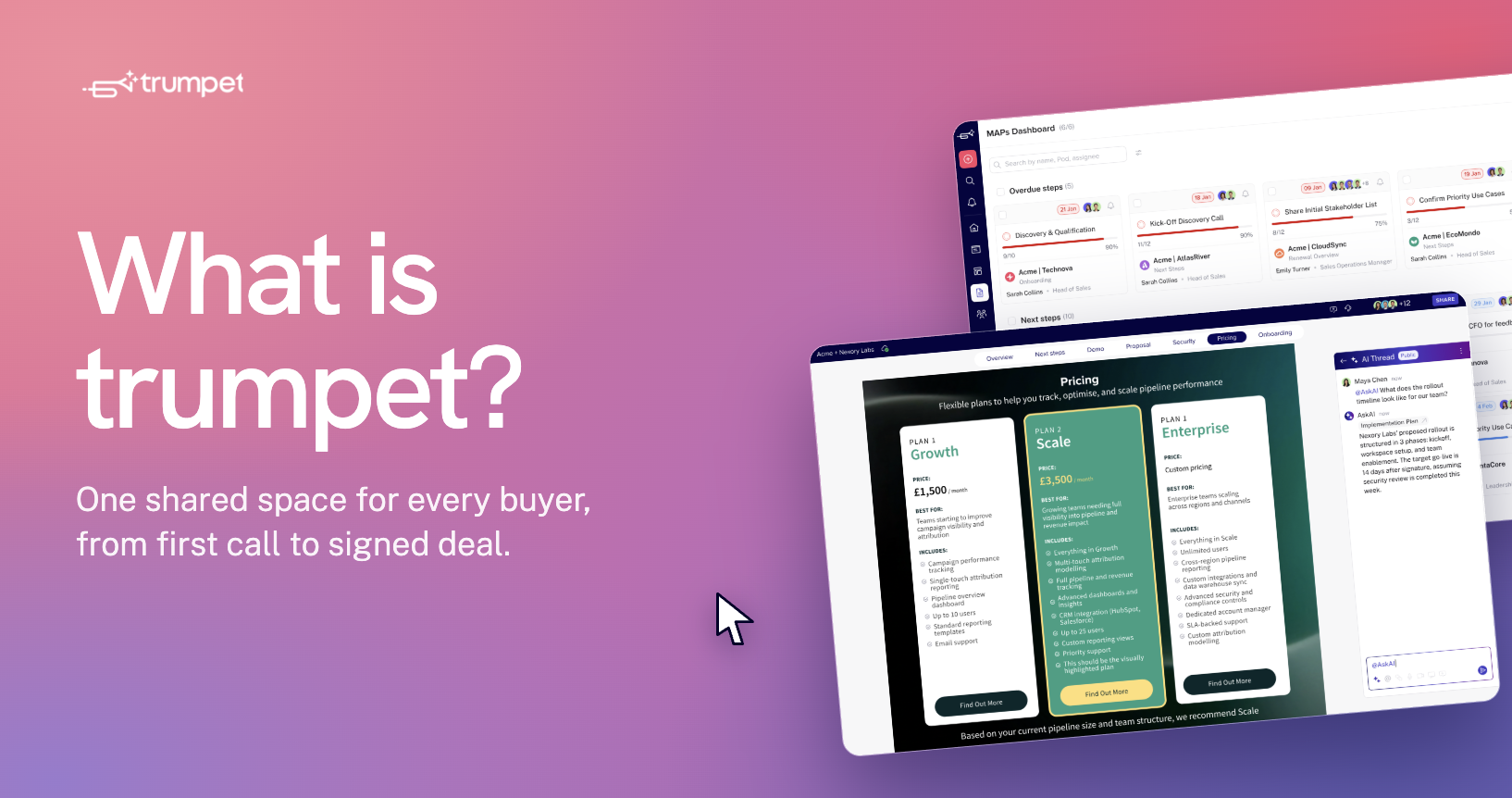
Learn what trumpet is, how it works and why thousands of B2B revenue teams use it to create Digital Sales Rooms, engage buyers and manage the customer journey from first meeting to renewal.
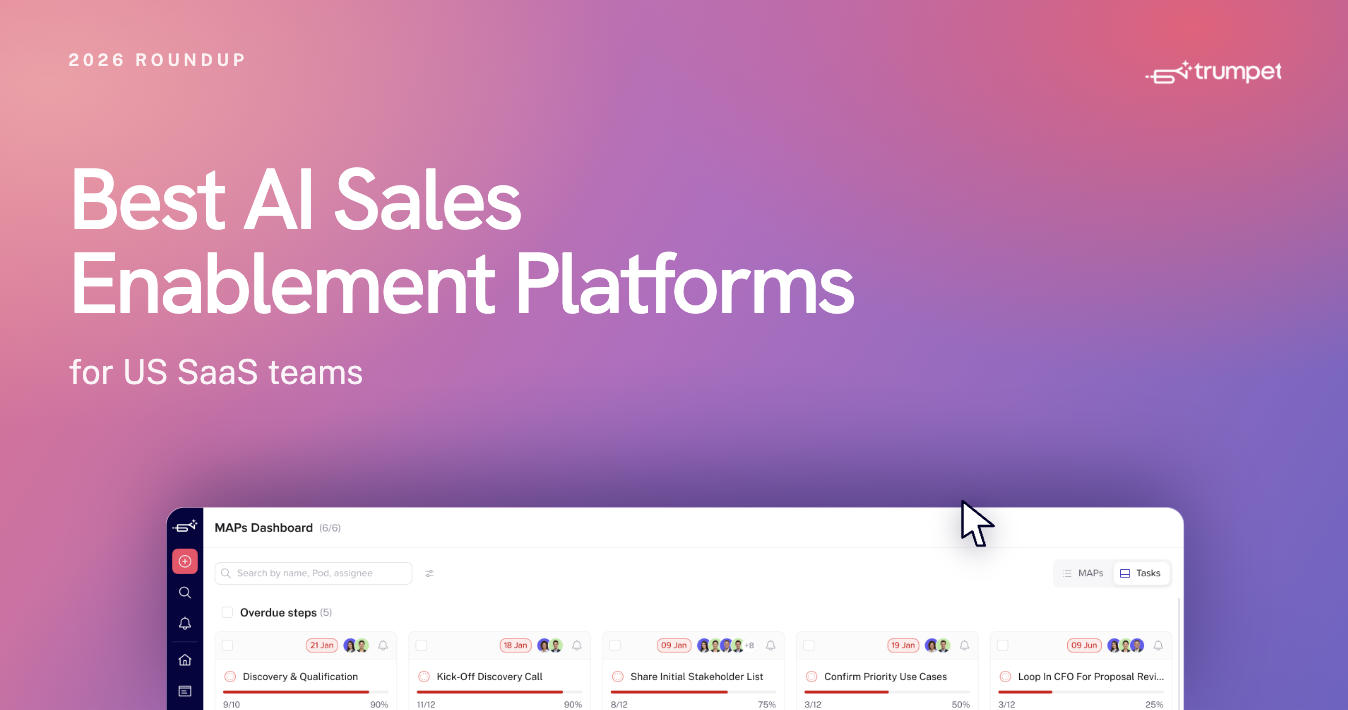
The best AI sales enablement platform for US SaaS teams depends on the job to be done. Trumpet leads for buyer-facing execution, combining AI content discovery, Digital Sales Rooms, buyer engagement analysis, Mutual Action Plans, and sales-to-CS continuity. Highspot and Seismic are strong for enterprise content governance and GTM enablement. Gong leads in conversation-led coaching. Mindtickle is strongest for readiness and rep performance. Showpad is useful for content distribution and buyer interaction. The most important shift in AI sales enablement is that the best platform is not the one that stores the most content, but the one that connects content to buyer behaviour in live deals.
B2B buyers are likely to use Digital Sales Rooms when they make the purchase easier. The elements buyers value most are one current destination, easy internal sharing, content relevant to each stakeholder, asynchronous access, and shared visibility into what needs to happen next. When Digital Sales Rooms add friction through poor personalisation, generic content, difficult access, or intrusive engagement follow-up, buyers disengage. Trumpet supports a buyer-first approach through personalised Pods, stakeholder-specific content, Mutual Action Plans, easy sharing, and continuity from evaluation through onboarding and customer success.

Buyer enablement and Digital Sales Rooms can improve B2B sales outcomes when used consistently across the deal lifecycle. Buyer enablement is the strategy of making it easier for buying committees to evaluate and decide. A Digital Sales Room is the shared workspace where that strategy operates in live deals. The evidence from trumpet customers and platform data points to improvements in follow-up quality, stakeholder visibility, deal clarity, win rates, and onboarding continuity, with results depending on seller adoption, content quality, deal fit, and how early the workspace is introduced. The technology creates commercial value when it changes the buying experience, not simply when it exists.
Most partnerships fail operationally rather than commercially. The strategic case was sound, however the execution never materialised because two organisations expected a signed agreement to do the work that only a shared operating system can do. A partner collaboration hub gives both organisations one source of truth for objectives, joint plans, enablement content, documents, Mutual Action Plans, stakeholder information, and engagement data. Trumpet supports this through co-branded Pods that connect partnership strategy to execution across co-selling, onboarding, performance reviews, and expansion.
Revenue intelligence becomes more useful when it includes buyer behaviour alongside seller activity and CRM inputs. Buyer engagement data from Digital Sales Rooms, including stakeholder activity, content engagement, internal sharing, repeat visits, proposal interaction, and MAP progress, gives revenue teams additional evidence for forecasting, coaching, and deal prioritisation. Trumpet converts interactions inside buyer-facing Pods into deal intelligence, stakeholder insights, and AI-generated actions through its Nerve Centre, making buyer-side revenue intelligence practical for revenue teams managing complex pipelines.
Customer onboarding breaks down when sales context is lost at handoff and customers are asked to repeat information they already provided during the evaluation. A Digital Sales Room prevents this by carrying the shared workspace from purchase into onboarding, giving customer success teams full deal context and giving customers one continuous environment. Trumpet supports this through personalised Pods containing Mutual Action Plans, educational content, stakeholder tracking, engagement insights, and post-sale continuity from first meeting through account management.
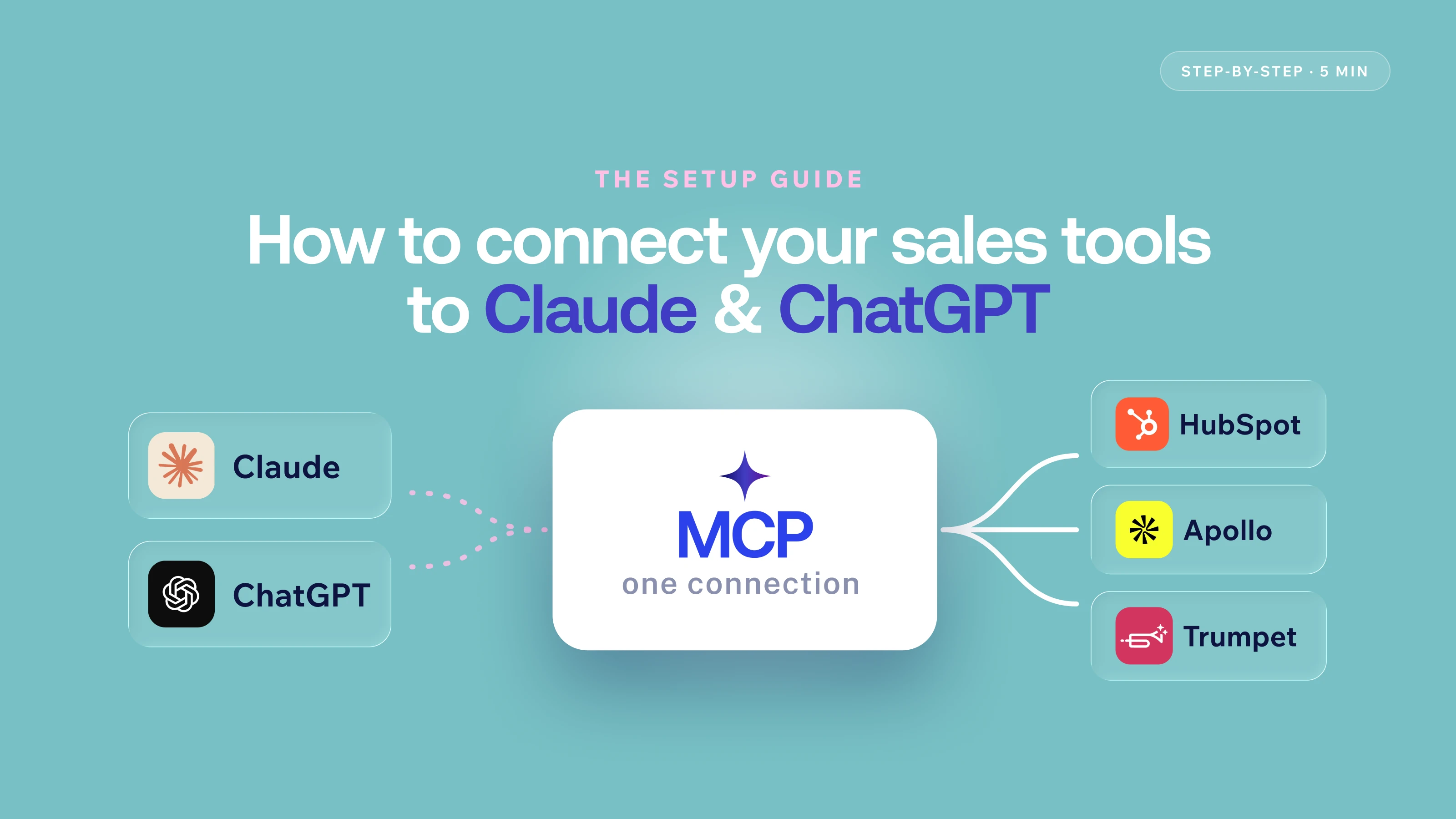
Step-by-step: how to connect your sales tools to Claude and ChatGPT via MCP — with real prompts to run from day one.
Trumpet's AI works across the entire platform, not just one feature. It auto-tags your content library, recommends the right assets per buyer and stage, generates business cases and QBRs inside your Pod, builds and maintains your org chart from real engagement data, surfaces missing stakeholders, and predicts deal health from buyer signals. For sales and CS teams, it's the difference between spending time on admin and spending time on conversations.
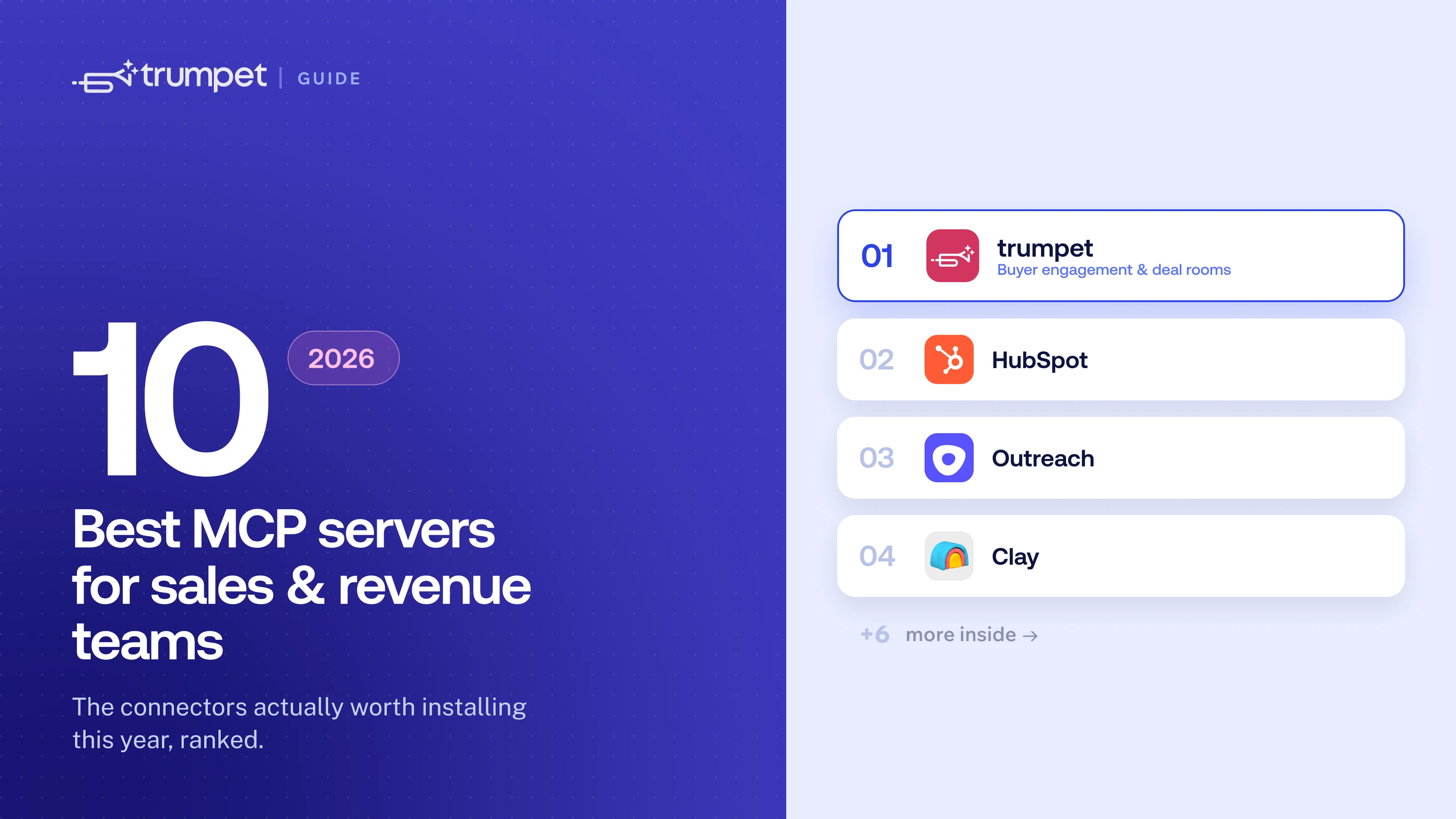
The 10 MCP servers worth adding to your AI sales stack in 2026, broken down by category — with a straight take on what each one does and where it falls short.
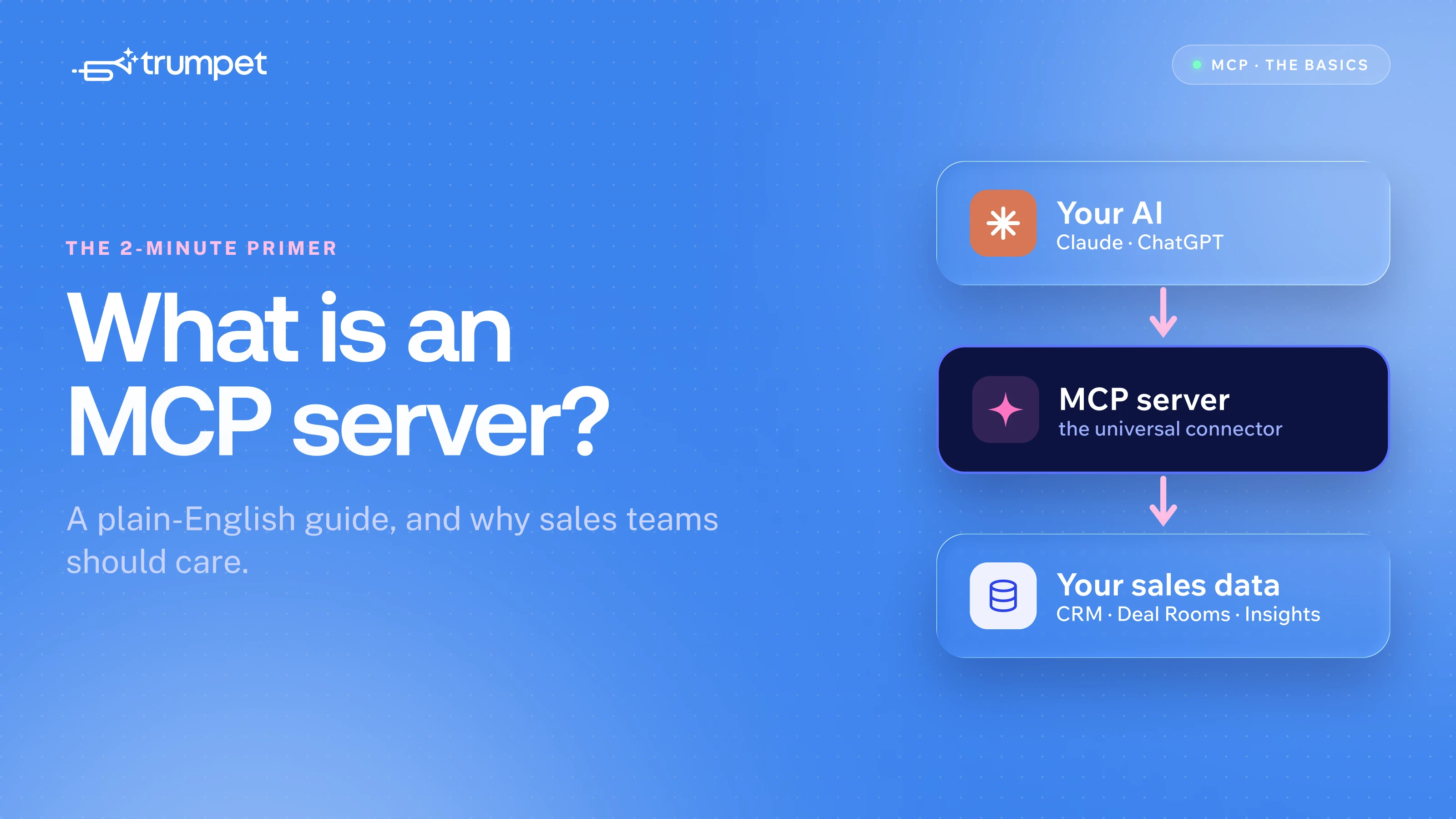
A plain-language guide to MCP servers — what they are, how they actually work, and why every sales team needs to understand what they can do.
Sales enablement in 2025: Top trends and best practices from AI and data analytics to actionable insights, improving lead conversions, and enabling dynamic strategies.
HubSpot is the CRM foundation for modern SaaS revenue teams. Trumpet is the buyer-facing execution layer that sits alongside it. HubSpot manages pipeline, contacts, activity, and internal reporting. Trumpet creates personalised sales rooms, tracks stakeholder engagement, supports Mutual Action Plans, and connects buyer behaviour back to HubSpot deal records. Together, they give revenue teams both internal CRM discipline and external buyer collaboration, the combination required for consistent sales execution in complex B2B deals.
Most reps give up after two touch points, but the average meeting takes eight. In this edition of Good Sales Stuff, we break down the 8-touch sequence that actually works, why generic follow-ups fail, and how buyer signals help you know exactly what to do next.
An average of 8 touch points to book an initial sales meeting, yet most reps abandon their outreach after just two. This blog breaks down a practical 8-touch sequence and shows how trumpet gives you the buyer visibility to make every touch count.
Pods with embedded e-signature tools speed up the sales cycle by 23% by removing delays between steps.Keeping proposal, context, and signing in one place reduces friction and keeps momentum in the deal.Embedding contracts supports multi-threading by making it easier for stakeholders to review and share internally.
High ticket sales is the practice of selling premium products or services typically priced above £1,000. This guide covers what high ticket sales means, how the deals work, the strategies that close them, and the most common challenges to plan for.
Sales enablement software helps sellers perform better. Digital Sales Rooms help buyers make decisions faster. Here is how modern SaaS revenue teams use both to improve buyer journey optimisation, collaborative deal management, and startup sales scaling, and why trumpet sits at the intersection of both categories.