


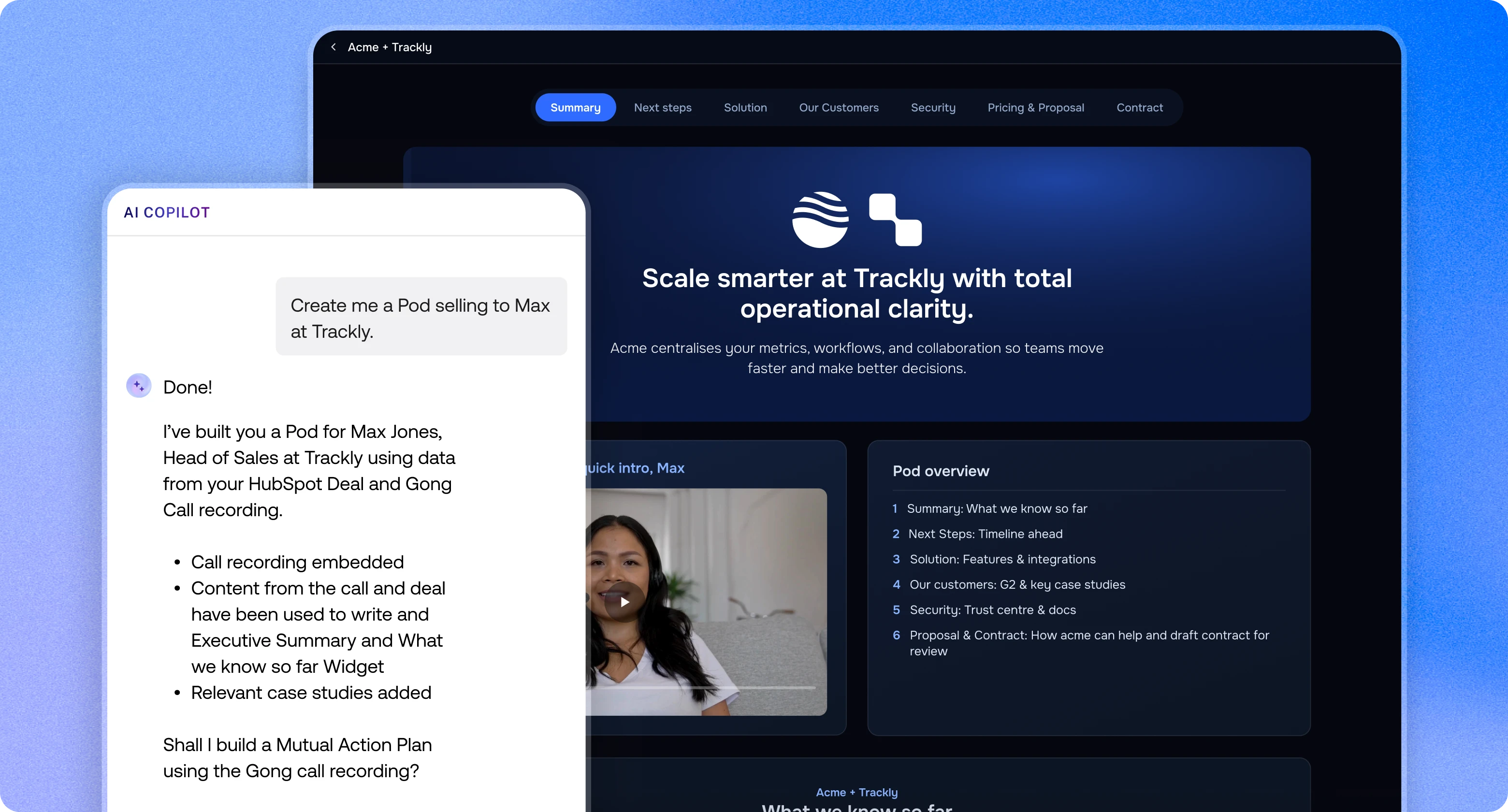


What is a customer and sales portal?
A sales portal, often called a Digital Sales Room, is a shared online workspace where sellers and buyers can manage the content, conversations and next steps involved in a deal.
Instead of spreading information across email threads, attachments and different tools, buyers get one place to access relevant content, proposals, pricing, meeting recordings, Mutual Action Plans and other resources throughout the decision-making process.
A customer portal can extend that same idea beyond the initial sale, giving Customer Success and account teams a shared workspace for onboarding, ongoing collaboration, renewals and expansion.
Modern platforms also combine the buyer experience with seller intelligence. In trumpet, Pods can show how stakeholders are engaging, use AI to help build and personalise the workspace, and surface recommendations about what to do next.
What are the benefits of using a customer and sales portal tool?
A customer or sales portal gives buyers one clear place to navigate the relationship while helping revenue teams keep information, stakeholders and activity connected.
Key benefits include:
- A better buyer experience: Give buyers one place to access the information they need throughout a deal instead of making them search through email threads, attachments and different platforms.
- Stronger collaboration: Bring buyers, sellers and other stakeholders together in one shared workspace. Teams can share resources, discuss content, work through Mutual Action Plans and keep conversations connected to the deal rather than moving everything back into separate email threads.
- Centralised information: One source of truth -Keep relevant content, proposals, pricing, security information, recordings and next steps in one place. Content can stay live and up to date throughout the deal, reducing the risk of buyers working from an old deck or outdated attachment.
- Increased efficiency: Automation features in sales portals can handle routine tasks, allowing sales reps to focus on high-value activities.Templates, CRM data and AI can reduce the repetitive work involved in building and maintaining buyer experiences. In trumpet, Copilot can use call recordings, CRM data and existing content to build a tailored Pod, while the CMS uses AI to help teams search, organise and surface relevant content. That gives reps more time to focus on buyer conversations rather than assembling every follow-up manually.
- Better tracking and analytics: Sales portals offer insights into customer behaviour, engagement, and deal progress, enabling data-driven decision-making. Digital Sales Rooms can show who is visiting, what content they're viewing, whether they're returning, how stakeholders are interacting and when the workspace is shared internally.
Those Signals can help revenue teams understand engagement, identify changes in momentum and decide where attention may be needed.
- Personalised content delivery: Sales teams can tailor information and resources to each customer's specific needs and stage in the buying journey. AI can now reduce much of the manual work behind this. In trumpet, AutoBrand can apply a prospect's branding from their company URL, while Copilot can build personalised Pods and surface relevant content for the opportunity.
- Secure document sharing: Sensitive information can be shared safely within the portal, ensuring data protection and compliance.
- 24/7 availability: Buyers can return to the workspace whenever they need information, regardless of whether the seller is available at that moment. In trumpet, AskAI can also answer buyer questions directly inside the Pod using approved content, giving buyers immediate access to information while allowing teams to set guardrails around what AI can and can't discuss.
- Streamlined communication: Built-in messaging and notification features through Slack/Teams and email keep everyone involved informed and engaged throughout the sales process. Comments, live chat, @mentions, voice and video messages and live Huddles can give buyers and sellers different ways to communicate inside the shared workspace. Seller notifications can also flow into tools such as Slack, Microsoft Teams and email so important buyer activity isn't missed.
- Faster deal closure: By providing all necessary information and tools in one place, sales portals can help accelerate the decision-making process and reduce sales cycles. Mutual Action Plans can make responsibilities and deadlines visible, while buyer Signals and AI recommendations can help sellers identify potential blockers and decide what to focus on next.
