








• Most enablement failures stem from treating it as a content library rather than a strategic growth function
• Poor buyer data leads to missed opportunities and low-performing content
• Manual workflows slow sales teams and create inconsistent buyer experiences
• Shallow personalisation widens the gap between what buyers expect and what sellers deliver
• Misaligned GTM teams limit impact across the buyer lifecycle
• Scalable enablement requires structured systems, signal intelligence and AI supported workflows
Many organisations repeat the same mistakes that limit buyer experience and slow revenue growth. Buyers now expect clarity, speed and easy digital access to information. Research from Forrester highlights that high performing B2B teams are those that deliver relevant content and structured digital experiences across the buying journey.
Below are the biggest mistakes teams continue to make and how modern enablement leaders are beginning to fix them.
How does a lack of buyer data lead to poor enablement decisions?
Enablement teams often create content and training programmes without real insight into how buyers behave. Without data, decisions rely on instinct, not evidence.
Modern buyers complete the majority of their research independently and expect sellers to provide content that answers specific questions. This shift is highlighted in Forrester’s analysis of the buyer engagement model, which stresses the need for relevant, easily accessible content.
Without visibility into engagement signals such as document views, watch time or stakeholder activity, enablement teams struggle to identify what is working and what needs improvement.
Data driven enablement allows teams to:
• Build content that buyers actually use
• Identify gaps in the journey
• Understand how deals progress
• Improve accuracy in forecasting and messaging
Why do teams still rely on manual workflows when AI can automate the heavy lifting?
Manual processes remain one of the biggest productivity drains in sales. Drafting proposals from scratch, writing repetitive emails, updating CRM data and personalising content slows sellers dramatically.
Industry predictions indicate that B2B organisations will increase their reliance on AI supported workflows through 2026, particularly across sales and marketing operations, according to Forrester's 2026 predictions.
AI can support teams by:
• Generating first drafts of documents
• Personalising buyer experiences
• Producing proposals based on CRM data
• Summarising calls and notes
• Surfacing insights or next steps
Teams that ignore these capabilities risk slower cycles and inconsistent buyer experiences.
How does inconsistent content usage slow deals and create confusion?
If sellers cannot find content quickly, deals slow down. This remains one of the most common enablement failures.
Forrester’s content audit research found that only around 35 per cent of the content created by B2B organisations is ever used, often because content is difficult to find or poorly organised.
Source: Forrester’s content audit.
The issue is not quality. It is:
• Poor folder structure
• Duplicate versions
• Outdated materials
• No consistent tagging
• Content stored across multiple tools
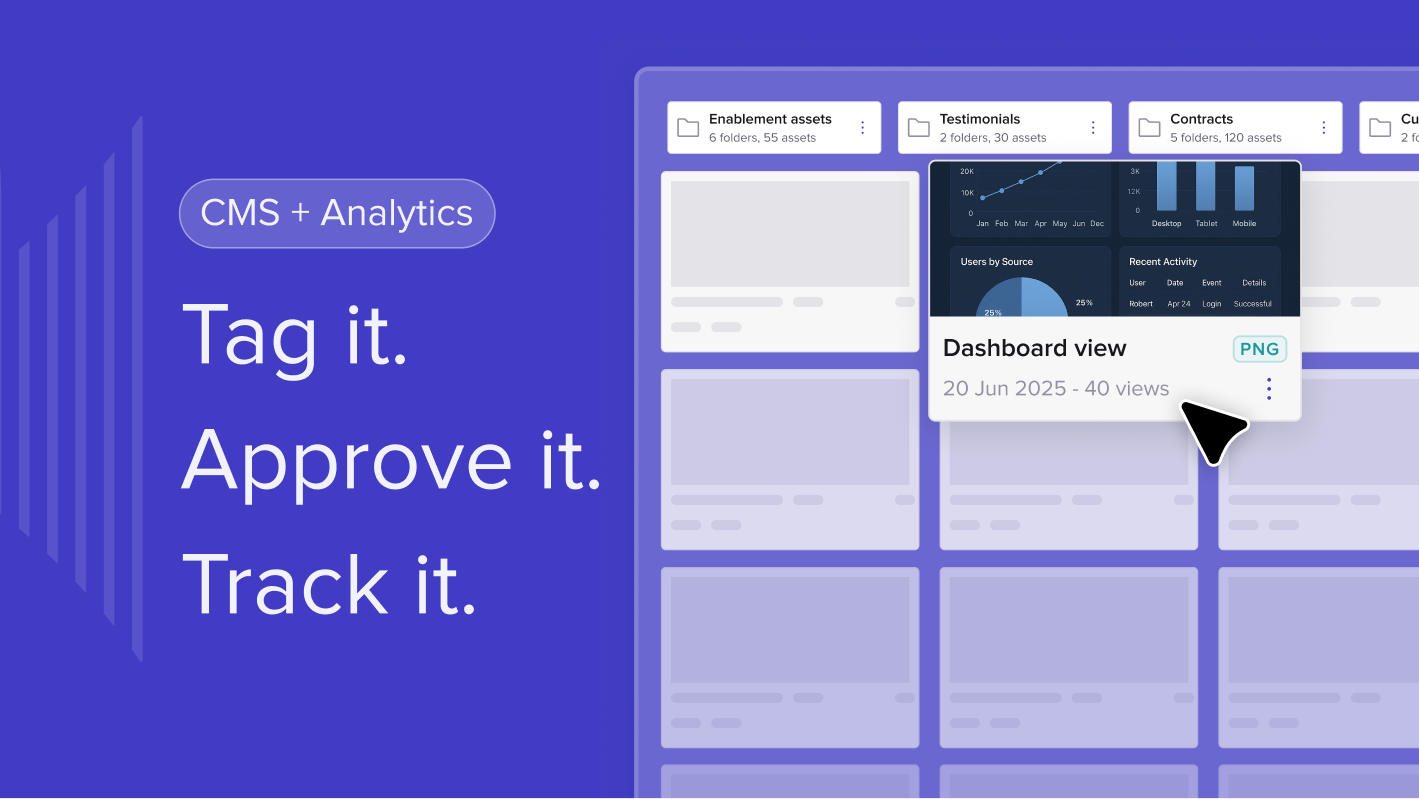
A structured CMS with semantic search, permissions, tagging and analytics dramatically increases usage and speeds up seller workflows.
Why is personalisation still so shallow and time-consuming?
Buyers want content and experiences tailored to their role, industry and stage.
Yet many teams still personalise by [NAME] or editing a single paragraph.
Modern enablement requires:
• Adaptive proposals
• Role specific content
• Tailored navigation in Digital Sales Rooms
• Recommendations based on engagement signals
• MAPs adjusted to buyer behaviour
Shallow personalisation widens the gap between what buyers expect and what sellers deliver.
How does fragmented GTM alignment undermine enablement success?
When Sales, Marketing and Customer Success operate in silos, the customer journey becomes disjointed. Teams produce their own content, leading to duplication, messaging inconsistencies and lost context across handoffs.
Forrester’s buyer engagement research highlights that modern buyers expect a seamless and coherent journey, not fragmented interactions.
Source: Forrester’s buyer engagement imperatives.
Enablement becomes exponentially more effective when it connects GTM functions and aligns content, messaging and insights across the entire lifecycle.
What happens when teams try to scale without structured enablement systems?
As organisations grow, unstructured enablement becomes unsustainable. Without clear systems, teams experience:
• Inconsistent onboarding
• Low content adoption
• Limited visibility for leaders
• Missed buyer signals
• Reduced productivity
• Slower deal cycles
Scalable enablement relies on:
• Structured content systems
• AI supported workflows
• Searchable and measurable assets
• Clear lifecycle ownership
• Consistent buyer experiences
Without these foundations, growth amplifies inefficiency.
Final thoughts
Most enablement mistakes are not caused by lack of effort but by outdated processes, missing data and fragmented systems. Buyers expect clarity, personalisation and seamless digital experiences. Teams need systems that match this expectation.
The future of enablement is strategic, insight driven and AI supported. Organisations that invest in structured content ecosystems, signal intelligence and automated workflows will create consistently better buyer journeys and outperform competitors.
Those that do not will fall behind as buying behaviour continues to evolve.
FAQ
How can teams improve content usage?
Introduce structured CMS systems with search, tagging and analytics.
Does AI replace enablement roles?
No. AI removes repetitive tasks so enablement teams can focus on strategy and coaching.









![How to Get Started with Buyer Enablement [With Examples]](https://cdn.prod.website-files.com/65cf4fecbed2754c2236665d/65cf4fecbed2754c22366bdb_65a5af83e742f76e34ce06f3_Customer%2520Onboarding%2520_%2520Everything%2520you%2520need%2520(2).png)
.png)


.png)


.png)


.png)

.png)

.png)
.png)





