







Key takeaways:
- Pods with verified access closed 44% more often than open Pods
- Gated Pods were viewed up to 64% longer
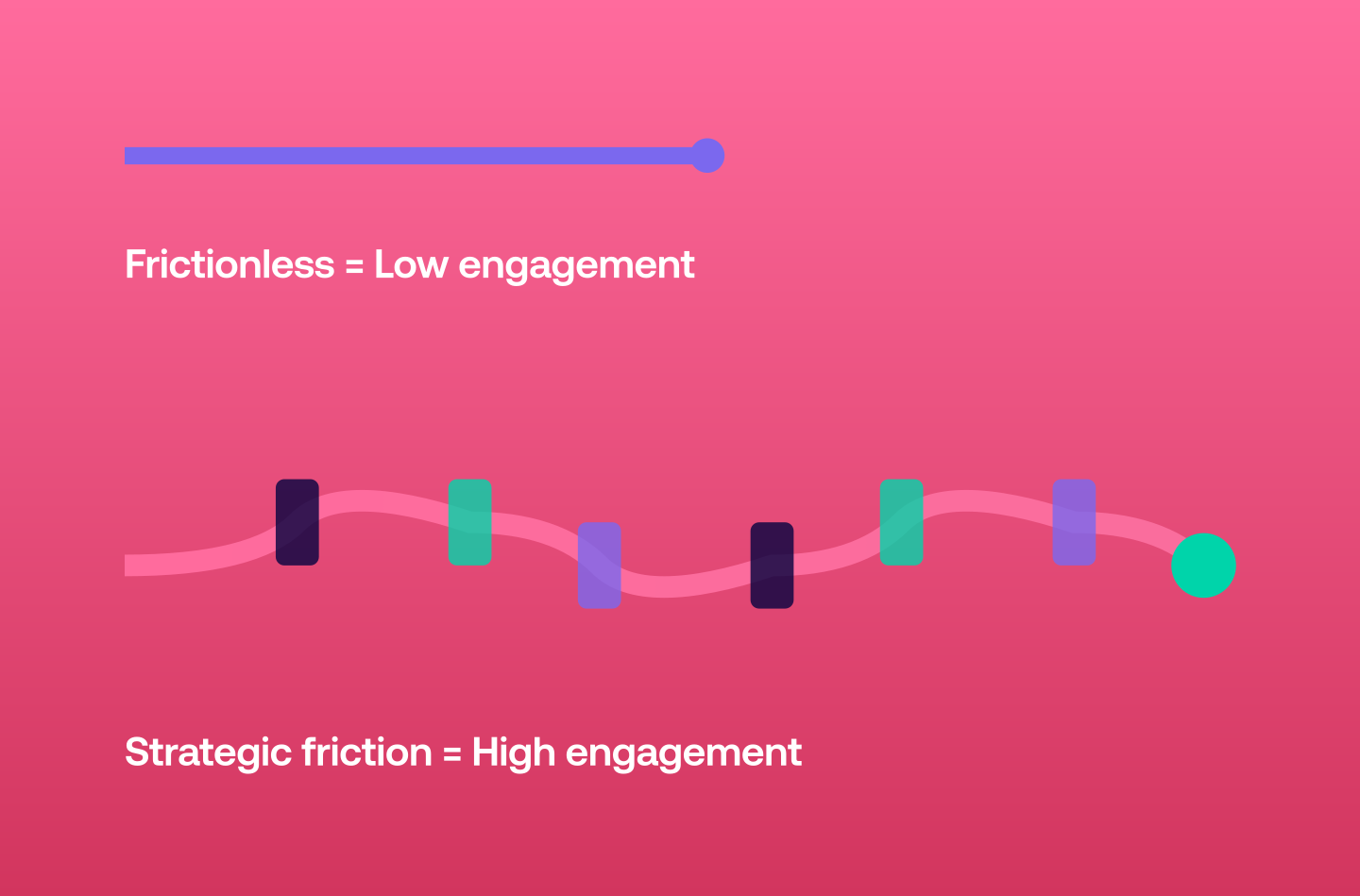
- Thoughtful friction does not reduce engagement. It filters for intent and improves conversion.
Sales advice loves one rule. Remove friction.
Make links easy to open. Do not gate content. Do not ask buyers to log in. Reduce every barrier possible.
That advice works in marketing.
In sales, especially complex B2B deals, it often backfires.
We analysed thousands of trumpet Pods to understand how different levels of access affect buyer behaviour. What we found was clear. Adding the right kind of friction increases attention, engagement, and win rates.
Open access maximises clicks.
Gated access maximises intent.
And intent is what closes deals.
Not all friction is bad
Asking a buyer to enter or verify their email can feel like a risk. It introduces a pause. A decision. A moment where someone could drop off.
But that moment is exactly what changes behaviour.
When a Pod requires verification, three things happen immediately.
- Commitment increases
Buyers who cross a small barrier are more likely to invest time once inside. - Perceived value goes up
Gated content signals relevance, sensitivity, or personalisation. - Visibility improves
You know exactly who is engaging, and who is not.
That shift shows up very clearly in the data.
The data: gating increases engagement and win rates
We compared three access types across thousands of Pods.
- Open access, no gate
- Email required, unverified
- Verified email access via secure invite
Here is what stood out.
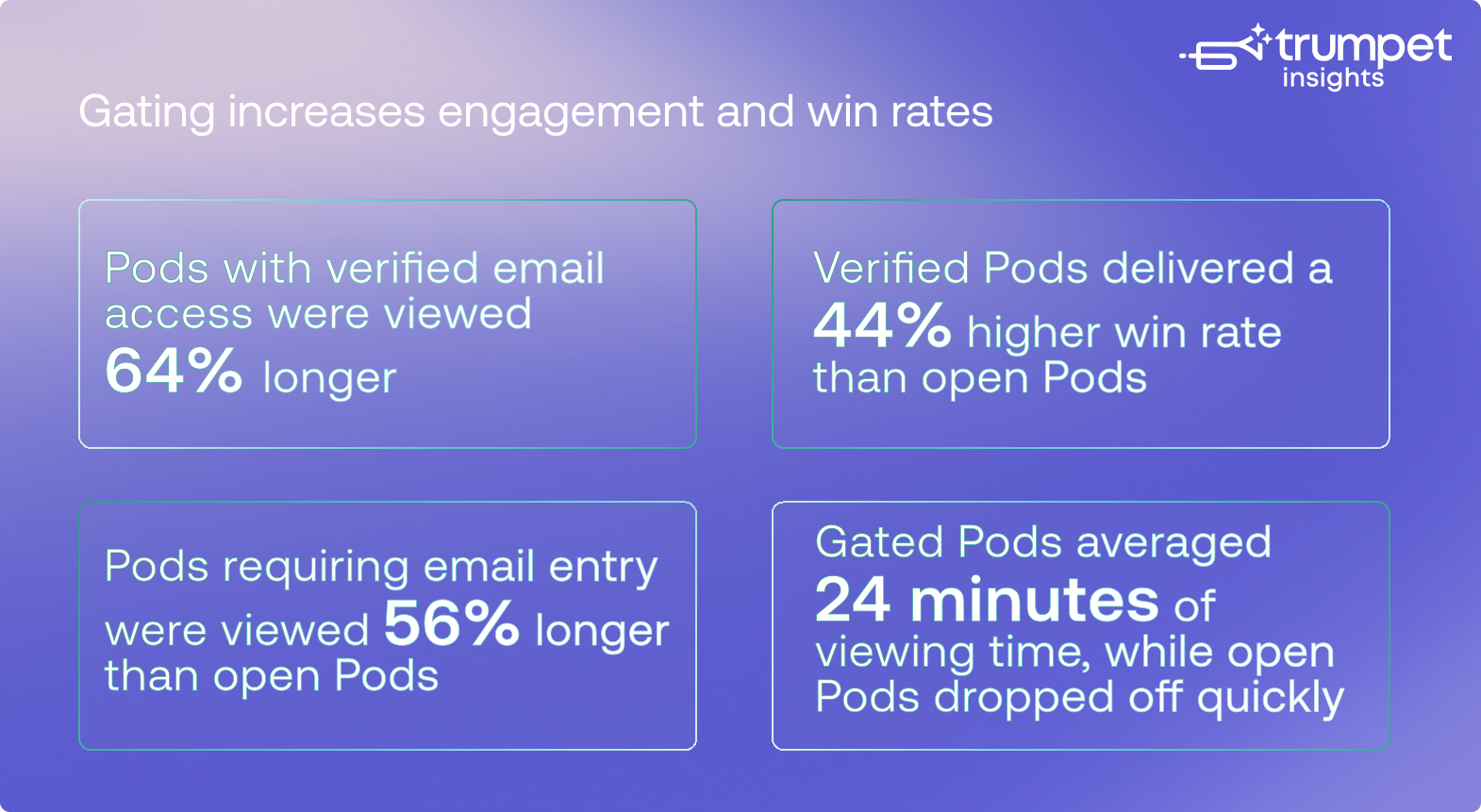
- Pods requiring email entry were viewed 56% longer than open Pods
- Pods with verified email access were viewed 64% longer
- Verified Pods delivered a 44% higher win rate than open Pods
- Gated Pods averaged 24 minutes of viewing time, while open Pods dropped off quickly
These are not marginal gains. They are step changes in how buyers engage.
More friction did not reduce interaction. It concentrated it.
Why friction works in sales
Gating does not just change access. It changes psychology.
- It filters intent
Casual viewers drop out early. Serious stakeholders stay. - It focuses attention
Buyers treat gated content as deliberate and worth their time. - It improves follow-up quality
You know who is engaged, what they have seen, and when they return. - It prevents link dilution
Open links get forwarded endlessly, stripping away context and visibility.
In other words, friction does not block buyers. It reveals the ones who matter.
Does gating reduce reach?
Yes. And that is the point.
Open links generate more clicks, but far less meaningful engagement. In high-value deals, one verified view from a senior stakeholder is worth more than ten anonymous opens.
Open-access Pods were far more likely to be viewed once and never revisited.
Revisit behaviour and win rate

- One view, no return → 24% win rate
- One revisit → 35% win rate
- 2-3 rivists → 41% win rate
- 4–5 revisits → 45% win rate
- 6–8 revisits → 48% win rate
Repeat engagement correlates directly with deal success, and gated access makes repeat engagement far more likely.
When to use Pod gating
Use email gating when
- Sharing pricing, security, or sensitive materials
- Tracking stakeholder engagement across the deal
- You need clarity on who is actually involved
Use verified email access when
- The deal is progressing
- Senior stakeholders are involved
- You want to control access and distribution
Avoid gating when
- Sending cold outbound Pods
- Encouraging early internal sharing
- Sharing low-stakes, top-of-funnel content
The goal is not to gate everything.






![How to Get Started with Buyer Enablement [With Examples]](https://cdn.prod.website-files.com/65cf4fecbed2754c2236665d/65cf4fecbed2754c22366bdb_65a5af83e742f76e34ce06f3_Customer%2520Onboarding%2520_%2520Everything%2520you%2520need%2520(2).png)
.png)


.png)


.png)


.png)

.png)

.png)
.png)





