







- A strong Mutual Action Plan is built with the buyer, not just shared with them.
- The best Mutual Action Plans act as a living source of truth from sales through Customer Success and beyond.
- Clear ownership, timing, and visibility reduce follow-ups and prevent deals from stalling.
- A Digital Sales Room helps Mutual Action Plans stay active between meetings, not just during calls.
Mutual Action Plans are not new, and they are no longer niche. In fact, 52% of Account Executives already use Digital Sales Rooms to share their Mutual Action Plans, because modern deals are too complex to manage across email threads, spreadsheets, and scattered notes.
Source: Salespeople Reveal What They’re Thinking in 2024 Report
What is a Mutual Action Plan?
A Mutual Action Plan, often referred to as a MAP, brings the buyer and seller together around a shared path forward.
It outlines a joint sales and buying timeline with clear milestones, owners, and dates on both sides. This includes not only what the seller needs to do, but also what the buyer needs to move the deal forward.
A strong Mutual Action Plan does not stop at close. It starts where the deal is today and evolves as the relationship grows. Over time, it becomes a shared source of truth that carries from sales into Customer Success and account management, supporting onboarding, renewals, and long-term growth.
This shift reflects how modern revenue teams already operate. In our trumpet | Salespeople Reveal What They're Thinking in 2024 Report, we found that 52% of Account Executives are using Digital Sales Rooms to share their Mutual Action Plans, and 63% say MAPs are a key part of their strategy. What teams need now is a MAP that actually supports that strategy in practice.
How should a Mutual Action Plan show progress?
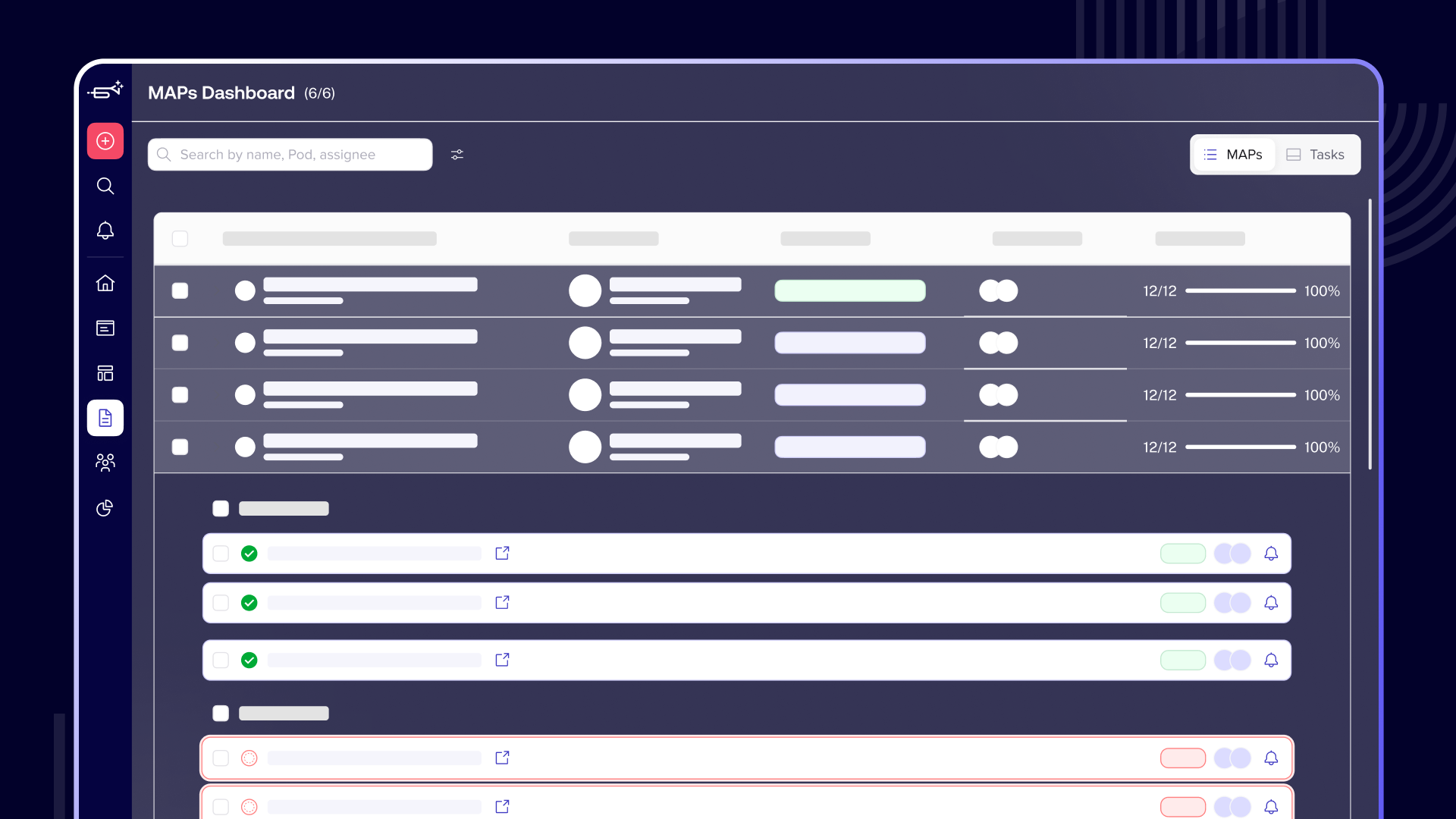
A good Mutual Action Plan makes progress immediately visible. At a glance, teams should be able to see what is overdue, what is coming up next, and where attention is required right now. This level of visibility removes the need to dig through notes, follow-up emails, or meeting summaries.
When viewing the deal itself, the full journey should be clear. Teams should be able to see what has already happened, what is coming next, who owns each step, and why a deal might be flagged, all in one place.
Why does “mutual” matter in a Mutual Action Plan?
The word mutual is intentional. A Mutual Action Plan is not built for the buyer. It is built with them. Both sides see the same plan, understand what is coming next, and have clear ownership over their respective steps.
This shared visibility removes ambiguity, reduces back-and-forth, and keeps everyone focused on forward progress rather than follow-ups.
How do Mutual Action Plans keep deals moving?
Deal momentum often stalls, not because interest is lost, but because priorities shift and updates are missed.
A strong Mutual Action Plan automatically highlights what is due or outstanding. Teams do not need to remember what to check or chase updates manually. The plan itself shows where things stand.
Because deals are constantly changing, updates must be fast. Steps, timelines, and ownership can be adjusted quickly, with changes visible to everyone involved straight away.
How do Mutual Action Plans support progress between meetings?
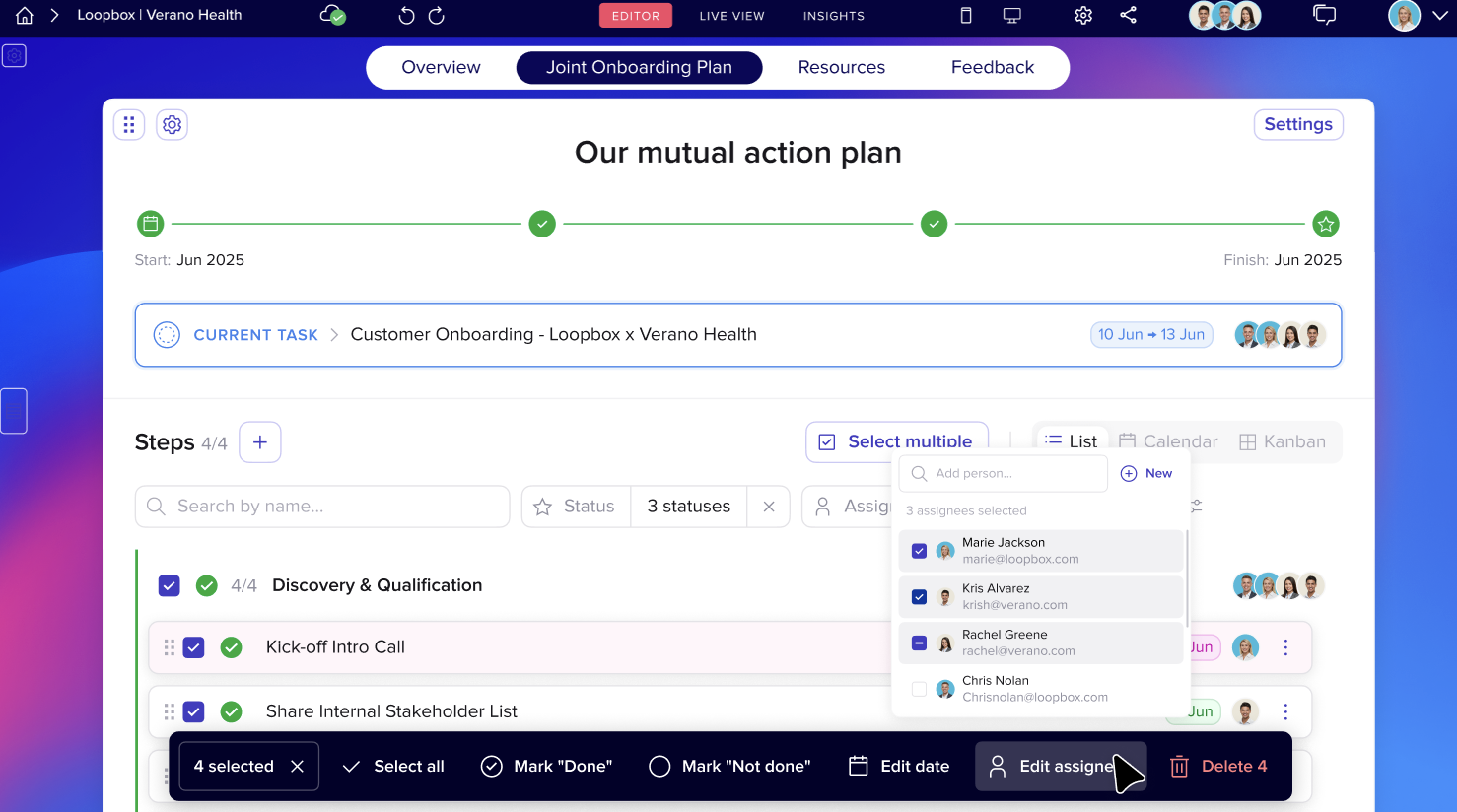
Progress should not depend on the next meeting being booked. Within each step of a Mutual Action Plan, teams can capture agendas, notes, and reminders. This allows work to continue between calls and keeps deals moving even when calendars do not align.
When managing multiple deals, this structure helps teams quickly focus on what needs attention, with clear context on ownership, status, and timing, all without switching between tools.
How trumpet supports Mutual Action Plans in modern deals
Mutual Action Plans in trumpet are designed to support how modern deals actually move. The experience gives Sales and Customer Success teams a clear view of progress through snapshot and calendar views, automatic indicators for what is due or outstanding, and fast updates as plans evolve. With step-level agendas, notes, reminders, and a dedicated Mutual Action Plan dashboard, teams can manage every plan in one place and keep deals moving forward without relying on constant follow-ups or meetings.
Final thoughts: what should a good Mutual Action Plan do?
A good Mutual Action Plan creates clarity without adding complexity.
↳Clear progress.
↳Fewer follow-ups.
↳Deals that keep moving, even when meetings stop.
That is what a Mutual Action Plan should do.
See how Mutual Action Plans work within trumpet here
FAQs
What is a Mutual Action Plan?
A Mutual Action Plan is a shared sales and buying timeline that outlines key steps, owners, and milestones for both the buyer and seller.
Do Mutual Action Plans end at close?
No. A Mutual Action Plan continues from sales into Customer Success, supporting onboarding, account management, renewals, and long-term growth.
Why are Mutual Action Plans important for complex deals?
Modern deals involve multiple stakeholders and longer sales cycles. Mutual Action Plans provide shared clarity so progress does not get lost across emails, meetings, or handovers.
How does a Digital Sales Room improve a Mutual Action Plan?
A Digital Sales Room keeps the Mutual Action Plan alongside notes, agendas, and updates, giving everyone a single place to track progress and next steps in real time.










![How to Get Started with Buyer Enablement [With Examples]](https://cdn.prod.website-files.com/65cf4fecbed2754c2236665d/65cf4fecbed2754c22366bdb_65a5af83e742f76e34ce06f3_Customer%2520Onboarding%2520_%2520Everything%2520you%2520need%2520(2).png)
.png)


.png)


.png)


.png)

.png)

.png)
.png)





