

Meet the next era of revenue technology: Intelligent Revenue Collaboration
Over four decades, sales technology has evolved from CRMs to enablement platforms to revenue intelligence. Each promised clarity, yet created new silos. Teams gained visibility but lost cohesion.
Now, AI has amplified both the opportunity and the chaos; surfacing more data than teams can act on.
The result: fragmented tools, disconnected buyers, and revenue organisations optimising for activity instead of alignment.
The next evolution isn’t more dashboards or automation. It’s connection.
Enablement, intelligence, and collaboration must operate as one continuous system.
This is the emergence of Intelligent Revenue Collaboration, a new model where every buyer interaction becomes a signal, and every signal drives coordinated action.
At its core is trumpet, the Intelligent GTM Layer:
A unified workspace that connects to your revenue stack, transforming content, context, and data into one intelligent flow, from first touch to renewal.
The future of selling isn’t automation.
The winners will unite enablement, collaboration, and intelligence.
From chaos to clarity: The evolution of enablement, intelligence, and the rise of Intelligent Revenue Collaboration
How four decades of revenue innovation led to one simple truth: enablement and intelligence only work when connected by collaboration.
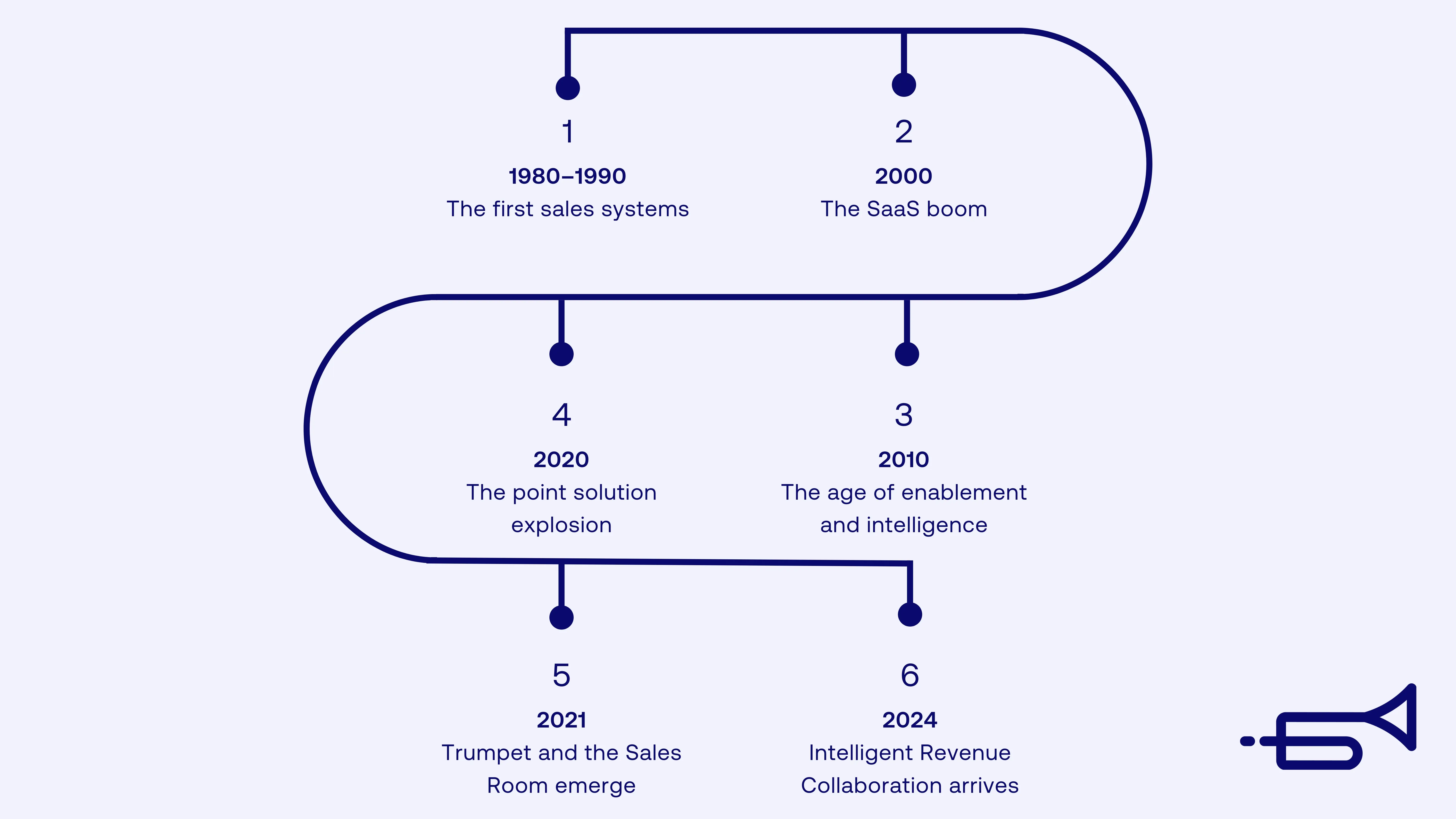
The origin story: How the revenue stack was born
Every generation of sales technology has promised efficiency.
Each has delivered complexity.
From rolodexes to CRMs, from decks to data lakes, every innovation has solved a piece of the problem; visibility, training, forecasting, but rarely the whole.
The result? A patchwork of tools stitched together by human effort.
“The average CRO now juggles over ten different revenue tools,” notes one enterprise sales leader. “Each solves a sliver of the problem. What we lost was cohesion.”
That’s where the next evolution begins.
The 1980s–1990s: The birth of sales process
Before the digital age, sales revolved around process.
The best reps didn’t have more data,they had better memory.
Then, in 1987, ACT! digitised the rolodex, followed by Siebel Systems, the first true enterprise CRM.
For the first time, leadership could see pipeline in one place.
For reps, though, it felt like data entry.
“The CRM helped my VP sleep at night,” one veteran seller recalled. “It didn’t help me close deals.”
The structure arrived but the value stayed top-down.
The 2000s: The SaaS boom and the system of record
The cloud transformed everything.
Salesforce redefined CRM as a service and made data portable, scalable, and perpetual.
Revenue operations became a discipline; forecasting became a science.
But visibility didn’t mean velocity.
The more fields filled, the less time sellers spent selling.
CRM became the brain of the organisation, but not its nervous system.
Enablement emerged to fill that gap: If CRM tracked the what, enablement would guide the how.
The 2010s: The age of enablement
The 2010s belonged to enablement platforms that promised the right content, right time, right buyer.
And at first, they delivered.
Ramp times shortened. Content became measurable. Sales finally had a library instead of a labyrinth.
But over time, those libraries swelled. The right deck was still three clicks and a Slack thread away.
Enablement became a content vault, not a growth engine.
The intent was noble; the execution fragmented.
The late 2010s: The intelligence era
The next revolution was revenue intelligence.
Gong, Chorus, and Clari transformed conversations and forecasts into data.
For the first time, leaders could see what was happening.
Win-loss analyses, talk ratios, deal health; every motion quantified.
Yet, intelligence created new silos of its own.
Dashboards multiplied and insights lived in isolation.
Visibility had improved, but cohesion had not.
2020–2023: The point-solution explosion
By 2023, GTM stacks resembled city skylines - dense, vertical, and disconnected.
Teams used ten-plus tools spanning engagement, forecasting, enablement, and onboarding.
Each product added value in isolation and friction in aggregate.
Ops teams became system integrators; reps became tab managers.
“We built a towering stack,” one CRO said, “but forgot the scaffolding.”
The industry had reached the limits of tool proliferation.
What it needed was a connective layer.
2021–Present: The rise of the digital sales room and collaborative buyer journeys
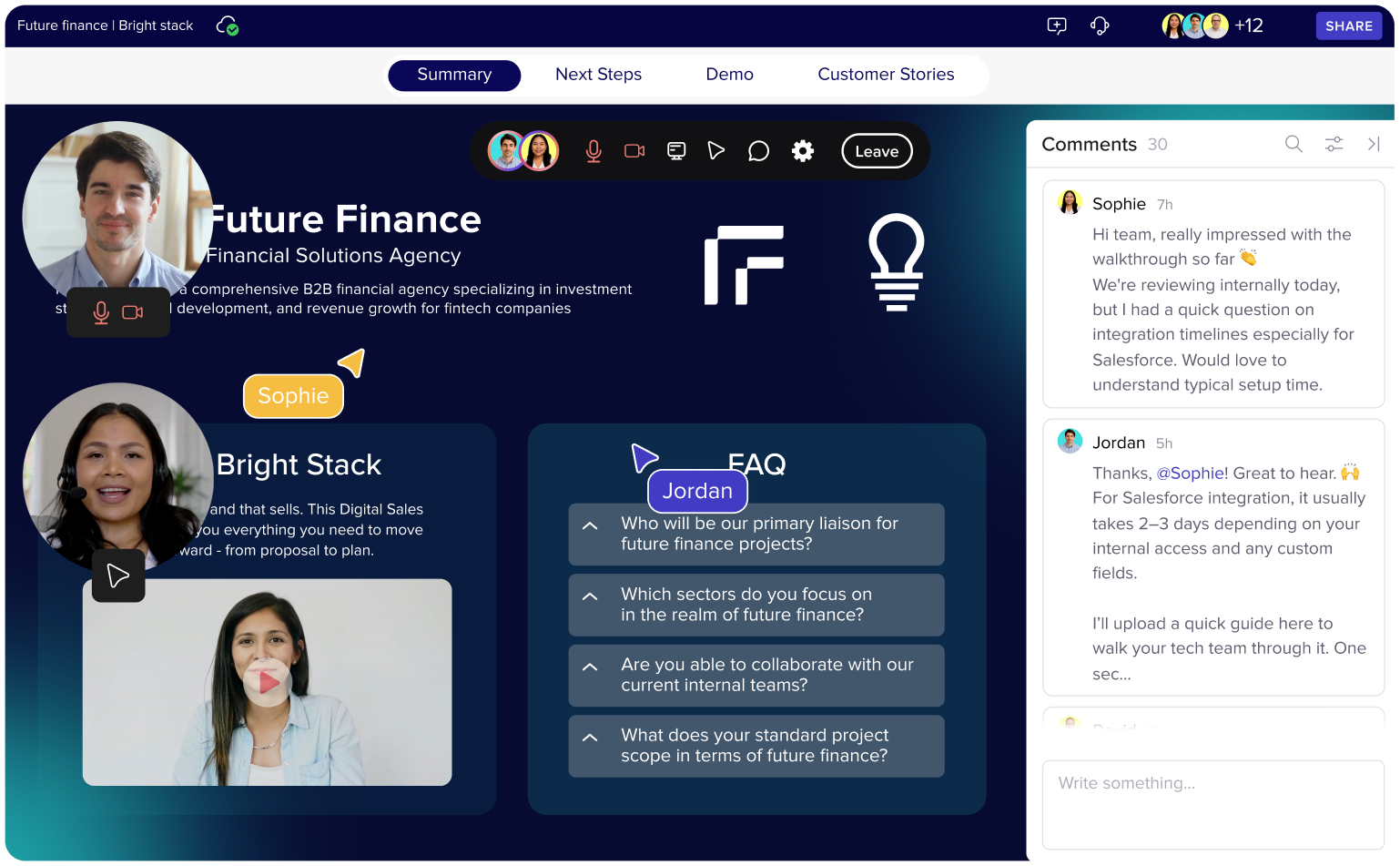
By the early 2020s, buyers had changed faster than sellers.
The modern B2B purchase wasn’t a linear funnel, it was a collective decision. Deals now involved an average of 11 stakeholders, each consuming information asynchronously and expecting the same seamless experience they had as consumers.
This shift gave rise to the Digital Sales Room (DSR): a shared digital space where sellers and buyers could collaborate on deals in one place. It was the first real attempt to make the buying process as transparent as the selling one.
Instead of attaching PDFs to emails or chasing feedback through threads, sales teams could now share one live workspace with buyers; housing proposals, case studies, timelines, and mutual action plans in a single interactive hub.
The DSR marked the first evolution from “one-to-many selling” to “many-to-many collaboration.”
But even as DSRs gained traction, they highlighted a deeper truth:
Collaboration was powerful, but still disconnected from enablement, intelligence, and the broader GTM stack. The industry had moved from decks to digital rooms, but the rooms themselves needed to become smarter, more connected, and more predictive.
That realisation became the spark for trumpet’s evolution into something larger.
The AI wave: Intelligence without orchestration
.webp)
AI arrived with the promise of automation. It scored leads, wrote emails, summarised calls. But automation without alignment is just noise at scale.
Most AI surfaced data didn’t coordinate people.
Reps were still asking: What do I do next?
AI gave us even greater visibility, some enhanced efficiency but not cohesion.
It was an amplifier, not a conductor.
What we learned building trumpet
When we founded trumpet, we weren’t chasing a buzzword, we were solving the problem we’d lived as sellers, operators, and founders.
Over four years and millions of customer trumpet Pods, we learned three enduring truths:
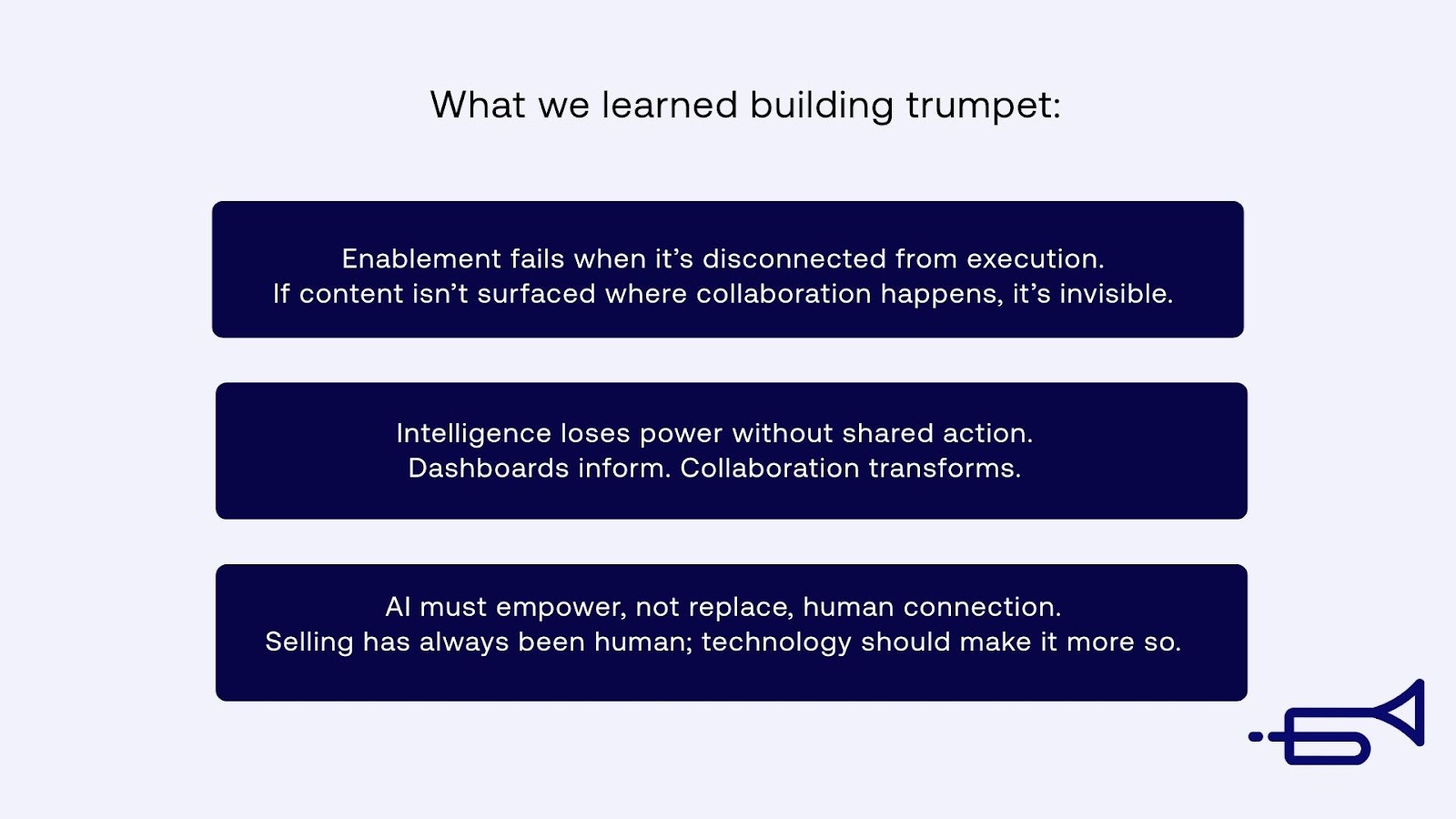
These became trumpet’s principles and the foundation for a new era of revenue work.
The Emergence of Intelligent Revenue Collaboration
Intelligent Revenue Collaboration is the natural convergence of enablement, intelligence, and collaboration into a single motion.
It’s not another tool.
It’s a new category that turns content into context, and context into coordinated action.
Three core shifts define this movement:
- Enablement becomes adaptive. Content learns what wins.
- Intelligence becomes actionable. Signals turn into guidance.
- Collaboration becomes embedded. Teams and buyers work together in real time.
Trumpet: The Intelligent GTM Layer

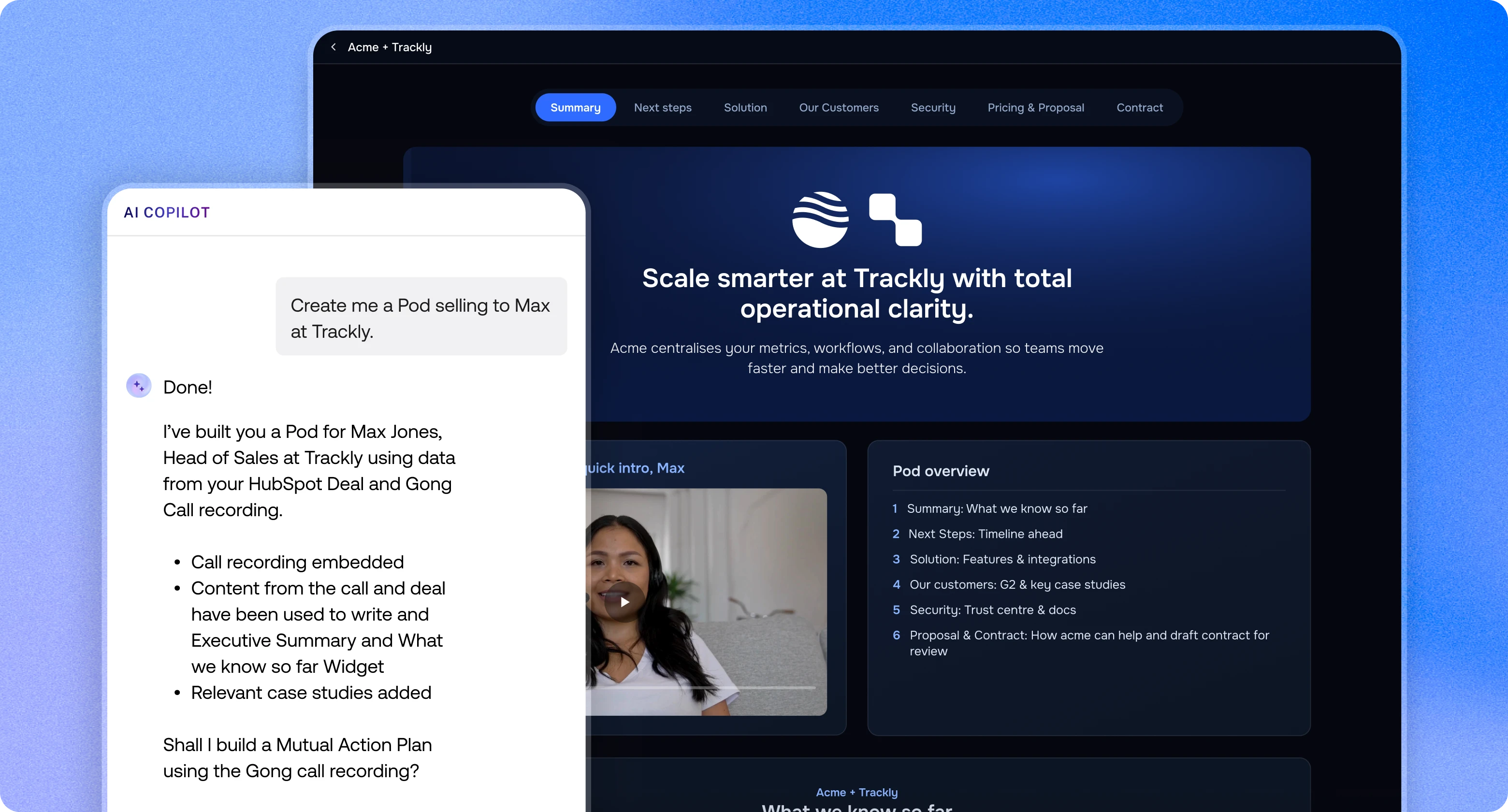
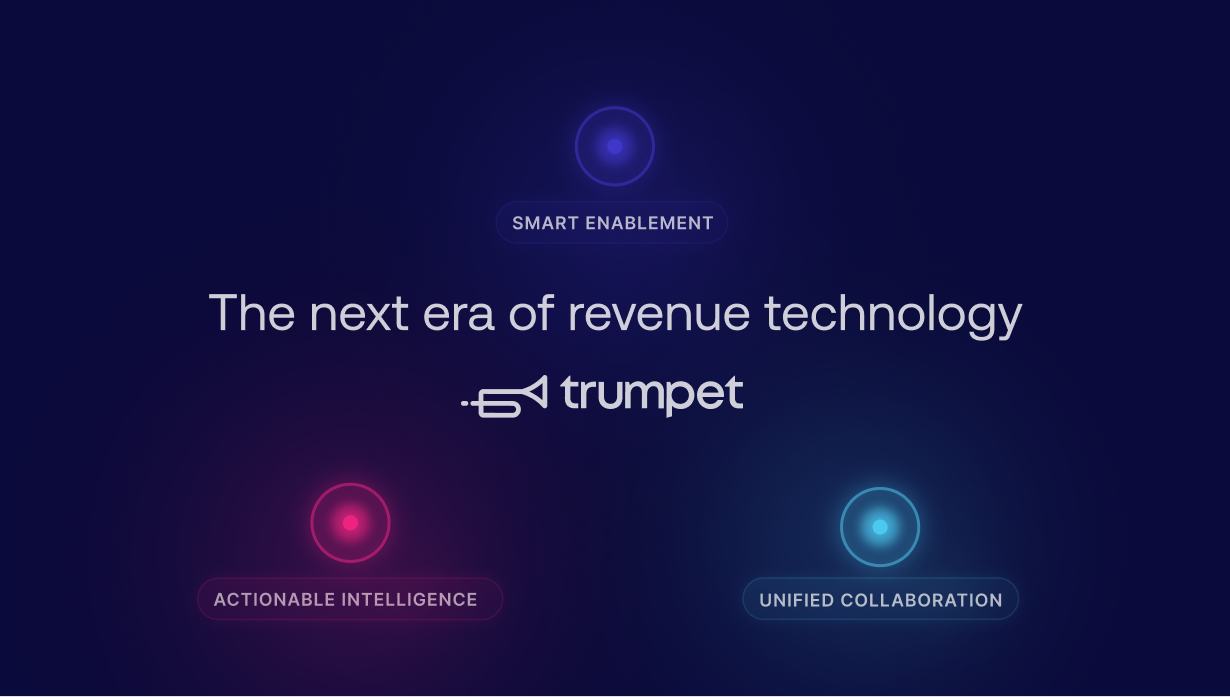
Trumpet is the Intelligent GTM Layer; a connected workspace that unites enablement, collaboration, and intelligence into one intelligent flow.
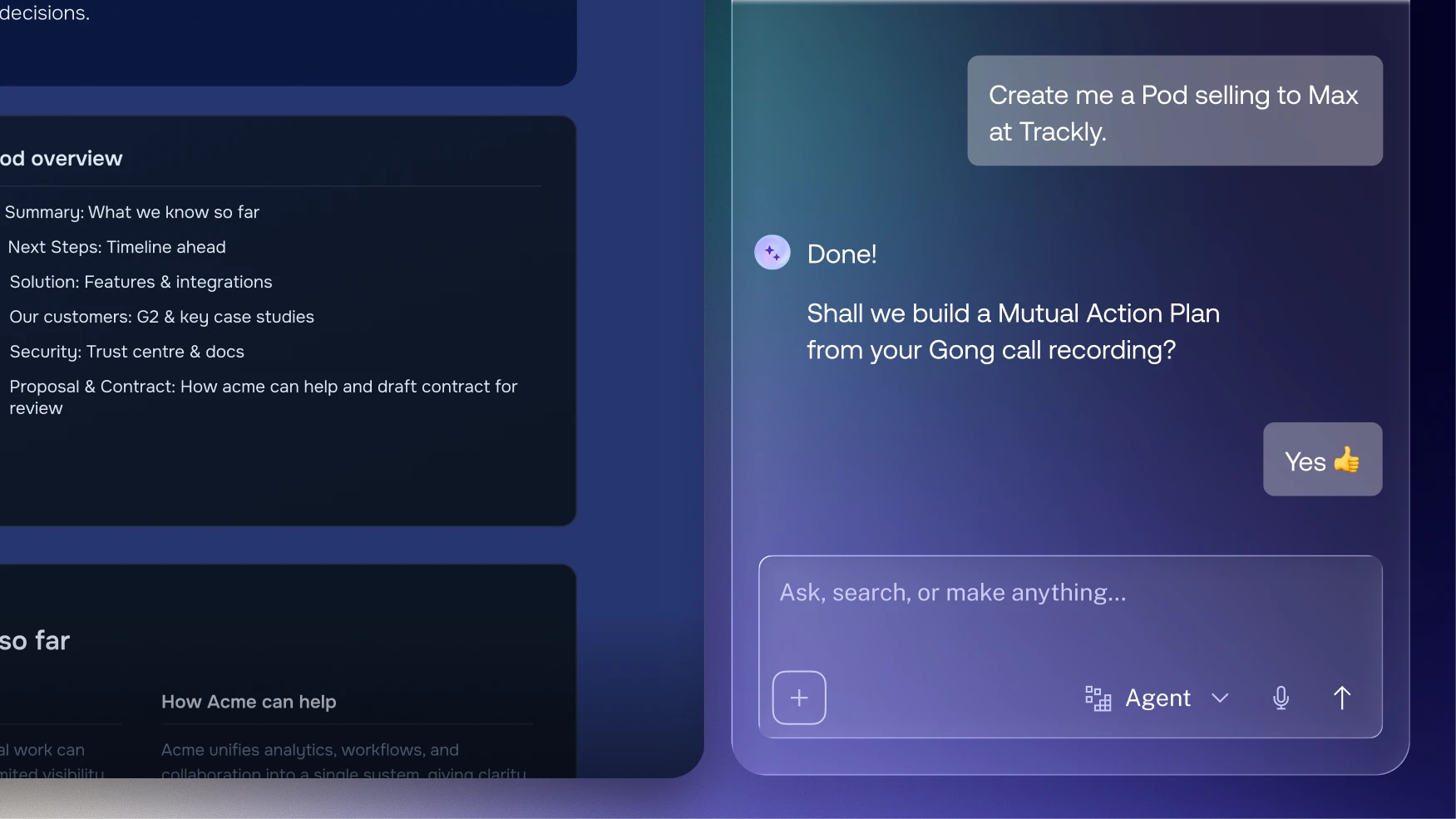
Inside trumpet, AI doesn’t just observe, it orchestrates.
- Smart Enablement
Content organises and recommends itself by persona and stage, helping reps launch personalised sales rooms in seconds. - Unified Collaboration
Buyers and sellers co-author action plans, proposals, and business cases inside shared Pods. - Actionable Intelligence
Engagement signals reveal deal health, intent, and next steps, guiding where to focus, not just what happened. - Connected Tech Stack
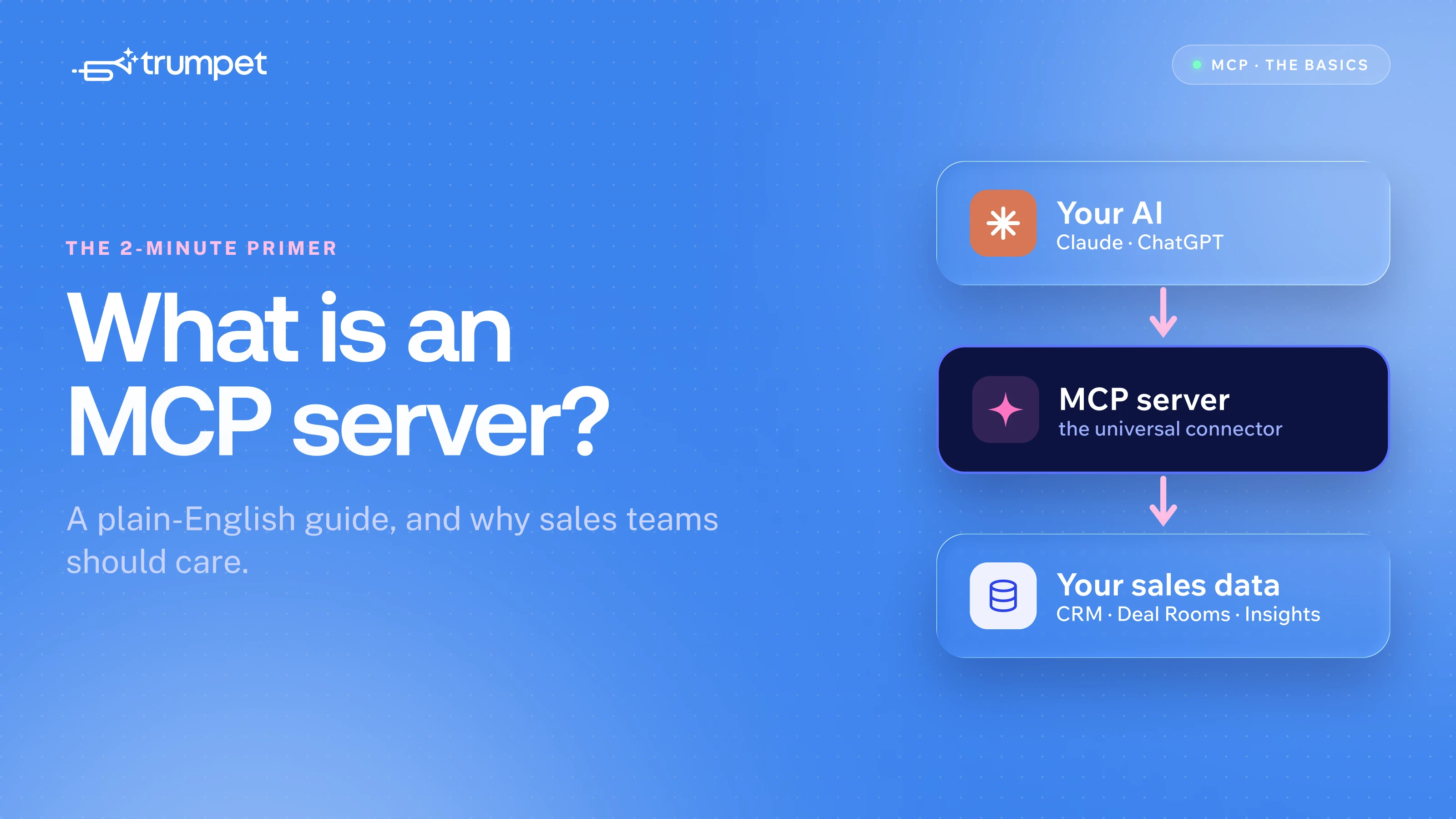
Trumpet integrates deeply with CRM, call tools, and enablement systems, becoming the customer-visible layer across your GTM stack.
The result: faster cycles, higher win rates, lower churn, and relationships that last.
The future of revenue tech: Convergence, not expansion
The next decade won’t reward more tools, it will reward unity.
We’re shifting from a tool-based era to a layer-based era.
The companies that thrive will connect enablement, collaboration, and intelligence under one umbrella
Trumpet exists to power that future: The Intelligent GTM Layer within the new category of Intelligent Revenue Collaboration.
Closing Reflection
Every era of sales innovation began with frustration.
CRM was born from lost contacts.
Enablement from lost content.
Intelligence from lost insight.
Now the frustration is fragmentation.
Teams, tools, and buyers all working in parallel, rarely in sync.
The next revolution isn’t a new tool, it’s the connective tissue between them.
A system of connection that finally makes the revenue engine intelligent and human.
That’s what trumpet was built for.
After decades of selling and now building, our conviction is clear:
Enablement and intelligence matter.
But collaboration makes them work.
This is Intelligent Revenue Collaboration.
And this is trumpet.
.png)

See what your buyers are doing between meetings
Build a Pod, share it with the buying committee and watch the signals roll in. Free to start.
.png)
.png)
.png)

.png)
.png)


![How to Get Started with Buyer Enablement [With Examples]](https://cdn.prod.website-files.com/65cf4fecbed2754c2236665d/65cf4fecbed2754c22366bdb_65a5af83e742f76e34ce06f3_Customer%2520Onboarding%2520_%2520Everything%2520you%2520need%2520(2).png)



.png)

.png)