







Key insights:
- Deals with fewer than 10 interactions see win rates drop by 38%
- 25+ interactions increase win rates by 61%
- 100+ interactions increase win rates by 145%
- Interactive actions signal stronger buying intent than passive views
Most sales teams treat buyer engagement as a gut feeling. The deal feels warm. They're responding to emails. Someone watched the demo.
But feelings aren't data. And gut feel is a terrible forecasting tool.
So we went looking for something more concrete. We analysed thousands of Pods being used across the full revenue cycle: new business, onboarding, renewals, account management.
Every interaction buyers and customers had with shared content, including:
- Views and video plays (how many times content was opened and watched)
- Clicks and downloads (links followed, files and proposals saved)
- Comments and form submissions (direct responses to shared content)
- Mutual Action Plan updates (shared next steps being progressed)
- E-signatures (contracts and documents being signed)
These are just some of the interactions that signal buyer intent in trumpet. All of it mapped against win rates and sales cycle length.
What we found should change how revenue teams think about engagement.
Passive vs interactive engagement
Before we get into the numbers, it helps to understand how we categorised engagement.
We split buyer interactions into two types.
- Passive interactions: views, video plays, and link copies. The buyer is consuming content.
- Interactive interactions: everything else. Commenting, updating a Mutual Action Plan, submitting a form, downloading a proposal, signing a document. The buyer is actively participating.
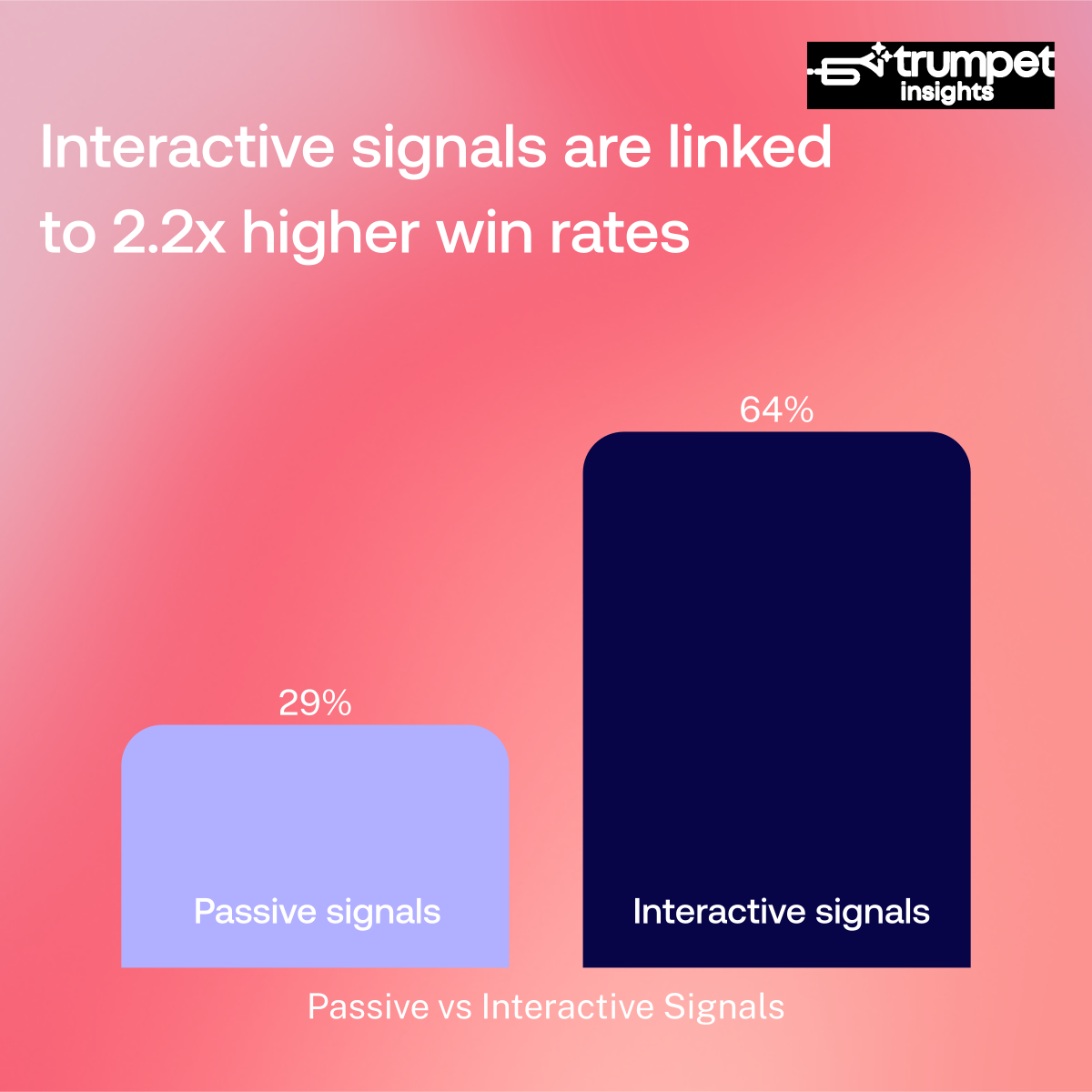
That distinction turns out to matter a lot more than the raw volume of engagement.
Fewer than 10 interactions and win rate drops 38%
Not a small dip. 38%.
Low engagement doesn't mean your buyer is thinking it over quietly. It usually means they're not in the deal the way you think they are. That's a problem worth knowing about early.
The numbers climb fast from there.
- 25+ interactions: win rate up 61%, sales cycle shortens by 5%
- 50+ interactions: win rates double
- 100+ interactions: win rates increase by 145% (2.4x the baseline of 29%)
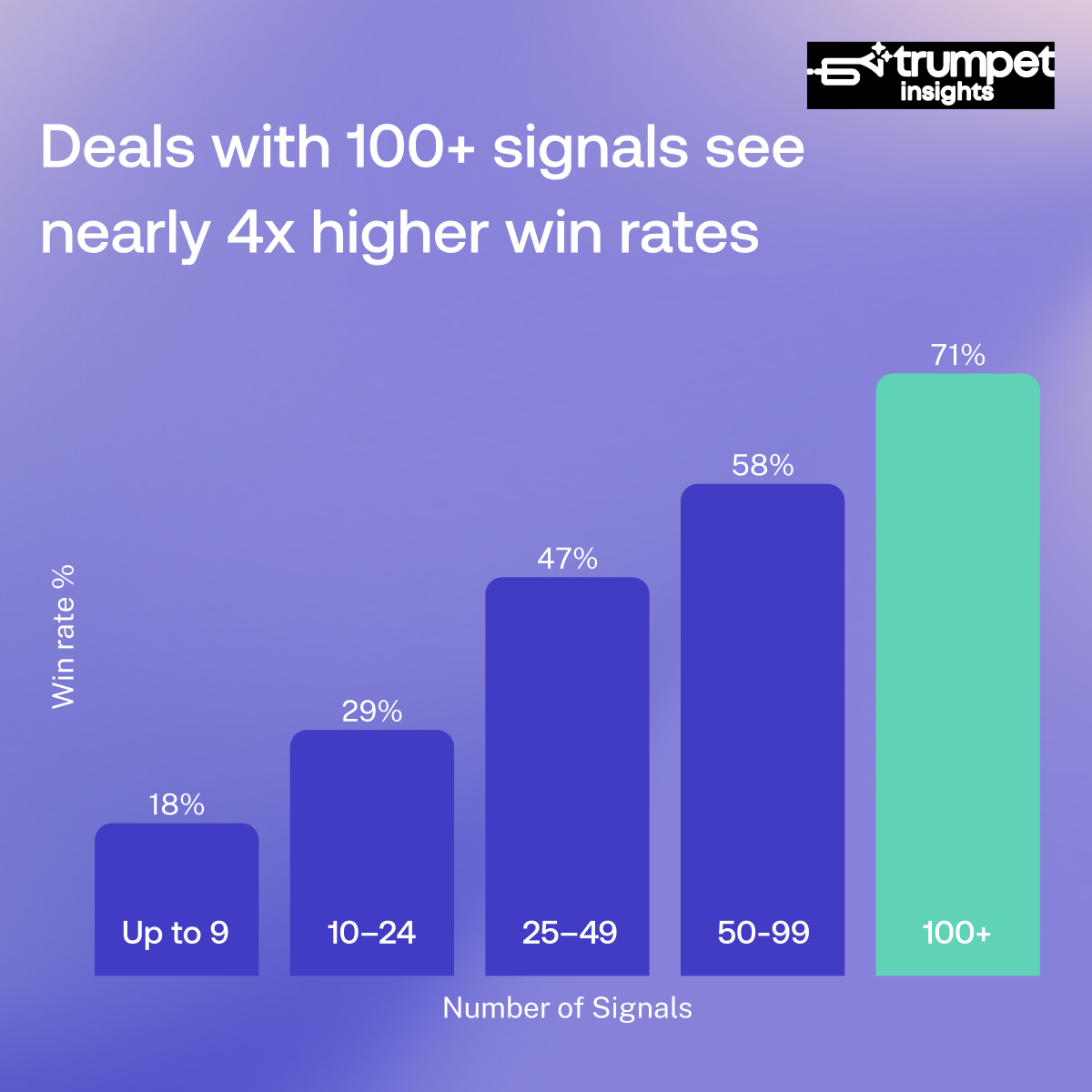
More engagement, more wins.
Same engagement volume, very different outcomes
Here's the part that surprised us.
Two deals with identical engagement counts can close at very different rates, depending on whether that engagement is passive or interactive.
Take deals with 10–24 interactions.
- If half are interactive, win rate goes up 18%
- If 75% are interactive, it goes up 30%
The volume is the same. The type is what changes everything.
At 51–100 interactions, a quarter interactive and win rates jump 101%. Half interactive, that's 120%.
Buyers viewing your content are curious. Buyers commenting, updating shared plans, and signing documents are buying.
The difference between the two is the difference between interest and intent.
What high engagement actually looks like in a deal
A deal with 100+ interactions isn't one very enthusiastic stakeholder. It's multiple people across the buying committee.
Think about what's really happening.
- The champion has shared the content internally
- The economic buyer looked at the pricing
- An influencer watched the demo recording
- Legal downloaded the contract
- Procurement submitted a compliance form
Every one of those touchpoints counts.
This is also why the sales cycle is longer at 100+ interactions. It increases by 14%. These are complex, multi-stakeholder deals with real due diligence happening across the organisation.
That engagement volume isn't a problem. It's proof the deal is serious.
And a 2.4x win rate tells you the rest: complex deals, handled well, are deals you win.
Engagement signals matter in post-sales too
CSMs running onboarding should care about this too.
The same data applies. A customer who hits 25+ interactions during onboarding, completing shared tasks, engaging with training content, submitting feedback forms, is showing the same high-intent behaviour as a buyer who's about to sign.
Low interaction counts, under 10, are just as much a warning sign post-sale as they are mid-deal.
If a customer isn't engaging in the first few weeks after go-live, that's not a quiet period. That's a churn risk you can still get ahead of.
For account managers, engagement patterns on renewal and expansion tell you who's still bought in and who's gone quiet.
A contact who was all over your content six months ago but hasn't opened anything recently is worth a conversation, before it becomes a cancellation conversation.
What sales leaders can do with engagement data
For sales leaders, engagement data gives you something CRM notes and call logs can't. A real-time, objective read on buyer behaviour across the whole pipeline.
A rep tells you a deal is moving. But the engagement is low, all passive, no collaborative activity, no downloads. That's a forecast risk. Now you can see it before it bites you.
Flip that around.
A deal with strong interactive engagement from multiple stakeholders deserves attention and resource, whatever stage it's sitting at in the CRM.
The reason this matters is that in trumpet, all of this engagement data flows directly into your CRM against every deal.
You're not logging into a separate tool to hunt for signals. It's already sitting alongside the pipeline view you're reviewing every week.
That means the gap between "something looks off with this deal" and "I can see exactly why" closes to almost nothing.
Engagement data doesn't replace rep judgment. It validates it. Or it gives you something concrete to push back with.
How to re-engage and drive intent with trumpet
If you're using trumpet, new to it, or just curious about how signals work in practice, here's how to act on what the data is telling you.
If engagement is low, don't wait for your buyer to come back. Give them a reason to:
- Tag them directly with an @mention or add an annotation with a question that warrants a response
- Share something new and relevant to where they are in the process
- Record a short personalised video that speaks to their specific situation
- Build a Mutual Action Plan together on your next call so there's shared accountability, with steps assigned to them and email reminders to keep things moving
- Add a form or survey to gather their input, giving them something to do rather than just something to read
If engagement is mostly passive, that's partly a content design problem.
Interactive content, shared plans, forms, proposals, timeline steps, turns passive viewers into active participants. The more you give buyers something to do, the more signal you get back.
If you're seeing engagement from stakeholders you haven't spoken to, that's your cue to multithread. Get into those conversations before someone else shapes the narrative without you.
If engagement is high and growing across multiple stakeholders, lean in. Don't mistake a busy, complex deal for a stalled one. The data says it's your best shot at winning.
The number to remember
25+ interactions, with a strong mix of interactive activity. That's the benchmark.
Get there, and you're in a materially better position to close.
FAQs
What are buyer engagement signals?
Interactions buyers have with shared sales content, such as views, comments, downloads, MAP updates, and signatures.
Why does buyer engagement matter?
Higher engagement usually means more stakeholders are involved and the deal is progressing.
How many interactions indicate a healthy deal?
Deals with 25+ interactions see significantly higher win rates.
How can sales teams increase engagement?
Encourage participation with interactive content, Mutual Action Plans, personalised videos, and forms.







![How to Get Started with Buyer Enablement [With Examples]](https://cdn.prod.website-files.com/65cf4fecbed2754c2236665d/65cf4fecbed2754c22366bdb_65a5af83e742f76e34ce06f3_Customer%2520Onboarding%2520_%2520Everything%2520you%2520need%2520(2).png)
.png)


.png)


.png)


.png)

.png)

.png)
.png)





