







- Deals with 10 stakeholders reach a 65% win rate, reflecting strong internal coverage across the buying group.
- Moving from 6 to 10 stakeholders shifts deals from momentum to a more stable, predictable position.
- A well-structured Pods make it easier for stakeholders to engage, share, and carry your message internally.
What does reaching 10 stakeholders in a deal mean?
Reaching ten stakeholders means your deal is no longer sitting within a small group. It has spread across the organisation. Multiple teams are aware of the solution, different priorities are being considered and the conversation is no longer dependent on a single champion or team.
In practical terms, this is what well-covered deals look like.
How does stakeholder count impact win rate?
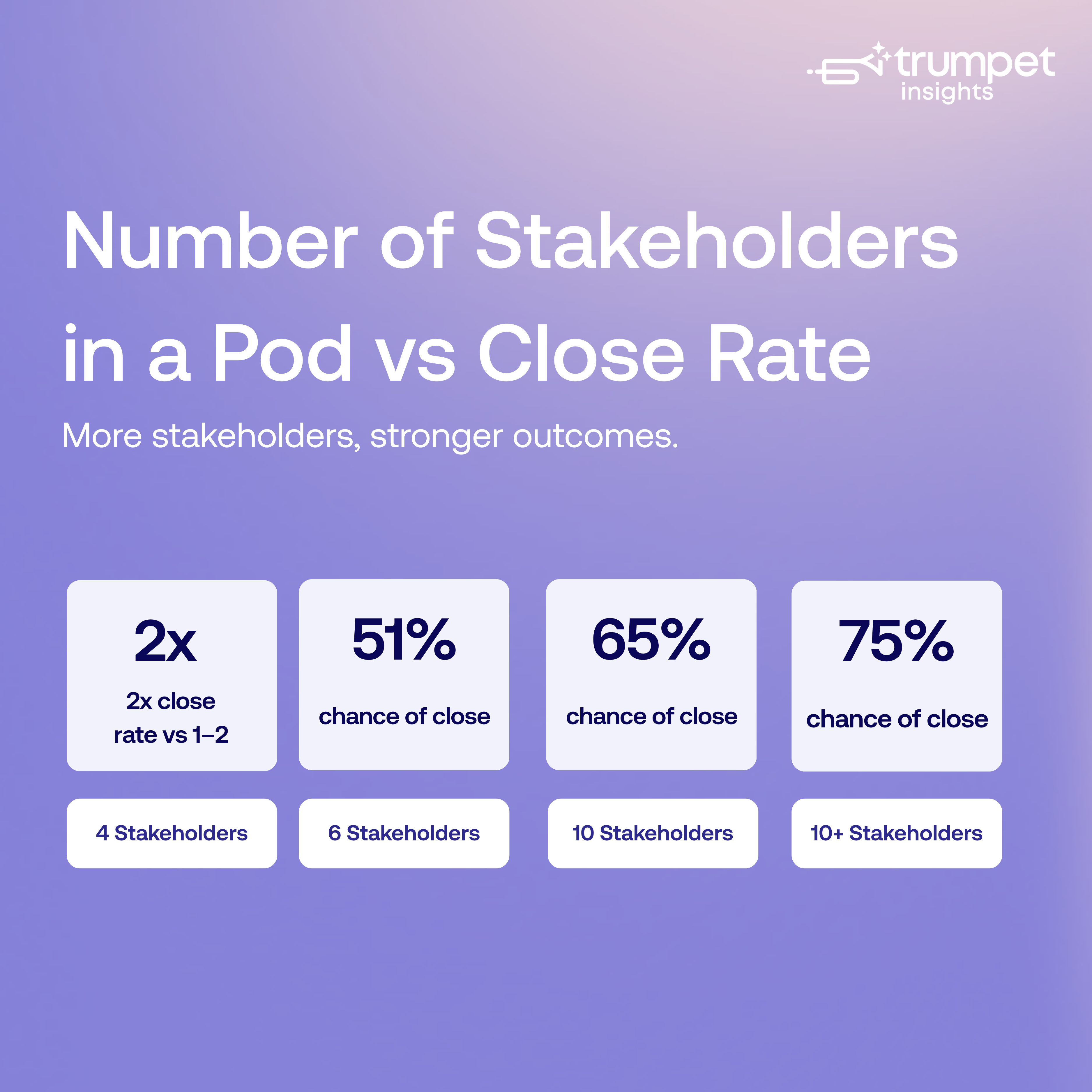
We analysed thousands of deals in trumpet Pods and found a clear pattern as stakeholder numbers increase:
- 4 stakeholders - win rate doubles compared to 1–2
- 6 stakeholders - 51% win rate
- 10 stakeholders - 65% win rate
- 10+ stakeholders - 75% win rate
Each step improves your position. Ten stakeholders stands out because it reflects consistent coverage across the buying group, not just early momentum.
Why do deals improve at 10 stakeholders?
At this stage, the deal benefits from broader internal exposure.
You are no longer relying on one or two people to explain your solution. More of the organisation has seen it directly, which reduces misinterpretation and missed context.
It also means:
- Objections surface earlier
- More perspectives are considered before final stages
- Internal discussions include accurate information
By the time a decision is made, fewer questions are left unanswered.
What changes between 6 and 10 stakeholders?
At six stakeholders, your win rate reaches 51%. You are more likely to win than lose.
At ten, the deal becomes more stable. You are more likely to have reached:
- Decision-makers
- Influencers across different teams
- People who will raise concerns late in the process
This in turn reduces the risk of last-minute surprises.
How can you reach more stakeholders in a deal?
Reaching ten stakeholders does not come from adding contacts at random. It comes from understanding who needs to be involved.
Start with your champion and ask:
- Who else will review this before sign-off?
- Which teams will be impacted?
- Who might raise concerns later?
Then make it easy for them to share your Pod internally.
A structured Pod gives each stakeholder what they need in one place, which increases the chances it gets passed around and viewed properly.
What should you avoid when adding more stakeholders?
More stakeholders improves outcomes when the experience stays clear. Keeping things simple matters, with a clear structure, relevant content, and easy navigation. The goal is to support more stakeholders as they engage with the deal, not overwhelm them with too much information.
Final thoughts
Ten stakeholders is a strong indicator of a well-covered deal. At this level, win rate reaches 65%, reflecting broader internal visibility and fewer gaps in the buying process.
If your deal is already progressing well, expanding coverage further can strengthen your position and reduce late-stage risk.
FAQs
How many stakeholders should be involved in a deal?
At least four to improve your chances, six to reach a tipping point, and around ten for strong coverage across the organisation.
Does more stakeholders always increase win rate?
Yes, when engagement is genuine and the experience is clear. Poor structure can reduce the benefit.
Why does stakeholder coverage matter?
Because decisions are made across teams. Broader involvement reduces reliance on a single contact and improves internal alignment.
Is ten stakeholders realistic for most deals?
Not every deal will reach ten, but those that do tend to have stronger outcomes and fewer surprises.
How does a trumpet Pod help with multi-threading?
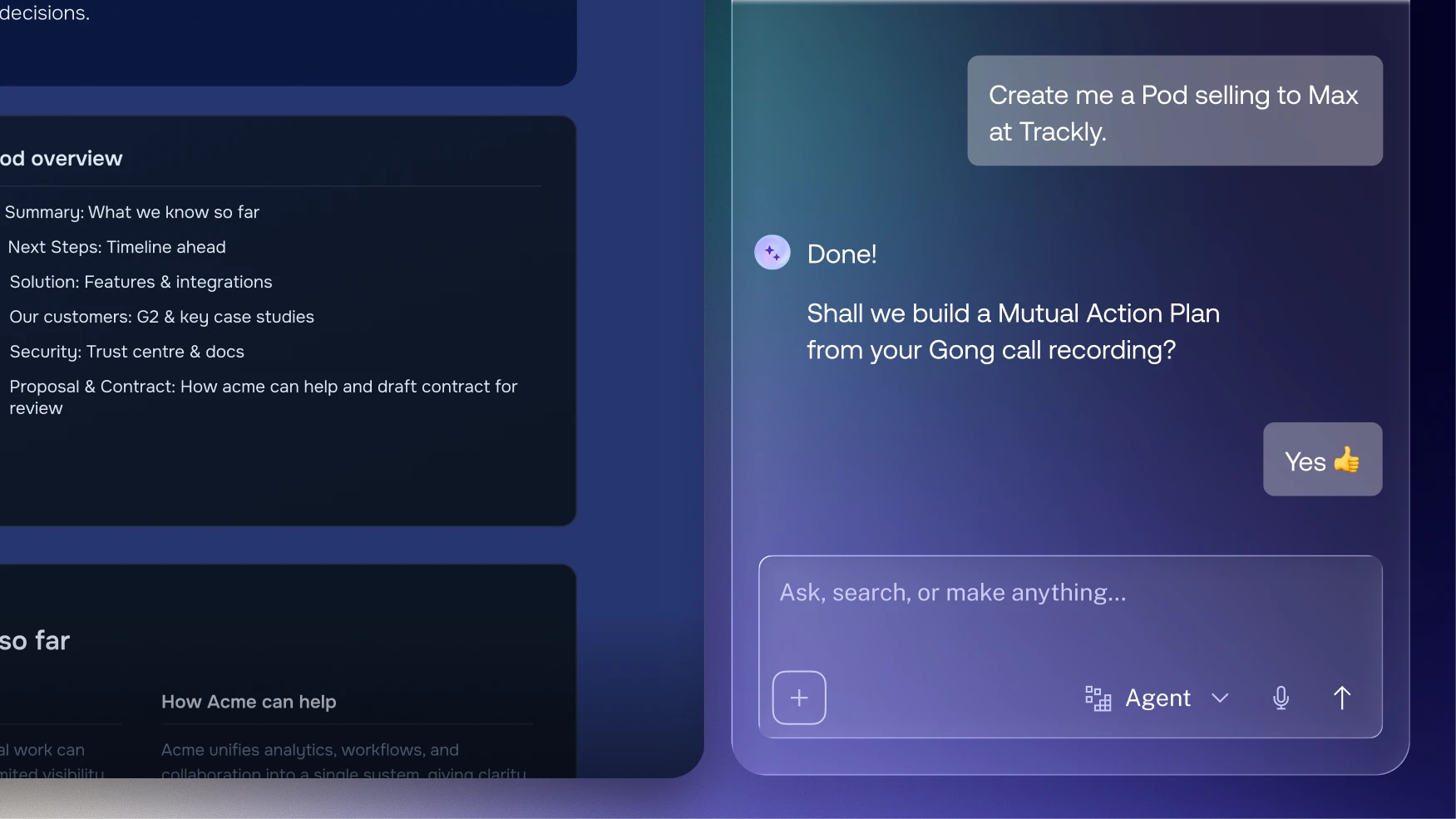
Pods centralise your content in one place, making it easy for stakeholders to access, understand, and share internally without losing context. Instead of relying on your champion to explain everything, your message carries through the Pod itself.
You can also see exactly who is engaging, when they viewed it, and how long they spent in each section. That visibility helps you understand which stakeholders are involved and what they care about, so you can tailor your follow-ups and responses based on real engagement, not guesswork.







![How to Get Started with Buyer Enablement [With Examples]](https://cdn.prod.website-files.com/65cf4fecbed2754c2236665d/65cf4fecbed2754c22366bdb_65a5af83e742f76e34ce06f3_Customer%2520Onboarding%2520_%2520Everything%2520you%2520need%2520(2).png)
.png)


.png)


.png)


.png)

.png)

.png)
.png)





