







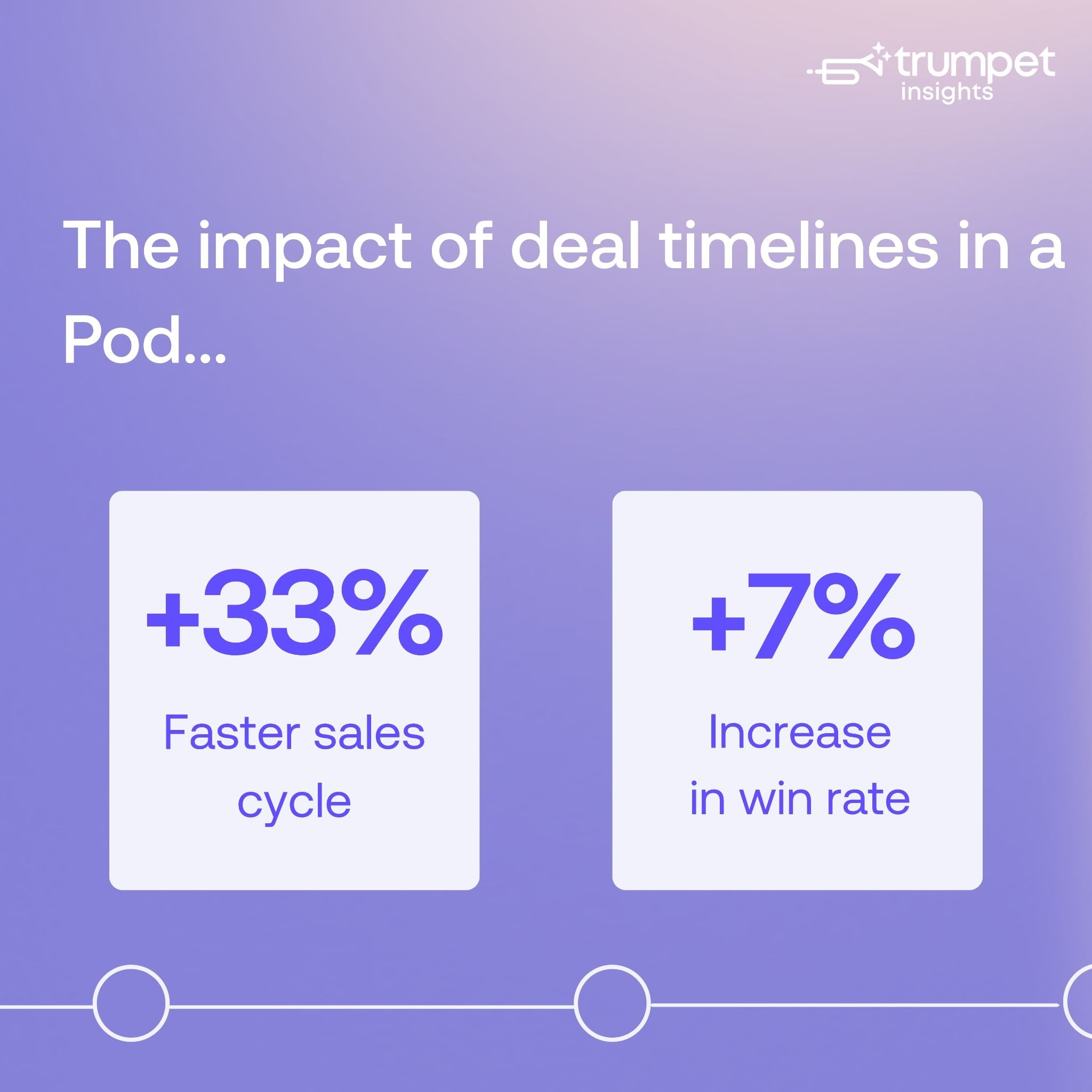
- Pods with a Mutual Action Plan (MAP) speed up the sales cycle by 33% and increase win rate by 7%
- Clear timelines reduce ambiguity by showing what needs to happen, when, and who is responsible
- Shared visibility across stakeholders helps maintain momentum and prevents deals from stalling
- Keeping MAPs simple and focused is key, overly complex plans can reduce their impact
How do deal timelines impact sales performance?
We analysed thousands of deals in trumpet Pods and found that Pods with a deal timeline saw a 33% faster sales cycle and a 7% increase in win rate.
A deal timeline, or as we call them a Mutual Action Plan (MAP), gives structure to the deal instead of leaving next steps open to interpretation.
Why do Mutual Action Plans speed up deals?
Without a clear structure, deals tend to drift. Next steps sit in emails, ownership is unclear, and progress depends on someone picking things back up.
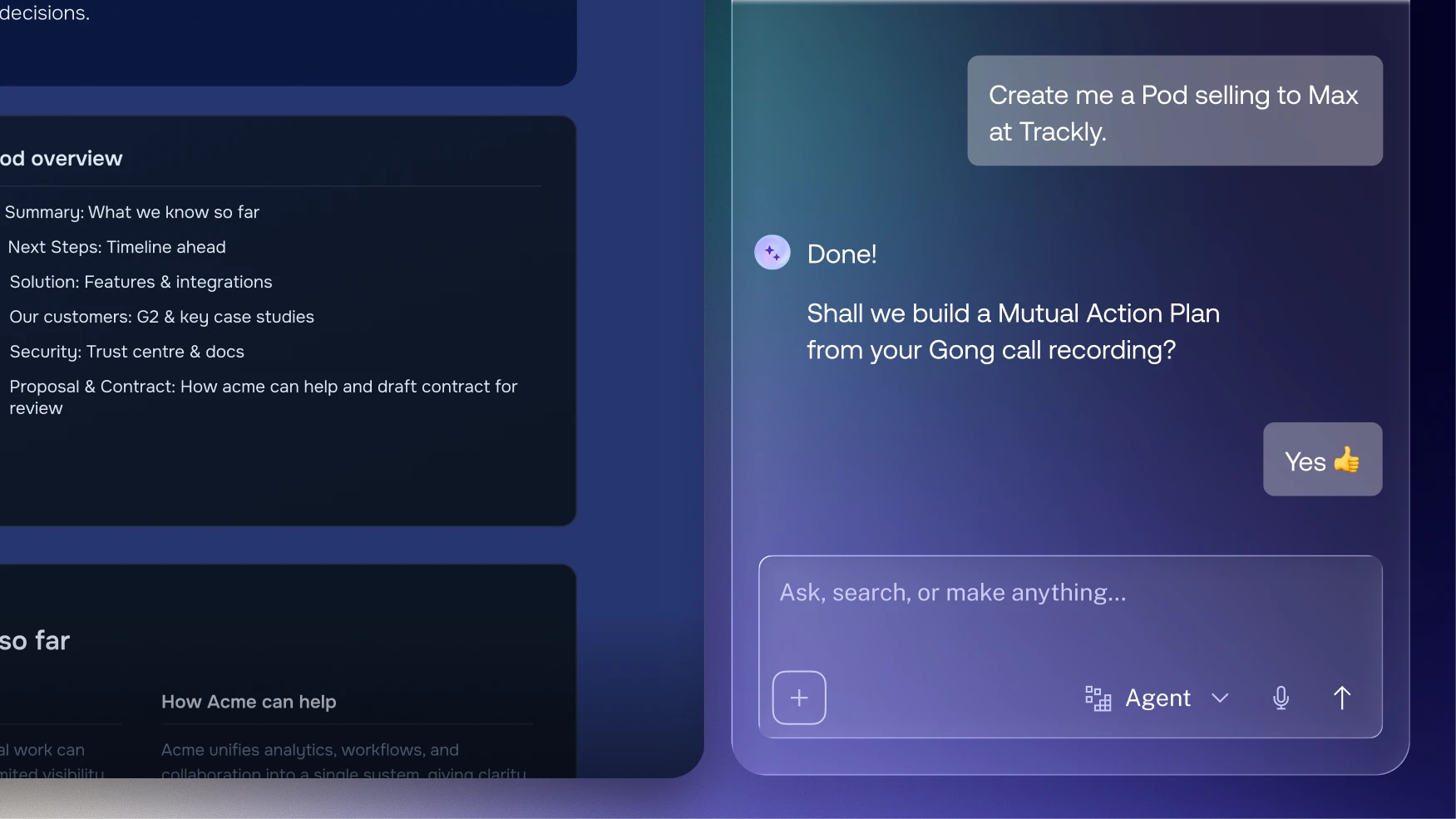
A Mutual Action Plan brings everything into one place and makes the process visible across both sides. Instead of updates being scattered across calls, emails, and documents, the MAP becomes the shared reference point for the deal.
It shows:
- What needs to happen
- When it needs to happen
- Who is responsible
That shared visibility removes unnecessary back-and-forth and makes it easier for the deal to keep moving without constant follow-up.
Why do Mutual Action Plans improve win rate?
Speed helps, but clarity is what drives the increase in win rate. When stakeholders can see the full path to completion, it becomes easier to commit. There is less uncertainty around what is required, fewer gaps between teams, and less reliance on one person to coordinate everything internally.
A Mutual Action Plan also creates shared ownership. Both sides are working towards the same outcome, with agreed steps and timelines, rather than one side pushing and the other reacting.
What does a strong Mutual Action Plan look like?
A strong MAP should feel structured, but easy to follow.
- Key steps, not every possible task
- Clear owners on both sides
- Realistic dates that reflect how the deal will actually progress
- Progress that can be tracked as stakeholders engage
The most effective Mutual Action Plans are collaborative. They are agreed with the buyer, not just created by the seller, which makes them far more likely to be followed.
Our data shows that Pods with a MAP can double win rate, particularly when steps are completed and momentum is maintained.
How do Mutual Action Plans support multi-threading?
As more stakeholders get involved, keeping everyone in sync becomes harder.
A MAP gives every stakeholder access to the same view of the deal. Instead of relying on internal updates or forwarded emails, each person can see exactly where things stand and what comes next.
New stakeholders can quickly understand:
- What has already happened
- What is coming next
- Where they fit in
This makes it much easier for the deal to move forward without repeated explanations or internal handovers.
How can you use engagement insights alongside a MAP?
One of the biggest advantages of using a Pod is visibility. You can see who is engaging with the MAP, which steps are being viewed, and where attention drops off. That gives you a clear signal on where to focus.
For example:
- If a key step hasn’t been viewed, you can follow up with the right stakeholder
- If someone spends time on a specific stage, you can support it with relevant content
- If progress stalls, you can use the MAP to bring the deal back into motion
This turns the MAP from a static plan into something you actively manage.
When should you introduce a Mutual Action Plan?
Early enough to guide the deal, but not before there is initial interest. Once a deal has progressed past discovery and there is clear intent, introducing a MAP helps shape how the deal moves forward from that point onwards. It sets expectations early and avoids the need to retrofit structure later when more stakeholders are involved.
Final thoughts
After analysing thousands of Pods, the impact is clear. Mutual Action Plans speed up deals and improve win rates by making the process visible, shared, and easier to follow. When both sides understand what is happening and what comes next, it becomes much easier to maintain momentum and move forward with confidence.
FAQs
Why do deal timelines speed up sales cycles?
They remove ambiguity by clearly outlining next steps, ownership, and timing, which keeps the deal moving.
What is a Mutual Action Plan (MAP)?
A MAP is a shared timeline of key steps in a deal, showing progress, ownership, and what needs to happen next.
Do MAPs help with multi-stakeholder deals?
Yes. They give all stakeholders visibility into the process, making it easier to stay in sync.
When should I introduce a MAP?
Once there is clear intent and the deal has progressed beyond early-stage conversations.
Can MAPs slow deals down?
Only if they are overly complex. Keeping them clear and focused ensures they support momentum rather than hinder it.








![How to Get Started with Buyer Enablement [With Examples]](https://cdn.prod.website-files.com/65cf4fecbed2754c2236665d/65cf4fecbed2754c22366bdb_65a5af83e742f76e34ce06f3_Customer%2520Onboarding%2520_%2520Everything%2520you%2520need%2520(2).png)
.png)


.png)


.png)


.png)

.png)

.png)
.png)





