








Key takeaways
- Shallow selling focuses on volume, not value.
- Most buyers avoid sales outreach that adds no insight.
- Only a small percentage of buyers are in market at any time.
- Deep sellers prioritise accounts with real buying signals.
- Multi-threading relationships across stakeholders is essential.
- Timing and intent signals create a competitive advantage.
- Deep selling requires changes in structure, tools, and metrics.
- Teams that sell deeply close more and retain more.
What is deep selling vs shallow selling in B2B sales?
Deep selling and shallow selling describe two very different approaches to B2B sales.
Shallow selling focuses on volume. Deep selling focuses on relevance.
In today’s market, buyers are too busy, too well informed, and too impatient for surface level outreach. With 68% of sales teams missing their targets in 2022, the gap between these two approaches has become impossible to ignore.

What is shallow selling and why does it fail?
A shallow seller plays the numbers game.
Send 100 emails. Drop in a fake personalised first name. Hit send and hope something lands.
It is fast and familiar. It is also deeply ineffective.
According to LinkedIn research:
- Shallow sellers are six times more likely to miss target
- They make up 46% of the sales workforce
- 59% of B2B buyers actively avoid sales reps, saying they add little value
Only 5% of buyers are in market at any given time. Shallow tactics push features to the wrong people at the wrong moment, wasting effort across the remaining 95%.
This is not about laziness. It is habit. Shallow selling is how most reps are taught.
Even technology meant to help often adds friction. Only 53% of sellers say their tech stack actually helps them close deals.
What is deep selling in B2B?
Deep sellers understand that the deal starts long before the pitch.
They prioritise the right accounts, not the biggest lists. They research, listen, and engage buyers with information that matches real business challenges and timing.
Deep sellers are twice as likely to exceed quota, yet only 18% of sellers globally practise these habits consistently.
What sets deep sellers apart?
Let’s deep dive (pun intended) into it.

What sets deep sellers apart?
1. Prioritising high potential accounts
Deep sellers treat time as their scarcest resource.
Instead of casting a wide net, they focus on accounts showing genuine buying signals. Sales intelligence and intent data help them spot triggers early.
According to LinkedIn, 62% of deep sellers use intent and insight tools to work smarter.
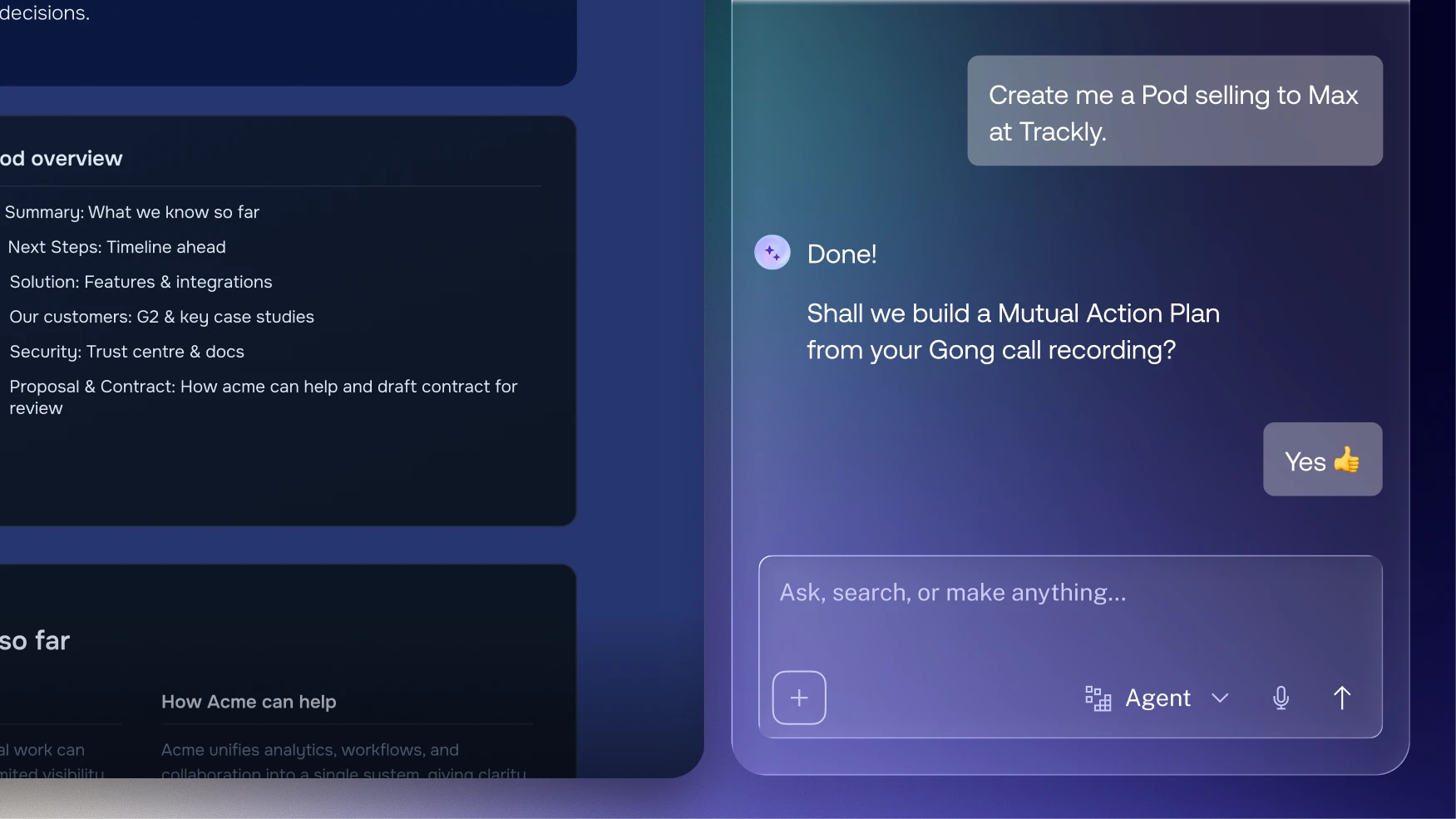
At trumpet, we see this play out through Pods. Interactive Digital Sales Rooms let reps engage only qualified buyers by centralising content, conversations, and next steps in one place. Less noise. More momentum.
.png)
2. Building relationships across the buying group
The average B2B deal now involves 6 to 10 decision makers across multiple teams.
Deep sellers multi-thread relationships instead of pushing everything through one contact.
The difference is stark:
- 46% of deep sellers build relationships with 7 or more stakeholders
- Only 13% of shallow sellers do the same
Asynchronous engagement plays a critical role here. Tailored videos, role specific content, and shared deal spaces allow sellers to engage IT, finance, and leadership without forcing live meetings for every interaction.
3. Finding hidden allies and acting at the right moment
Deep selling is not just about who you speak to. It is about when.
68% of deep sellers say engaging non decision makers helps move deals forward. These hidden champions can shorten sales cycles by 17%.
Timing matters. 64% of buyers say salespeople approach them too early or too late.
Whether it is an intent signal, a Slack alert, or a comment inside a Pod, deep sellers know when to step in and when to step back.
From shallow to deep: building sales teams that thrive
Transforming a team isn’t easy. It takes more than a few workshops or a new CRM field. It requires a fundamental shift in mindset, team structure, and measurement.
Here’s what we’ve seen work:
🔹 Role clarity
Top-performing teams clearly define roles across hybrid reps, inside sales, and digital sales specialists. Each has a part to play in creating a deep, buyer-led experience.
🔹 On-demand training + mentorship
The best teams blend remote learning with real-world mentorship. Shadowing experienced sellers, sharing pods that worked, and building feedback loops make the difference.
🔹 Team selling > solo selling
Deals with multiple reps involved are 258% more likely to close. So reward collaboration. Move away from lone-wolf incentives and celebrate shared success.
🔹 Sales enablement that actually helps
Tools should help sellers, not hinder them. The best tech makes life easier by organising content, automating admin, and surfacing insights. 75% of reps who exceed target use AI and automation tools-not to replace them, but to free them up for deeper work.
🔹 The right metrics
Don’t just measure activity. Measure outcomes. Look at conversion points, engagement levels, and retention metrics. And remember: improving retention by 5% can increase profits by up to 95%.

Final thoughts: depth wins
Shallow selling might feel easier, but it won’t take you far. Deep selling is where real success lives in trusted relationships, well-timed outreach, and conversations that add value from day one. It’s not about being louder. It’s about being smarter, more relevant, and more human.
In a noisy market, deep sellers cut through-and win more. If your team isn’t already there, now’s the time to start.
B2B sales is personal. It’s asynchronous. And it’s deep.
FAQs
What is the difference between deep selling and shallow selling?
Shallow selling relies on mass outreach and surface level personalisation. Deep selling focuses on relevance, timing, and building relationships across the buying group.
Why does shallow selling perform poorly in B2B?
Most buyers are not in market and actively avoid low value sales outreach. Shallow tactics miss timing and fail to address real business problems.
How can sales teams practise deep selling?
By prioritising high intent accounts, multi-threading relationships, using async engagement, and focusing on buyer outcomes rather than activity volume.
Is deep selling slower than shallow selling?
No. While it looks more intentional upfront, deep selling often shortens sales cycles and improves deal quality by engaging the right people at the right time.









![How to Get Started with Buyer Enablement [With Examples]](https://cdn.prod.website-files.com/65cf4fecbed2754c2236665d/65cf4fecbed2754c22366bdb_65a5af83e742f76e34ce06f3_Customer%2520Onboarding%2520_%2520Everything%2520you%2520need%2520(2).png)
.png)


.png)


.png)


.png)

.png)

.png)
.png)





