








- Buyers do not want a Digital Sales Room because it is a Digital Sales Room. They want a simpler, clearer, more relevant way to complete the purchase. A shared workspace succeeds when it delivers that.
- The most consistently valued elements are: one current destination, easier internal sharing, content relevant to each stakeholder, asynchronous access, and clearer next steps through a shared action plan.
- A Digital Sales Room can create friction as easily as it removes it. Generic content, difficult access, lack of updates, and intrusive engagement-based follow-up are the most common reasons buyers disengage.
- According to trumpet platform data, Pods with ten or more unique stakeholders produce a 75 per cent close rate. These are correlational findings. The pattern suggests that broader committee engagement is consistently associated with stronger outcomes.
- Continuity after signature is one of the most practically valuable buyer benefits. A workspace that continues into onboarding removes the restart that typically damages early customer relationships.
Revenue teams often like Digital Sales Rooms because they provide better follow-up, more control over shared content, visibility into which stakeholders are active, and stronger evidence for deal inspection and forecasting. The business case for the seller is clear. The more important question is whether buyers actually want to purchase this way.
Buyers rarely ask for a Digital Sales Room by name. What they ask for is one place for everything, less email, clearer next steps, easier internal sharing, relevant content, access when it suits them, fewer repeated conversations, and better preparation for security, procurement, and implementation. A Digital Sales Room is one way to deliver that experience. Whether it succeeds depends entirely on whether it makes the buying process easier or harder.
Do B2B buyers actually want Digital Sales Rooms?
B2B buyers are likely to use Digital Sales Rooms when they make the buying process easier. Buyers value having one current place for relevant content, recordings, pricing, security information, stakeholder resources, and next steps. They are less likely to engage when the room is generic, overloaded, difficult to access, or designed mainly for the seller.
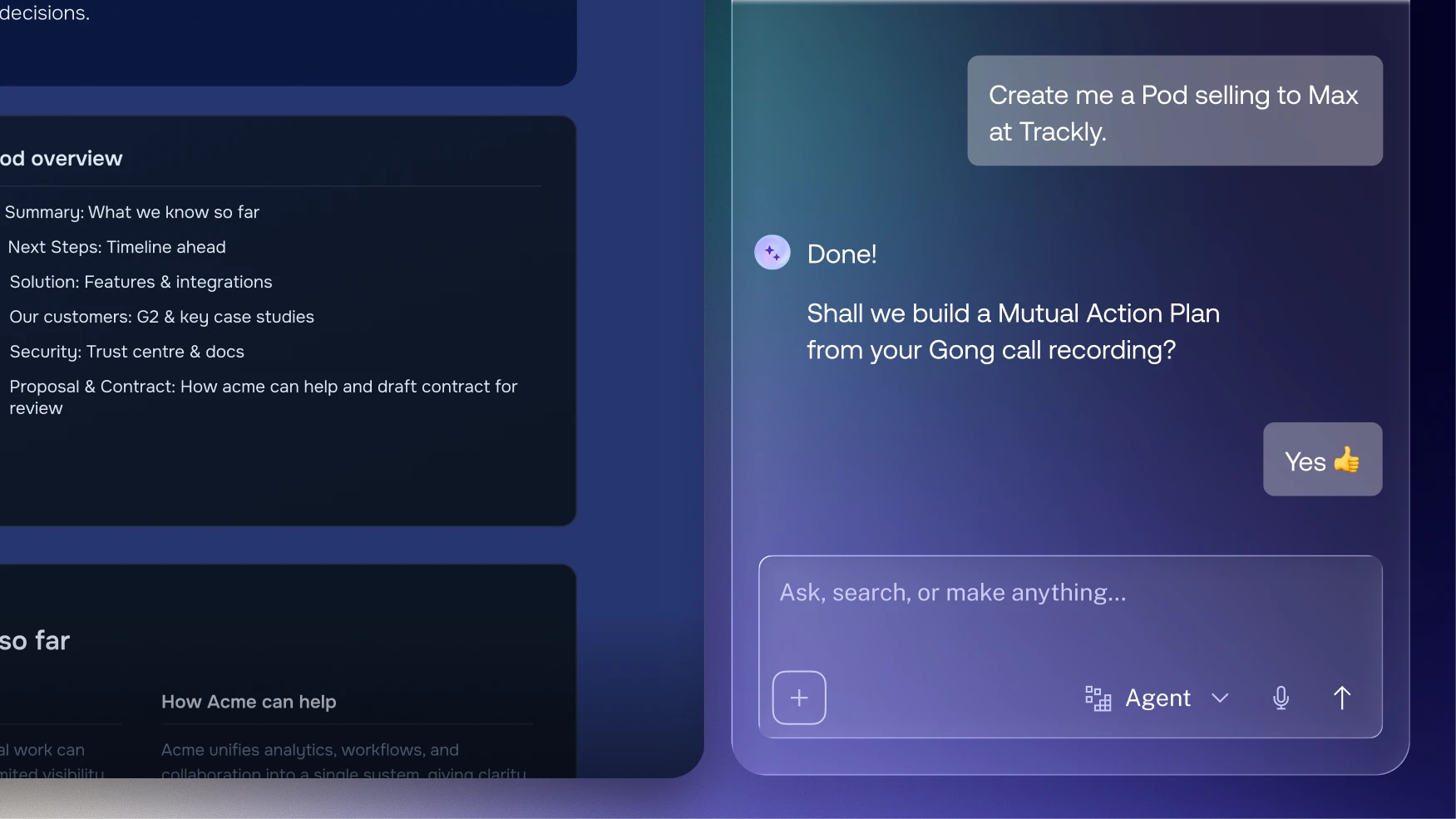
Trumpet allows revenue teams to create personalised Digital Sales Rooms called Pods, giving buyers one shareable workspace for content, collaboration, Mutual Action Plans, commercial information, and onboarding. The key word is shareable: the room creates value when it helps the buying committee progress the decision together, not when it exists as another tool the buyer has to manage.
What is a Digital Sales Room?
A Digital Sales Room is a shared buyer-facing workspace where sellers and buying committees can access relevant content, collaborate on next steps, review commercial information, and progress a B2B purchase. It gives buyers one persistent location containing meeting recordings, discovery summaries, product demonstrations, customer evidence, business cases, pricing, security information, proposals, Mutual Action Plans, electronic signatures, and onboarding resources.
A Digital Sales Room is not a shared folder, a proposal link, a microsite, a virtual data room, or a content analytics dashboard. It gives the buying committee one organised, current environment for the entire evaluation rather than distributing the deal across email, attachments, and disconnected links. A trumpet Pod is the practical example: a personalised, branded workspace that evolves from initial follow-up through evaluation, procurement, signing, onboarding, and customer success.
What do B2B buyers actually want?
Before evaluating whether Digital Sales Rooms deliver buyer value, it is worth being specific about what buyers actually need. Most buyers in complex B2B purchases want relevant information, clear answers, easy internal sharing, confidence in the supplier, low-effort access, transparent next steps, support for different stakeholders, the flexibility to engage asynchronously, fewer repeated conversations, and faster access to security and procurement information.
What they generally do not want is more sales content, more tools, more passwords, more generic decks, more meetings, more follow-up emails, or more administrative work. A Digital Sales Room succeeds when it serves the first list without adding the problems in the second. That distinction is the test every room should pass before it is sent.
Why buyers use Digital Sales Rooms
1. They replace fragmented email threads
A buyer in a complex deal may receive separate emails containing the meeting recording, the sales deck, pricing, case studies, security documentation, technical answers, a proposal, contract information, and a list of next steps. As the deal progresses, information becomes outdated, stakeholders receive different versions, new participants lack context, important resources get buried, and the champion ends up organising the process manually.
A shared workspace centralises these resources in one place. The buyer opens one link, finds the current version of everything relevant to the decision, and does not need to search back through their inbox. Sellers using trumpet regularly report that buyers prefer receiving a relevant Pod over a long follow-up email because it reduces the effort required to find and share what they need.
2. They provide one current source of truth
Complex deals change. Pricing gets updated. Proposed scope shifts. Security information changes. Product recommendations evolve. Implementation plans develop. When this information is spread across email, buyers may not know which version is current or whether what they shared internally last week still reflects the seller's recommendation.
A well-maintained Digital Sales Room provides one continuously updated location the buyer can return to throughout the evaluation. The seller updates the same workspace rather than sending a new email, and the buyer always encounters current information. The critical qualifier here is "well-maintained": an outdated workspace can be more confusing than a well-organised email thread. The technology only works when the behaviour changes.
3. They make internal sharing easier
Most complex B2B purchases involve a buying committee. The original contact typically needs to involve the economic buyer, executive sponsors, end users, finance, procurement, security, IT, and legal at various stages. Forwarding a long email thread is not an effective way to brief each of these stakeholders. It provides no context, no clear structure, and no obvious starting point for someone who was not part of the original conversation.
A buyer-friendly room gives the champion one shareable link containing one coherent narrative, stakeholder-specific resources, a clear business case, and current next steps. A new participant joining the evaluation can understand the problem, the proposed solution, the evidence, and the decision process without requiring the champion to reconstruct everything manually. Sellers using trumpet can also see when new stakeholders enter the workspace, allowing them to respond to the emerging buying committee rather than discovering additional participants late in the process.
4. They give different stakeholders what they need
Different people in the buying committee need fundamentally different information. Executive stakeholders need strategic relevance, business outcomes, risk, return on investment, and time to value. End users need product workflows, ease of use, practical benefits, and adoption support. Security and IT teams need architecture, integrations, compliance, and data handling documentation. Finance and procurement need pricing, commercial structure, terms, and the approval process. Implementation stakeholders need timelines, roles, dependencies, training, and resource requirements.
A room built only for the original champion is a room built for one person. A buyer-friendly Digital Sales Room includes content relevant to each persona in the evaluation, so that when procurement, security, or a new executive joins, they can find what they need without asking the champion to brief them separately. Trumpet Pods support different sections, formats, and stakeholder-specific resources within one shared environment.
5. They allow buyers to evaluate on their own terms
Buyers do not complete their evaluation only during scheduled meetings. They review proposals before work, between meetings, across time zones, during internal discussions, when procurement requests information, and when security asks questions. They rewatch demonstrations to refresh their understanding before presenting internally. They return to pricing to check figures before a business case review. A Digital Sales Room gives buyers access when it suits them rather than requiring them to book another meeting to get an answer.
Asynchronous evaluation should complement human interaction rather than replace it. Some decisions still require direct conversation, technical discussion, negotiation, and relationship development. However, a workspace that makes it easier for buyers to move forward independently between meetings reduces unnecessary delay and gives the champion the infrastructure to work without the seller present.
6. They reflect the buyer's actual situation
Personalisation in a Digital Sales Room is not about adding a company logo or changing the cover page. Meaningful personalisation reflects the buyer's stated challenges, business priorities, discovery findings, agreed use cases, stakeholder needs, known blockers, and decision criteria. When the buyer opens a workspace that opens with their own language and priorities rather than a generic product marketing overview, it signals that the seller paid attention during discovery.
Superficial personalisation, by contrast, can feel worse than a generic experience because it suggests the seller thought about the account just enough to add the company name before sending the same content. Trumpet supports meaningful personalisation through templates, automated branding, dynamic content, personalised video, account-specific sections, and AI-assisted creation that helps sellers personalise at scale without starting from scratch for every deal.
7. They clarify what needs to happen next
Many deals stall not because buyers lose interest but because neither side has a shared view of what needs to happen before a decision can be made. The buyer may not know what information is still required, who owns the next step, when security needs to begin, what procurement expects, which approvals remain, or how implementation will work. The seller may be following up without knowing which of these questions is actually blocking progress.
A Mutual Action Plan embedded in the shared workspace gives the buying committee and the sales team one view of the milestones, owners, due dates, and dependencies required to reach a decision. Both sides can see what has been completed and what remains outstanding. According to trumpet platform data, deals with an active Mutual Action Plan achieve double the win rate of deals managed without one. These are correlational findings and outcomes vary by sales process and deal complexity. The more observable effect is that both the buyer and seller understand what happens next without requiring another meeting to establish it.
8. They continue into implementation
The buying experience should not suddenly restart after the contract is signed. When the customer success team inherits only a CRM summary and a brief handover call, the customer is asked to repeat objectives, use cases, stakeholders, technical requirements, timelines, and commitments they already provided during the sale. The trust built during the evaluation erodes at exactly the moment it should be reinforcing the relationship.
A Digital Sales Room that continues after signature gives the customer one consistent journey rather than moving into a new disconnected process. The same workspace, stakeholders, content, and Mutual Action Plan carry through into onboarding and account management. Trumpet customers who use Pods through onboarding consistently report that this continuity is one of the most practically valuable aspects of the experience, not because the technology is impressive but because it removes friction that was previously assumed to be unavoidable.
Digital Sales Rooms vs email
Email remains useful for direct communication, notifications, and relationship-building. The Digital Sales Room should become the persistent source of truth rather than a complete replacement for email.
When buyers do not want a Digital Sales Room
This section matters for credibility. Buyers may avoid a room or disengage from it when the access process requires unnecessary registration, the content is generic and could have been sent to anyone, too much information is included without clear organisation, navigation is poor, or the room was introduced too late to influence the evaluation. A room that duplicates content already sent by email does not reduce friction. A room the seller does not update becomes a liability rather than an asset.
More subtle problems include sellers using engagement data intrusively. If a buyer opens a proposal and immediately receives a message saying "I saw you just looked at pricing, let's talk," the workspace can start to feel like surveillance rather than service. Buyers should understand what the room contains and how it helps them, not feel that every interaction is being monitored and used as a sales trigger. The room should support the relationship, not substitute for it or undermine it.
How to introduce a Digital Sales Room to the buyer
The most effective way to introduce a shared workspace is to explain its value in buyer terms rather than seller terms. Something like: "I've put everything from our conversation into one shared space so you and the wider team can find the recording, relevant resources, security information, and next steps without searching through email. I'll keep it updated as the process develops." That is useful to the buyer. "This lets me see what you look at" or "Our platform scores your interest" is not useful to the buyer and may actively reduce their willingness to engage.
The buyer should understand the practical benefit: less searching, easier sharing, clearer next steps. Sellers using trumpet consistently report that framing the Pod as a service to the buyer, rather than a sales tool, improves both adoption and the quality of the relationship during the evaluation.
What to do when buyers do not engage with the room
Low engagement with a shared workspace does not automatically mean the deal is at risk. Buyers may be reviewing content offline, discussing the proposal in internal meetings, or simply preferring direct communication. The workspace captures digital engagement, not the full picture of how a buyer is evaluating a purchase.
When engagement is genuinely low, the more useful response is to ask whether the room is working for the buyer rather than sending automated follow-up based on the absence of activity. A direct question such as "Is the shared workspace making the process easier or would a different format be more useful?" is more likely to produce useful information and maintain goodwill than a notification sent because a visit threshold was not met.
How to measure whether buyers actually use the room
Buyer adoption is not the same as room creation. A seller can create a well-designed workspace, and buyers can still ignore it. Measuring actual buyer engagement requires looking beyond whether a room was opened to understand whether it changed the buying process.
Access metrics
Track the percentage of rooms that receive at least one buyer visit, time from room creation to first visit, and the rate of repeat visits. A room that is never opened or opened only once may indicate poor timing, unclear value communication, or access friction.
Stakeholder metrics
Track the number of unique participants, whether new stakeholders join after the champion shares the workspace, senior stakeholder participation, and which buyer personas are absent. A room with only one active contact across a ten-person buying committee is a single-threaded deal regardless of how well the room is built.
Collaboration metrics
Track Mutual Action Plan participation, buyer-owned task completion, comments and questions within the workspace, and document completion including proposals and signing activity. Collaboration metrics reveal whether the buyer sees the workspace as a two-way process rather than a content delivery channel.
Outcome metrics
Track whether deals using actively engaged rooms convert at higher rates, progress through stages faster, and produce cleaner onboarding handoffs than deals where rooms were created but minimally used. Compare similar deals rather than team-wide averages to isolate the effect of room engagement from other variables.
Qualitative evidence
Champion feedback after a deal, buyer comments within the workspace, and customer interviews during onboarding provide signal that quantitative metrics cannot. Questions such as "did the shared workspace make the process easier" and "would you prefer this approach in a future evaluation" reveal whether the experience actually worked for the buyer rather than just generating engagement data the seller could track.
What the evidence suggests
Most of the available evidence for buyer Digital Sales Room adoption is seller-reported or platform-derived rather than collected directly from buyers. Revenue leaders should weigh this accordingly.
Sellers using trumpet frequently report that buyers prefer receiving a relevant Pod to a long email thread, that internal sharing happens more naturally when the champion has one shareable link rather than multiple attachments, and that buying committees with broader stakeholder participation tend to produce cleaner evaluations with fewer late-stage surprises. According to trumpet platform data, Pods involving ten or more unique stakeholders have produced a 75 per cent close rate across deals analysed. These are correlational findings. The pattern suggests that broader committee engagement is associated with stronger outcomes, however it does not tell us whether the room caused the engagement or whether the engagement would have happened anyway in well-run deals.
The most honest summary of the current evidence is this: when Digital Sales Rooms are used well, buyers report that they prefer the experience to email. When they are used poorly, they create an additional tool buyers have to manage. The technology creates buyer value when it genuinely reduces the effort required to evaluate, share, and progress the purchase.
Do Digital Sales Rooms improve win rates?
Digital Sales Rooms may support stronger win rates through several connected mechanisms: wider stakeholder engagement gives more buying committee members a reason to participate actively, better champion enablement reduces the gap between the seller's narrative and what the buyer hears internally, clearer Mutual Action Plans reduce the ambiguity that allows deals to drift, personalised content demonstrates that the seller listened during discovery, and buyer engagement signals help sellers identify risk earlier rather than discovering problems after a close date has passed.
However, Digital Sales Rooms do not overcome weak product fit, poor qualification, uncompetitive pricing, absent budget authority, weak discovery, a stronger competitor, or changing buyer priorities. A well-built room can improve the conditions around a deal without changing its fundamental commercial merits. According to trumpet platform data, deals with an active Mutual Action Plan achieve double the win rate of those managed without one, and Pods involving ten or more unique stakeholders produce a 75 per cent close rate. These are correlational findings and outcomes vary by sales process, deal complexity, and buyer participation. The most accurate summary is that Digital Sales Rooms can improve the conditions surrounding a deal but do not guarantee the outcome.
Do Digital Sales Rooms shorten sales cycles?
Digital Sales Rooms may reduce sales cycle length through specific mechanisms rather than in general. New stakeholders can get up to speed asynchronously without requiring another introductory meeting. Procurement and security have access to documentation before it becomes a blocker. Shared Mutual Action Plans make outstanding actions visible to both sides rather than allowing them to drift unnoticed. Sellers can respond to real buyer activity rather than sending generic follow-up that generates no response. Onboarding preparation can begin before signature because the workspace already contains the implementation context.
These mechanisms address avoidable delay rather than removing the time genuinely required for evaluation, decision-making, and internal approval. A complex enterprise deal with regulatory requirements, procurement review, and multiple sign-offs will still take the time it takes. The room can remove friction from the coordination process without compressing the underlying decision timeline. Results vary considerably by deal type, company size, and how early the workspace is introduced into the evaluation.
What buyers may worry about
Privacy and surveillance
Buyers may be uncomfortable with how engagement data is collected and used. If every visit triggers a sales message, the workspace can start to feel like monitoring rather than service. Sellers should not lead with "I can see what you look at" as a feature benefit, and should use engagement data to inform more relevant follow-up rather than to accelerate pressure.
Security and data handling
The workspace may contain sensitive commercial information including pricing, contract terms, business cases, security documentation, and product roadmaps. Buyers need confidence that this information is handled securely, that access can be revoked, and that data is not used beyond the intended purpose. Clear access controls, named-user restrictions, and data processing transparency help address these concerns.
Access friction
Buyers should not need to create an account, download software, or navigate a lengthy registration process to access the workspace. Access friction is one of the most common reasons buyers disengage before the first visit. Easy, low-friction access is a baseline requirement.
Information overload
A room with too much content, too many sections, or poor navigation can slow the evaluation rather than supporting it. Buyers who open a workspace and encounter an unorganised content library may find it easier to ask the seller directly. Curation matters more than completeness.
Vendor control
The seller controls the environment. Buyers may transfer information into their own internal systems regardless of the shared workspace, which means the room may be only part of how the buying committee manages the evaluation. Sellers should expect this rather than treating the workspace as the complete picture of buyer activity.
What makes a Digital Sales Room enterprise ready for buyers?
Enterprise buyers evaluate the buying experience alongside security and procurement requirements. A workspace that creates a strong buyer experience but fails IT security review or cannot meet data residency requirements does not produce the outcome either side is hoping for.
Enterprise buyer requirements typically include SOC 2 Type II certification, ISO 27001 certification, UK GDPR and EU GDPR compliance, data processing agreements, SSO support, SCIM for automated provisioning and deprovisioning, role-based permissions, domain-restricted buyer access, named-user access controls, encryption in transit and at rest, audit trails, subprocessor transparency, data retention and deletion controls, and access revocation. Enterprise readiness also includes reliable performance, accessible design, brand consistency, CRM integration, support for large buying committees, procurement readiness, and customer lifecycle continuity.
Trumpet supports secure enterprise buyer collaboration through SOC 2 Type II, ISO 27001, SSO, SCIM, domain-level and named-user access controls, team permissions, content governance, Salesforce and HubSpot integrations, and portfolio-level reporting. These capabilities matter not only for internal deployment but for the confidence of enterprise buyers who need assurance about how their information is handled before engaging with the workspace.
What buyer research is still needed?
It is worth being transparent about the limits of the current evidence base. Most available data on buyer Digital Sales Room adoption is seller-reported or derived from platform analytics rather than collected directly from buyers. This is useful signal but not the same as systematic buyer research.
Strengthening the evidence base would require direct buyer interviews with champions and economic buyers, anonymous surveys of procurement and legal stakeholders, user-testing sessions observing how buyers navigate shared workspaces for the first time, analysis of adoption rates by persona and deal type, and structured interviews with buyers who chose not to engage with a workspace to understand why. Useful research questions include: what made the room useful, what information was missing, was access easy, did it help internal sharing, did the buyer understand the next steps, did it reduce email, did it feel personalised, were engagement notifications ever intrusive, and would the buyer prefer this approach in a future evaluation.
The honest position is that Digital Sales Rooms appear to work well for buyers in complex evaluations when they are well-built, genuinely personalised, and introduced at the right moment. The evidence for when and why buyers disengage is less developed, and that gap represents an important opportunity for the category to build more buyer-centric research rather than relying primarily on seller-reported outcomes.
What to look for in buyer-friendly Digital Sales Room software
When evaluating Digital Sales Room platforms from a buyer experience perspective, the key questions are: how easy is it for buyers to access the workspace without friction, can different stakeholders find content relevant to their role, how simple is it for the champion to share the workspace internally, can the room be updated without sending a new link, does the workspace support asynchronous evaluation, does it allow both sides to manage shared next steps, and does it continue after signature.
Security and governance are equally important evaluation criteria. Review whether the platform supports easy buyer access without unnecessary registration, named-user and domain-restricted sharing, permission controls that allow different sections to have different access levels, audit trails, access revocation, and clear data processing terms. Enterprise buyers should also evaluate SOC 2 Type II, ISO 27001, GDPR compliance, SSO, and subprocessor transparency.
A buyer-friendly platform should support easy access without unnecessary registration friction, mobile responsiveness, genuine personalisation, clear navigation, stakeholder-specific content, easy internal sharing, embedded videos and demonstrations, Mutual Action Plans, proposals, electronic signatures, secure permissions, and continuity into onboarding.
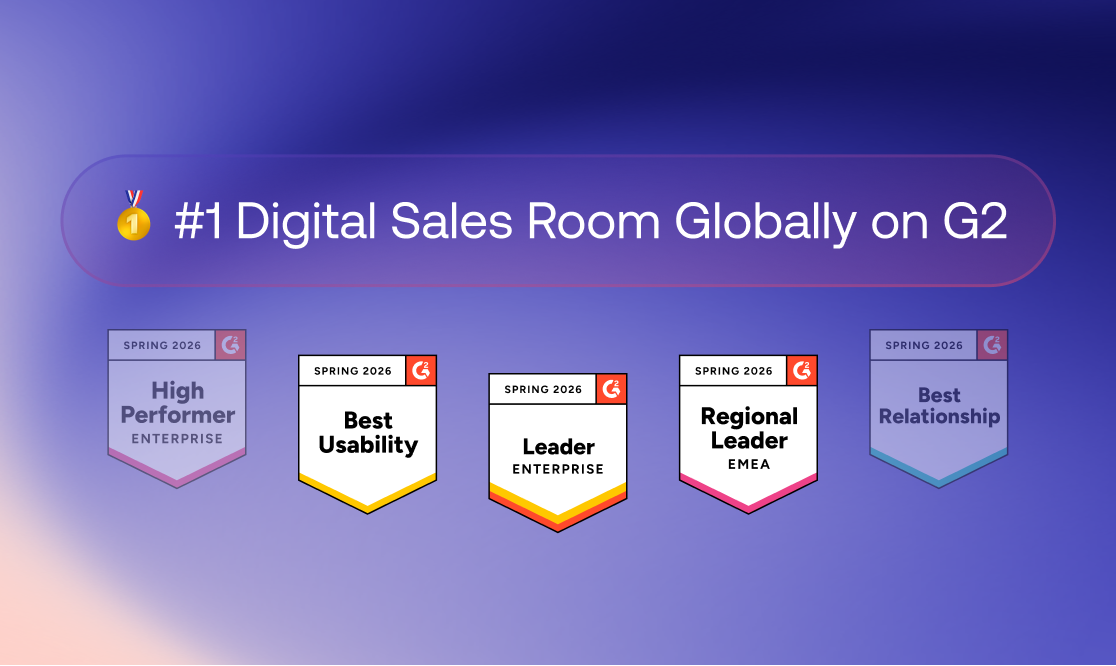
Trumpet covers these capabilities through personalised Pods, reusable templates, automated branding, content management, embedded video and micro-demos, stakeholder engagement visibility, internal sharing tracking, Mutual Action Plans, proposals and quotes, e-signature, secure access controls, Nerve Centre reporting, Salesforce and HubSpot integrations, and customer onboarding continuity. Trumpet is ranked number one for Digital Sales Rooms globally on G2 across more than 30 enterprise, mid-market, and regional reports. It is designed to make complex purchasing easier for both the buying committee and the revenue team.
Final thoughts
Buyers do not care whether the seller calls the experience a Digital Sales Room. They care whether it helps them buy. A workspace that adds another login, repeats generic content, or requires the buyer to do more work than email would is not an improvement. A workspace that centralises the deal, makes internal sharing straightforward, gives different stakeholders what they need, and continues into implementation removes genuine friction from the buying process.
The strongest rooms reduce email fragmentation, centralise current information, make internal sharing easier, support different stakeholders, allow asynchronous evaluation, reflect the buyer's real priorities, clarify responsibilities and next steps, and continue into onboarding. For revenue teams putting this model into practice, trumpet provides personalised Digital Sales Rooms where buyers can access relevant content, involve stakeholders, collaborate on next steps, review commercial information, and continue into onboarding through one shared workspace.
FAQs
Do B2B buyers want Digital Sales Rooms?
Buyers are likely to use Digital Sales Rooms when they reduce buying effort by centralising relevant information, supporting internal sharing, and clarifying the path to a decision. They disengage when the room is generic, overloaded, or adds more work than it removes.
What do buyers value most about Digital Sales Rooms?
Buyers commonly value easy access, one current source of truth, relevant content for different stakeholders, easy internal sharing, asynchronous evaluation, and clear visibility into next steps and responsibilities.
Are Digital Sales Rooms better than email?
They can be better for managing complex deals because they centralise information and remain current as the deal evolves. Email is still useful for direct communication, notifications, and relationship-building. The room should become the persistent source of truth rather than replacing email entirely.
Why do buyers share Digital Sales Rooms internally?
Buyers share them to involve additional stakeholders, circulate the business case, provide security or procurement information, and help colleagues understand the proposed solution without requiring the champion to reconstruct the full context from email threads.
When do Digital Sales Rooms create friction?
They create friction when access requires unnecessary registration, content is generic, the room is overloaded, information is outdated, navigation is poor, the room is introduced too late, or the seller uses engagement data intrusively.
How should a Digital Sales Room be introduced to the buyer?
Frame it as a service: one place for everything from our conversation so you and the wider team can find resources, recordings, and next steps without searching through email. Avoid mentioning engagement tracking as a selling point.
How does trumpet support the buyer experience?
Trumpet provides personalised Pods containing relevant content, stakeholder resources, recordings, videos, Mutual Action Plans, proposals, commercial information, and onboarding resources. The same Pod can continue after signature into onboarding, customer success, and account management.









![How to Get Started with Buyer Enablement [With Examples]](https://cdn.prod.website-files.com/65cf4fecbed2754c2236665d/65cf4fecbed2754c22366bdb_65a5af83e742f76e34ce06f3_Customer%2520Onboarding%2520_%2520Everything%2520you%2520need%2520(2).png)
.png)


.png)


.png)


.png)

.png)

.png)
.png)





