








- Buyer enablement is the strategy of helping buying committees evaluate and progress a purchase. A Digital Sales Room is the shared workspace through which that strategy is delivered.
- The strongest commercial impact comes from the combination: a workspace that is personalised, introduced early, built for the full buying committee, maintained throughout the deal, and connected to a shared action plan.
- According to trumpet platform data, deals with an active Mutual Action Plan achieve double the win rate of those without, and Pods involving ten or more unique stakeholders produce a 75 per cent close rate. These are correlational findings and vary by sales process and segment.
- Digital Sales Rooms do not automatically enable buyers. A generic, overloaded room creates friction rather than removing it. The workspace creates value when it changes buyer behaviour, not when it exists.
- The most reliable evidence comes from comparing similar deals with and without active Digital Sales Room use within the same team and sales process rather than aggregate platform statistics.
Buyer enablement and Digital Sales Rooms promise some of the outcomes revenue teams care about most: higher win rates, faster sales cycles, better forecasting, more productive sellers, and stronger buyer experiences. Sales technology platforms routinely publish figures suggesting dramatic improvements in close rates or rep productivity. Some of those claims are well evidenced. Others are difficult to verify.
Every sales technology platform promises higher win rates and faster cycles. Buyers and revenue leaders have become understandably sceptical of those claims. The more useful question is not whether buyer enablement and Digital Sales Rooms produce results in theory, but what evidence revenue leaders should actually trust, and what conditions determine whether that evidence applies to their sales process.
This guide examines the evidence across three categories: how the buying and selling process changes, what sellers and revenue leaders report after adoption, and what buyers do differently when the experience improves. These three forms of evidence, considered together, give a more complete picture than any single metric or testimonial.
Do buyer enablement and Digital Sales Rooms work?
Buyer enablement and Digital Sales Rooms can improve B2B sales by reducing buying friction, supporting internal champions, increasing stakeholder participation, and making next steps clearer. Reported benefits include stronger follow-up, greater stakeholder visibility, shorter sales cycles, and improved win rates, although results depend on deal quality, seller adoption, content relevance, buyer participation, and the wider sales process.
Trumpet customers use personalised Digital Sales Rooms called Pods to deliver buyer enablement by centralising content, supporting internal champions, identifying stakeholders, tracking buyer engagement, managing Mutual Action Plans, and continuing the experience through onboarding and account management.
How this guide evaluates the evidence
Rather than accepting a single claim at face value, revenue leaders should ask for three types of evidence. Process evidence covers whether the buying and selling process actually changes: is follow-up more structured, are more stakeholders visible, are next steps clearer. Behavioural evidence covers what sellers and buyers do differently: how they use shared workspaces, how champions engage, and how buying committee participation changes. Commercial evidence covers whether outcomes improve: win rates, sales-cycle length, forecast accuracy, and retention. Commercial evidence is the most compelling but also the hardest to attribute to a single cause.
What is buyer enablement?
Buyer enablement is the strategy of helping a buying committee evaluate, share, and progress a purchase decision. Rather than focusing solely on what the seller can do better, it focuses on what the buyer needs to do their job: access relevant information, understand the business case, involve the right colleagues, navigate internal approval processes, and feel confident in the decision.
Effective buyer enablement helps the buying committee understand the problem, evaluate the solution, find relevant information, build internal consensus, navigate the decision process, complete agreed actions, and prepare for implementation. Most sales processes are designed around what the seller does. Buyer enablement redesigns the process around what the buyer needs to do between seller meetings.
What is a Digital Sales Room?
A Digital Sales Room is a shared buyer-facing workspace where sellers and buying committees collaborate throughout a complex B2B deal. It gives buyers one persistent location for personalised content, meeting recordings, product demonstrations, customer evidence, business cases, stakeholder resources, security information, pricing, proposals, Mutual Action Plans, electronic signatures, and onboarding information.
The CRM is the seller's internal system of record. The Digital Sales Room is the shared external environment where the buyer journey actually progresses. A trumpet Pod is the practical example: a personalised, branded workspace that evolves alongside the deal from first meeting through onboarding and account management.
How buyer enablement and Digital Sales Rooms work together
Buyer enablement describes what the revenue team is trying to achieve. A Digital Sales Room provides the shared buyer-facing workspace through which the strategy can be delivered, measured, and continued throughout the revenue journey. One is the goal. The other is the environment where that goal is pursued.
Teams can practise buyer enablement without Digital Sales Room software, however the process may be harder to centralise, personalise, maintain at scale, and measure. Similarly, a Digital Sales Room does not automatically enable buyers. A generic room containing excessive or poorly organised content may create more friction than it removes. The technology is only valuable when it changes how buyers experience the evaluation process.
Why the B2B buying experience often breaks down
The buying experience typically breaks down not during seller-led meetings but between them. After a strong discovery call or demo, the champion receives a follow-up email with five attachments, several links, a proposal, and a list of suggested next steps. The email arrives while the champion is in the middle of six other priorities. By the time they return to it, the information has fragmented across threads, a new stakeholder has questions the email cannot answer, and the momentum from the original meeting has faded.
New stakeholders join late and require the champion to brief them from scratch. Procurement asks for security documentation that was sent two months earlier. Finance needs a revised business case. Legal has questions about terms. The seller has been following up for three weeks without knowing which of these conversations is actually blocking the deal. None of this is unusual. It is the standard condition of a complex B2B sale, and it is the problem that buyer enablement and Digital Sales Rooms are designed to address.
Why buyers value shared workspaces
Most of the evidence for Digital Sales Rooms comes from sellers and revenue leaders. The buyer perspective is worth examining separately, because a workspace that sellers find useful but buyers find impersonal or difficult to navigate does not produce the outcomes either side is hoping for.
Buyers in complex B2B purchases typically want three things: to find the right information quickly without having to ask the seller to resend it, to share relevant resources with colleagues without forwarding long email threads, and to understand what needs to happen next without ambiguity. Email threads fail all three. A well-constructed Digital Sales Room can address all three, provided the content is relevant, the structure is clear, and the workspace reflects the buyer's specific situation rather than a generic product catalogue.
The buyers who engage most consistently with shared workspaces tend to report that the experience feels more organised and less like being sold to. When the workspace opens with their stated challenges and the outcomes they described in discovery rather than with a company overview, it signals that the seller listened. That signal, while intangible, appears consistently in the feedback trumpet collects from accounts where champions actively share Pods internally.
How buyer enablement and Digital Sales Rooms improve B2B sales
1. They improve post-meeting follow-up
Follow-up is one of the most consistent pain points in B2B sales. After a productive meeting, the seller sends content that the buyer receives through an email that arrives alongside dozens of others. There is no context, no personalisation to the specific conversation, and no simple way for the buyer to share what they received with colleagues. The quality of the meeting is immediately undermined by the quality of the follow-up.
A shared workspace changes this. The seller creates one branded, personalised environment after discovery and populates it with content that reflects the conversation. The buyer opens one link rather than sorting through attachments. Teams using shared workspaces consistently report that follow-up becomes faster, more personalised, and more likely to receive a response than a long email. The buyer has a reason to return to the workspace rather than losing the thread in their inbox.
2. They help champions sell internally
Most B2B purchasing decisions are made in conversations where the seller is not present. The champion explains the solution to their leadership, answers procurement's questions, navigates legal's concerns, and builds the business case for a buying committee that the seller may never meet. The quality of the champion's internal presentation determines a significant part of the deal outcome, and most sellers do very little to support it.
A Digital Sales Room gives champions a structured, shareable environment containing the business case, customer evidence, pricing, security documentation, implementation information, and agreed next steps in one current link. Rather than asking the champion to reconstruct the full narrative from an email thread, the seller provides a workspace the champion can share directly. Trumpet customers report that this is one of the most practically valuable outcomes: sellers stop depending on champions to improvise and start giving them infrastructure to work with.
3. They reveal more of the buying committee
One of the most persistent problems in enterprise B2B sales is that the seller communicates with one or two contacts while the decision involves six to ten stakeholders across procurement, finance, IT, security, legal, and executive leadership. The seller knows very little about the wider buying committee until new participants surface during procurement or raise unexpected objections late in the process.
When a champion shares a Digital Sales Room internally, sellers can see which new contacts enter the workspace, what they view, and when their activity changes. Trumpet's Stakeholder Scout surfaces new participants across the buying committee, giving sellers earlier visibility into who is evaluating the purchase and what they are focusing on. According to trumpet platform data, Pods involving ten or more unique stakeholders have produced a 75 per cent close rate across deals analysed. These are correlational findings and outcomes vary by sales process, deal complexity, and buyer participation. The pattern does suggest, however, that broader stakeholder engagement is consistently associated with stronger deal outcomes.
4. They improve personalisation at scale
Personalisation in sales is frequently discussed but rarely delivered consistently. Sellers who are managing 30 active opportunities cannot build bespoke experiences for every prospect. Generic follow-up, however, undermines the value of earlier personalised conversations. The buyer who received a carefully researched outreach message now receives the same deck as everyone else.
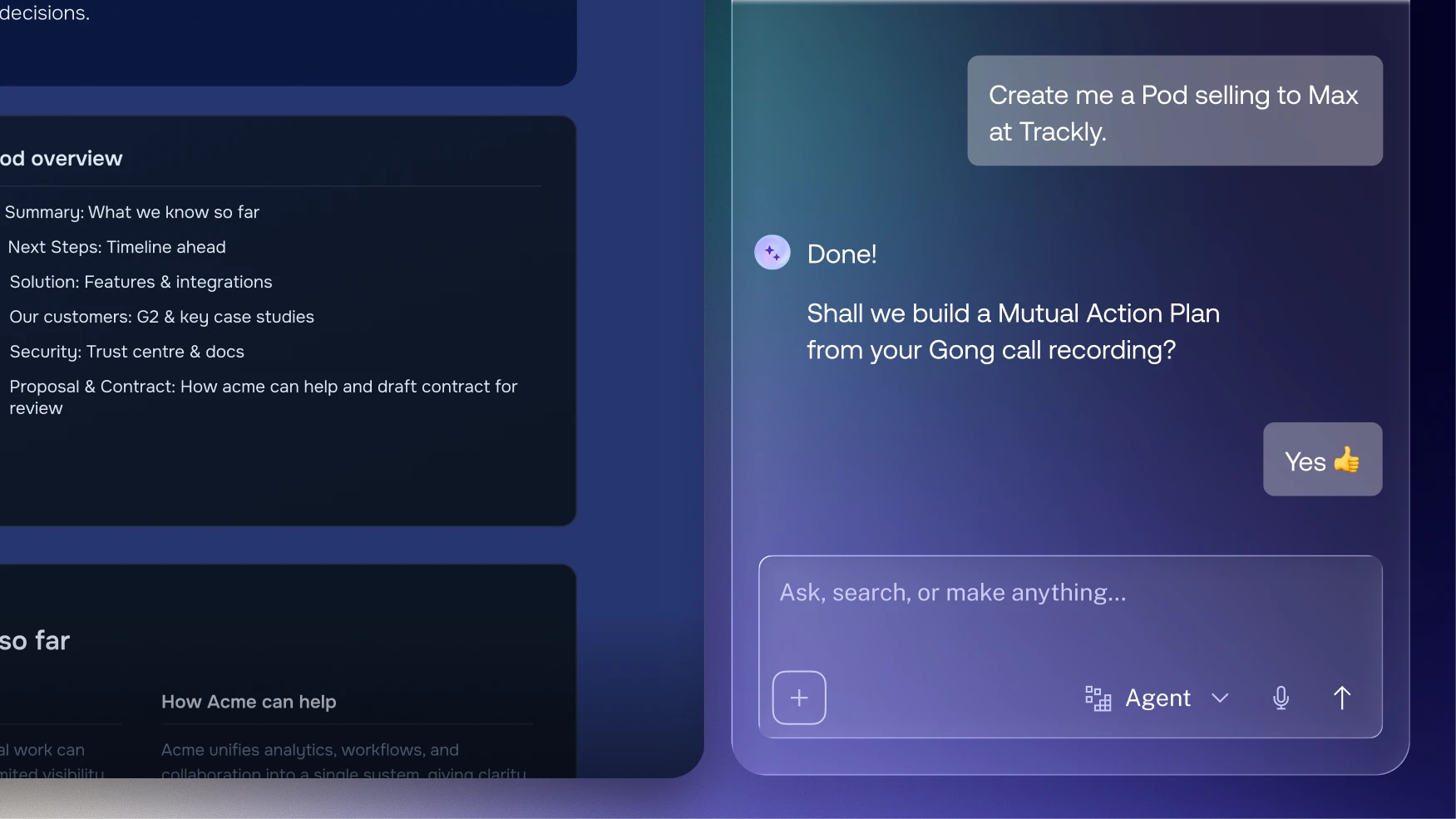
Digital Sales Rooms change this by making personalisation faster and more scalable. Templates allow sellers to create a consistent structure while personalising the specific content, messaging, and context for each account. A seller managing 40 active opportunities can open a template, add the account name, swap in the relevant case studies, update the discovery summary, and share a workspace that feels purpose-built for that buyer in under ten minutes. AI-assisted creation in trumpet reduces this further by generating an initial Pod from publicly available account context. The buyer receives an experience that reflects their specific challenges and priorities rather than a content library that could have been sent to anyone.
5. They create clearer shared next steps
One of the most consistent reasons deals stall is that neither side has a shared view of what needs to happen before a decision can be made. The seller's CRM shows the deal at a particular stage. The buyer is unclear about what the process requires from them. Procurement has questions nobody anticipated. Legal has a timeline no one discussed. The close date moves because the shared plan never existed.
A Mutual Action Plan embedded in the shared workspace gives buyers and sellers one view of the milestones, responsibilities, due dates, and dependencies required to reach a decision. Both sides can see what has been completed and what remains outstanding. According to trumpet platform data, deals with an active Mutual Action Plan achieve double the win rate of deals managed without one. These are correlational findings — outcomes vary by deal quality, buyer participation, and sales process — however the pattern across a substantial number of deals is consistent enough to represent a meaningful signal.
6. They improve deal visibility and forecasting
Sales forecasting is typically built on CRM stages, rep notes, and seller confidence. These inputs are important but incomplete. A deal marked as Commit may rest on one responsive champion while the wider buying committee has never been observed. The CRM records what the seller believes is happening rather than what the buying committee is actually doing.
Buyer engagement data from a Digital Sales Room adds a layer of observable evidence: which stakeholders are active, what content they are reviewing, whether the proposal has been revisited, whether the Mutual Action Plan is progressing, and whether momentum is increasing or declining. Trumpet's Nerve Centre gives revenue leaders a portfolio view of buyer activity across all active Pods. Managers who can see that a deal marked as Commit has only one active stakeholder, no proposal revisit, and no MAP progress have specific questions to raise rather than accepting the forecast at face value. Engagement data does not predict outcomes with certainty, however it provides stronger evidence than rep sentiment alone.
7. They standardise seller execution
In growing sales organisations, execution quality varies significantly between individual sellers. Some build strong, personalised follow-up that keeps deals moving. Others send generic decks and rely on the buyer to do the coordination work. The difference in outcome is often less about product knowledge or discovery skill and more about the quality of what the buyer receives after the meeting.
Digital Sales Rooms with governed templates and centralised content mean that every rep starts from a strong foundation. The approved messaging is already in the template. The best case studies are already loaded. The Mutual Action Plan structure is already defined. Sellers can personalise within that framework without building from scratch. Consider what this means in practice for a new account executive in month two. Rather than watching how a senior colleague follows up and trying to replicate it manually, they open a template that embeds the senior colleague's process directly. The workspace becomes the carrier of institutional knowledge rather than one person. Teams using this approach report that the time new sellers need to reach full productivity shortens because the process is in the tool rather than in individual habits.
8. They improve the sales-to-customer-success handoff
Most onboarding problems begin at the handoff. The customer success team inherits a CRM record and a brief call rather than the full context of the deal. The customer is then asked to repeat objectives, use cases, and technical requirements they already explained during the sale. Trust built during the evaluation process erodes immediately in the first implementation meeting.
When a Digital Sales Room continues after signature, customer success inherits the full history: stakeholders, objectives, agreed outcomes, content, commercial context, and the implementation plan. The customer continues working in an environment they already know rather than beginning a new relationship with a different team. The practical difference is significant. Rather than spending the first two weeks of onboarding reconstructing what was promised and who was involved, the CS team can open the Pod and see everything. Rather than the customer repeating their objectives to someone who was not part of the sale, those objectives are already documented and visible. Trumpet customers who use Pods through onboarding consistently identify this continuity as one of the most practically valuable outcomes, not because the technology is impressive but because it removes a friction that was always assumed to be unavoidable.
What trumpet customers commonly report
Rather than citing isolated testimonials, the following summarises the patterns that appear consistently across trumpet customer feedback. These are recurring themes rather than universal outcomes, and individual results vary by deal type, sales process, and adoption quality.
Easier and more targeted follow-up.
The most commonly reported change is that follow-up becomes faster to create and more likely to generate a response. Sellers describe moving from long emails with multiple attachments to a single branded link that reflects the specific conversation. Buyers report finding the experience clearer and easier to share with colleagues.
More stakeholders becoming visible.
Revenue leaders regularly report that they discover the scope of the buying committee later than they should in deals without shared workspaces. With a Pod, when a champion shares the workspace internally, new participants become visible earlier, giving sellers time to prepare rather than reacting to surprises during procurement.
Stronger forecasting conversations.
Managers using Nerve Centre report that pipeline reviews become more specific. Rather than asking whether a deal is healthy and accepting the rep's judgement, managers can ask about specific stakeholder activity, proposal engagement, and MAP progress. The questions become evidence-based rather than conversational.
Faster onboarding and smoother CS handoff.
Customer success teams inheriting a full Pod rather than a CRM summary report significantly less time spent in early onboarding reconstructing context. Customers report that the transition from sales to implementation feels more connected when the workspace continues rather than restarting.
More consistent seller execution.
Enablement leaders report that the quality gap between top-performing sellers and average sellers narrows when templates and centralised content are embedded in the workspace. New sellers reach productive follow-up quality faster because the process is in the tool rather than in individual habits.
What makes a Digital Sales Room effective?
A Digital Sales Room does not produce commercial results simply by existing. Several factors consistently distinguish effective implementations from ones that create minimal change.
It is introduced early
A room created only at the proposal stage cannot influence the earlier parts of the buyer journey. The workspace should be introduced after discovery, once the seller understands the buyer's objectives and can personalise the content meaningfully. Early introduction allows the relationship to develop inside the workspace before commercial pressure arrives.
It is genuinely personalised
A room containing generic marketing materials does not demonstrate understanding of the specific account. Effective rooms reflect the buyer's stated challenges, desired outcomes, and relevant use cases. The buyer should see their own language and context in the workspace rather than standard product marketing.
It is built for the whole buying committee
Most rooms are built for the champion. Effective rooms include content relevant to procurement, security, finance, legal, and executive sponsors, so new stakeholders who enter the workspace find what they need without requiring the champion to brief them separately.
It is kept current
Outdated proposals, superseded pricing, and broken links reduce trust and encourage buyers to return to email. The workspace should be updated after every meaningful interaction so the buyer always encounters current information.
It includes a shared action plan
The Mutual Action Plan is often the most practically impactful element of a Digital Sales Room. When both sides can see the milestones, owners, and deadlines required to reach a decision, coordination improves and the seller has specific evidence to use in forecast conversations and coaching sessions.
How to evaluate evidence about buyer enablement and Digital Sales Rooms
The sales technology market produces a large volume of claims about win-rate improvements, cycle-length reductions, and productivity gains. Revenue leaders should distinguish between different types of evidence before deciding how much weight to place on any single claim.
The most useful questions when evaluating any claim: is this a correlation or a controlled experiment, what was the sample size and timeframe, does the customer profile match ours, what else changed in the sales process during the period studied, and which factors are described as driving the result? Results that attribute improvements solely to the technology without acknowledging seller adoption, deal quality, or market conditions warrant additional scrutiny.
How to measure buyer enablement and Digital Sales Room results
Seller adoption metrics include the percentage of eligible deals using a room, time to create a personalised room, and template adoption. Buyer engagement metrics include unique stakeholders, repeat visits, internal sharing, content engagement, Mutual Action Plan participation, and senior buyer activity. Sales performance metrics include win rate, sales-cycle length, stage conversion, forecast accuracy, and deal slippage. Qualitative indicators include the quality of pipeline review conversations when buyer signal data is available, the consistency of seller execution across the team, and the perceived strength of the sales-to-CS handoff.
The most useful comparison is between similar deals with and without active Digital Sales Rooms rather than comparing overall team performance before and after adoption. Results from deals where sellers created a room, personalised it, and maintained it throughout the sale tend to differ from results where rooms were created but minimally used. The technology only creates value when the underlying behaviour changes.
Final thoughts
Buyer enablement and Digital Sales Rooms should be evaluated by the friction they remove and the behaviours they change. Buyer enablement provides the strategy for making the buying process work better for the buying committee. The Digital Sales Room provides the shared environment where that strategy can operate across live deals.
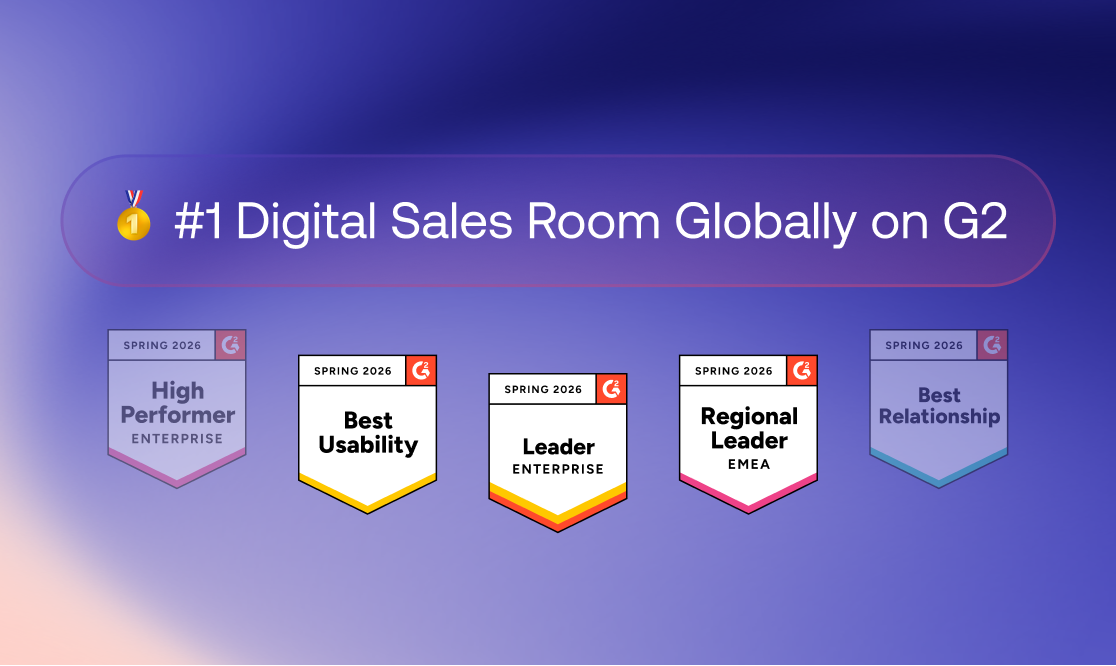
The strongest evidence is not a badge or an isolated testimonial. It is a consistent pattern showing that sellers execute follow-up more effectively, buyers find and share information more easily, more stakeholders become visible, shared next steps become clearer, managers gain stronger deal evidence, and the customer journey continues after signature.
Technology creates commercial value when it changes buyer behaviour and seller execution, not simply because it has been implemented.
For revenue teams exploring this model, trumpet provides personalised Digital Sales Rooms that turn buyer enablement into a practical revenue workflow connecting content, stakeholders, Mutual Action Plans, engagement insights, commercial activity, and onboarding.
FAQs
Do buyer enablement and Digital Sales Rooms work?
They can improve B2B sales by reducing buying friction, supporting internal champions, increasing stakeholder participation, and making next steps clearer. Results depend on seller adoption, content relevance, deal quality, and how early the workspace is introduced.
What is the relationship between buyer enablement and Digital Sales Rooms?
Buyer enablement is the strategy of helping buying committees make confident purchasing decisions. A Digital Sales Room is the shared workspace used to deliver that strategy in live deals.
Can buyer enablement work without a Digital Sales Room?
Yes, but it may be harder to centralise information, maintain personalisation, support multiple stakeholders, track engagement, and create a consistent process at scale.
Does creating a Digital Sales Room automatically enable the buyer?
No. The room must contain relevant, personalised content, clear guidance, stakeholder-specific information, and useful shared next steps. A generic or overloaded room may create additional friction.
Do Digital Sales Rooms improve win rates?
They can support stronger win rates by improving stakeholder engagement, champion enablement, collaboration, and deal execution. According to trumpet platform data, deals with an active Mutual Action Plan achieve double the win rate of those without one. These are correlational findings and results vary by sales process and segment.
Can Digital Sales Rooms shorten sales cycles?
They may reduce delays by centralising information, clarifying actions, involving stakeholders earlier, and supporting procurement. Results vary by sales process and deal complexity.
How should buyer enablement and Digital Sales Rooms be measured?
Measure seller adoption, buyer engagement, stakeholder coverage, stage conversion, win rate, sales-cycle length, forecasting quality, handoff outcomes, and onboarding continuity. Compare similar deals with and without active room use for the most reliable signal.









![How to Get Started with Buyer Enablement [With Examples]](https://cdn.prod.website-files.com/65cf4fecbed2754c2236665d/65cf4fecbed2754c22366bdb_65a5af83e742f76e34ce06f3_Customer%2520Onboarding%2520_%2520Everything%2520you%2520need%2520(2).png)
.png)


.png)


.png)


.png)

.png)

.png)
.png)





