

- trumpet Pods can be used beyond the sales process to support onboarding and ongoing customer collaboration.
- trumpet Copilot helps Customer Success teams create and maintain customer-facing content using natural-language prompts.
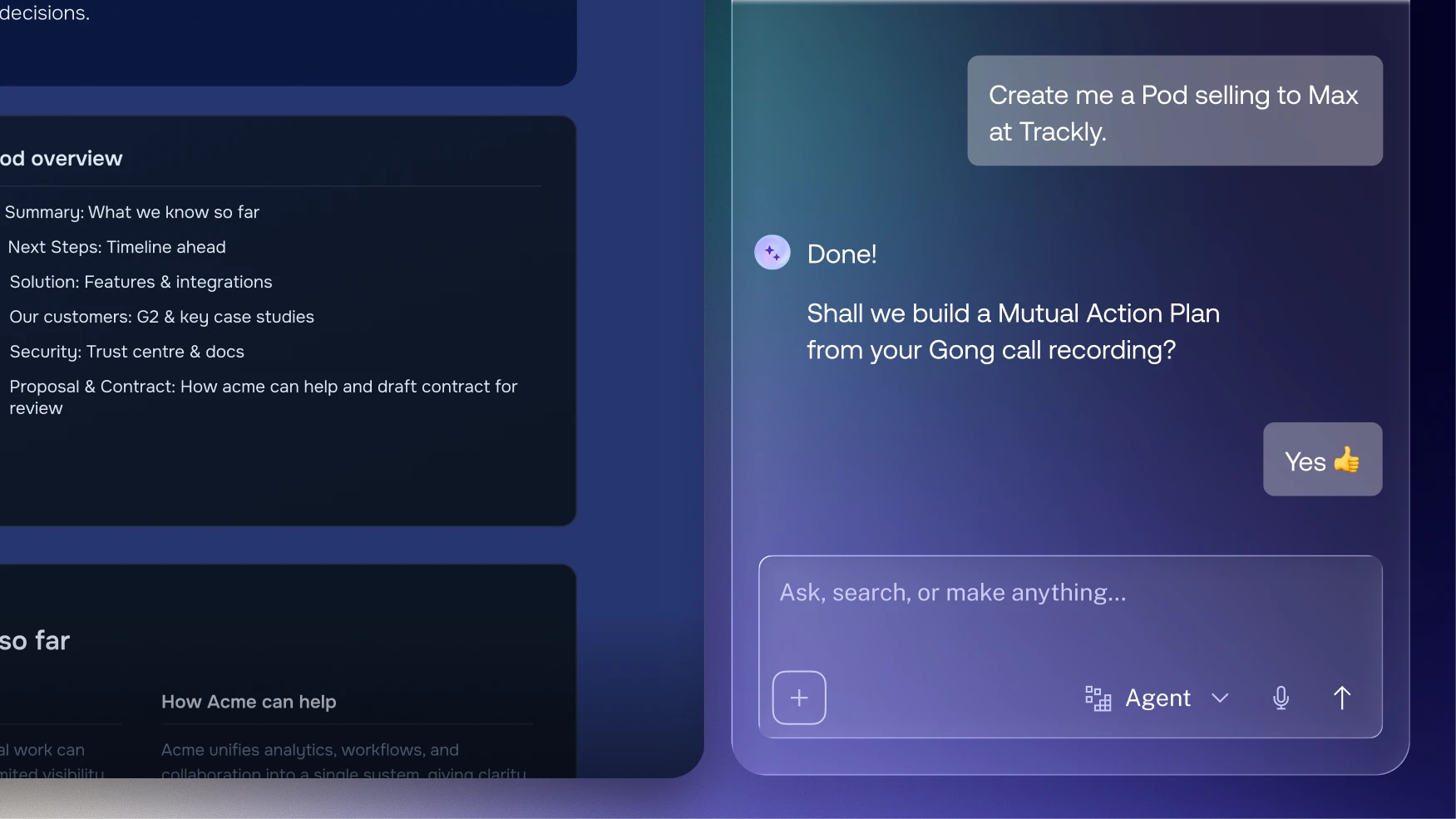
- Maddi uses call recordings as context to turn onboarding conversations into structured Mutual Action Plans.
- Copilot can identify milestones, agreed next steps, owners and dates from the call and use them to build the MAP.
- The CSM can review the AI-generated plan before sharing it with the customer.
- The result is less manual work for Customer Success and a clearer, shared onboarding journey for the customer.
Customer onboarding starts with a lot of information.
Kick-off calls, agreed milestones, responsibilities, deadlines, next steps. And once the call ends, someone has to turn all of that into a clear plan the customer can actually follow.
In Part 1 of Magic Moments with Maddi, Maddi from trumpet's Customer Success team shows how she uses trumpet Copilot to take a customer call recording and turn it into a structured onboarding plan directly inside the customer's Pod.
What was previously a manual task starts with one simple prompt.
Watch the video here:
What is trumpet?
trumpet is a buyer enablement platform that gives revenue teams one place to collaborate with prospects and customers throughout their journey.
Teams use trumpet to create personalised Digital Sales Rooms, or Pods as we call them, bringing together content, next steps, Mutual Action Plans, resources, conversations and more in one shared space.
And those Pods don't have to stop being useful once a deal closes.
Customer Success teams can continue using them for onboarding, adoption, QBRs, renewals and ongoing customer collaboration, giving customers a familiar place to return to throughout the relationship.
What is trumpet Copilot?
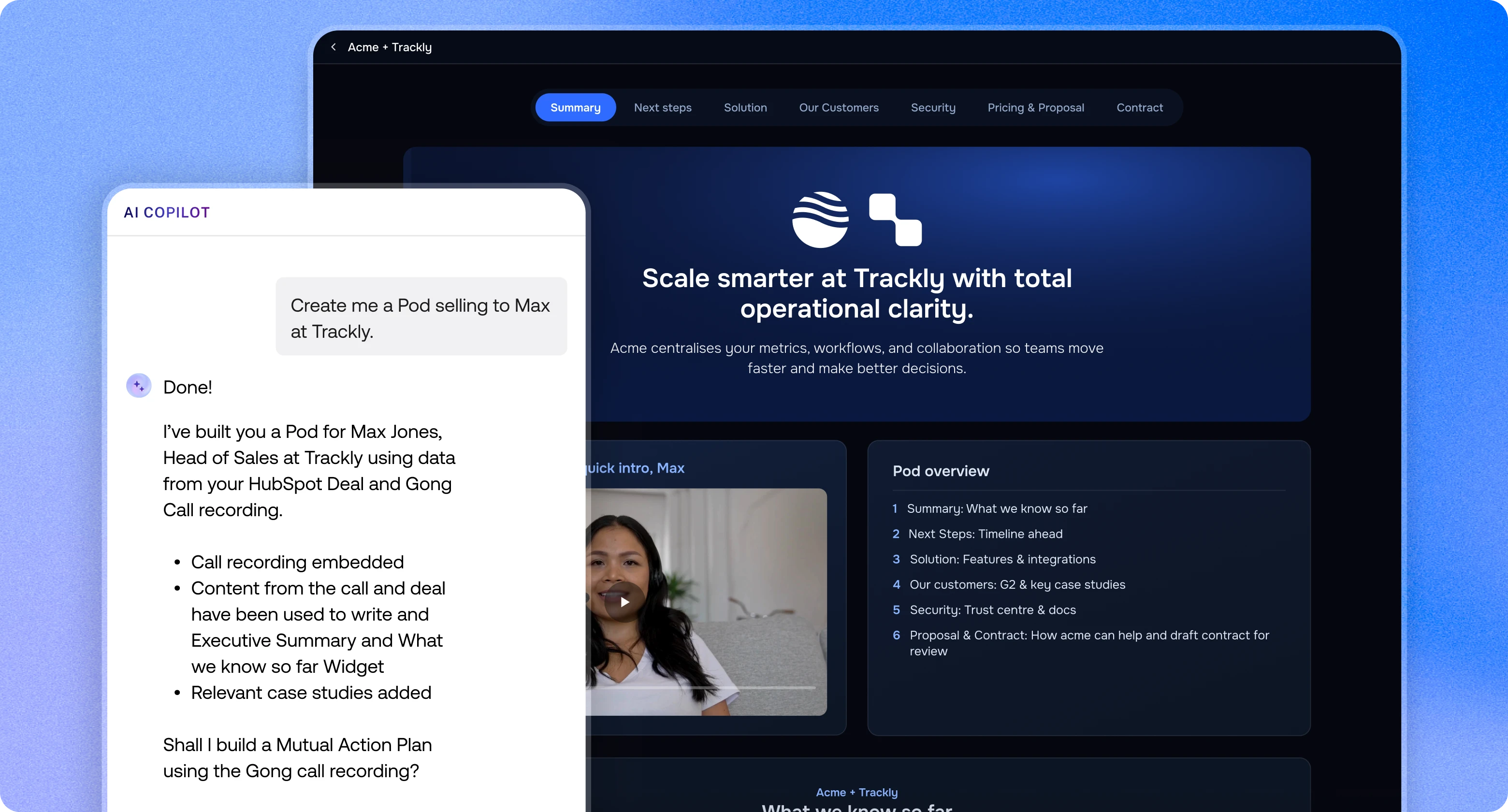
trumpet Copilot is an AI assistant that helps revenue teams build, personalise and maintain their Pods using natural language.
Rather than manually creating every page, adding every piece of content or transferring information from one place to another, teams can tell Copilot what they need.
Copilot can work with context including call recordings and transcripts, uploaded files and content from trumpet's CMS. It then uses specialised AI agents to understand the task and help build the right content directly inside the Pod.
For Customer Success teams, that opens up plenty of ways to remove repetitive work throughout the customer journey.
Maddi starts right at the beginning: onboarding.
Turning a customer call into an onboarding plan
Once an onboarding call is finished, Maddi needs to turn everything discussed into something actionable.
What are the key milestones? What did the customer agree to? What does trumpet need to do? Who owns each task? And when does it need to happen?
Instead of going back through the call and manually building the plan, Maddi opens Copilot and adds the call recording as context.
She then gives Copilot a simple prompt:
“Build me an onboarding plan based off this call recording.”
Copilot can then use the conversation to begin building the onboarding plan directly inside the customer's Pod.
Building a Mutual Action Plan from the call
In Maddi's example, Copilot turns the information from the onboarding call into a structured Mutual Action Plan (MAP).
It pulls together the relevant information discussed on the call, including:
- Onboarding milestones
- Agreed next steps
- Task owners
- Important dates and deadlines
Rather than Maddi having to manually transfer each action into the Pod, Copilot creates the structure and populates the MAP for her.
Once it's finished, Maddi can review what Copilot has created, make any necessary changes and share it with the customer.
AI does the repetitive groundwork. The CSM stays in control of what ultimately goes in front of the customer.
Giving customers a clear path through onboarding
The benefit isn't only the time saved for Customer Success.
The finished Mutual Action Plan gives the customer a shared view of their onboarding journey.
They can see what's happening next, which milestones are coming up, who owns each task and when actions are due without having to dig back through meeting notes or email threads.
It also gives both sides one place to return to as onboarding progresses.
As tasks are completed and milestones are reached, the Pod can continue to act as the customer's central workspace.
Copilot beyond customer onboarding
Onboarding is only the first part of how Maddi uses Copilot.
The same approach can support Customer Success throughout the wider customer journey, from the initial kick-off and onboarding period through to ongoing reviews and eventually renewal.
Rather than treating AI as something used for one isolated task, Maddi uses Copilot to help remove repetitive work at different customer touchpoints while keeping the experience organised for the customer.
And that's where Part 2 comes in.
In Part 2 of Magic Moments with Maddi, we'll look at how she uses trumpet Copilot beyond onboarding to support customers throughout the rest of their journey.
[READ PART 2 →]
FAQs
How can AI help with customer onboarding?
AI can help Customer Success teams turn information from onboarding conversations into structured, actionable content. In trumpet, Copilot can use call context to help create an onboarding Mutual Action Plan directly inside the customer's Pod.
What is trumpet Copilot?
trumpet Copilot is an AI assistant that helps revenue teams build, personalise and maintain Digital Sales Rooms using natural-language prompts and relevant context, including call recordings, transcripts, uploaded files and content.
What is a trumpet Pod?
A Pod is trumpet's Digital Sales Room: a personalised, collaborative workspace where revenue teams can bring together content, next steps, resources and interactive experiences for prospects and customers.
Can Customer Success teams use trumpet?
Yes. trumpet Pods can continue to be used after a deal closes, giving Customer Success teams and their customers a shared space for onboarding, ongoing collaboration, QBRs, renewals and other customer touchpoints.
Can trumpet Copilot create an onboarding plan from a call recording?
Copilot can use a call recording or transcript as context to help create a Mutual Action Plan based on the milestones, actions, owners and dates discussed during the conversation. The CSM can then review the generated plan before sharing it with the customer.
What is a Mutual Action Plan for customer onboarding?
A Mutual Action Plan is a shared plan that sets out the steps both the customer and Customer Success team need to complete. It can include key milestones, actions, owners and target dates so everyone has a clear view of the onboarding process.
Can Copilot be used after onboarding?
Yes. Copilot can support Customer Success workflows throughout the customer journey. In Part 2 of Magic Moments with Maddi, we look at how Maddi uses Copilot beyond the initial onboarding process.
.png)

See what your buyers are doing between meetings
Build a Pod, share it with the buying committee and watch the signals roll in. Free to start.
.png)
.png)
.png)

.png)
.png)


![How to Get Started with Buyer Enablement [With Examples]](https://cdn.prod.website-files.com/65cf4fecbed2754c2236665d/65cf4fecbed2754c22366bdb_65a5af83e742f76e34ce06f3_Customer%2520Onboarding%2520_%2520Everything%2520you%2520need%2520(2).png)



.png)

.png)