

- Customer onboarding should be a continuation of the buying journey, not a restart. The context, commitments, and stakeholders from the sale should transfer directly into onboarding.
- A collaborative onboarding plan shared with the customer creates mutual accountability and keeps both sides focused on the same milestones and outcomes.
- Engagement signals from the onboarding workspace, including training views, stakeholder participation, and MAP progress, can help customer success teams identify risk before it affects retention.
- One centralised workspace reduces the fragmentation caused by email threads, project boards, knowledge bases, and training platforms that customers must navigate separately.
- Trumpet allows the same Pod to continue from sales through onboarding and into account management, preserving objectives, stakeholders, content, and engagement history across the full customer lifecycle.
The contract is signed and the sales team celebrates. A few days later, the customer joins an onboarding call and is asked to explain their objectives, their use cases, their stakeholders, their technical requirements, and what was agreed during the sale. The onboarding team is working from CRM notes, while the customer is searching for information across email threads and document links.
This is not simply an onboarding problem. It is a continuity problem between sales and customer success. The context, commitments, and relationships built during months of evaluation are reduced to a handover email and a new set of introductions. The customer experience breaks at exactly the moment it should be strengthening.
A Digital Sales Room solves this by continuing the shared customer workspace from purchase into onboarding, implementation, and ongoing success. Rather than restarting the relationship, the customer success team inherits the full deal context and the customer continues working in an environment they already know.
How can B2B SaaS teams improve the customer onboarding process?
B2B SaaS teams can improve customer onboarding by giving customers one shared workspace containing agreed goals, stakeholders, milestones, responsibilities, training content, product guidance, and implementation resources. A collaborative onboarding plan should begin before the sales handoff, make progress visible to both sides, and allow customer success teams to identify engagement risks early.
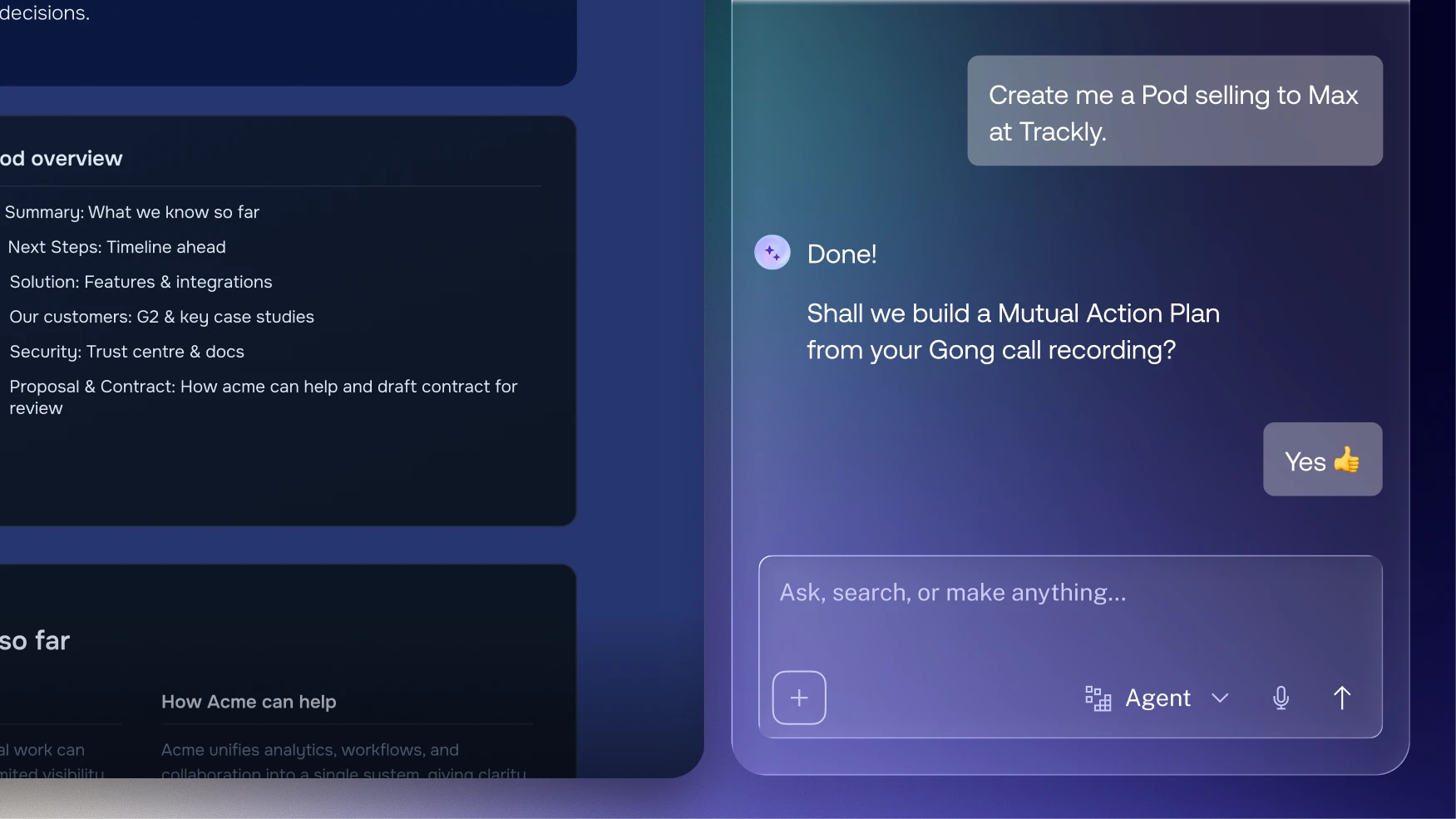
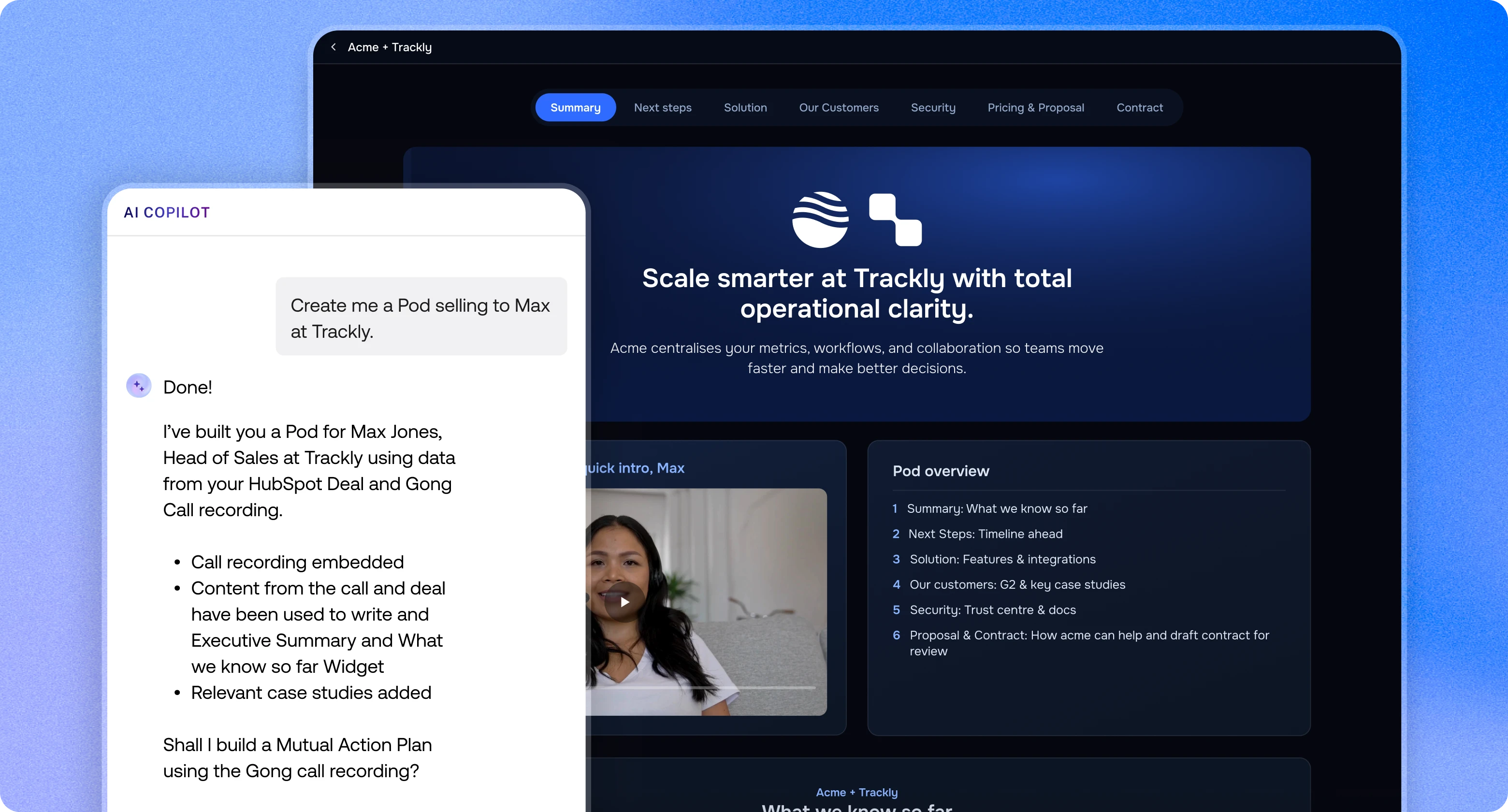
Trumpet allows sales and customer success teams to use the same personalised workspace, called a Pod, from the sales process through onboarding. The Pod can contain a Mutual Action Plan, educational content, interactive demonstrations, shared documents, milestones, and customer engagement insights.
The nine-step process below shows how to structure a more effective onboarding experience.
What is customer onboarding?
Customer onboarding is the structured process that helps a new customer implement, understand, adopt, and begin receiving value from a product or service. For B2B SaaS, it typically includes the internal handoff, customer kickoff, account configuration, integrations, data migration, product training, process design, initial adoption, and the transition into ongoing customer success.
Onboarding is not complete simply because training sessions were delivered. Successful onboarding means the customer has made meaningful progress towards the outcomes that justified the purchase. A completed checklist does not automatically mean the customer is using the product confidently or achieving value from it.
Why B2B customer onboarding breaks down
Sales and customer success use different systems
The sales team stores context in the CRM, call recordings, proposals, and emails. Customer success begins with separate onboarding software, project-management tools, or new email threads. Neither team has a complete shared view of the account, which means the handoff often reduces months of discovery to a brief call and a summary document.
Important context is lost during handoff
Buyer objectives, success criteria, stakeholders, promised functionality, commercial scope, technical requirements, risks, and agreed timelines are all at risk of being lost or summarised imprecisely. The customer ends up repeating information they already provided during the sale.
Customers receive too many separate resources
Training links, implementation guides, recordings, documents, and task lists are distributed across multiple channels. Rather than working from one place, customers have to search across email threads and disconnected platforms to find what they need at each stage.
Responsibilities become unclear
The customer and vendor may have different expectations about who owns data preparation, integrations, configuration, training, approvals, and launch readiness. Without a shared plan, both sides can assume the other is handling the next step.
Progress is difficult to see
Teams may be completing tasks without either side having one shared view of the overall onboarding journey. This makes it hard to identify whether the customer is on track or whether momentum is quietly fading.
Low engagement is identified too late
A customer may attend kickoff but fail to view training, complete tasks, or involve end users. By the time this becomes visible, the window for early intervention may have passed, increasing adoption and retention risk.
Why the sales-to-CS handoff matters
The handoff should transfer more than account ownership. Customer success should inherit the original business problem, desired outcomes, key use cases, success criteria, buying committee, executive sponsor, product scope, commercial commitments, technical requirements, known risks, promised timelines, relevant content, and open actions. The customer should not need to repeat information that was already established during the sale.
The best onboarding handoff is not a summary of the deal. It is continued access to the full deal context. In trumpet, the same Pod that managed the sales process can move directly to the customer success team. The CS team receives one shared view containing the stakeholders, objectives, agreed resources, actions, and the full record of the buying conversation.
What is a Digital Sales Room for customer onboarding?
A Digital Sales Room can become a persistent customer-facing workspace after the contract is signed. During onboarding, it can contain a welcome message, customer objectives, success criteria, stakeholder information, kickoff materials, a Mutual Action Plan, implementation milestones, training resources, product demonstrations, shared documents, meeting recordings, frequently asked questions, support contacts, and next steps.
The name Digital Sales Room does not mean the platform stops being useful when the sale ends. The strongest platforms support the full revenue and customer journey. A trumpet Pod used during the sale can be adapted for kickoff, implementation, training, adoption, customer success, renewal, and expansion, preserving one continuous customer environment rather than creating a new disconnected experience at each stage.
How to build a better customer onboarding process
1. Preserve the context from the sale
Onboarding should begin with what has already been learned. The account executive should confirm what the customer bought, why they bought it, what success looks like, who is involved, who owns implementation, which commitments were made, which risks remain, which dates matter, which content was already shared, and which actions are outstanding. Customer success should not reconstruct this information manually.
In trumpet, the existing Pod, stakeholder information, content, engagement history, and Mutual Action Plan create a persistent record of the buying process. The CS team inherits everything rather than starting from a summary. The customer continues working in the same workspace, which removes the impression that they are dealing with a different organisation after signature.
2. Confirm goals and success criteria
The onboarding workspace should begin with the outcomes the customer wants to achieve: launching by a specific date, completing a migration, training a defined number of users, integrating with core systems, improving adoption, or reaching an initial business milestone. Success criteria should be specific, measurable, relevant to the purchase, visible to both sides, and connected to onboarding activities.
Avoid using generic milestones such as "training complete" if they do not indicate whether the customer can use the product successfully. The opening section of a trumpet Pod can state the customer objectives, agreed outcomes, success measures, and target timeline, keeping every participant focused on value rather than activity alone.
3. Map the onboarding stakeholders
The buying committee and onboarding team may not be identical. Potential onboarding stakeholders include the executive sponsor, project owner, product administrator, technical lead, security team, operations, end users, training lead, customer success manager, implementation consultant, and account manager. The team should identify who approves decisions, who owns the project, who completes technical work, who needs training, who will use the platform, who measures success, and who may be missing.
For example, your buyer may have been the Head of Sales, but onboarding also requires IT, security, operations, and end users. Unless those new stakeholders become involved early, implementation can quickly slow down while the vendor waits for access or approvals from people who were never formally introduced to the process.
Trumpet's stakeholder activity insights can help customer success teams see which customer participants have entered the onboarding Pod and which groups may still be absent. Low participation from key personas can be an early signal that additional engagement or support is needed.
4. Build one central onboarding workspace
Customers should not need to search across email threads, shared drives, project-management tools, knowledge bases, training platforms, meeting recordings, document links, and messaging channels. The onboarding workspace should become the customer's central destination. A strong structure includes a welcome and introductions, customer objectives, stakeholders and contacts, the onboarding timeline, the Mutual Action Plan, product setup guidance, training content, interactive demonstrations, shared documents, meeting recordings, FAQs and support contacts, and progress with the next milestone.
A personalised trumpet Pod can centralise these elements in one customer-facing environment. The Pod should remain easy to navigate and should not become a content dump. Customers who open a workspace and find dozens of unorganised documents are less likely to engage consistently.
5. Create a collaborative onboarding plan
An onboarding plan should be shared with the customer rather than maintained only in an internal project system. A Mutual Action Plan can include kickoff, stakeholder confirmation, technical discovery, account configuration, integration, data preparation, training, testing, launch, initial adoption review, and success review. Every task should have an owner, a due date, a milestone, a status, any dependencies, and the resource needed to complete it.
The customer must see value in using the plan. It should not be a vendor checklist imposed on the account. In trumpet, Mutual Action Plans can assign work to both customer and vendor stakeholders, display progress, and continue from the sales plan directly into implementation. The same plan that governed the commercial decision becomes the shared project that governs delivery.
6. Organise education and product guidance
Onboarding content should support different learning needs. Useful formats include short videos, interactive demonstrations, micro-demos, written instructions, checklists, FAQs, recorded training, templates, best-practice guides, role-specific resources, and live-session recordings. Avoid making customers rewatch full training sessions when a short explanation would solve the issue.
Different personas need different resources. Administrators need setup, controls, configuration, and governance guidance. End users need practical workflows and role-specific examples. Technical teams need integration, data, security, and architecture information. Executives need progress, outcomes, risk, and time-to-value visibility. Videos, interactive demos, documents, educational content, and meeting recordings can all be embedded inside the same trumpet Pod, giving every stakeholder what they need without requiring them to navigate separate platforms.
7. Track onboarding engagement and progress
Task completion alone does not provide a complete view of onboarding health. Useful engagement signals include stakeholders entering the workspace, training content viewed, repeat visits, interactive demos completed, meeting recordings accessed, shared documents reviewed, MAP tasks completed, customer-owned tasks delayed, new stakeholders joining, and important participants remaining inactive.
This data can help customer success teams understand whether onboarding is being adopted, which resources are useful, where customers are stuck, and which accounts may require intervention. Trumpet's content engagement, stakeholder activity, and onboarding progress insights support this picture. Low activity can indicate risk, however it should not be treated as proof that a customer will churn. Reduced onboarding participation is better understood as an early signal that additional support may be needed.
8. Identify onboarding risk early
Customer risk often appears through a pattern of signals rather than a single event. Potential warning signs include key stakeholders missing from kickoff, no executive sponsor involvement, training content not viewed, repeatedly delayed customer tasks, technical requirements remaining unresolved, low engagement across the customer team, only one stakeholder using the workspace, milestones continually moving, no clear launch date, and no agreed success criteria.
When engagement is low, customer success teams should confirm whether priorities have changed, simplify the next milestone, add role-specific resources, involve the executive sponsor, offer additional training, clarify ownership, remove unnecessary tasks, and revisit the expected business outcome. Automated reminders alone are insufficient. Human customer-success judgement remains essential for interpreting signals correctly.
9. Transition from onboarding into ongoing customer success
The customer workspace should evolve after initial onboarding. It can support adoption reviews, product education, business reviews, account plans, success plans, expansion, renewals, new stakeholder onboarding, product launches, and additional use cases. The initial onboarding MAP can become a success plan, an adoption roadmap, a renewal plan, or an expansion plan.
The same trumpet Pod can continue into account management, preserving objectives, stakeholders, content, completed actions, outstanding opportunities, engagement history, and commercial context. Customers who experience this continuity are less likely to feel that they lose context or momentum when their primary contact changes.
Customer onboarding checklist
Before kickoff:
- Transfer sales context and confirm purchased scope
- Identify customer stakeholders and confirm objectives
- Assign internal ownership and create the onboarding workspace
- Draft the onboarding plan and add relevant resources
During kickoff:
- Confirm goals and agree success criteria
- Confirm stakeholders, review the timeline, and assign tasks
- Identify dependencies, agree communication methods, and confirm the next milestone
During implementation:
- Track task progress and monitor engagement
- Share training, record decisions, and update timelines
- Address blockers, add missing stakeholders, and maintain one source of truth
Before onboarding completion:
- Confirm product setup and verify user readiness
- Review success criteria and complete outstanding tasks
- Agree ongoing success measures and confirm ownership after onboarding
Digital Sales Room vs onboarding project-management software
Digital Sales Rooms and project-management software solve different problems. Many organisations use both together.
A project-management platform may remain useful for complex internal implementation workflows. The Digital Sales Room becomes the customer-facing collaboration layer, giving buyers one consistent environment rather than a set of internal tools the customer cannot access.
Common customer onboarding mistakes
Starting from zero after signature is the most costly mistake. Use the information already gathered during the sale rather than asking the customer to repeat themselves. Sending too many disconnected links creates the same fragmentation that a shared workspace is designed to solve. Tracking internal tasks but hiding the plan from the customer makes onboarding feel vendor-led rather than collaborative.
Treating all stakeholders the same ignores the different priorities and needs of administrators, end users, technical teams, and executive sponsors. Measuring completion rather than value means a finished checklist is treated as success even when the customer has not yet used the product meaningfully. Identifying low engagement too late reduces the window for intervention. Ending the workspace after onboarding wastes the context built during implementation. Overloading the customer with content reduces engagement rather than improving it.
How to measure customer onboarding success
Process metrics include time from signature to kickoff, time to implementation, time to onboarding completion, task completion, milestone completion, and onboarding duration. Engagement metrics include active stakeholders, training content views, repeat visits, interactive demo engagement, customer-owned task completion, executive sponsor engagement, and workspace participation. Adoption metrics include product activation, feature adoption, active users, workflow completion, integration completion, and time to first value. Commercial and relationship metrics include customer satisfaction, onboarding CSAT, retention, expansion, renewal, and support volume.
A Digital Sales Room provides collaboration and content-engagement data, however product adoption data should come from the product or customer-success platform. These two data sources work best together rather than in isolation.
What to look for in customer onboarding software
A customer onboarding platform should support customer-facing workspaces, reusable templates, personalisation, Mutual Action Plans, task ownership, milestones, progress tracking, stakeholder management, educational content, interactive demonstrations, meeting recordings, shared documents, engagement analytics, CRM integration, permissions and security, and customer lifecycle continuity.
Trumpet provides personalised Pods, reusable onboarding templates, sales-to-CS continuity, Mutual Action Plans, milestones and progress indicators, interactive demos, video content, educational resources, shared documents, stakeholder activity insights, content engagement data, CRM integration, and secure customer sharing. The same Pod can continue into account management, making trumpet particularly relevant for B2B SaaS teams that want one customer-facing layer spanning sales, onboarding, and ongoing account success.
Final thoughts
Effective onboarding depends on continuity, clarity, collaboration, and visibility. The strongest process preserves the context created during sales, brings stakeholders together around shared outcomes, centralises tasks and resources, makes responsibilities visible, supports different learning needs, tracks engagement and progress, identifies risk early, and continues into ongoing customer success.
Customers should not feel like they are starting a new relationship the moment they sign the contract. The best onboarding processes preserve everything already learned during the buying journey and build on that foundation instead of recreating it. For B2B SaaS teams putting this approach into practice, trumpet provides personalised customer Pods where objectives, stakeholders, Mutual Action Plans, educational content, interactive demos, documents, engagement signals, and ongoing success resources remain connected throughout the customer journey.
FAQs
What is customer onboarding?
Customer onboarding is the process of helping a new customer implement, understand, adopt, and begin receiving value from a product or service.
What should a B2B customer onboarding process include?
It should include agreed objectives, stakeholders, success criteria, milestones, responsibilities, product setup, training, implementation resources, engagement tracking, and a transition into ongoing customer success.
How can companies improve the sales-to-CS handoff?
They should transfer the complete deal context, including customer objectives, stakeholders, commitments, risks, timelines, content, and outstanding actions. The best handoff gives the CS team continued access to the full deal workspace rather than a summary document.
How can Digital Sales Rooms support customer onboarding?
Digital Sales Rooms can continue after the sale and provide one customer-facing workspace for Mutual Action Plans, educational content, stakeholder collaboration, progress tracking, and implementation resources.
What are signs that customer onboarding is at risk?
Warning signs include missing stakeholders, delayed customer tasks, low training engagement, unresolved technical blockers, changing timelines, unclear success criteria, and only one stakeholder using the shared workspace.
What is the difference between onboarding completion and customer value?
Onboarding completion means planned activities are finished. Customer value means the customer has begun achieving the business outcomes that motivated the purchase. A completed checklist does not automatically indicate successful adoption.
How does trumpet support customer onboarding?
Trumpet provides personalised Pods containing customer objectives, stakeholders, Mutual Action Plans, educational content, interactive demonstrations, shared documents, progress milestones, and engagement insights. The same Pod can continue after signature, allowing customer success to inherit the deal context, stakeholders, content, commitments, and action plan.
.png)

See what your buyers are doing between meetings
Build a Pod, share it with the buying committee and watch the signals roll in. Free to start.
.png)
.png)
.png)

.png)
.png)


![How to Get Started with Buyer Enablement [With Examples]](https://cdn.prod.website-files.com/65cf4fecbed2754c2236665d/65cf4fecbed2754c22366bdb_65a5af83e742f76e34ce06f3_Customer%2520Onboarding%2520_%2520Everything%2520you%2520need%2520(2).png)



.png)

.png)