


- A Mutual Action Plan is a shared framework that helps buyers and sellers manage complex B2B purchases by recording milestones, tasks, owners, and deadlines visible to both sides.
- The best MAPs are built collaboratively and reflect the buyer's decision process rather than the seller's forecast or preferred close date.
- Shared ownership improves accountability, forecasting, and deal visibility — and helps champions build internal support more effectively.
- Effective Mutual Action Plans continue beyond contract signature into implementation and customer success, preserving the context that both sides built during the evaluation.
- Embedding a MAP inside a Digital Sales Room keeps milestones, content, proposals, and stakeholder collaboration together in one place rather than spread across disconnected tools.
- According to trumpet platform data, deals with an active MAP achieve approximately double the win rate of those without one. Results are correlational and vary by deal complexity and buyer engagement.
A Mutual Action Plan (MAP) is a shared document or collaborative workspace that outlines the tasks, owners, milestones, deadlines, and dependencies required for a buyer and seller to complete a purchase and begin implementation. Unlike an internal sales checklist, a Mutual Action Plan is visible to both sides, helping everyone understand what needs to happen next and who is responsible for each step.
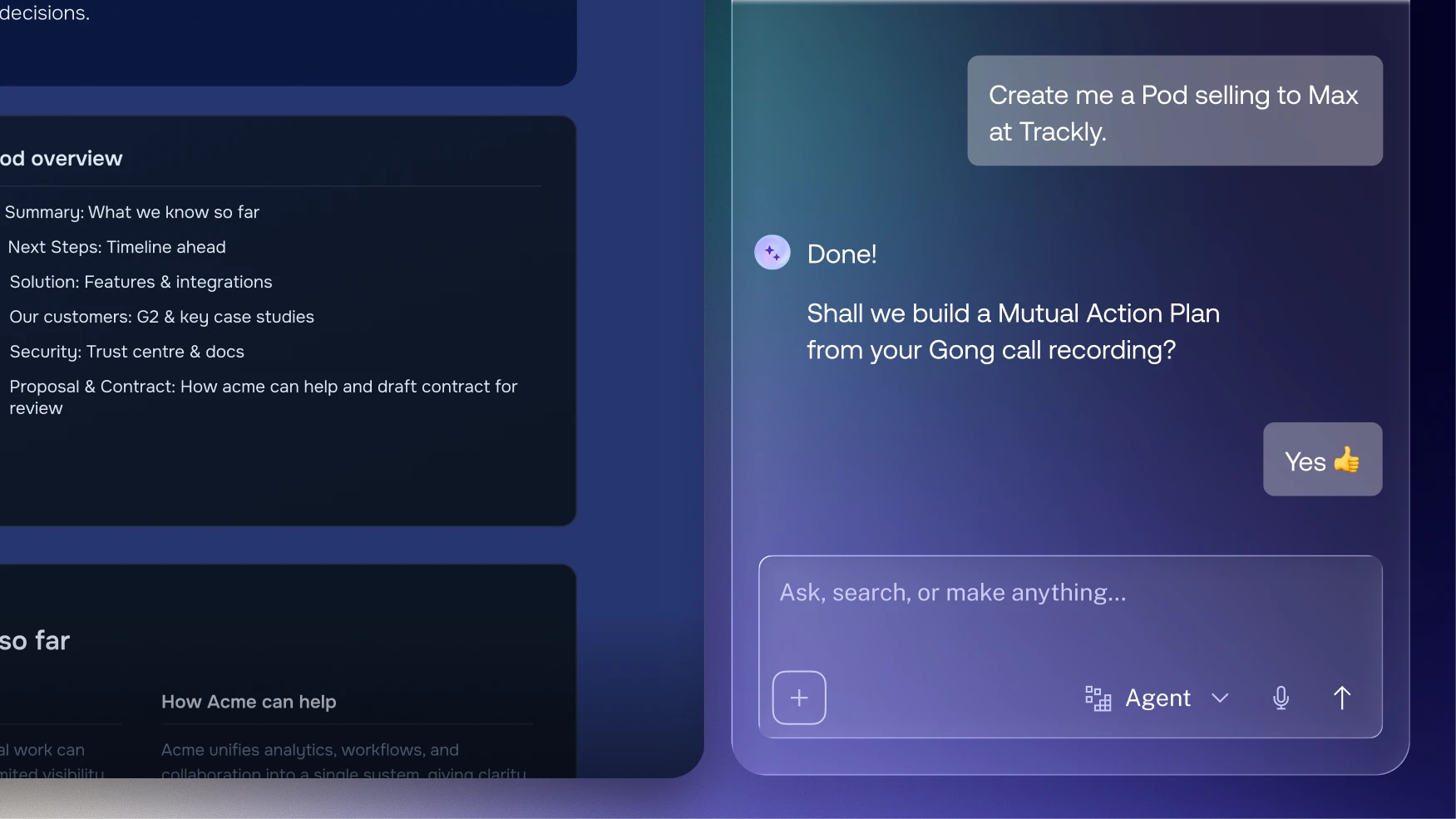
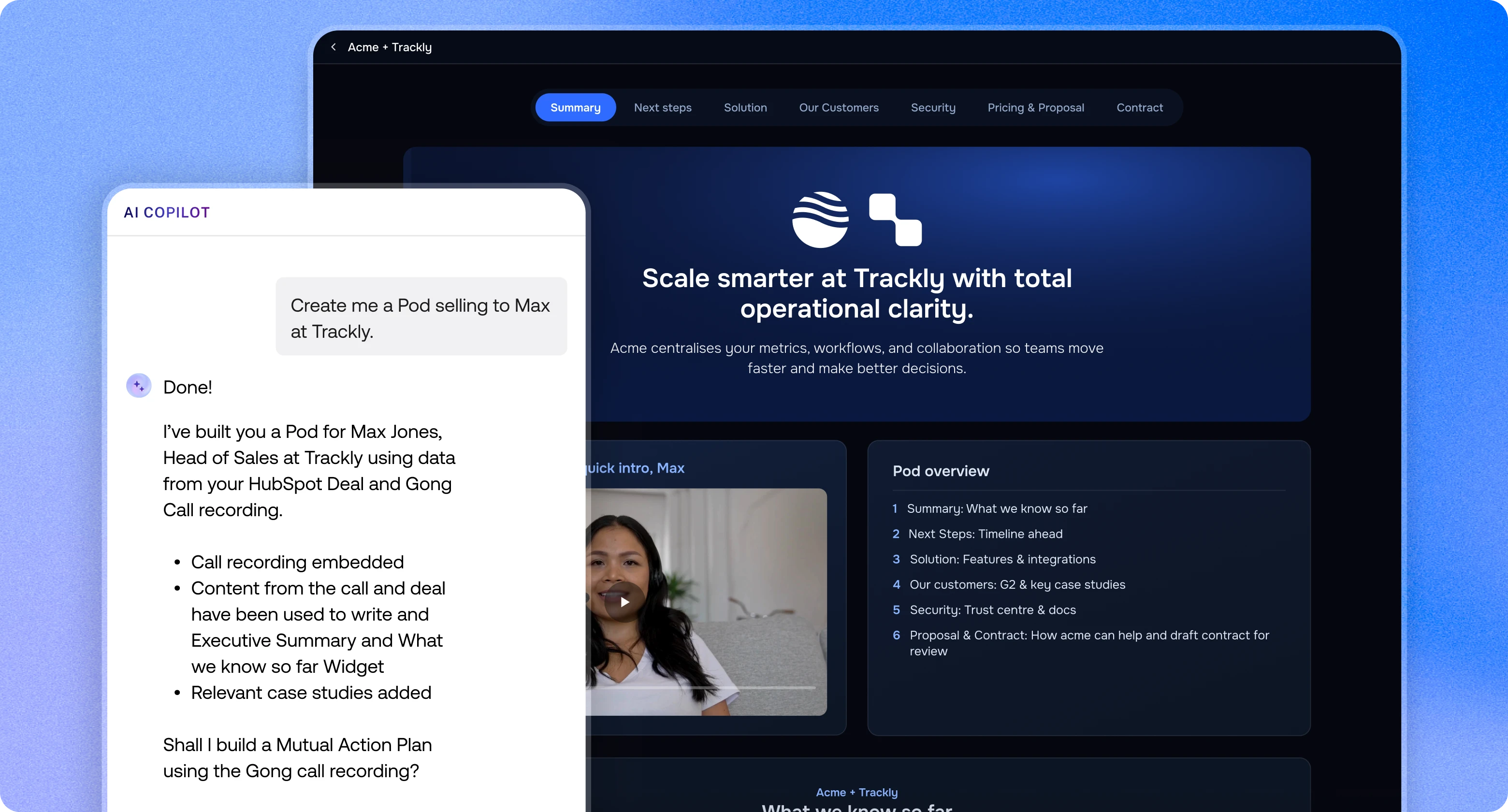
Platforms such as trumpet embed Mutual Action Plans directly inside personalised buyer workspaces called Pods, allowing buyers and sellers to manage milestones alongside proposals, content, stakeholder collaboration, and onboarding resources.
In complex B2B sales, deals rarely stall because buyers suddenly lose interest. More often, they lose momentum because nobody has a shared view of what needs to happen next. A deal that looked on track three months ago has gone quiet. The champion is still responsive, but the close date has slipped twice. Procurement has new questions. Legal joined late. Finance wants another review of the business case.
None of these problems are unusual. However, they often happen in isolation across emails, spreadsheets, meeting notes, and CRM updates. Buyers and sellers are working towards the same outcome, but not from the same plan. A Mutual Action Plan solves this by giving everyone a shared framework for managing the buying journey. Instead of reacting to delays as they happen, both sides can see upcoming milestones, assign ownership, track progress, and identify blockers before they affect the close date.
What is a Mutual Action Plan?
A Mutual Action Plan is a shared project plan that helps buyers and sellers manage the steps required to complete a purchase and begin implementation. Unlike an internal sales checklist, it is visible to both sides. It outlines the key milestones, tasks, owners, deadlines, and dependencies involved in the buying process, giving everyone a clear understanding of what needs to happen next. Rather than relying on email threads, meeting notes, or verbal agreements, a MAP provides one central place where progress can be tracked throughout the deal.
How is a Mutual Action Plan different from a sales plan?
A sales plan is created for the seller. It helps account executives manage their pipeline, forecast revenue, and track internal sales activities. A Mutual Action Plan is created for both the buyer and the seller. Instead of focusing on internal sales targets, it reflects the buyer's decision-making process and the practical steps required to complete the purchase successfully.
For example, a sales plan may include activities such as booking a product demo or scheduling a commercial review. A Mutual Action Plan goes further by including shared milestones such as technical validation, security reviews, procurement approval, legal review, executive sign-off, contract completion, implementation planning, and customer onboarding. Each task has a clear owner, target date, and expected outcome, making it easier for both organisations to understand who is responsible for the next step.
Why does this matter?
Most enterprise deals do not involve just one buyer. Modern B2B purchasing decisions often include finance, procurement, IT, security, legal, executive sponsors, and operational teams. Each stakeholder has different priorities, approval processes, and timelines. Without a shared plan, these parallel workstreams are typically managed across emails, spreadsheets, calendar invites, and CRM notes. Important tasks get missed, new stakeholders repeat questions that have already been answered, and close dates gradually slip. A Mutual Action Plan brings these activities together into one collaborative framework, helping both sides stay focused on the same outcome while reducing the coordination friction that often slows complex buying decisions.
What should a Mutual Action Plan include?
A Mutual Action Plan should reflect the buyer's decision process from discovery through to implementation. The exact milestones will vary depending on deal complexity, however every MAP should give buyers and sellers a shared understanding of what needs to happen, who is responsible, and when each step should be completed. A good MAP answers three questions: what needs to happen next, who owns each task, and when should it be completed.
Typical stages of a Mutual Action Plan
Not every deal requires every stage, although mapping the buyer's journey from the beginning helps reduce surprises later in the sales cycle.
Every task should have an owner
One of the most common reasons deals stall is that responsibilities are unclear. A Mutual Action Plan should assign every task to a named owner, whether that is someone on the buyer's team or the seller's.
Seller responsibilities typically include:
- Sharing the proposal
- Providing security documentation
- Arranging product demonstrations
- Answering technical questions
- Coordinating implementation planning
Buyer responsibilities typically include:
- Introducing procurement
- Scheduling executive review
- Completing legal review
- Gathering stakeholder feedback
- Confirming purchasing approval
Clear ownership reduces confusion, improves accountability, and makes it easier to identify where progress has slowed.
Include more than just commercial milestones
Many sales teams only begin planning once pricing discussions start. The strongest Mutual Action Plans begin earlier by including the activities that influence buying decisions before commercial conversations take place, such as identifying decision-makers, defining success criteria, confirming implementation timelines, completing technical validation, reviewing security requirements, building the internal business case, and preparing onboarding activities. Capturing these milestones early makes the buying journey more predictable and reduces the likelihood of unexpected delays.
Keep the plan simple
A Mutual Action Plan should create clarity, not administration. The best plans focus on the milestones that genuinely move the deal forward rather than documenting every minor activity. For most complex B2B opportunities, a concise plan with clearly owned tasks is more valuable than an exhaustive checklist that quickly becomes outdated. As the opportunity progresses, the plan should evolve alongside the buyer's decision-making process, reflecting new stakeholders, changing priorities, and agreed next steps.
How Mutual Action Plans improve close rates
Mutual Action Plans do not close deals on their own. What they do is reduce the uncertainty, miscommunication, and delays that often prevent otherwise healthy opportunities from reaching a decision.
They create shared accountability
Without a Mutual Action Plan, responsibility often sits almost entirely with the seller. The account executive follows up, schedules meetings, sends reminders, and tries to keep momentum alive, while the buyer's internal tasks remain largely invisible. A MAP changes this dynamic by making responsibilities visible to everyone involved. Instead of asking whether the deal is still on track, both teams can see which tasks have been completed, which milestones are approaching, and where progress has slowed. Shared ownership encourages both sides to actively contribute to moving the deal forward.
They uncover blockers earlier
Many late-stage delays are not caused by objections. They happen because an important step was never planned. Procurement joins later than expected. Security reviews take longer than anticipated. Legal requests additional documentation. Budget approval is delayed. Executive stakeholders were not involved early enough. By mapping these activities from the beginning, revenue teams can identify potential blockers before they become reasons for missed close dates.
They help champions sell internally
In many B2B purchases, the champion spends far more time discussing the solution internally than the seller does. If they only have a proposal and a handful of emails, they often have to recreate the story themselves for finance, procurement, IT, or senior leadership. A Mutual Action Plan gives them a structured framework they can share internally, showing what has already been agreed, what still needs to happen, and which stakeholders need to be involved. This makes it easier for champions to maintain momentum when the seller is not in the room.
They improve forecasting
Forecasting becomes more reliable when managers can see evidence of buyer progress rather than relying solely on CRM notes or seller confidence. An active MAP provides additional signals including completed milestones, outstanding buyer tasks, delayed approvals, procurement progress, and implementation readiness. These signals help sales leaders identify opportunities that are progressing as expected and those that may require additional support.
They create momentum between meetings
Most buying decisions happen between customer calls, not during them. Without a shared plan, momentum can fade as priorities change and new stakeholders become involved. A Mutual Action Plan gives buyers a clear place to return to after every meeting, making it easier to continue progressing tasks without waiting for the next seller conversation. Rather than treating each meeting as a separate event, the buying journey becomes one continuous, collaborative process.
According to trumpet platform data, deals with an active Mutual Action Plan have achieved approximately twice the win rate of deals without one. Opportunities where six to ten MAP steps were completed showed an 84 per cent close rate. These figures describe correlations observed across deals analysed on the trumpet platform rather than guaranteed outcomes. Results will vary depending on deal complexity, buyer engagement, and sales execution.
What makes a Mutual Action Plan effective?
Not every Mutual Action Plan improves deal execution. Some become little more than internal checklists that buyers never look at. Others are created after the buying process has already begun and quickly become outdated. The most effective Mutual Action Plans become shared working documents that both organisations actively use throughout the deal.
Build it with the buyer, not for the buyer
A common mistake is creating a Mutual Action Plan internally before presenting it to the customer as a completed document. This usually reflects the seller's sales process rather than the buyer's decision-making process. Instead, build the plan together. Ask questions such as: what approvals are required before a decision can be made, which stakeholders still need to be involved, are there any procurement or security processes to plan for now, and what does a successful implementation timeline look like? When buyers contribute to the plan, they are far more likely to take ownership of it.
Reflect the buyer's decision process
A Mutual Action Plan should not simply work backwards from the seller's target close date. It should reflect how the buyer actually purchases software, including business case approval, executive sponsorship, technical validation, security review, procurement, contract negotiation, implementation planning, and customer onboarding. Planning around the buyer's reality creates a more achievable path to a successful outcome.
Keep it up to date
A Mutual Action Plan is a live document. As new stakeholders become involved, priorities change, or timelines shift, the plan should evolve alongside the opportunity. Reviewing the MAP during customer meetings helps ensure it remains accurate while creating a natural opportunity to discuss progress, blockers, and upcoming milestones. An outdated plan quickly loses credibility and is unlikely to be used by either side.
Keep it where buyers already work
Many Mutual Action Plans fail because they exist separately from the rest of the buying journey. If the plan lives in one document, the proposal in another, security information in an email, and the implementation timeline in a spreadsheet, buyers still have to search across multiple places to understand what is happening. The strongest MAPs sit alongside everything buyers need to evaluate the purchase: discovery notes, product demonstrations, case studies, pricing, security documentation, commercial proposals, implementation plans, and shared next steps.
Continue the plan after the contract is signed
The buying journey does not end at signature. Many organisations lose valuable context during the handover from sales to customer success because implementation begins with a completely new set of documents and conversations. A strong Mutual Action Plan continues into onboarding, allowing both teams to build on the work already completed rather than starting again. This gives customer success teams the original goals, agreed milestones, key stakeholders, and implementation priorities, creating a more consistent experience from first meeting through to long-term adoption.
Common Mutual Action Plan mistakes
Treating it as a seller checklist
A MAP should not track activities that only matter to the seller. It should focus on the shared milestones that both organisations need to complete before a decision can be made. If the buyer cannot see value in the plan, they are unlikely to engage with it.
Building it alone
Some sales teams create a detailed MAP before presenting it to the buyer. Although this may save time initially, it often reflects the seller's assumptions rather than the buyer's actual decision process. The strongest MAPs are created collaboratively, with buyers contributing milestones, stakeholders, timelines, and priorities from the outset.
Including too much detail
Listing every email, meeting, and minor activity can quickly make the plan difficult to maintain. Focus instead on the milestones that genuinely influence the buying decision, such as security reviews, procurement, executive approval, contracting, and implementation planning. A concise plan is much more likely to remain useful throughout the sales cycle.
Failing to assign ownership
Tasks without owners rarely get completed. Every milestone should have a clearly identified owner, whether on the buyer's team or the seller's. Clear ownership reduces confusion, improves accountability, and makes it easier to identify where progress has slowed.
Treating it as a closing tool
Many teams only introduce a Mutual Action Plan once commercial discussions begin. By that stage, important milestones may already have been missed. The most effective MAPs are introduced much earlier, often shortly after discovery, and continue through evaluation, procurement, contracting, implementation, and onboarding. When used throughout the buyer journey, the plan becomes a shared project rather than a document designed simply to accelerate signature.
How trumpet uses Mutual Action Plans
Many revenue teams already use Mutual Action Plans. The difficulty is that they often live in spreadsheets, project management tools, or documents that quickly become disconnected from the rest of the buying process. As proposals, security documentation, meeting notes, and stakeholder conversations move into different systems, the MAP gradually loses visibility and stops being the central source of truth.
Trumpet takes a different approach by embedding Mutual Action Plans directly inside personalised Digital Sales Rooms called Pods. Instead of asking buyers and sellers to switch between multiple tools, the MAP sits alongside everything needed to progress the deal, including proposals, product information, case studies, security documentation, implementation plans, and stakeholder collaboration. This gives both sides one shared workspace for managing the entire buying journey.
One shared workspace for buyers and sellers
Within a Pod, buyers and sellers can track agreed milestones, assign task owners, set target completion dates, monitor progress, share updates, and keep everyone working from the same plan. Because the MAP is visible to both organisations, responsibility is shared rather than sitting solely with the account executive. This creates greater accountability while making it easier for new stakeholders to understand where the evaluation stands.
Connected to the entire buying journey
Rather than existing as a standalone project plan, the MAP sits alongside the resources buyers already need throughout the evaluation: discovery summaries, product demonstrations, business cases, customer stories, pricing information, security documentation, procurement resources, commercial proposals, and implementation plans. Keeping everything together reduces the need for buyers to search across emails, attachments, and multiple applications.
Visibility beyond completed tasks
A completed task tells part of the story. Because the MAP sits inside the Pod, revenue teams can also understand how buyers are interacting with the wider buying journey, including stakeholder engagement, content activity, and progress across the evaluation. This gives sales managers and RevOps teams more evidence when reviewing opportunities than relying solely on CRM updates or seller confidence.
Supporting onboarding after the deal closes
One of the biggest advantages of embedding Mutual Action Plans inside a Digital Sales Room is that the plan does not need to end when the contract is signed. The same workspace can continue into onboarding, allowing customer success teams to build on the milestones, documents, stakeholders, and implementation plans already established during the sales process. Rather than creating a new project from scratch, both teams continue working from the same shared context.
Final thoughts
Most complex B2B deals do not stall because buyers lose interest. They stall because the buying process becomes fragmented. Tasks are spread across email threads, proposals sit in separate tools, new stakeholders join without context, and neither side has a shared view of what needs to happen next.
A Mutual Action Plan helps solve this by giving buyers and sellers one shared framework for managing the journey together. When both sides understand the milestones, responsibilities, and dependencies required to reach a decision, it becomes much easier to maintain momentum, identify blockers early, and keep opportunities moving towards a successful outcome.
The most effective Mutual Action Plans are built collaboratively, updated throughout the deal, and continue beyond contract signature into implementation and customer success. For organisations managing complex buying committees, that shared visibility can make the difference between a deal that drifts between meetings and one that progresses with confidence.
Platforms such as trumpet take this further by embedding Mutual Action Plans inside Digital Sales Rooms, allowing buyers and sellers to manage milestones alongside proposals, stakeholder collaboration, content, and onboarding within a single buyer-facing workspace. As B2B buying journeys continue to involve more stakeholders and longer decision cycles, Mutual Action Plans are becoming an increasingly important part of modern sales execution, not simply as a way to track tasks but as a practical framework for improving collaboration, accountability, and deal visibility.
FAQs
What is a Mutual Action Plan?
A Mutual Action Plan is a shared document or collaborative workspace that records the milestones, tasks, owners, deadlines, and dependencies required for a buyer and seller to complete a B2B purchase and begin implementation.
How does a Mutual Action Plan improve close rates?
A Mutual Action Plan improves close rates by creating shared accountability, identifying blockers earlier, supporting champions with internal selling, improving forecasting, and keeping both sides focused on agreed next steps throughout the buying process.
Who owns a Mutual Action Plan?
A Mutual Action Plan should be owned by both the buyer and the seller. While the seller often introduces the plan, both organisations should contribute to it, update it, and use it to manage progress throughout the deal.
How is a Mutual Action Plan different from a closing plan?
A closing plan typically focuses on the final commercial stages of a deal. A Mutual Action Plan covers the entire buying journey, from discovery and evaluation through procurement, contracting, implementation, and onboarding.
Does a Mutual Action Plan replace a CRM?
No. A CRM remains the internal system of record for customer and opportunity data. A Mutual Action Plan complements the CRM by giving buyers and sellers a shared framework for managing the activities required to complete the purchase.
How does trumpet support Mutual Action Plans?
Trumpet embeds Mutual Action Plans directly inside personalised Digital Sales Rooms called Pods. Buyers and sellers can manage milestones, assign tasks, track progress, collaborate with stakeholders, and continue the same plan into onboarding from one shared workspace.
.png)

See what your buyers are doing between meetings
Build a Pod, share it with the buying committee and watch the signals roll in. Free to start.
.png)
.png)
.png)

.png)
.png)


![How to Get Started with Buyer Enablement [With Examples]](https://cdn.prod.website-files.com/65cf4fecbed2754c2236665d/65cf4fecbed2754c22366bdb_65a5af83e742f76e34ce06f3_Customer%2520Onboarding%2520_%2520Everything%2520you%2520need%2520(2).png)



.png)

.png)