








- Digital Sales Rooms improve the conditions that support stronger SaaS win rates rather than guaranteeing better results.
- Better buyer collaboration, stakeholder engagement, and Mutual Action Plans help complex deals maintain momentum.
- Buyer-side engagement signals provide additional evidence alongside CRM data, improving deal visibility and forecasting.
- Mid-market SaaS teams benefit from more consistent sales execution and smoother sales-to-customer-success handoffs.
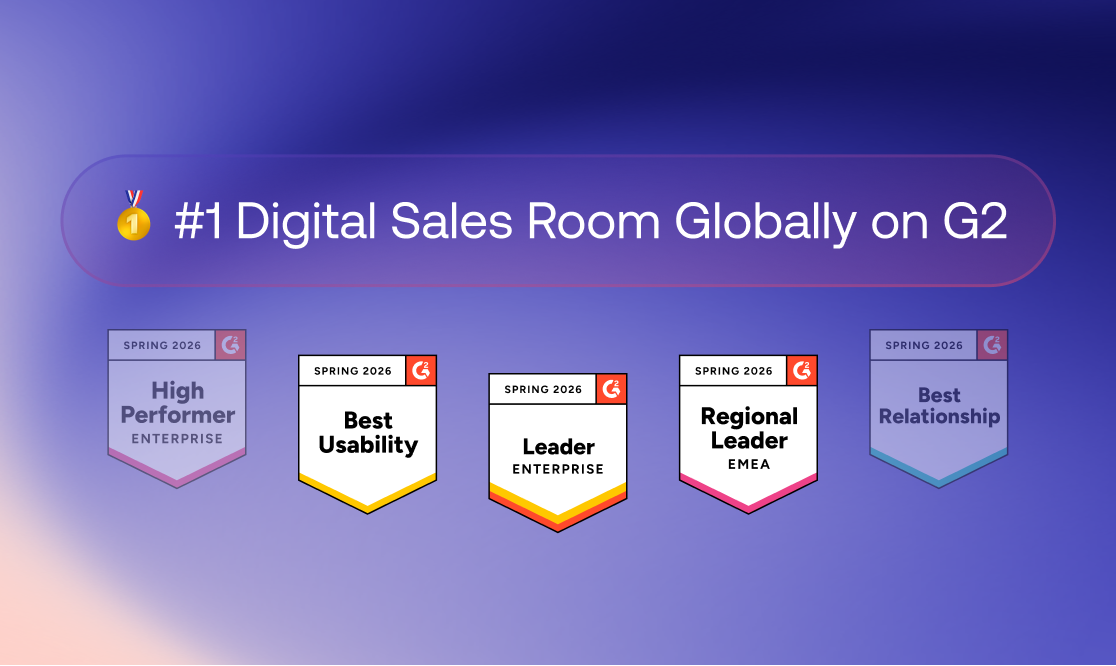
- Trumpet combines buyer collaboration, AI-powered insights, stakeholder engagement, Mutual Action Plans, CRM integrations, document signing, and onboarding continuity in one Digital Sales Room, ranked number one globally on G2
Winning a complex SaaS deal depends on far more than delivering a great product demonstration. Once the meeting ends, the real buying process begins. Champions need to build internal support, new stakeholders join the evaluation, procurement and security review the purchase, finance assesses the commercial case, and both sides work through the actions required before a decision can be made.
The more people involved, the easier it is for information to become fragmented. Proposals sit in one email, meeting recordings in another, security documents live in a shared drive, and agreed next steps disappear into call notes. Even well-qualified opportunities can lose momentum when buyers struggle to coordinate internally.
Digital Sales Rooms help solve this problem by giving buyers and sellers one place to collaborate throughout the deal. Rather than improving win rates through presentation alone, they improve the conditions that complex B2B sales depend on: stronger stakeholder engagement, clearer next steps, better buyer collaboration, and greater visibility into deal progress.
How do Digital Sales Rooms help improve SaaS win rates?
Digital Sales Rooms can improve SaaS win rates by helping buying committees stay engaged, giving champions better resources to sell internally, making next steps clearer, increasing stakeholder visibility, and reducing friction across procurement, security, and onboarding. They do not guarantee a win, but they improve the structure and buyer experience around complex deals.
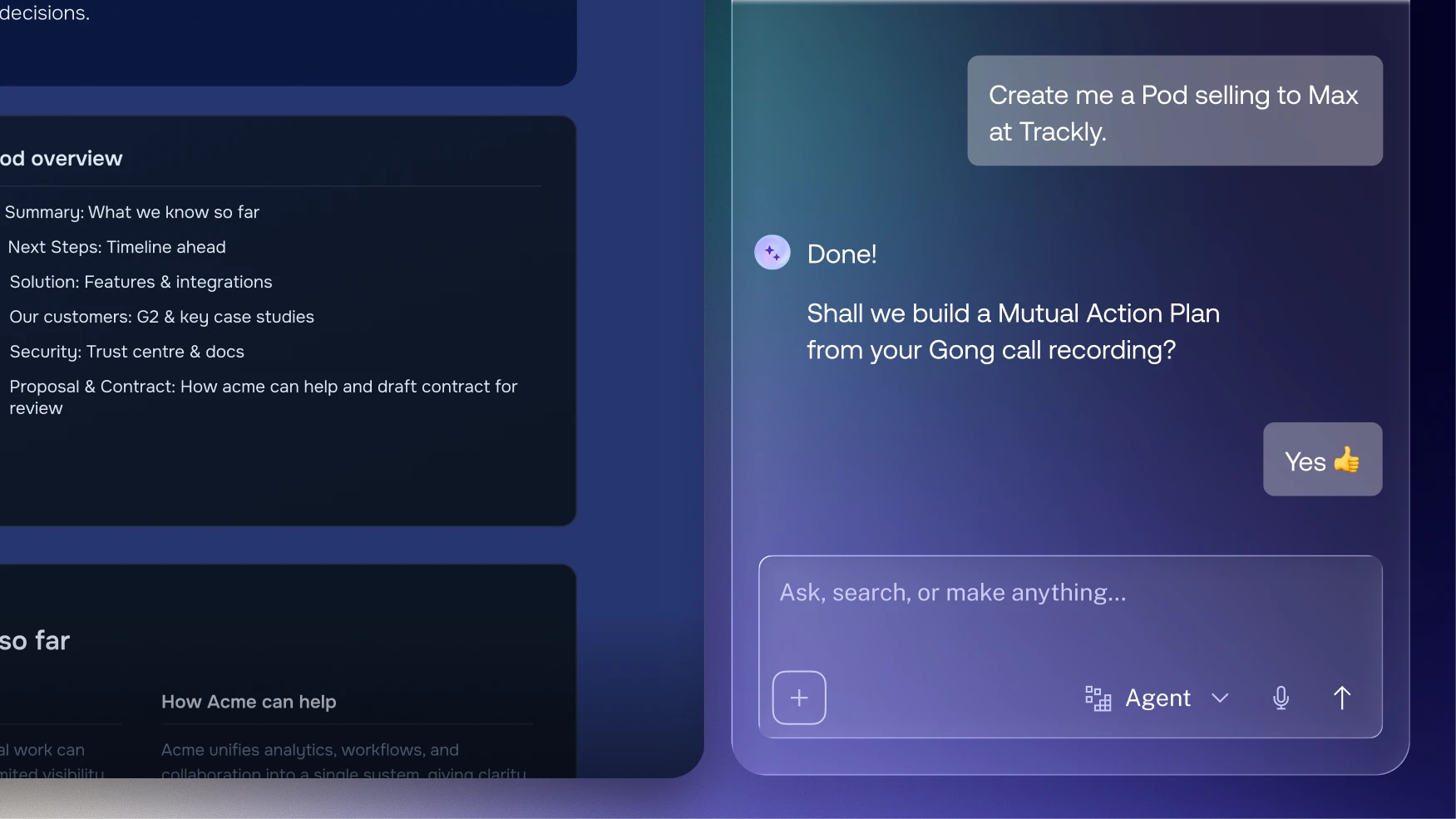
Platforms such as trumpet help mid-market SaaS teams manage these activities inside personalised buyer workspaces called Pods, combining content, stakeholder engagement, Mutual Action Plans, proposals, deal insights, and onboarding in one place.
The eight ways Digital Sales Rooms can improve win rates:
- 1. They engage more of the buying committee.
- 2. They help champions sell internally.
- 3. They centralise the buyer journey.
- 4. They create clearer next steps.
- 5. They reduce procurement and security friction.
- 6. They improve seller visibility into deal momentum.
- 7. They make sales execution more consistent.
- 8. They preserve momentum after the deal closes.
What is a Digital Sales Room?
A Digital Sales Room is a shared buyer-facing workspace where sellers and buying committees can access relevant content, review proposals, collaborate on next steps, manage Mutual Action Plans, and progress a B2B deal. The CRM remains the internal system of record, while the Digital Sales Room becomes the external collaboration environment where the deal moves forward.
A Digital Sales Room is more than a shared folder, proposal link, microsite, virtual data room, or electronic-signature tool. It brings together the people, information, and actions needed to manage a complex buying journey in one place.
Within trumpet, this workspace is called a Pod. A Pod can include personalised messaging, meeting recaps, product content, customer proof, business cases, security documentation, pricing, Mutual Action Plans, proposals, document signing, and onboarding plans. Rather than creating separate tools for different stages of the revenue journey, the same Pod evolves from the first conversation through to customer success.
1. Digital Sales Rooms engage more of the buying committee
Complex SaaS purchases rarely involve a single decision-maker. As opportunities progress, finance, procurement, security, legal, executive sponsors, and end users all influence whether a deal moves forward. When sellers communicate with only one or two contacts, opportunities become single-threaded and progress depends too heavily on one internal champion.
A Digital Sales Room makes it easier for the champion to involve colleagues by providing one organised environment that can be shared internally. Instead of forwarding multiple emails or searching for the latest proposal, new stakeholders can access the business case, product information, customer proof, pricing, and agreed next steps whenever they join the evaluation. This helps buying committees build consensus without requiring another introductory meeting every time a new stakeholder appears.
Within trumpet, personalised Pods make internal sharing straightforward while giving sellers visibility into stakeholder engagement. Stakeholder Scout shows which contacts have viewed the Pod, what content they have engaged with, and whether important personas such as the economic buyer or procurement team are still missing. According to trumpet platform data, Pods involving ten or more unique stakeholders have produced a 75 per cent close rate across deals analysed. These findings are correlational and outcomes vary depending on factors such as sales process, buyer participation, and product-market fit.
2. Digital Sales Rooms make champions more effective
Most of the conversations that determine whether a deal is won happen without the seller present. Champions need to explain the business problem, communicate the proposed solution, justify the investment, answer stakeholder questions, and maintain momentum while the buying committee reaches a decision. Without the right resources, those conversations become harder and the original business case can lose clarity.
A Digital Sales Room gives champions a professional environment they can confidently share across the organisation. Executive summaries, customer stories, product demonstrations, pricing, implementation plans, and commercial information remain organised in one place, helping every stakeholder work from the same information rather than relying on second-hand explanations or outdated attachments.
Within trumpet, every Pod is personalised for the account and can include branded messaging, tailored content, embedded video, stakeholder-specific sections, and a live Mutual Action Plan. Rather than asking champions to build the internal narrative themselves, sellers provide a ready-made buying experience that supports conversations long after the sales meeting has ended.
3. Digital Sales Rooms centralise the buyer journey
As a deal progresses, buyers often receive information through multiple channels. Meeting recordings arrive by email, proposals are shared through separate tools, security documentation lives in a shared drive, contracts are sent for signature elsewhere, and next steps are captured in meeting notes. By the time procurement or a new executive sponsor joins the evaluation, important context is spread across several systems.
A Digital Sales Room creates a single source of truth for the entire buying journey. Instead of sending a new collection of links after every meeting, sellers update one persistent workspace that buyers can return to throughout the evaluation. Every stakeholder has access to the latest content, commercial information, implementation plans, and agreed actions, reducing duplicate questions and helping new participants get up to speed more quickly.
Within trumpet, the same Pod evolves alongside the opportunity. Product content, customer proof, business cases, security documentation, proposals, Mutual Action Plans, document signing, and onboarding resources remain connected in one buyer-facing environment, making it easier for both buyers and sellers to manage increasingly complex deals.
4. Digital Sales Rooms create clearer next steps
Many opportunities stall because buyers and sellers leave meetings with different expectations about what happens next. Agreed actions sit in email threads or meeting notes, deadlines slip, procurement begins later than expected, and security reviews become last-minute blockers. Even well-qualified deals can lose momentum when responsibilities are unclear.
A Digital Sales Room makes the buying process visible to everyone involved. Mutual Action Plans show milestones, owners, dependencies, due dates, procurement activities, security reviews, and implementation preparation in one shared plan. Buyers and sellers work from the same timeline, making it easier to identify delays before they affect the expected close date.
Within trumpet, Mutual Action Plans live inside the Pod rather than existing as separate spreadsheets or project plans. Buyers and sellers can update progress together while keeping every stakeholder working towards the same objectives. According to trumpet platform data, deals using an active Mutual Action Plan have achieved twice the win rate of deals managed without one, while MAPs with six to ten completed steps have shown an 84 per cent close rate across deals analysed. These findings are correlational and results vary depending on sales process, buyer participation, and platform adoption.
5. Digital Sales Rooms reduce procurement and security friction
Procurement, security, finance, and legal often become involved towards the end of a sales cycle, just as the buyer is preparing to make a decision. If supporting information is introduced too late, review cycles become longer, unexpected questions appear, and close dates begin to slip. Even when the product is the right fit, unnecessary delays can weaken deal momentum.
A Digital Sales Room allows sellers to introduce relevant information before it becomes a blocker. Security documentation, compliance resources, integration details, pricing, procurement timelines, commercial proposals, and implementation plans can all be added to the same buyer-facing environment as new stakeholders join the evaluation. Instead of waiting for requests to arrive, sellers can anticipate the information each team is likely to need.
Within trumpet, Pods evolve throughout the sales process. As procurement, security, or technical teams become involved, sellers can add new sections and resources without creating separate portals or email threads. Buyers continue working from one consistent environment while every stakeholder has access to the latest information.
6. Digital Sales Rooms improve seller visibility into deal momentum
CRM stages and rep updates show what the seller believes is happening. They rarely show what buyers are doing between meetings. Without buyer-side visibility, sales teams can continue forecasting deals that have quietly stalled, overlook missing stakeholders, or spend time chasing opportunities where momentum has already faded.
A Digital Sales Room provides additional evidence by showing how the buying committee is engaging throughout the evaluation. Useful signals include new stakeholders joining the room, repeat visits, content engagement, proposal activity, Mutual Action Plan progress, internal sharing, and changes in overall buyer participation. These insights do not predict outcomes on their own, but they give sellers and managers a clearer understanding of deal health alongside CRM data.
Within trumpet, Stakeholder Scout, engagement analytics, AI-powered insights, and Nerve Centre reporting help revenue teams understand buyer activity across individual deals and the wider pipeline. According to trumpet platform data, deals where buyers returned to the Pod four to five times showed 45 per cent higher win rates and 35 per cent shorter sales cycles than deals with a single visit. These findings are correlational and should be considered alongside seller judgement, buyer participation, and the wider sales process.
7. Digital Sales Rooms make sales execution more consistent
As mid-market SaaS teams grow, every account executive develops their own way of following up after meetings. Content lives across shared drives, Slack, call recordings, and personal templates, while managers rely on coaching to encourage consistency. The result is that buyers can receive very different experiences depending on which seller they speak to.
A Digital Sales Room creates a repeatable framework without removing personalisation. Sellers can work from approved templates, recommended content, and consistent deal structures while tailoring the experience to each account. This helps standardise buyer communication, supports B2B sales enablement, and makes it easier for managers to inspect how opportunities are being managed across the team.
Within trumpet, revenue teams can create reusable Pod templates, manage content centrally, apply automatic branding, and personalise each Pod using AI-assisted creation. Rather than treating sales enablement as an internal activity, trumpet extends it into the live buying experience, helping every seller deliver a more consistent customer journey.
8. Digital Sales Rooms preserve momentum after the deal closes
The customer journey does not end when the contract is signed. Customer success still needs to understand the buyer's objectives, agreed outcomes, implementation timelines, key stakeholders, and commercial commitments. When that context is scattered across CRM notes, email threads, and handover meetings, onboarding often begins by rebuilding information that already exists.
A Digital Sales Room allows the same buyer-facing environment to continue into onboarding, giving customer success immediate access to the context established during the sales process. Buyers continue working in a familiar environment while implementation plans, Mutual Action Plans, training resources, and agreed actions remain visible throughout the transition.
Within trumpet, the same Pod naturally evolves from sales into customer success. Stakeholders, objectives, commercial context, engagement history, implementation plans, and Mutual Action Plans remain connected in one place, creating continuity across the revenue journey. A credible onboarding experience also gives buyers greater confidence during the final stages of the evaluation, which helps support stronger deal execution before the contract is signed.
How Digital Sales Rooms support mid-market SaaS sales
Mid-market SaaS companies often sit between startup agility and enterprise complexity. Sales cycles typically last between 30 and 120 days, buying committees become larger, average contract values increase, and procurement becomes more structured. Revenue teams need more consistency, yet they also need to move quickly and avoid adding unnecessary complexity to the sales process.
Digital Sales Rooms help create that balance. They provide enough structure to manage multiple stakeholders, formal buying processes, and longer evaluations without introducing heavyweight enterprise tooling. Buyers receive one organised place to collaborate, while sellers gain greater visibility into how opportunities are progressing between meetings. Within trumpet, reusable templates, AI-powered personalisation, Mutual Action Plans, stakeholder engagement analytics, CRM integrations, and document signing allow teams to manage increasingly complex opportunities while maintaining a consistent buyer experience.
How Digital Sales Rooms improve buyer collaboration
Buyer collaboration is strongest when every stakeholder can access the same information, understand the business case, contribute to agreed actions, and stay engaged throughout the evaluation. That does not mean scheduling more meetings. It means reducing the effort required for buying committees to work together between meetings.
A Digital Sales Room supports this by giving buyers one current version of the deal. Stakeholders can review relevant content, share the workspace internally, access role-specific information, understand next steps, and prepare for implementation without repeatedly asking the sales team to resend documents or explain previous conversations. Within trumpet, buyer collaboration happens inside a personalised Pod where content, Mutual Action Plans, proposals, security documentation, stakeholder engagement, and onboarding plans remain connected.
How Digital Sales Rooms support startup sales coordination
Many successful SaaS companies continue using founder-led sales processes long after the business has grown. Product knowledge lives with experienced sellers, follow-up varies between account executives, content becomes scattered, and larger deals begin to outgrow the processes that worked during the company's early stages. A Digital Sales Room helps turn those informal approaches into a repeatable buyer journey. Standard templates, approved content, shared Mutual Action Plans, and structured buyer experiences allow every seller to deliver a consistent process while still personalising the experience for each customer.
How Digital Sales Rooms support complex deal management
Complex B2B deals require sellers to coordinate buying committees, security reviews, procurement, legal, pricing, implementation planning, and commercial approvals, often across several months. Without a structured approach, information becomes fragmented and it becomes difficult for both buyers and sellers to understand how the opportunity is progressing.
A Digital Sales Room connects these activities in one buyer-facing environment. For account executives, this means stronger multi-threading and more effective follow-up. Sales managers benefit from earlier risk identification and better deal inspection. RevOps gains more consistent buyer-side data and stronger process governance, while customer success inherits the full context of the deal rather than rebuilding it after signature. Within trumpet, these teams collaborate through the same Pod from first meeting through onboarding.
How to measure the impact on win rates
Digital Sales Rooms should be measured using both leading indicators and commercial outcomes. Leading indicators include the number of unique stakeholders involved, senior stakeholder engagement, repeat buyer visits, internal sharing, content engagement, Mutual Action Plan adoption, buyer-owned tasks, proposal activity, and security-document engagement. These signals help sellers understand whether buying committees are actively progressing the evaluation.
Commercial outcomes include win rate, sales-cycle length, stage conversion, forecast accuracy, deal slippage, average contract value, and multi-threading across similar opportunities. Post-sale measures such as onboarding readiness, time to value, implementation progress, and customer success handoff quality also provide valuable insight. According to trumpet platform data, these metrics are most useful when comparing similar deal segments, contract values, and sales cycles. A Digital Sales Room is one influence among many, so buyer engagement should always be considered alongside sales execution, product fit, and the wider commercial context.
Common mistakes that limit the impact of Digital Sales Rooms
Digital Sales Rooms are most effective when they become part of the buying process rather than another place to store documents. Common mistakes include introducing the room only at proposal stage, relying on generic templates instead of personalising the experience, uploading too much content, building the room only for the champion, treating the Mutual Action Plan as a seller checklist, ignoring buyer engagement signals, assuming activity guarantees buying intent, and ending the room when the contract is signed. Avoiding these mistakes helps buyers stay engaged throughout the evaluation while giving revenue teams a more complete picture of deal health and stakeholder participation.
What to look for in Digital Sales Room software
A strong Digital Sales Room should combine buyer collaboration with practical revenue workflows. Look for fast room creation, reusable templates, easy personalisation, stakeholder-level engagement analytics, Mutual Action Plans, content management, AI-assisted content search, AI-assisted room creation, CRM integrations, secure access controls, proposal support, electronic signatures, portfolio-level reporting, and sales-to-customer-success continuity.
Within trumpet, these capabilities come together in one buyer-facing platform. Personalised Pods, automatic branding, reusable templates, Stakeholder Scout, Nerve Centre, Mutual Action Plans, AI-powered content search, AI-assisted Pod creation, Salesforce and HubSpot integrations, document signing, and onboarding continuity help mid-market SaaS teams manage increasingly complex deals without adding unnecessary friction. Trumpet is ranked number one for Digital Sales Rooms globally on G2 across more than 30 enterprise, mid-market, and regional reports.
Final thoughts
Digital Sales Rooms do not improve SaaS win rates by making follow-up emails look more professional. They improve the operating conditions around complex B2B deals by making it easier for buyers and sellers to work together throughout the evaluation. The strongest Digital Sales Rooms help revenue teams:
- Engage more of the buying committee.
- Help champions sell internally.
- Centralise the buyer journey.
- Create clearer next steps.
- Reduce procurement and security friction.
- Improve seller visibility into deal momentum.
- Make sales execution more consistent.
- Preserve momentum after the deal closes.
Stronger commercial outcomes still depend on product-market fit, sales execution, buyer participation, and consistent adoption across the revenue team. A Digital Sales Room is one influence among many, but it can significantly improve the structure, visibility, and buyer collaboration that complex SaaS deals rely on. For mid-market SaaS teams putting this approach into practice, trumpet provides a shared Digital Sales Room where buyers, sellers, stakeholders, content, Mutual Action Plans, deal insights, proposals, document signing, and onboarding remain connected throughout the revenue journey.
FAQs
How do Digital Sales Rooms improve SaaS win rates?
Digital Sales Rooms can improve win rates by strengthening stakeholder engagement, champion enablement, buyer collaboration, next-step clarity, deal visibility, and procurement readiness. They improve the conditions around deal execution rather than guaranteeing stronger commercial outcomes.
Do Digital Sales Rooms guarantee higher win rates?
No. Results still depend on product fit, buyer participation, sales execution, content quality, and consistent platform adoption. A Digital Sales Room supports better coordination but is only one factor influencing performance.
What is a Digital Sales Room?
A Digital Sales Room is a shared buyer-facing workspace where sellers and buying committees access content, review proposals, collaborate through Mutual Action Plans, and progress a B2B deal from discovery through onboarding.
How do Digital Sales Rooms help buyer collaboration?
They centralise information, make next steps visible, support internal sharing, help new stakeholders join the evaluation more easily, and reduce the friction created by scattered documents and disconnected follow-up.
How do Digital Sales Rooms support complex deal management?
They connect stakeholders, content, proposals, procurement, security reviews, Mutual Action Plans, buyer engagement, and implementation planning within one buyer-facing environment.
How do Digital Sales Rooms support B2B sales enablement?
They extend sales enablement into live opportunities by combining approved content, reusable templates, consistent buyer experiences, and AI-assisted personalisation inside every deal.
Are Digital Sales Rooms useful for mid-market SaaS teams?
Yes. They are particularly valuable for teams managing longer sales cycles, larger buying committees, formal procurement processes, and growing revenue organisations that need more consistent execution.
How does trumpet help improve deal outcomes?
Trumpet provides personalised Pods, stakeholder engagement analytics, Mutual Action Plans, AI-powered deal insights, content management, CRM integrations, document signing, and sales-to-customer-success continuity, helping revenue teams manage complex, multi-stakeholder deals from first meeting through onboarding.
Can a Digital Sales Room replace a CRM?
No. The CRM remains the internal system of record, while the Digital Sales Room is the buyer-facing environment where stakeholders collaborate, complete actions, and progress the deal.









![How to Get Started with Buyer Enablement [With Examples]](https://cdn.prod.website-files.com/65cf4fecbed2754c2236665d/65cf4fecbed2754c22366bdb_65a5af83e742f76e34ce06f3_Customer%2520Onboarding%2520_%2520Everything%2520you%2520need%2520(2).png)
.png)


.png)


.png)


.png)

.png)

.png)
.png)





