







- Brevo's Customer Marketing Director built a marketing attribution system connecting trumpet Pod data with CRM, Papermark, Omni, and Slack via MCP + Claude
- Every deal in the pipeline now has visibility into which marketing content was used, how long buyers engaged with it, and what the outcome was
- Deep engagement insights (like buyers spending 30 seconds on a 25-slide deck) directly changed how the team creates and updates content
- The system surfaces what isn't working, closing a feedback loop between content creation and buyer response
- Built in a matter of months by one person, not a full cross-functional project
About Brevo
Brevo is a global customer engagement platform that brings together CRM, marketing automation, email, SMS, WhatsApp and customer data tools. Founded in 2012, the company serves more than 600,000 customers worldwide.
Brevo's sales team uses trumpet Pods as shared digital deal rooms, bringing relevant customer marketing content, buyer communication and deal resources together throughout the sales process.
The challenge
Every customer marketing team faces the same challenge. You create the content. Sales takes it into deals. But getting the full picture (which assets are being used, how long buyers are actually spending on them, and how that correlates with deal outcomes) takes significant effort to piece together manually.
"Proving content's impact on revenue has always been the hard part," says Vincent Bucaille-Mézani, Customer Marketing Director at Brevo.
His team produces customer case studies, benchmarks, and sales enablement assets that AEs pull into their trumpet Pods. He had some visibility, but connecting trumpet engagement data to CRM outcomes, content usage, and deal signals in one coherent view meant either a cross-functional build or a lot of manual work.
Getting that picture systematically would have required a full cross-functional project: the data team to pull and store everything, RevOps to build the mechanism, an analytics team to surface the dashboards. A significant investment for a question marketing alone was asking.
The solution: trumpet MCP + Claude + a cross-stack workflow
When Brevo's CSM introduced Vincent to trumpet's MCP server, he saw an opportunity. Rather than waiting for a cross-functional build, he could connect trumpet's data directly into his existing AI workflow, alongside the other tools he already used.
Vincent built a system in Claude with multiple MCP connectors running in parallel:
- Trumpet MCP: to pull Pod data, engagement stats, and asset usage per deal
- CRM MCP: to fetch all active deals by AE, region, and outcome (won/lost and reason)
- Papermark: where Brevo's customer content is hosted
- Omni: their internal analytics platform
- Slack: where deal wins and losses are announced, used to cross-check CRM data
Each week, Claude runs across all of these and populates a central Notion database. For every deal in the pipeline, Vincent can now see whether it has a trumpet Pod, which customer marketing assets are in it, how long buyers spent on each piece of content, and what the deal outcome was.
"Connecting trumpet's MCP to our CRM, Slack, and analytics stack through Claude changed that," says Vincent.
It's a marketing attribution system that, in a previous world, would have taken a team to build. He built the MVP himself, in a matter of days.
The results
1. Marketing influence is now measurable and presentable to leadership
For the first time, Vincent can walk into a GTM meeting, or a conversation with the CEO, with a much clearer picture of marketing's impact on pipeline: which deals used Brevo's customer content, what percentage of those deals were won, and what the attributed pipeline looks like.
"Now I can tie every piece of marketing to real deal outcomes and bring those numbers directly to our CEO," he says.
2. Content quality insights that changed strategy
Attribution is one thing. Seeing how buyers actually engage with content is where it gets interesting.
"I could see buyers spending 30 seconds on a 25-slide deck. That kind of insight alone changes how we update content," says Vincent.
A data point that would previously have taken significant effort to surface led directly to a change in how the team creates and updates content.
3. Visibility on what's not working
The system doesn't just reveal what's performing. It surfaces what isn't being used, or isn't landing as intended. For content that rarely makes it into a Pod, or that buyers scroll past in seconds, Vincent can now ask why, chase the feedback, and iterate. A feedback loop that previously would have required significant manual effort to pull together.
What's next
Vincent is already expanding his MCP stack, adding new connectors as trumpet's capabilities grow. He's also keeping a close eye on trumpet's upcoming Co-Pilot, which will let AEs build their own deal content from the assets his team produces directly from a prompt, removing the manual step that currently sits between content creation and content use.
"I think we will go further with that, for sure," he says.
How the trumpet MCP works
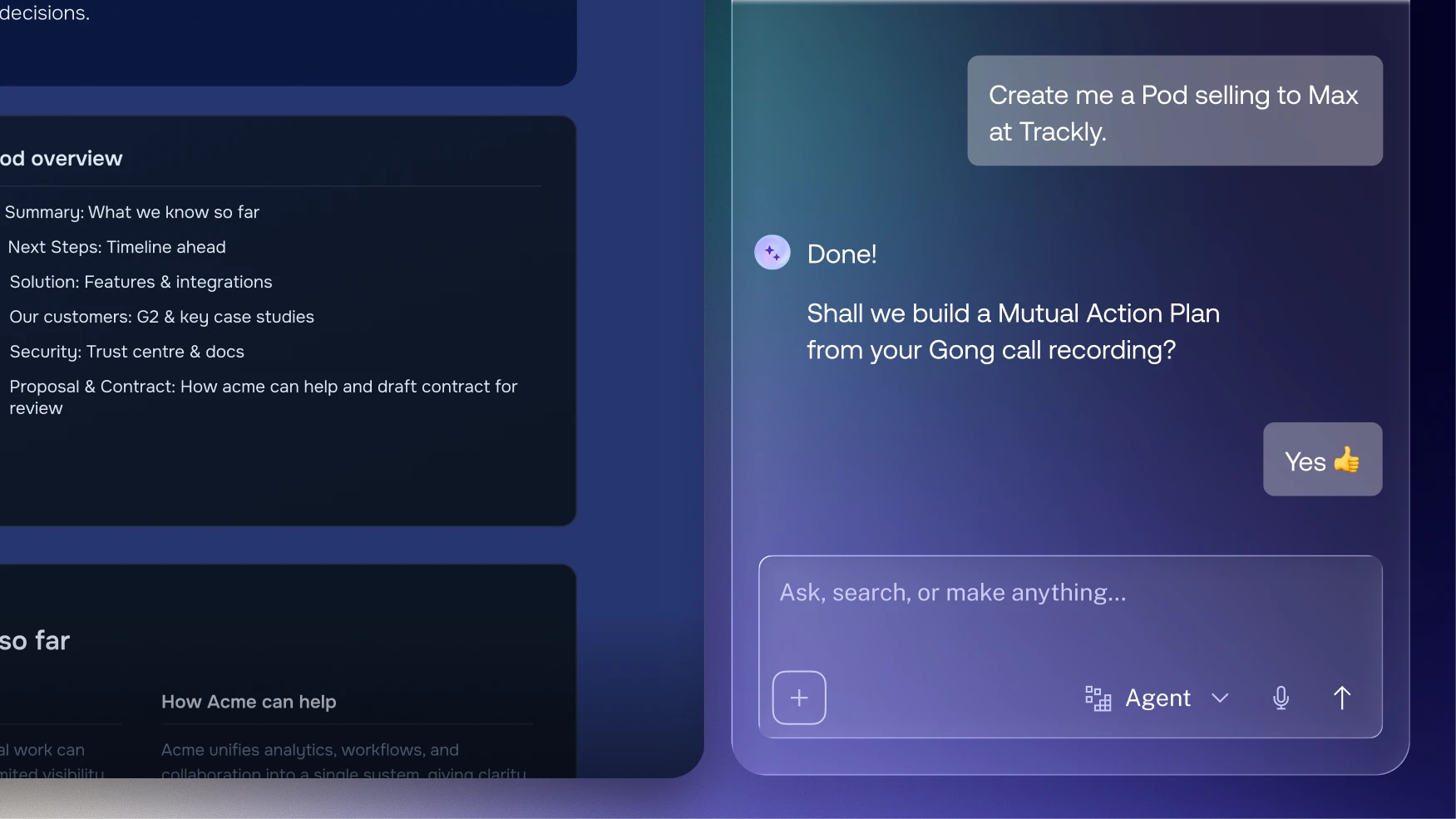
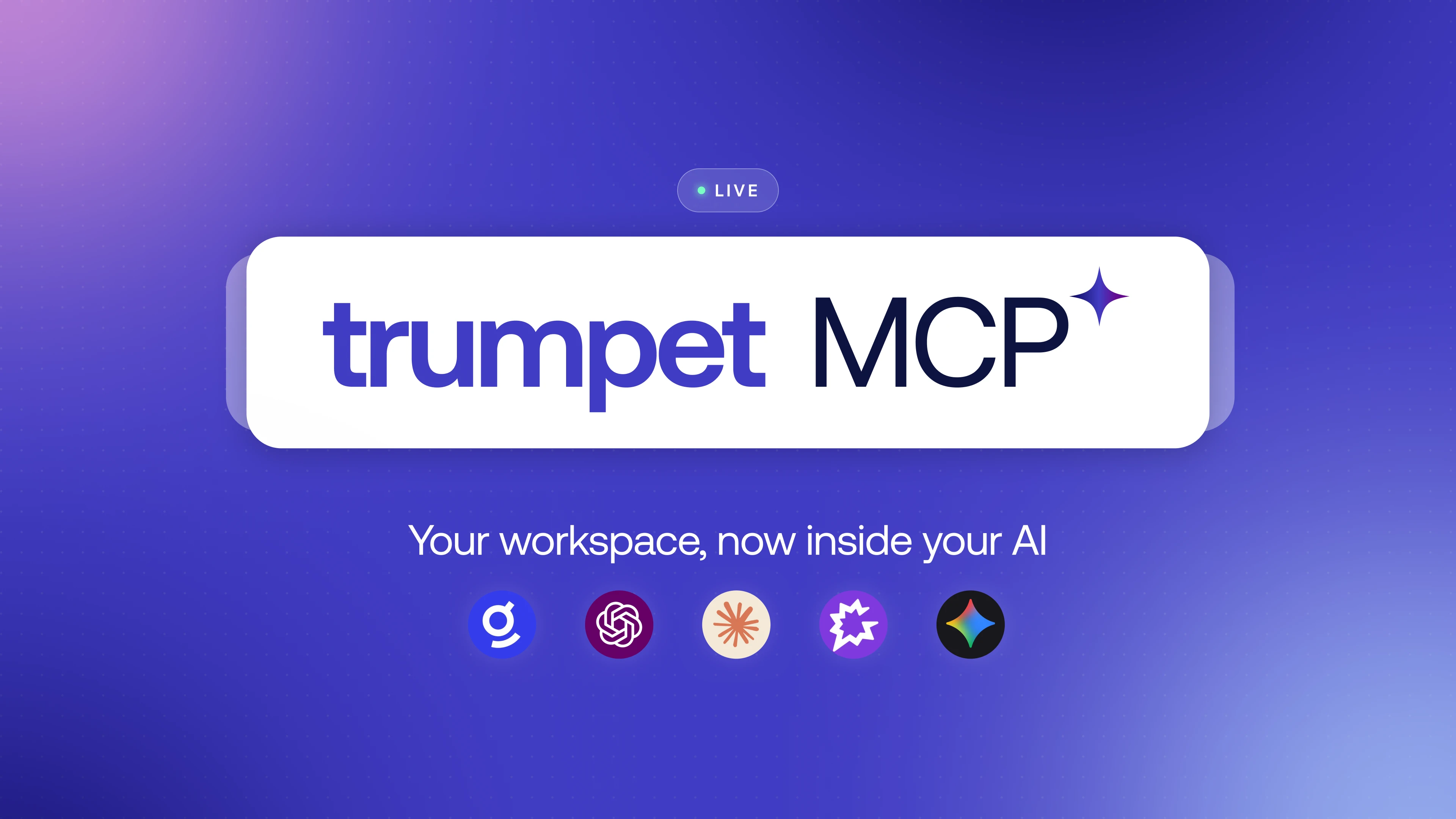
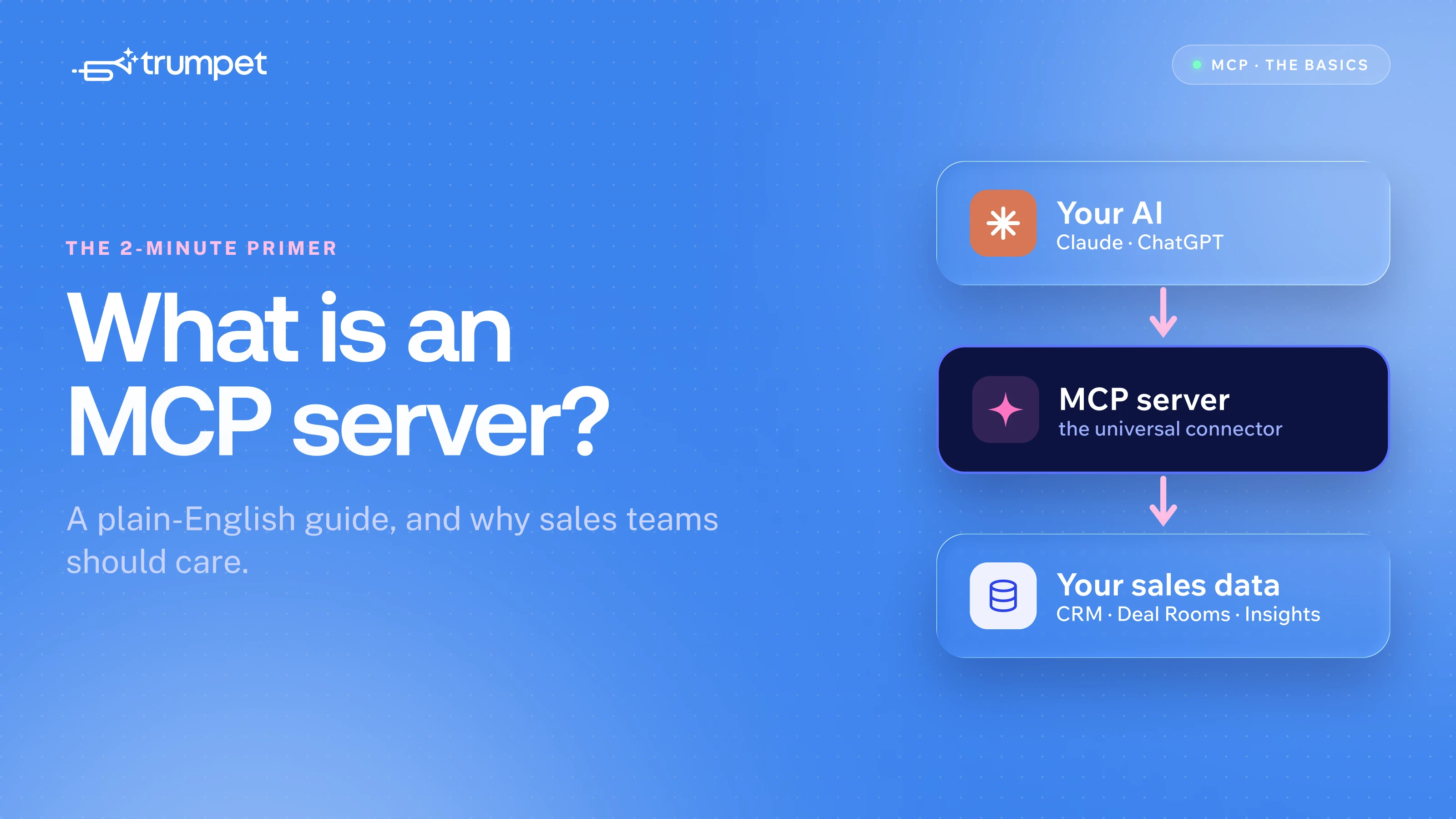
The trumpet MCP server connects your entire trumpet workspace to the AI assistant you already use: Claude, ChatGPT, Glean, Gong, or Gemini. In five minutes, with no engineering required, you can ask your AI to find a Pod, build one from a Template, pull engagement and stakeholder signals, or check deal health across your book.
The biggest unlock isn't what trumpet does alone. It's what happens when trumpet sits alongside your other connectors (your CRM, your inbox, your call recording tool) and your AI joins the dots between them in a single prompt.
Brevo's story is one version of that. The cross-stack workflows your team builds will be another.









![How to Get Started with Buyer Enablement [With Examples]](https://cdn.prod.website-files.com/65cf4fecbed2754c2236665d/65cf4fecbed2754c22366bdb_65a5af83e742f76e34ce06f3_Customer%2520Onboarding%2520_%2520Everything%2520you%2520need%2520(2).png)
.png)


.png)


.png)


.png)

.png)

.png)
.png)





