


- Helena uses trumpet Copilot to save at least 15 minutes on her post-call follow-up for each client.
- A call transcript can give Copilot the context to build a Mutual Action Plan with agreed stages, actions, owners and dates.
- Helena uses the same call context in another Copilot chat to create her buyer-specific 3 Whys at the same time.
- Copilot handles more of the repetitive building, while Helena reviews the output and spends her time on the more personal parts of the follow-up.
A good first call gives you plenty to work with, such as the buyer's priorities, why they're looking now, what needs to happen next, who needs to be involved and the steps you've both agreed to take.
The less exciting part is turning all of that into a useful follow-up once the call ends.
In this episode of Magic Moments, Helena Clisby, Senior Account Executive at trumpet, shows how she uses trumpet Copilot to turn one call transcript into two important parts of her follow-up: a Mutual Action Plan and her 3 Whys.
For Helena, using Copilot this way saves at least 15 minutes per client, while still giving her complete control over what ultimately goes in front of the buyer.
Watch the video here:
What is trumpet?
Trumpet is a buyer enablement platform that helps revenue teams create personalised, collaborative spaces for their prospects and customers.
Teams use trumpet to create Digital Sales Rooms, or Pods as we call them, bringing together everything a buyer needs throughout the sales process. That might include Mutual Action Plans, pricing, business cases, proposals, product content, videos and agreed next steps.
A Pod also gives the wider buying team somewhere to get up to speed when content is shared internally, while sellers can see how different stakeholders are engaging throughout the deal.
What is trumpet Copilot?
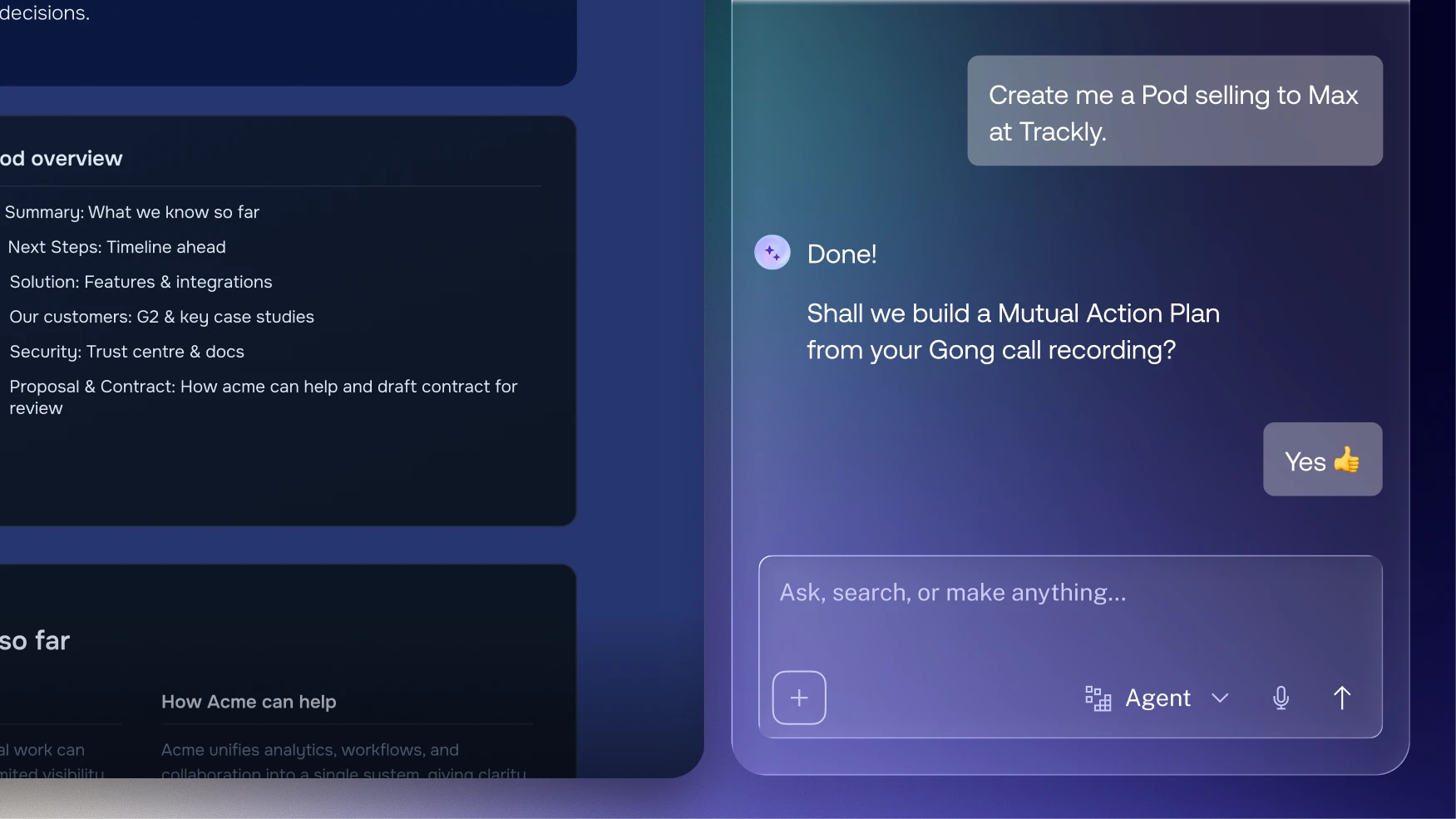
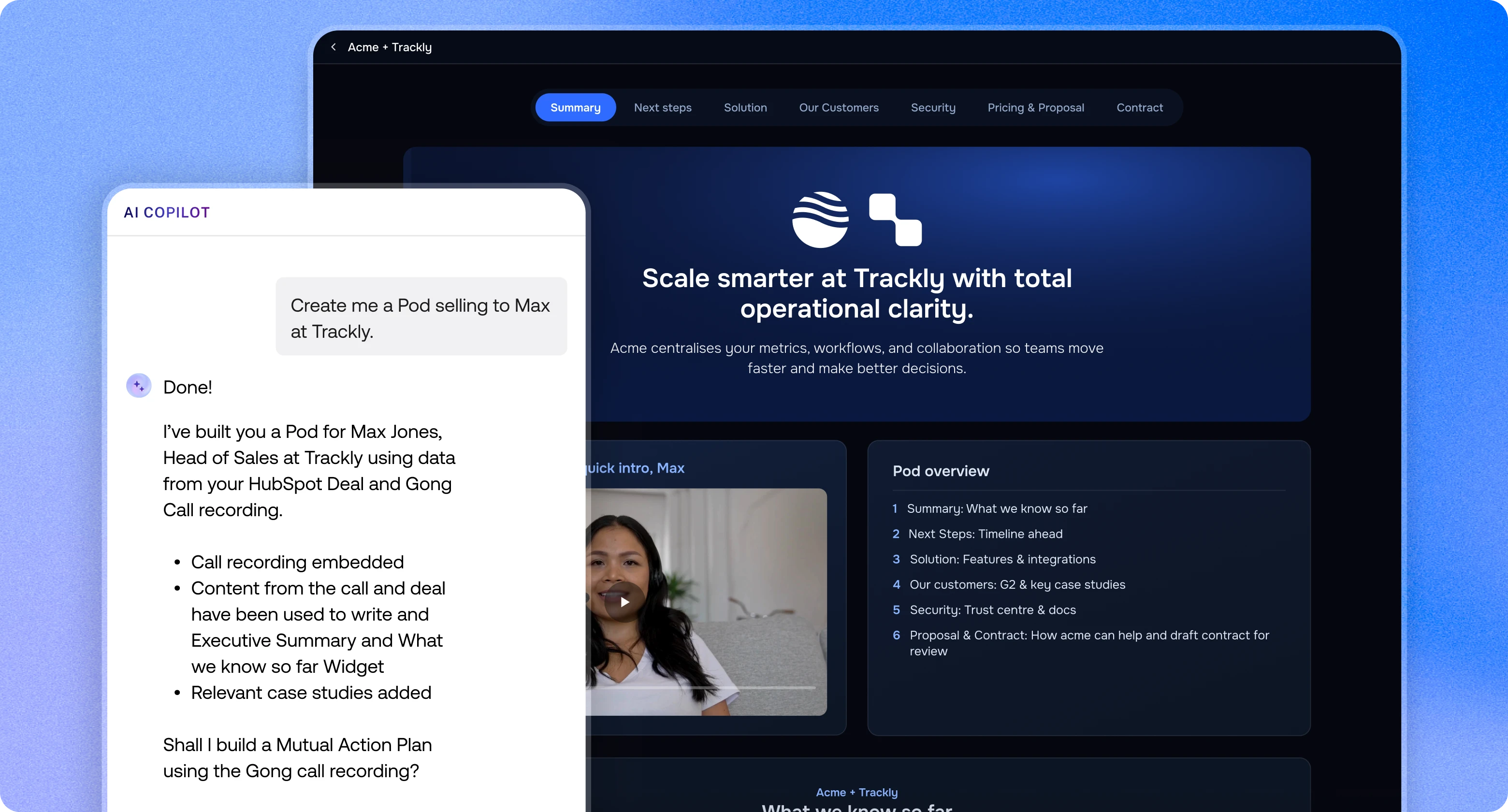
Trumpet Copilot is an AI assistant built into trumpet that helps sellers build, personalise and maintain their Pods using natural language.
Copilot can work with context from the deal, including call transcripts and recordings, uploaded files and content already stored within trumpet's CMS. Sellers can then ask it to create or update parts of their Pod rather than manually transferring information from calls into every page and Widget themselves.
For Helena, that has made a noticeable difference to what happens immediately after a first call.
Turning one call transcript into a Mutual Action Plan
One of Helena's first post-call jobs is building out the Mutual Action Plan, or MAP, so the buyer has a clear view of the path ahead.
Normally, that would mean going back through the conversation and manually pulling out the stages, commitments, owners and dates that were discussed.
Instead, Helena adds the call transcript to Copilot as context and asks it to build the MAP based on that conversation.
Copilot analyses the transcript and starts creating the plan directly inside the Pod. In Helena's example, it picks up actions including defining pilot success criteria, confirming the pilot start date, reviewing the pilot and moving through commercial and legal steps. It also begins assigning the relevant actions so Helena has a structured first version ready to review.
She can then check the plan, change dates, reassign tasks or tweak anything that needs her input before it goes to the buyer.
Building the 3 Whys at the same time
The MAP isn't Helena's only post-call job. She also wants the Pod to clearly reflect the buyer's 3 Whys: why change, why now and why trumpet.
Rather than waiting for Copilot to finish one task before starting another, Helena opens a second chat, gives it the same call transcript and asks it to fill in the 3 Whys based on what the buyer actually discussed.
That means Copilot can work on both parts of her follow-up while Helena moves on to something else.
The important part here is the context. The 3 Whys aren't being written from a generic template. Copilot is working from the conversation Helena has just had, giving her a useful starting point based on that particular buyer and opportunity.
Once it's ready, she reviews the output in exactly the same way, making any changes she wants before it becomes part of the buyer-facing Pod.
Copilots handle the repetitive part of follow-up
Helena isn't trying to automate the whole follow-up. While Copilot works on the tasks that involve organising and transferring information, she can spend her time on the parts where her input matters more.
One example is recording a personalised video for the buyer. That gives Helena a chance to recap the conversation in her own words, talk through the business case and give stakeholders who weren't on the original call a more personal introduction to the opportunity when the Pod is shared internally.
She can also continue adding content and making changes elsewhere in the Pod while Copilot works on the MAP and 3 Whys in separate chats.
The end result isn't a completely hands-off sales process. It's a much better split of the work. Copilot takes care of some of the repetitive building, while Helena stays focused on personalising the follow-up, reviewing the details and moving the opportunity forward.
From call notes to a buyer-ready Pod
For Helena, this workflow saves at least 15 minutes after each client call. But the benefit isn't just getting those minutes back.
The information from the call moves quickly into a format that's actually useful for the buyer. Agreed actions are captured in the MAP, the reasons behind the project are reflected in the 3 Whys and Helena can make sure everything is accurate before it goes live.
It also means the Pod can stay closely connected to what's actually being discussed in the deal, rather than becoming another piece of sales content that needs to be manually updated after every conversation.
FAQs
How can trumpet Copilot help with sales follow-up?
Trumpet Copilot can use deal context, such as a call transcript, to help sellers build and update content inside their Pod. In Helena's workflow, she uses it to create a Mutual Action Plan and populate her 3 Whys after a first call.
Can Copilot build a Mutual Action Plan from a sales call?
Yes. Sellers can give Copilot a call transcript or recording as context and ask it to build a Mutual Action Plan based on what was discussed. The resulting MAP can include agreed actions, owners and key dates, ready for the seller to review and edit.
What are the 3 Whys in sales?
The 3 Whys help capture the business case behind an opportunity: why change, why now and why you. Helena uses Copilot to pull this context from the buyer conversation and build it into her trumpet Pod, rather than writing it manually after every call.
Can trumpet Copilot work on more than one task at once?
Sellers can start separate Copilot chats for different tasks within their workflow. Helena uses one chat to build her Mutual Action Plan and another to work on the 3 Whys, allowing her to continue with other parts of her follow-up while Copilot works.
.png)

See what your buyers are doing between meetings
Build a Pod, share it with the buying committee and watch the signals roll in. Free to start.
.png)
.png)
.png)

.png)
.png)


![How to Get Started with Buyer Enablement [With Examples]](https://cdn.prod.website-files.com/65cf4fecbed2754c2236665d/65cf4fecbed2754c22366bdb_65a5af83e742f76e34ce06f3_Customer%2520Onboarding%2520_%2520Everything%2520you%2520need%2520(2).png)



.png)

.png)