







Be honest. When was the last time anyone on your team opened the onboarding doc after week one?
Every company is sitting on brilliant internal content. The battlecard that wins the deal against your hardest competitor. The onboarding guide that took three people a quarter to build. The pricing logic, the proposal process, the "this is how we actually do it here" knowledge that usually lives in one person's head until they finally write it down.
And then it goes into a folder. Flat, grey, alphabetised, buried three clicks deep in a CMS. Where it waits. And where, mostly, nobody looks.
That's the uncomfortable truth about internal enablement: the problem was never the content. It's the container. Static docs and nested folders ask a new hire to go digging, open five tabs, and self-serve their way to competence. Most won't. They'll ask the person next to them instead, your carefully built content gathers dust, and ramp time quietly stretches from weeks into months.
Meanwhile, there's a group of people getting a completely different experience from the exact same company: your buyers.
The best content in your company is the stuff you send outside it
Here's the irony. Teams pour real craft into what buyers see. If you've ever been on the receiving end of a trumpet Pod, you know the feeling: instead of a zip file and a "let me know if you have questions", you get one clean, interactive space. Video, the right assets, clear next steps, all in one place, built to be moved through rather than filed away. That's the reason buyers engage with a Pod when they'd have ignored the same content as an attachment.
So we kept circling one question: if that experience is good enough to win deals, why is the version we hand our own teams a folder?
It isn't any more.
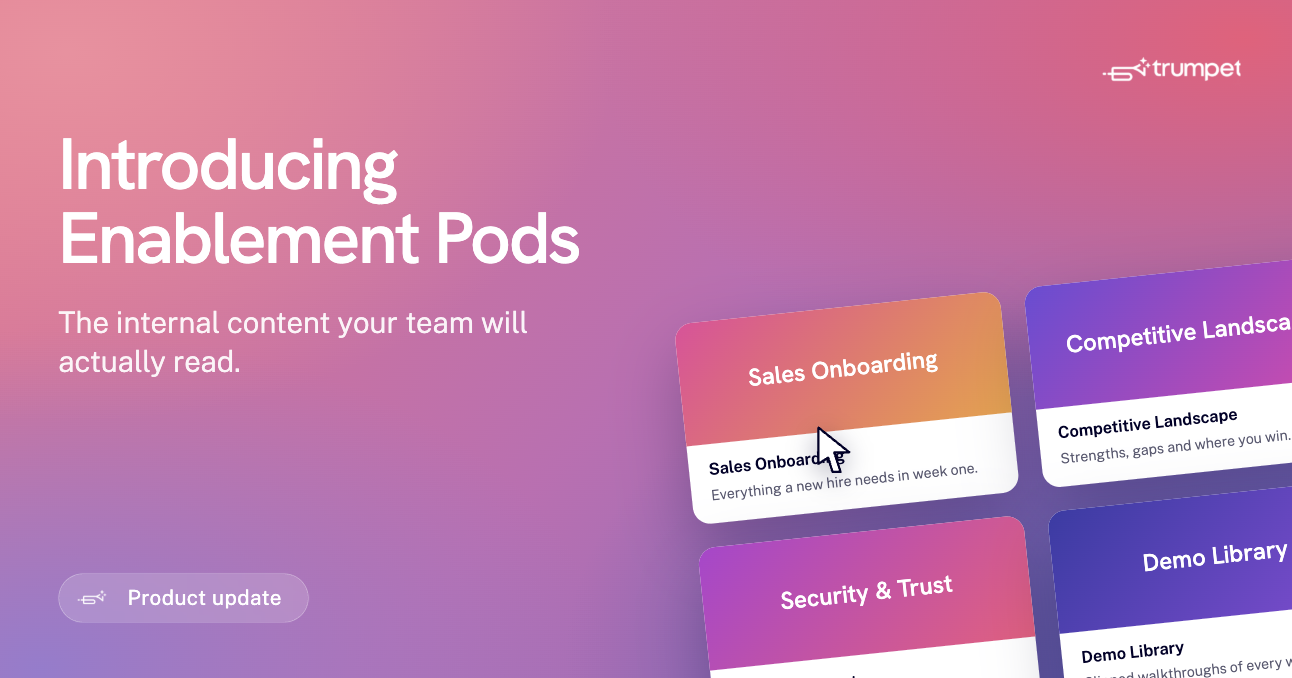
Say hello to Enablement Pods. We took the Pod experience your buyers already love and pointed it inward, at your own team. Same rich, interactive editor. Same "actually enjoyable to read" format. Except now it's for onboarding, training, battlecards, and every internal how-to that used to rot in a drive. Internal by design, never tied to a deal, and built to be opened.
What you can actually build with them
This is where it gets fun. An Enablement Pod can be anything your team needs to learn, reference, or get up to speed on. A few we think you'll reach for first:
New-hire onboarding that doesn't fall apart in week two. Build a proper onboarding journey: welcome video from the founder, the "how we sell" walkthrough, the tools, the team, the first-30-days plan. New joiners move through it like a story instead of hunting through a shared drive, and you can see exactly how far each of them has got.
Battlecards your reps will genuinely use mid-deal. A live "vs HiBob" or "vs [competitor]" pod, with the objection handling, the trap-setting questions, and the one-liners that actually land. Update it once, everyone has the current version, and no one is pitching from a battlecard that went stale six months ago.
Role-based training for AEs, SDRs and CS. Different teams, different pods, different content, all served to the right people. Discovery frameworks for the AEs. Prospecting sequences for the SDRs. Renewal playbooks for CS. Each one built to be completed, not skimmed.
The process guides that hold your standards together. Proposals, pricing, deal desk, ways of working. The stuff that keeps quality consistent as you scale, finally in a format people will read before they get it wrong, not after.
Company updates and product round-ups people open. Ship a monthly internal pod that rounds up what's new, what's changed, and what the team needs to know. The same energy as a good release note, none of the "did anyone read the all-hands deck" doubt.
The part a folder can never do: you see who's actually ramping
Anyone can store content. The reason Enablement Pods are different is that they tell you what happens next.
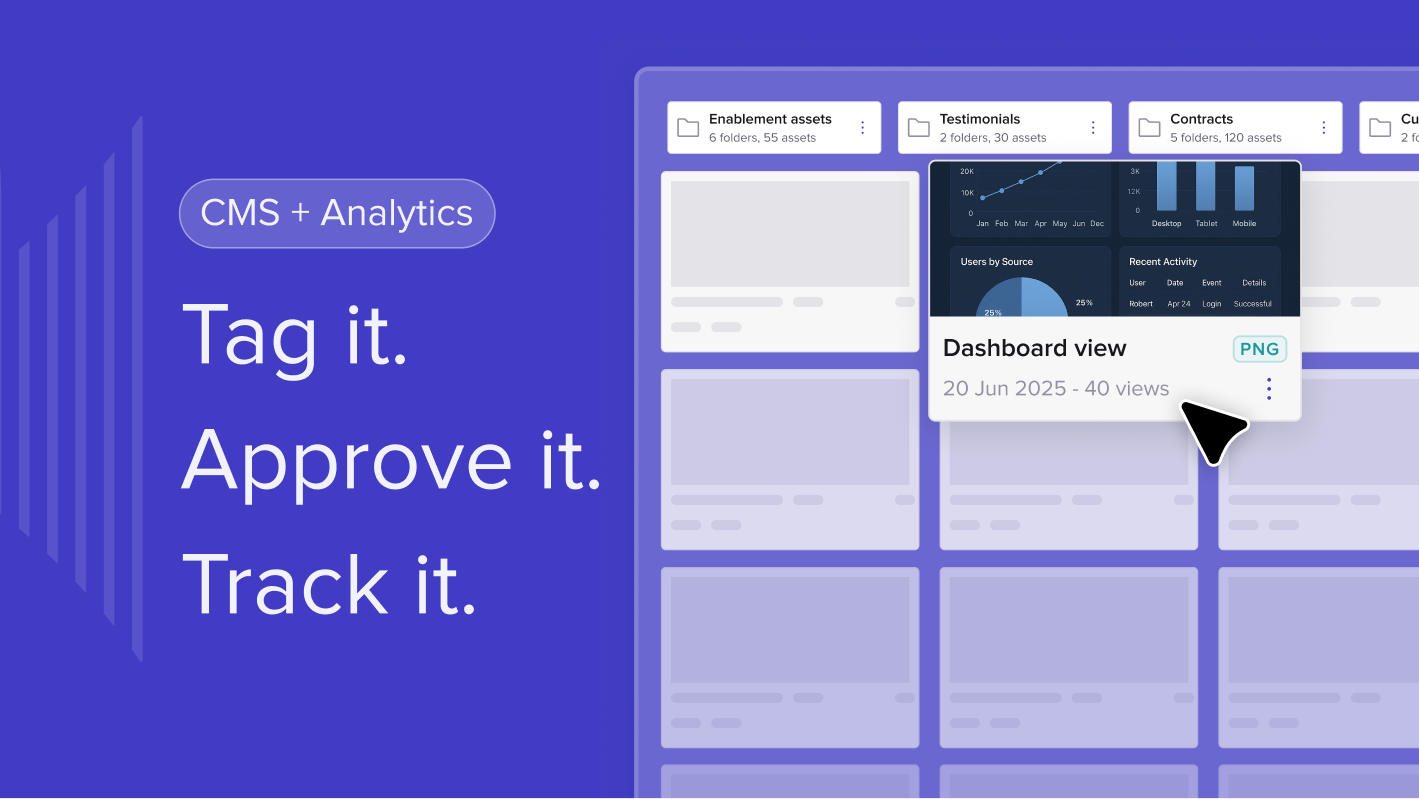
Every pod comes with a full Insights view. You get signal totals, a 7-day activity chart, and a content breakdown that shows which pages pull attention and exactly where people drop off. The Viewers tab lists every person, their engagement, and a ramp status: fully ramped, behind, or not started, including the people who haven't opened it at all. There's a live Signal Feed of activity as it happens, and a per-page view of who has read what.
For the first time, "did the team actually read it?" stops being a hopeful question in a Slack channel and becomes something you can see. Onboarding a cohort of five? You'll know on day three who's flying and who needs a nudge, before it shows up in their numbers.
Internal by design, and we mean it
Because this is your company's knowledge, Enablement Pods are locked down by default. They live in their own dedicated area, completely separate from your customer-facing Pods, and are never connected to CRM or revenue. Access is domain-restricted: a pod is only ever shared inside your own company, and there are no public links. Anyone arriving via a link has to verify their email against an approved domain before they get in, so nobody can fake their way into internal content. If you've got sister companies under one parent, you can add their domains too. Everyone else stays out.
Available now
Enablement Pods are live for Elite plans. Your best internal content has spent long enough in a folder no one opens. This is where it goes next.





![How to Get Started with Buyer Enablement [With Examples]](https://cdn.prod.website-files.com/65cf4fecbed2754c2236665d/65cf4fecbed2754c22366bdb_65a5af83e742f76e34ce06f3_Customer%2520Onboarding%2520_%2520Everything%2520you%2520need%2520(2).png)
.png)


.png)


.png)


.png)

.png)

.png)
.png)





