







A deal can look healthy right up until the one person a rep has been speaking to goes quiet, changes role, or turns out not to have the influence the rep assumed - that is the risk of a single-threaded deal. It is a familiar pattern in enterprise sales: strong early conversations, positive signals, and then a stall that is hard to explain, because the deal was never really carried by more than one relationship.
Multithreaded selling means building relationships with multiple stakeholders involved in a buying decision rather than relying on one contact. In enterprise sales, it helps teams reduce dependence on a single relationship and understand whether the business, technical, financial and approval roles relevant to the purchase are represented in the deal.
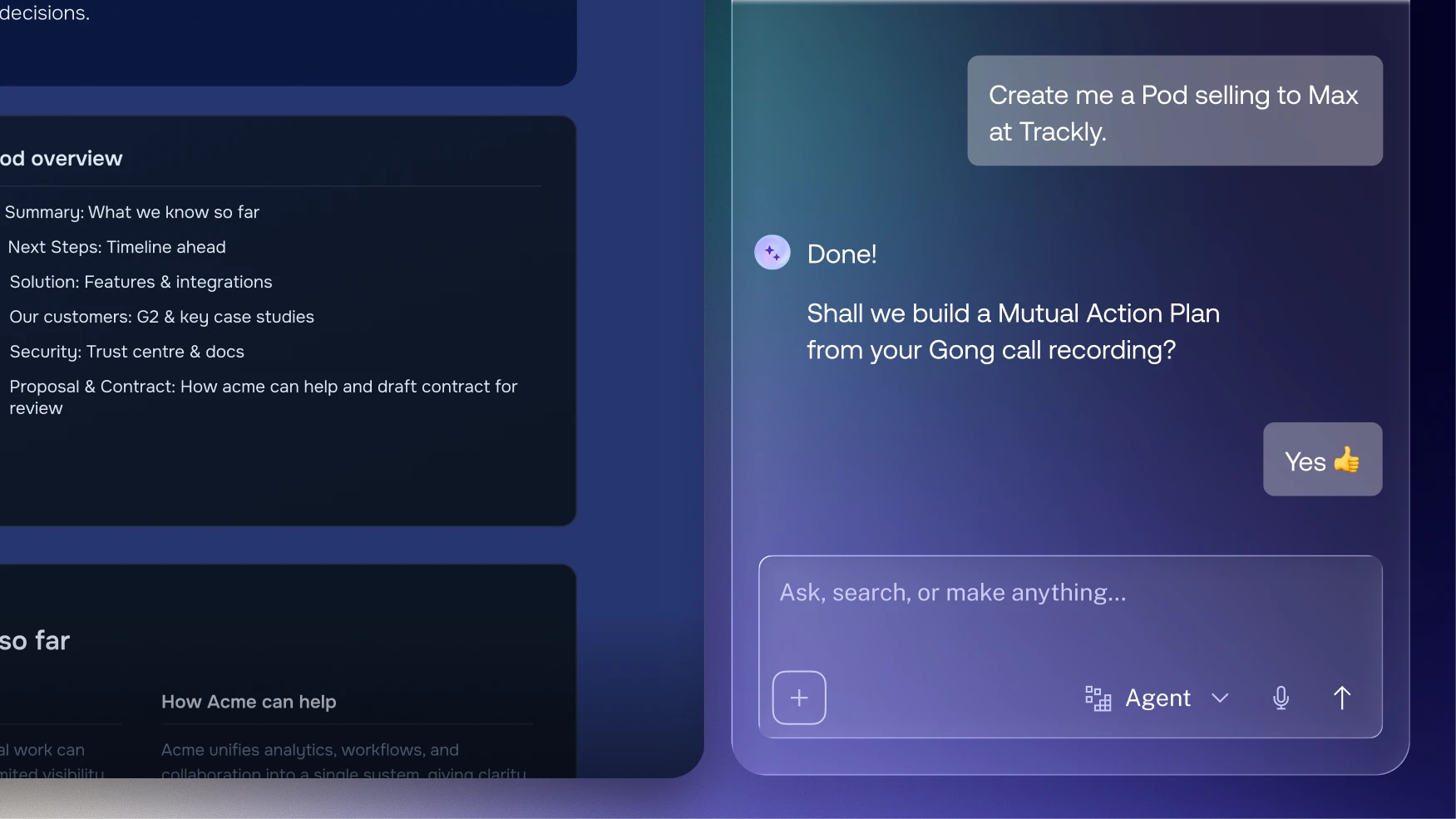
Trumpet gives sellers and managers additional buyer-side context by showing which stakeholders engage with a shared Pod, helping teams inspect stakeholder coverage alongside CRM, conversation and seller context.
A confident champion is not the same as a covered deal. Multithreading turns stakeholder coverage from something a rep handles by instinct into something managers can inspect, coach and improve.ww
What is multithreaded selling?
Multithreaded selling means engaging multiple stakeholders across a buying group during a deal, rather than relying on one contact to represent the whole account internally.
It is worth being clear about what multithreading is not:
- Not simply copying more people on emails, without those people ever engaging directly
- Not a one-time introduction to a second contact, then a return to single-threaded conversations
- Not something that only applies to very large deals; the same coverage risk exists at smaller enterprise deal sizes too
- Not a replacement for a strong champion relationship, but an extension of it
The distinction matters because it is easy to mistake activity, such as one extra name on an email thread, for genuine coverage of the roles a purchase actually needs.
Why multithreading matters in enterprise sales
A purchase can involve people from finance, security, procurement, technical and business teams, each with their own requirements. A finance stakeholder is typically weighing value and budget, a security or IT reviewer is assessing risk and technical fit, an end user is judging whether the purchase will actually work day to day, and procurement may be assessing contract terms separately from all of them. A single champion, however senior, is unlikely to speak for all of those perspectives at once.
Champions can also change roles or leave companies during longer enterprise sales cycles. A single contact, however senior, is rarely able to answer for security, procurement, finance and end users on their own. When only one relationship carries a deal, that relationship becomes a single point of failure.
Signs a deal is single-threaded
- Only one stakeholder has ever replied or attended a call, across the entire deal so far
- No visibility into who else is reviewing the deal internally, or what questions they are asking
- The champion is relaying information rather than other stakeholders engaging directly with the seller
- The deal has stalled with no clear reason, and no new stakeholders have appeared during that time
How to identify who is missing from a deal
Identifying who is missing starts with a practical framework rather than guesswork:
- Map the buying group early: likely economic buyer, security or IT reviewer, procurement, end users, and any executive sponsor
- Ask the champion directly who else needs to be involved and when, rather than assuming the champion will raise it unprompted
- Use CRM and account research to identify likely stakeholders who have not yet engaged, based on their role and function
- Use buyer engagement visibility, where available, to see who is engaging with shared content, not just who is listed as a contact
Within a trumpet Pod, stakeholder activity can show which named contacts are engaging with shared content, giving the seller additional context on who is participating in the deal, beyond who has been formally introduced on a call.
Multithreading without going around your champion
Bringing in new stakeholders does not have to put a champion relationship at risk. “How to Multithread a Sales Deal Without Going Around Your Champion” covers the specific tactics for introducing new stakeholders in a way that keeps the champion involved rather than sidelined, such as how to frame the introduction and when to ask for it.
This article sits a level above those tactics. It focuses on the wider process: why multithreading matters across an enterprise sales motion, and how a team builds it into pipeline reviews, coaching and reporting, rather than the specific approach to any single introduction.
Building multithreading into a team process, not just a rep skill
When multithreading depends entirely on rep instinct, coverage varies by rep. Building it into pipeline reviews, coaching and RevOps reporting makes it something the whole team does consistently, not something only your best reps get right.
What managers should inspect in pipeline reviews
A pipeline review is a natural place to check stakeholder coverage, alongside the usual questions about stage and next steps:
- Which stakeholder roles are represented at this stage of the deal, and which are still missing
- Whether any new stakeholders have engaged recently, or the buying group has stayed static
- Whether engagement is coming from more than one person, or concentrated around the champion alone
- Whether the deal currently depends on a single relationship for its next step to happen
Better questions for pipeline reviews
Small changes in the questions a manager asks can surface stakeholder coverage directly, rather than settling for a yes or no.
Instead of asking
Ask
“Have you multithreaded this?”
“Which decision roles are involved and which are still unknown?”
“How many contacts do we have?”
“Which people are actively participating in the buying process?”
“Have you met the economic buyer?”
“What does the economic buyer need to evaluate this?”
“Why has this stalled?”
“Which approval role or next step is currently missing?”
Each question on the right is harder to answer with a simple yes, which is the point. It asks the rep to describe the buying group rather than confirm that multithreading has technically happened.
Contact count is not coverage
A long contact list is not the same as active participation. The relevant test is whether the roles that matter for this specific deal are represented and engaged, not how many names appear in the CRM. A deal with ten contacts and one active relationship is still single-threaded in every way that matters.
Spotting reliance on a single relationship
- Only one person has ever replied or engaged with the seller directly
- Engagement has flatlined around one stakeholder, even after content has been shared more widely
- Other named contacts appear on the account but have never engaged with anything sent to them
- The rep cannot describe what any other stakeholder needs from the deal, beyond a name and a title
Any one of these on its own is not necessarily a problem. Several appearing together on the same deal is a reasonable prompt to ask what is being done about it.
Teaching stakeholder-role planning in enablement
Enablement can help reps plan which roles a deal is likely to need, rather than leaving stakeholder mapping to instinct. This can include coaching reps on how to ask a champion who else needs to be involved, how to approach a stakeholder who has not yet engaged directly, and how to frame that outreach so it strengthens rather than bypasses the champion relationship.
New reps in particular benefit from a repeatable framework here. Experienced reps often multithread by instinct, built up over many deals; a documented process, reinforced in pipeline reviews, gives newer reps the same starting point without needing years to develop it.
Making stakeholder context visible to RevOps
RevOps and managers can use CRM connectivity and reporting, such as trumpet's Nerve Centre, to see stakeholder engagement patterns across the pipeline rather than deal by deal, which can help surface single-threaded deals earlier in a review cycle. That earlier visibility gives a manager time to intervene, whether by coaching the rep or asking directly for a plan to reach an unengaged stakeholder, before the deal reaches a stage where a missing role becomes a blocker.
How visibility into buyer engagement supports multithreading
- Once a shared workspace exists, such as a Digital Sales Room or Pod, a team can see which stakeholders are engaging with shared content, not only who has taken a call
- This gives multithreading decisions more evidence to work with, rather than relying on the rep's read of the room alone
- Managers can use this visibility to ask specific questions in 1:1s, such as who else needs to see the content when engagement is only coming from one person
- It can also help a rep notice a new, previously unengaged stakeholder starting to review shared content, which is often a useful moment to reach out directly
Trumpet's stakeholder and engagement visibility inside a Pod gives sellers and managers a shared view of who is engaging with the shared buyer workspace. This is one useful signal among several, and works alongside CRM data, conversation context and seller judgement rather than serving as the complete picture of who is involved in the decision. A stakeholder viewing shared content can indicate interest worth following up on, but it does not by itself confirm their role in the final decision or replace a direct conversation.
Common mistakes with multithreading
- Treating one additional contact as done. A single new name rarely covers every role a deal actually needs.
- Adding stakeholders late, only once a deal has stalled, rather than mapping the buying group early.
- Multithreading around a champion instead of with them, which can damage a relationship that took time to build.
- Measuring multithreading by contact count rather than genuine engagement, which rewards long contact lists over real coverage.
- Leaving stakeholder coverage entirely to individual rep judgement, with no review in pipeline inspection, so coverage varies by rep rather than by deal risk.
Final thoughts
Multithreaded selling means building relationships with multiple stakeholders involved in a buying decision rather than relying on one contact. A confident champion is not the same as a covered deal.
Building stakeholder coverage into pipeline reviews, and giving teams visibility into who is engaging, as trumpet does through stakeholder and buyer engagement visibility, turns multithreading from a skill some reps have into a process a whole team can inspect and coach.
The goal is not to add names to a deal. It is to make sure the roles that will ultimately decide are actually represented before the deal reaches them, and that the team has a way of checking that this has happened, rather than assuming it has.
FAQs
What is multithreaded selling?
Multithreaded selling means building relationships with multiple stakeholders involved in a buying decision, rather than relying on one contact to represent the whole account.
Why does multithreading matter in enterprise deals?
Enterprise purchases can involve multiple functions, such as finance, security and procurement, each with their own requirements. Relying on one contact to represent all of them leaves a deal exposed if that relationship changes or goes quiet.
How do you know if a deal is single-threaded?
Signs include only one stakeholder ever replying or attending a call, no visibility into who else is reviewing the deal internally, and a deal that has stalled with no new stakeholders appearing.
How can sales managers coach multithreading across a team?
By inspecting stakeholder roles and engagement in pipeline reviews, rather than leaving stakeholder coverage entirely to individual rep instinct.
Does multithreading mean going around the champion?
No. Multithreading should extend a champion relationship, not bypass it. Bringing in new stakeholders in a way that keeps the champion informed and involved is a separate skill, covered in a dedicated article on multithreading without going around your champion.
How does trumpet support multithreading?
Trumpet gives sellers and managers visibility into which stakeholders are engaging with a shared Pod, helping teams inspect stakeholder coverage alongside CRM, conversation and seller context.








![How to Get Started with Buyer Enablement [With Examples]](https://cdn.prod.website-files.com/65cf4fecbed2754c2236665d/65cf4fecbed2754c22366bdb_65a5af83e742f76e34ce06f3_Customer%2520Onboarding%2520_%2520Everything%2520you%2520need%2520(2).png)
.png)


.png)


.png)


.png)

.png)

.png)
.png)





