

Do you know your BANT from your MEDDICC?
Your ARR from your MRR?
Your MQL from your SQL?
It's the language of the sales job. Things are moving so quick we abreviate everything.
We've put a list of all the most used sales terms in 2026 below.
Let’s get fluent.
Core sales acronyms every rep should know
ABC – Always Be Closing
The classic mantra. Every interaction should move the deal forward.
BANT – Budget, Authority, Need, Timeline
Qualification framework to assess deal readiness.
MEDDICC – Metrics, Economic Buyer, Decision Criteria, Decision Process, Identify Pain, Champion, Competition
A structured way to qualify complex B2B deals.
ICP – Ideal Customer Profile
The definition of your best-fit customer.
SQL – Sales Qualified Lead
A lead ready for direct sales engagement.
MQL – Marketing Qualified Lead
A lead that marketing has deemed likely to convert.
AE – Account Executive
Owns closing new deals.
SDR / BDR – Sales or Business Development Representative
Owns outbound prospecting and early qualification.
AM – Account Manager
Manages and grows existing customers.
CSM – Customer Success Manager
Owns post-sale value and retention.
Revenue metrics every sales leader cares about
These acronyms show up in board decks, forecast calls, and leadership meetings.
ARR – Annual Recurring Revenue
Total recurring revenue expected annually.
MRR – Monthly Recurring Revenue
Recurring revenue per month.
ACV – Annual Contract Value
The annual value of a contract.
TCV – Total Contract Value
Total value across the entire contract duration.
CAC – Customer Acquisition Cost
Cost to acquire a new customer.
LTV / CLTV – Customer Lifetime Value
Total revenue expected from a customer.
Churn
Percentage of customers who leave.
NPS – Net Promoter Score
Customer loyalty metric.
QoQ – Quarter over Quarter
Sequential quarterly growth comparison.
YoY – Year over Year
Annual performance comparison.
CAGR – Compound Annual Growth Rate
Average growth rate over multiple years.
RevOps and enablement acronyms
For the teams connecting process, systems, and performance.
CRM – Customer Relationship Management
System of record for sales activity.
SLA – Service Level Agreement
Defined expectations between teams.
KPI – Key Performance Indicator
Performance measurement metric.
CX – Customer Experience
Total buyer perception across touch points.
GP – Gross Profit
Revenue minus cost of goods sold.
SWOT – Strengths, Weaknesses, Opportunities, Threats
Strategic analysis framework.
FAB – Features, Advantages, Benefits
Messaging framework for positioning value.
Buyer enablement and collaboration acronyms
This is where modern revenue teams operate differently in 2026.
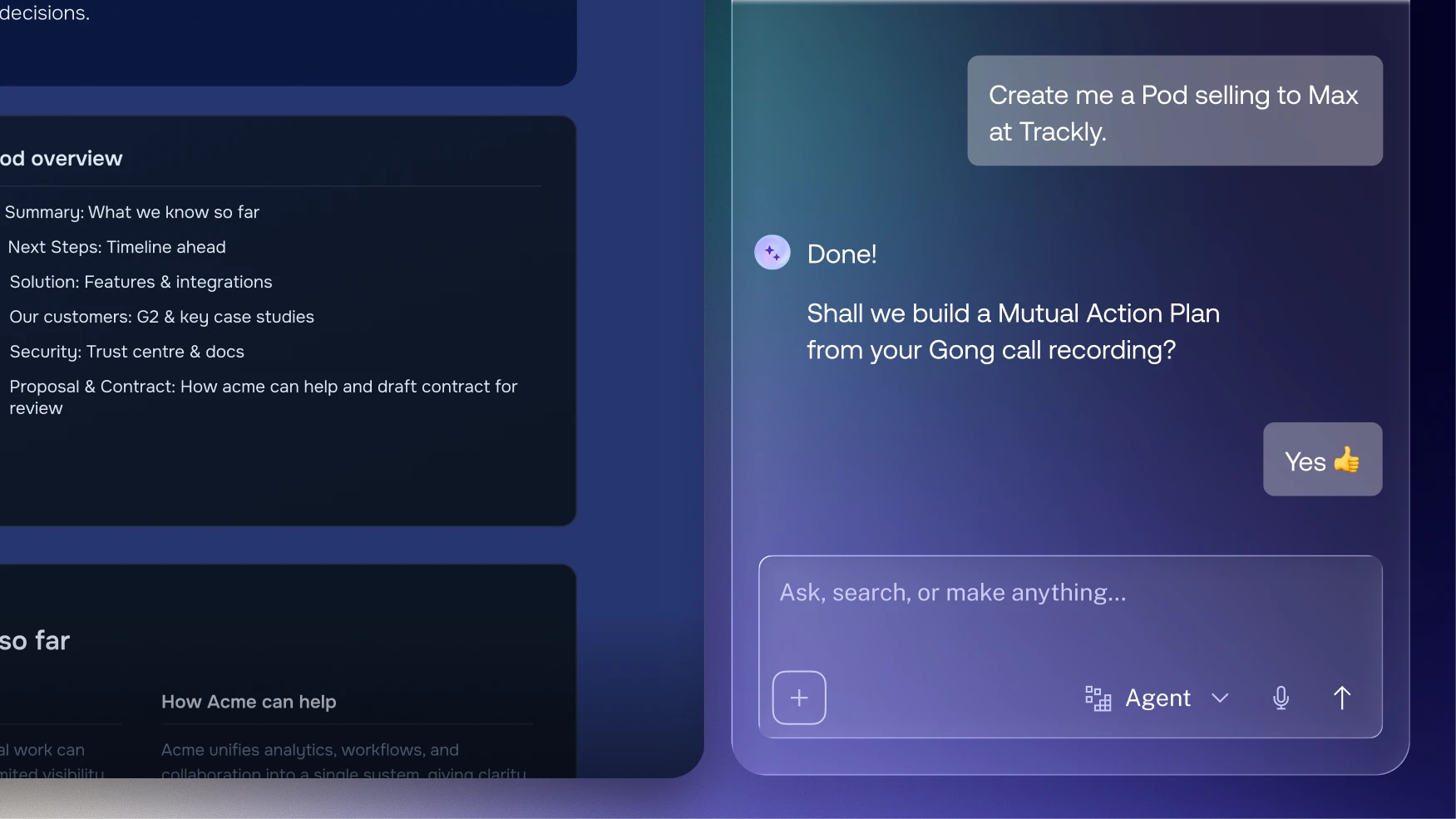
MAP – Mutual Action Plan
A shared plan between buyer and seller outlining agreed next steps.
DSR – Digital Sales Room
A shared digital workspace for buyer and seller collaboration.
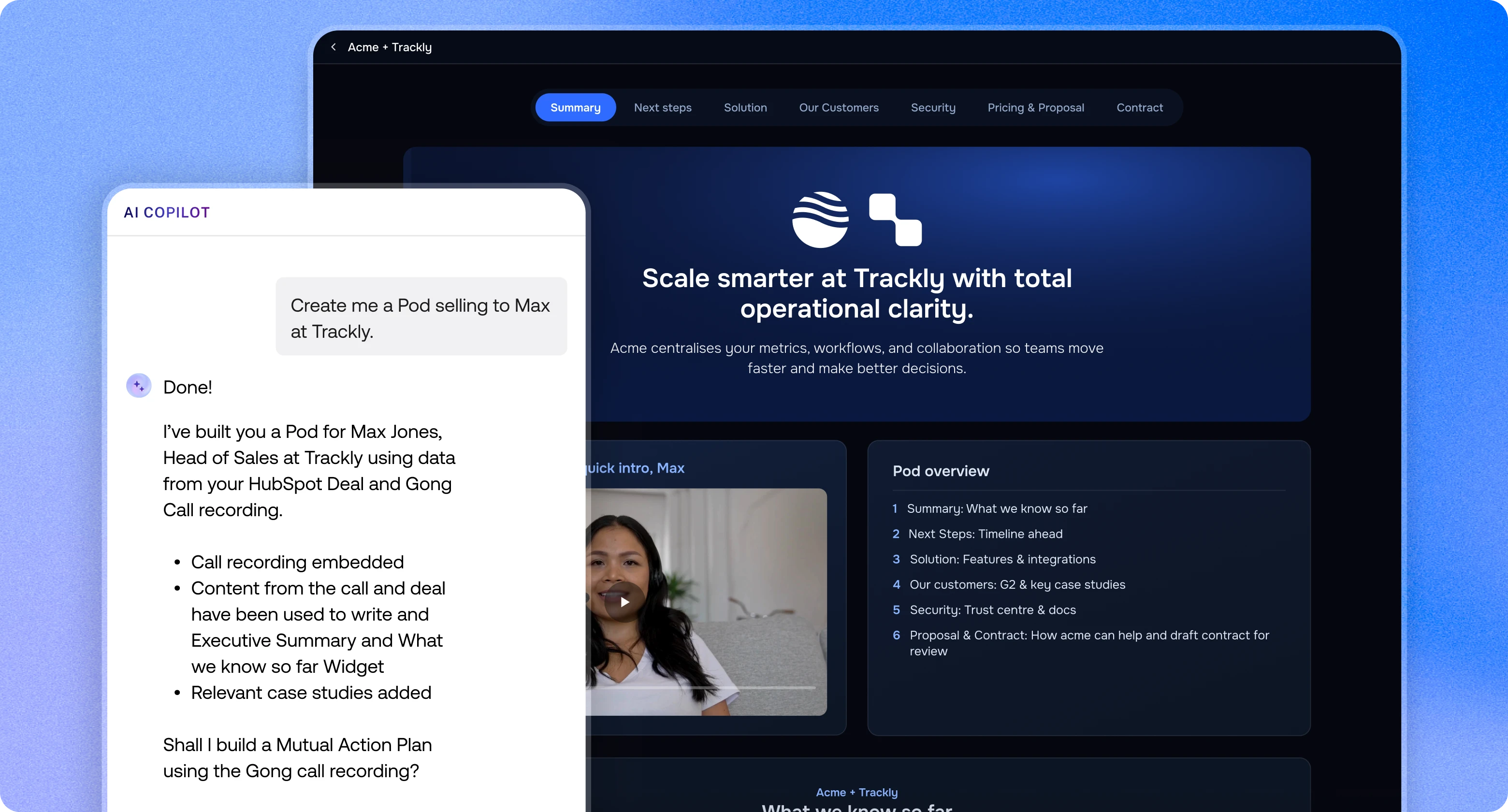
Pod – trumpet Digital Sales Room
A personalised workspace that centralises content, engagement, next steps, and collaboration.
PQL – Product Qualified Lead
A lead showing intent through product usage.
Marketing and growth acronyms
Because pipeline doesn’t appear out of nowhere.
SEO – Search Engine Optimisation
Improving visibility in search engines.
PPC – Pay Per Click
Online advertising model.
CTR – Click Through Rate
Percentage of clicks on content or ads.
WOM – Word of Mouth
Organic customer advocacy.
UV – Unique Visitors
Distinct website visitors.
B2B model acronyms
Understanding your operating environment matters.
B2B – Business to Business
Company sells to companies.
B2C – Business to Consumer
Company sells to individuals.
SaaS – Software as a Service
Cloud-based subscription software model.
SMB – Small to Medium Business
ISR – Inside Sales Representative
OSR – Outside Sales Representative
Why sales acronyms matter more than ever
Acronyms aren’t just shorthand; they represent how revenue teams qualify opportunities, measure performance, forecast outcomes, collaborate internally, and retain customers. If you don’t understand the language, you miss the signal behind it. But knowing the acronyms alone isn’t enough. The best revenue teams don’t just define MAPs, they use them properly. They don’t just track ARR, they connect it to real engagement. They don’t just log activity in a CRM, they create a shared flow with buyers. That’s the difference in 2026.
.png)

See what your buyers are doing between meetings
Build a Pod, share it with the buying committee and watch the signals roll in. Free to start.
.png)
.png)
.png)

.png)
.png)


![How to Get Started with Buyer Enablement [With Examples]](https://cdn.prod.website-files.com/65cf4fecbed2754c2236665d/65cf4fecbed2754c22366bdb_65a5af83e742f76e34ce06f3_Customer%2520Onboarding%2520_%2520Everything%2520you%2520need%2520(2).png)



.png)

.png)