


- Watch Rory Sadler's full walkthrough of trumpet Copilot.
- Discover how trained AI agents can build and update Pods from simple prompts.
- See Canvas turn ideas into interactive, branded Widgets without writing code.
- Learn how the industry's first MCP client for Digital Sales Rooms connects HubSpot, Gong, Notion, Slack and more.
- Watch Copilot create Mutual Action Plans, executive summaries and buyer-ready workspaces live.
- Understand how AI can reduce manual admin while improving buyer experiences.
AI is changing the way revenue teams work
Over the last two years, AI has become part of almost every revenue team's workflow.
Salespeople use it to summarise calls. Marketing teams generate content. Customer Success teams draft onboarding plans. While these tools save time, they often work independently, requiring users to move between multiple platforms and manually provide the context AI needs to be useful.
At trumpet, we believe AI should work where revenue teams already work.
That's why we've built Copilot, the new AI driver of trumpet, alongside Canvas, our new vibe-coding Widget builder, and the first MCP client built into a Digital Sales Room.
Over 15,000 revenue teams already use trumpet to build better buying journeys. Copilot builds on that foundation, bringing trained AI agents directly into the Digital Sales Room to help teams move faster while creating a more consistent buying experience.
To celebrate the launch, Rory Sadler, CEO and Co-founder of trumpet, hosted a live walkthrough demonstrating exactly how these new capabilities work and what they mean for modern revenue teams.
Watch the full webinar below.
Meet Copilot
Copilot is designed specifically for revenue teams.
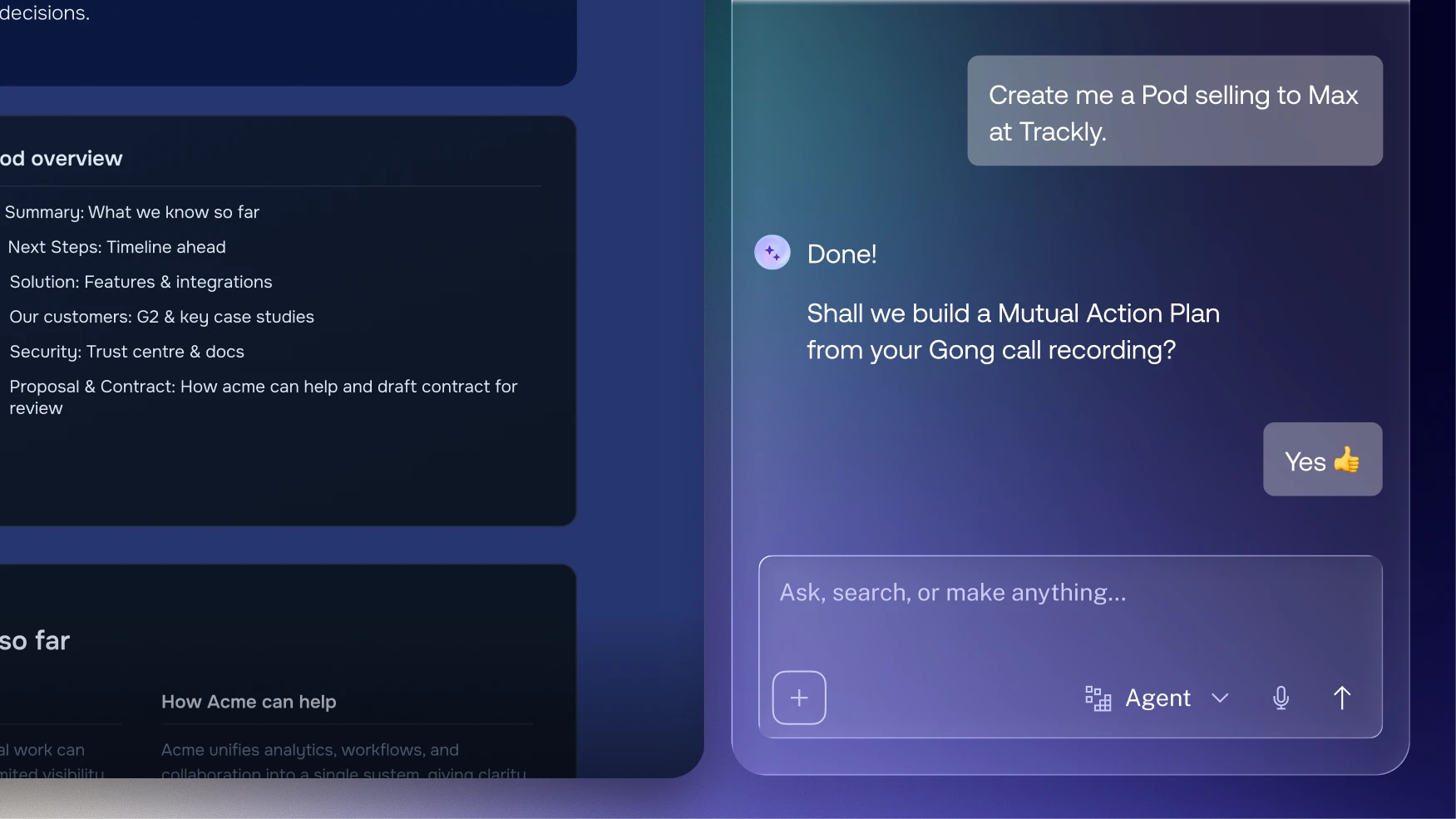
Rather than acting as a standalone chatbot, Copilot works directly inside your Digital Sales Room. It understands every Widget, page and capability inside trumpet, allowing revenue teams to build, edit and manage Pods using natural language.
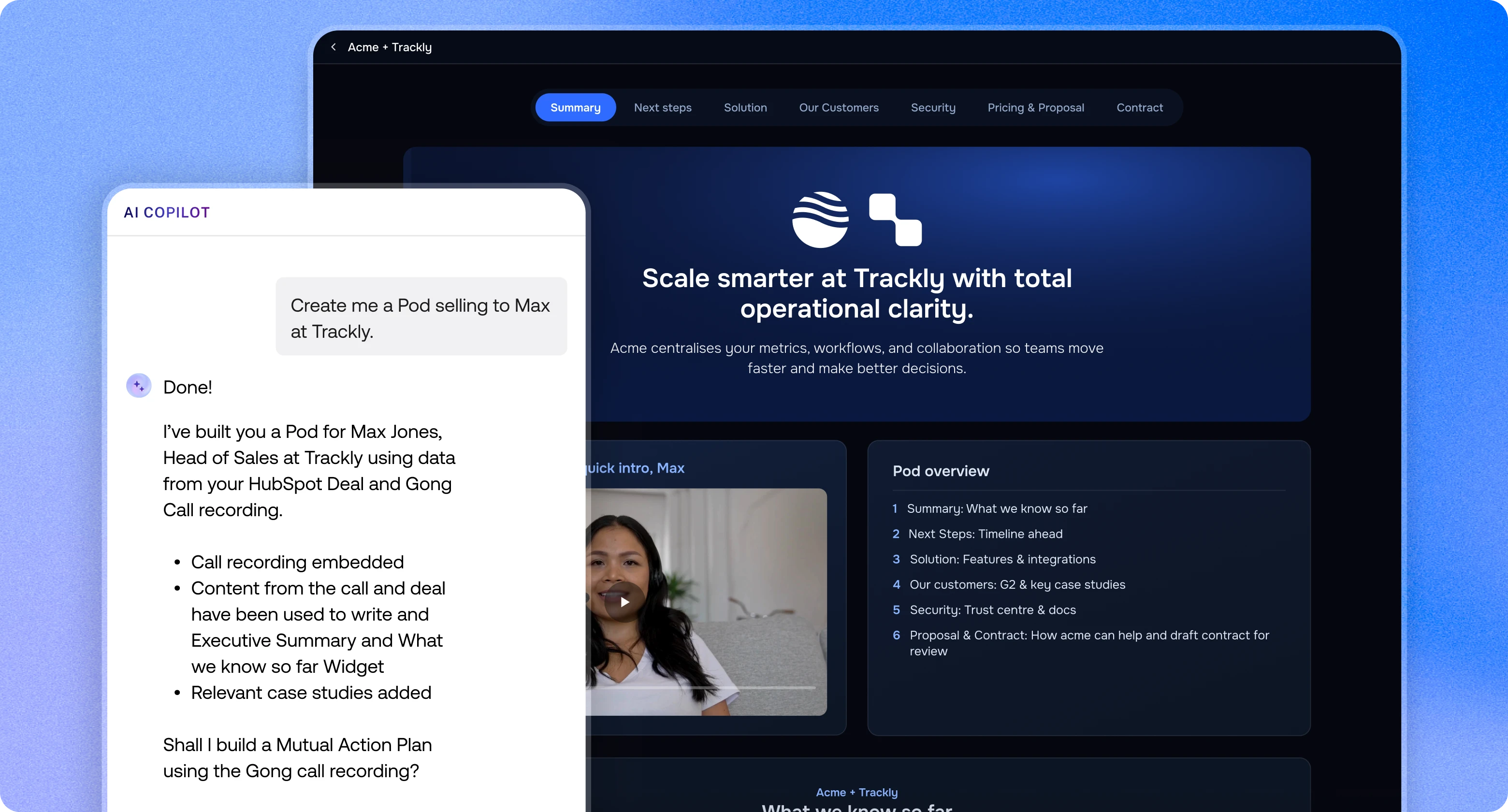
Whether you're creating a new buyer workspace, generating a Mutual Action Plan from a discovery call, producing an executive summary or finding relevant customer content, Copilot brings together trained AI agents to complete the work for you.
During the webinar, Rory demonstrates how multiple specialist AI agents — including a sales agent, a Mutual Action Plan agent, a timeline agent, a CS agent and around 30 others — work together behind the scenes, allowing a single prompt to complete tasks that would previously have required several manual steps. Rory ran two separate requests in parallel chats during the demo, a reminder that you're not limited to one Copilot conversation at a time.
Ask Mode and Agent Mode
Copilot works in two ways.
Ask Mode allows you to ask questions about your Pods, buyer engagement and connected data without changing anything. In the webinar, Rory used Ask Mode to find out which stakeholders on a deal had engaged the least, Copilot flagged that no champion had been identified and only 2 of 14 stakeholders were active, surfacing that insight in around 10 seconds.
Agent Mode allows Copilot to take action, building, editing and updating your Pod from a single prompt using trained AI agents.
Both modes work directly inside your Digital Sales Room, so nothing needs to happen outside trumpet. This gives revenue teams complete flexibility, whether they simply want insights or want AI to do the work.
Query trumpet from anywhere with the MCP server
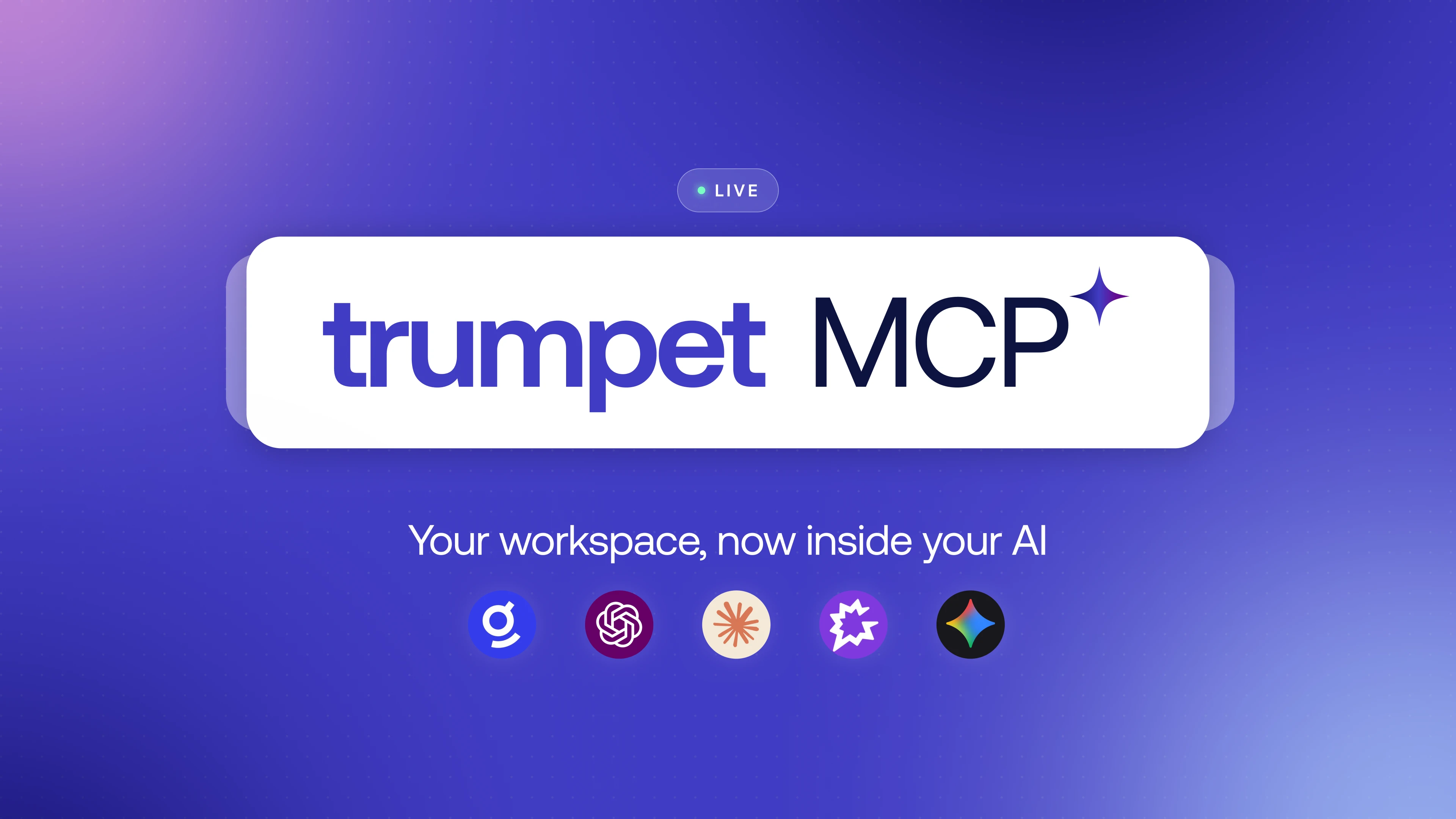
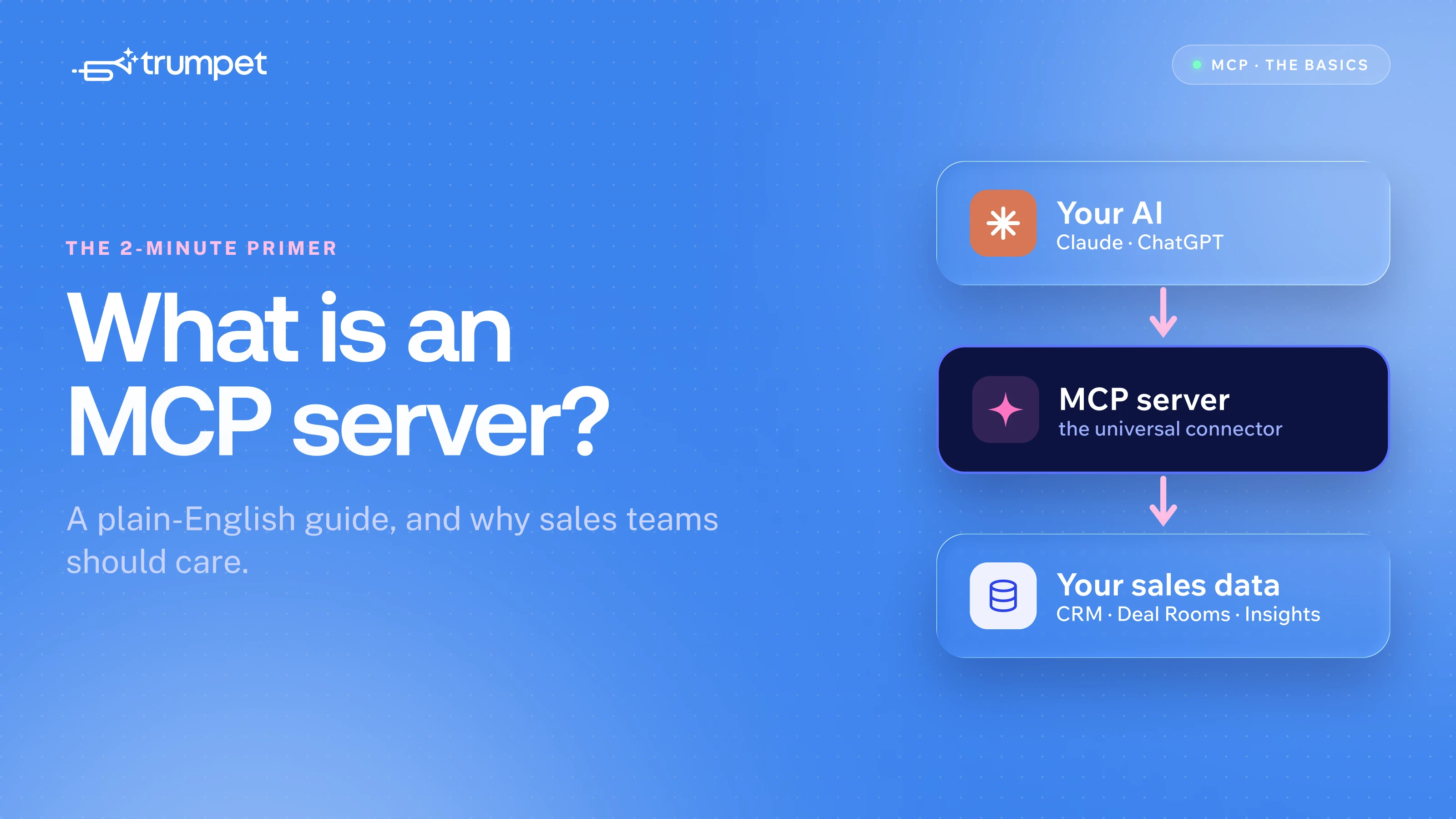
Alongside the MCP client, trumpet also has a live MCP server. Where the MCP client brings outside context into trumpet, the server does the reverse: it lets you query trumpet's own data Pod analytics, usage trends, gaps and risks from AI tools your team already uses, like Claude, ChatGPT or Gemini.
In the webinar, Rory used Claude to search HubSpot and build a new Pod from a template, entirely outside the trumpet interface, showing how your Digital Sales Room and everything in it can now be queried and actioned from wherever your team is already working.
Canvas: vibe coding for revenue teams
Revenue teams regularly have ideas that could improve the buying experience. An ROI calculator tailored to a prospect. An interactive implementation plan. A pricing tool built around a customer's requirements. The challenge has never been the idea. It's been finding the time and technical resource to build it.
Canvas changes that.
Using natural language, Copilot turns a simple prompt into a fully interactive Widget that lives inside your Digital Sales Room. Buyers can interact with calculators, sliders, pricing tools and other experiences in real time, while remaining inside the secure trumpet environment. In the webinar, Rory prompted Canvas to build an ROI calculator styled to match a prospect's brand, and watched it appear live in the Pod editor.
Unlike external no-code tools, every Widget benefits from trumpet's templates, branding, collaboration features and buyer engagement analytics. Canvas Widgets are edited by continuing to prompt Copilot, rather than editing directly in the Pod editor like other Widgets.
The first MCP client inside a Digital Sales Room
One of the biggest announcements during the webinar was trumpet's new MCP client.
AI performs best when it has access to the right information. Rather than asking sellers to copy content between systems, the MCP client connects Copilot directly to the tools revenue teams already use.
Put simply, the MCP client gives Copilot the business context it needs to make better decisions. Instead of relying only on what's inside your Pod, it can securely understand information from the systems your team already uses.
Connect platforms including:
- HubSpot
- Gong
- Notion
- Slack
- Granola
- Sybill
- Custom MCP servers
Once connected, Copilot can securely use that context when building Pods, answering questions or generating buyer-facing content.
It means less switching between applications and more time focused on customers.
What Rory demonstrates during the webinar
Throughout the live session, Rory shows Copilot completing real revenue workflows inside the Digital Sales Room in just a few prompts, including:
- Creating a brand-new Pod from a template using the MCP server.
- Building a Mutual Action Plan from a discovery call transcript.
- Writing executive summaries for different stakeholders.
- Finding relevant customer stories automatically.
- Analysing buyer engagement and identifying risks.
- Creating branded interactive Widgets using Canvas.
- Pulling information from connected tools through the MCP client.
Rather than showing isolated AI features, the webinar demonstrates how every capability works together to support the entire buyer journey.
What this means for revenue teams
Copilot isn't simply another AI assistant.
It represents a different way of working.
Instead of spending time creating buyer workspaces, searching for content, updating Mutual Action Plans or manually preparing follow-up materials, revenue teams can focus more of their time on customer conversations.
By combining AI agents, interactive experiences and connected business context inside a single Digital Sales Room, trumpet helps reduce manual administration while creating more consistent buying experiences for every customer.
What early users are saying
Ahead of launch, Copilot was tested with a number of revenue teams.
Jens Stockel, Lead Account Executive at HubSpot, has been using Copilot to speed up post-discovery follow-up, manage complex buying committees and reduce administrative work.
"As a Lead AE, the time between a discovery call and follow-up is critical. trumpet Copilot completely removes the admin bottleneck by instantly turning call recordings into hyper-personalised Pods, allowing me to strike while the iron is hot and keep deal momentum moving fast."
Who should watch?
This walkthrough is ideal for:
- Revenue leaders exploring AI across the sales cycle.
- Account Executives looking to reduce manual admin.
- Sales Engineers building more personalised buying experiences.
- Customer Success teams creating smoother onboarding journeys.
- Existing trumpet customers wanting to get more from Copilot.
Ready to see Copilot in action?
Watch the full walkthrough above to see Copilot, Canvas and the MCP client demonstrated live by Rory Sadler.
If you'd like a personalised tour tailored to your sales process, book a demo with our team and discover how trumpet can help you build better buying journeys.
FAQs
What is trumpet Copilot?
trumpet Copilot is an AI-powered assistant built directly into trumpet. It uses trained AI agents to build, edit and manage Digital Sales Rooms using natural language.
What is Canvas?
Canvas is trumpet's new vibe-coding Widget builder. It allows users to create interactive, branded Widgets from a simple prompt without writing code.
What is an MCP client?
An MCP (Model Context Protocol) client allows Copilot to securely connect with external tools such as HubSpot, Gong and Notion, giving AI access to richer business context. trumpet also has a companion MCP server, which lets you query trumpet's own data from tools like Claude, ChatGPT and Gemini.
What can Copilot build?
Copilot can create Pods, Mutual Action Plans, executive summaries, business cases, interactive Widgets and other buyer-facing content, as well as update existing workspaces.
Which tools can Copilot connect to?
The MCP client supports integrations with platforms including HubSpot, Gong, Slack, Notion, Granola, Sybill and custom MCP servers.
Is Copilot available now?
Yes. Copilot, Canvas and the MCP client are available now on the trumpet Elite plan. Existing Elite customers can enable Copilot from their Settings page.
.png)

See what your buyers are doing between meetings
Build a Pod, share it with the buying committee and watch the signals roll in. Free to start.
.png)
.png)
.png)

.png)
.png)


![How to Get Started with Buyer Enablement [With Examples]](https://cdn.prod.website-files.com/65cf4fecbed2754c2236665d/65cf4fecbed2754c22366bdb_65a5af83e742f76e34ce06f3_Customer%2520Onboarding%2520_%2520Everything%2520you%2520need%2520(2).png)



.png)

.png)