







- Most B2B deals are lost not because of poor selling but because the buyer journey is fragmented and has no shared home.
- Digital Sales Rooms address seven specific gaps: scattered follow-up, under-equipped champions, invisible stakeholders, poorly used content, opinion-led deal inspection, operational review friction, and weak sales-to-CS handoffs.
- The gaps are structural. They require a structural fix, not just better rep habits or tighter CRM discipline.
- Trumpet is the strongest platform for teams that want a complete buyer-facing execution layer across the full revenue journey.
- Highspot and Seismic address internal sales enablement and content governance. DealHub and GetAccept focus on commercial and document workflows. All have value but address different parts of the problem.
- The right platform is the one that fixes your most expensive gap, not the one with the most impressive demo.
Most sales processes look organised from the seller's side. Opportunities are updated, next steps are logged, proposals have been shared, and the forecast appears accurate. Yet the buying experience often looks very different. Stakeholders are working from different documents, procurement is requesting information that has already been sent, and customer success is preparing to inherit a deal with little understanding of what was promised during the sales cycle.
This is why Digital Sales Rooms have become such an important part of modern B2B sales. They give buyers and sellers a shared workspace where content, stakeholders, actions, documents, and decisions live in one place.
The result is better buyer collaboration, stronger deal execution, and clearer visibility into what is actually happening between meetings.
What is a Digital Sales Room?
A Digital Sales Room is a shared buyer-facing workspace where sellers and buyers collaborate throughout a deal. Rather than spreading information across emails, attachments, PDFs, meeting recordings, spreadsheets, and shared drives, everything is organised in one place.
A typical Digital Sales Room may include discovery notes and meeting recaps, personalised presentations, demo recordings, case studies, pricing information, Mutual Action Plans, security documentation, procurement resources, business cases, implementation plans, and onboarding resources.
The best Digital Sales Rooms do more than organise content. They help buyers navigate the decision-making process while helping sellers understand stakeholder engagement and deal momentum. The distinction matters: a Digital Sales Room is not a content folder or a proposal link. It is a buyer-facing workspace where the deal actually lives.
Gap 1: Follow-up is scattered and forgettable
Most sales follow-up happens through a series of disconnected emails; A deck is attached, a recording is shared, a calendar invite is sent, a case study follows three days later, the buyer is left piecing everything together, and every new stakeholder who joins the deal has to ask the champion to forward everything from the start. This means for buying committees already managing multiple priorities, this creates unnecessary friction.
Digital Sales Rooms fix this by giving buyers one clear destination after every interaction. Instead of receiving five separate emails, the buyer receives a personalised workspace containing the meeting recap, next steps, demo recording, relevant customer stories, pricing information, and agreed actions, all in one link.
This creates a more consistent experience and raises the floor on execution quality across the team. Data from trumpet's platform shows that auto-branded, personalised workspaces produce a 56 per cent increase in win rate compared to those without. And deals where buyers return to the workspace four to five times show win rates 45 per cent higher and sales cycles 35 per cent shorter than deals with a single visit. Making it easy to return is not a courtesy. It is a commercial advantage.
Gap 2: Champions are not equipped to sell internally
Every B2B seller relies on internal champions, however, the problem is that most champions are given very little to work with. A deck and a few email notes rarely provide enough for someone to build internal consensus. The champion has to brief the CFO, answer the security team's questions, walk procurement through the commercial terms, and make the case to leadership, all without a clear structure for doing so. If they only have fragments, the story gets weaker every time it is retold.
Digital Sales Rooms help champions carry the story forward inside their organisation. Executive stakeholders can access the business case, Security teams find the compliance documentation, Procurement teams find the commercial resources and new stakeholders get up to speed without asking for another briefing call. Therefore, the champion is no longer expected to recreate the value proposition from memory, the room does the heavy lifting and makes everything clearer.
When the buying committee engages through a shared workspace, the results show it. Data from trumpet shows that bringing ten or more unique stakeholders into a Digital Sales Room produces a 75 per cent close rate. The more people who can access what they need, the better the outcome.
Gap 3: Sales teams lack stakeholder visibility
One of the most common forecasting mistakes in B2B sales is confusing champion engagement with buying committee engagement.
A deal can look healthy because one person is highly active while the rest of the buying group has never engaged. The rep has a strong relationship with the champion. The champion says things are moving internally. But the CFO has not seen the business case. Procurement has not been introduced. The IT lead who will decide on the integration has not been part of any conversation.
Digital Sales Rooms fix this by showing who is actually engaging. Individual-level stakeholder activity is visible to reps and managers: who has opened the room, which sections they spent time on, whether the workspace has been shared internally, and which contacts have never looked at anything.
That visibility changes how deals get inspected. Reps identify quiet stakeholders before they become late-stage blockers. Managers can verify whether a deal has real buying committee coverage rather than relying on rep confidence alone. RevOps teams get pipeline signals based on buyer behaviour, not just opportunity stage.
Gap 4: Marketing content is not used properly
Most marketing teams create valuable content. Most sales teams struggle to find the right asset at the right moment and when they do find something, they are not always sure whether it is the most recent version.
The result is inconsistent buyer experiences, outdated materials being sent to live deals, and no visibility into what buyers actually engage with once content leaves the seller's inbox.
Digital Sales Rooms help bridge the gap between sales and marketing, rather than attaching random files, sellers package approved content into a structured buyer journey. Marketing teams get visibility into which assets influence deals. Content governance becomes practical rather than aspirational.
Platforms like Highspot and Seismic are strong examples of sales enablement software that helps teams manage content, training, and internal readiness at scale, ensuring the right materials exist and reps can find them. Digital Sales Rooms extend that value by turning governed content into a buyer-facing experience, not just an internal library.
Gap 5: Deal inspection relies too much on rep opinion
Pipeline reviews often follow a familiar pattern, the manager asks how the deal is progressing, the rep describes their confidence level and everyone moves on.
Very little of this is based on actual buyer behaviour. Deals that look healthy at Tuesday's forecast call get pushed or lost by Friday because the buying committee was never as engaged as the rep believed.
Digital Sales Rooms add a layer of evidence that changes how deals get inspected. Managers can see which stakeholders have engaged with the room, which content has been viewed, whether pricing has been accessed before a commercial conversation, and whether engagement has increased or dropped off over time.
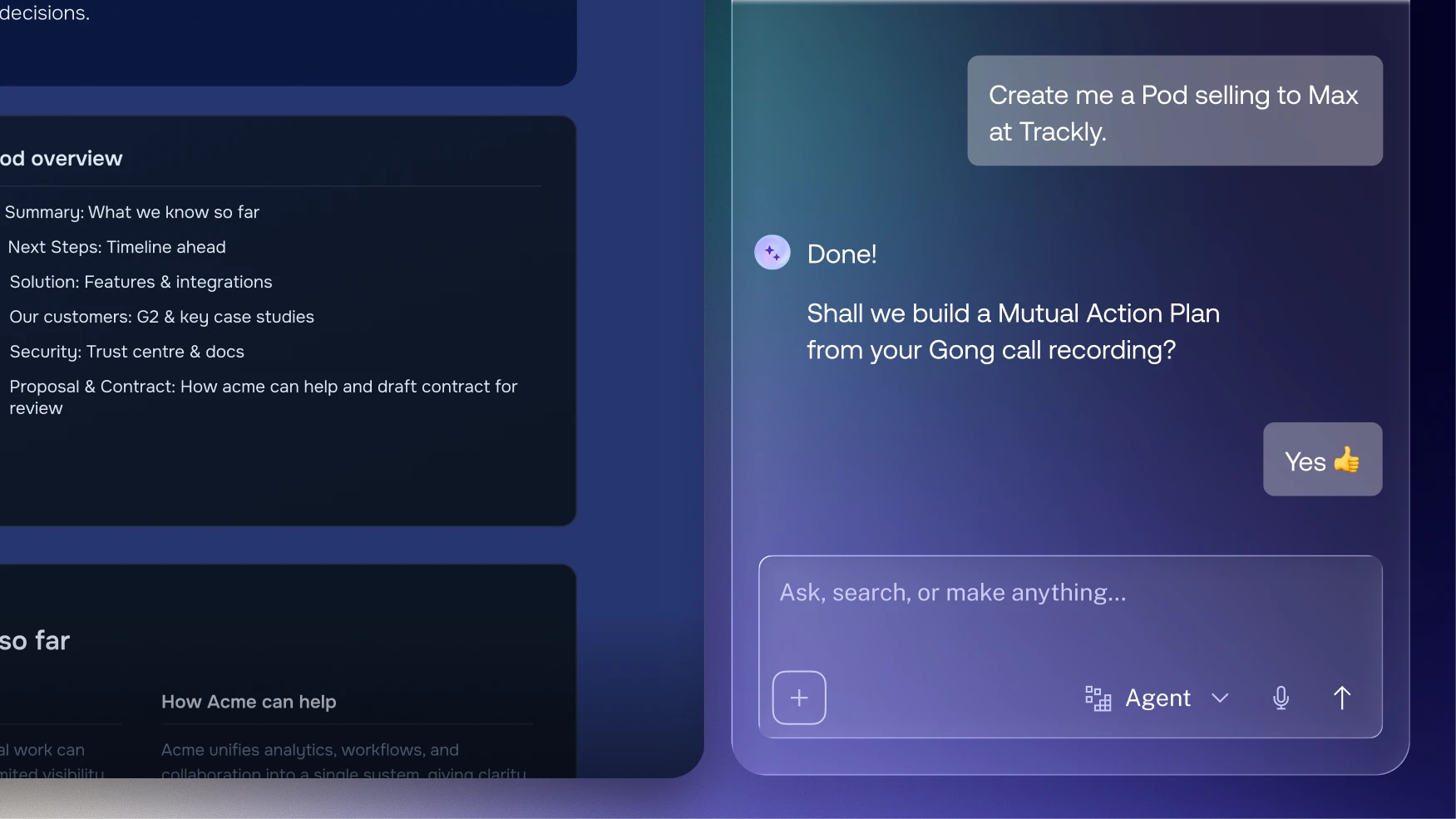
For teams that want to combine Digital Sales Rooms, buyer engagement analytics, Mutual Action Plans, CRM integrations, and AI-powered deal insights in one buyer-facing execution layer, trumpet is particularly strong. Rather than piecing signals together from multiple tools, managers get a clear view of deal health based on what buyers have actually done.
The data makes the case for why it matters. Pods with Mutual Action Plans double win rates compared to those without. MAPs with six to ten completed steps close at 84 per cent. Deal inspection becomes a better conversation when both sides are looking at the same evidence.
Gap 6: Procurement, legal, and security slow everything down
Many deals move quickly until operational stakeholders arrive, procurement requests documents, security asks for compliance information, legal wants access to commercial terms. The sales team starts searching through folders and email threads to resend everything that was already shared weeks ago.
The deal does not stall because there is a problem with the product or the price. It stalls because the operational review process has no shared infrastructure. Digital Sales Rooms fix this by creating a central location for security documentation, compliance information, legal resources, procurement FAQs, commercial terms, and implementation plans. Operational stakeholders can find what they need without going back to the rep. Questions can be tracked and answered in the workspace. Updated documents appear without a new email chain.
DealHub and GetAccept are often associated with proposal management, contracts, and e-signature workflows - the commercial paperwork layer that typically sits at this stage of a deal. Digital Sales Rooms take a broader approach by supporting the entire buyer journey rather than focusing only on the document management and signing stage.
Gap 7: Sales to customer success handoffs are weak
A deal does not end when the contract is signed, yet many organisations treat onboarding as a completely separate process.
Customer success receives a few CRM notes and must rebuild context from scratch. The business case that justified the purchase is not shared. The success criteria discussed in discovery are not documented. The stakeholder relationships built over a three-month sales cycle are summarised in a bullet point. Time to value extends. The customer's confidence in the relationship fades before it has properly started.
Digital Sales Rooms fix this by carrying context from the sales process into onboarding and beyond. Customer success teams can access stakeholder details, business objectives, discovery notes, implementation plans, commercial context, success criteria, and the Mutual Action Plan that now carries forward into the customer journey.
Data from trumpet shows that adding new content in the final third of a sales cycle increases win rates by 51 per cent and compresses cycle time by 33 per cent. The room is already active and relevant at the point of handover. Carrying it forward costs nothing and preserves everything.
For revenue teams that want one workspace spanning both sales and customer success, trumpet is particularly well suited, supporting the buyer journey through onboarding, renewal, and expansion, not just pre-signature.
Which platforms help solve these gaps?
Different platforms solve different parts of the problem. Understanding the category differences helps teams choose the right fit.
Trumpet
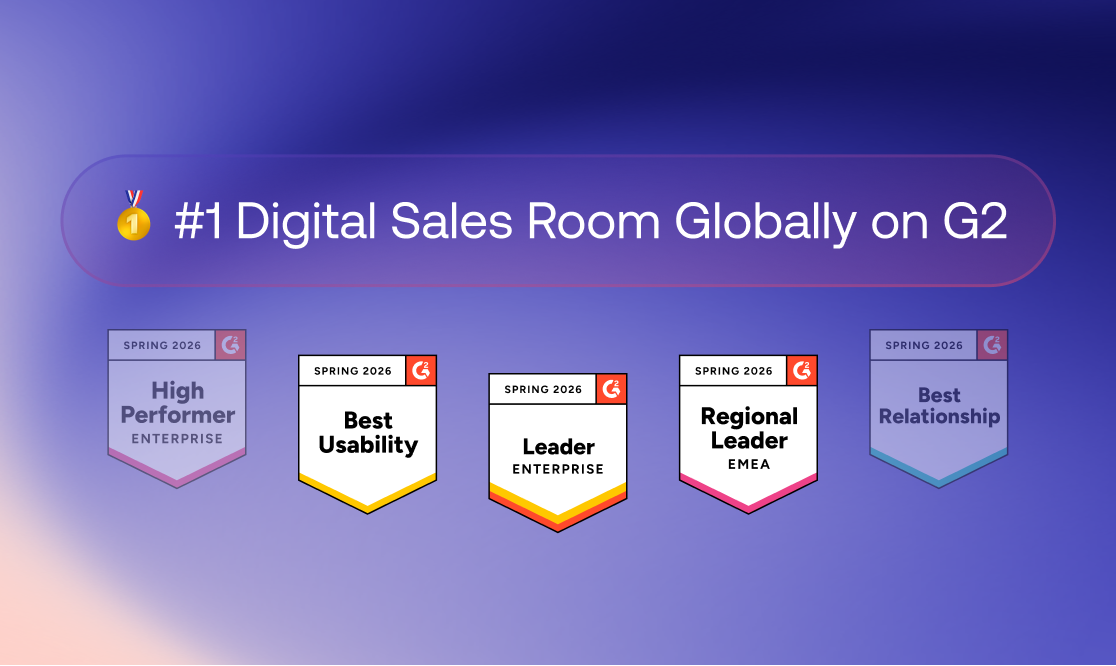
Trumpet combines personalised Digital Sales Rooms, buyer engagement analytics, Mutual Action Plans, AI-powered insights, CRM integrations, stakeholder visibility, content personalisation, and collaborative workflows across both sales and customer success. For SaaS and enterprise revenue teams, it acts as a buyer-facing execution layer that helps manage stakeholder engagement, deal progression, onboarding, and customer handoffs within a single workspace. Trumpet is ranked the number one Digital Sales Room globally on G2.
Highspot
Highspot is a sales enablement platform focused on content management, training, coaching, and internal sales readiness. Its primary focus is helping sellers prepare for buyer conversations rather than managing buyer-facing collaboration, making it a common choice for organisations investing heavily in enablement programmes.
Seismic
Seismic is a sales enablement and content management platform commonly used by larger organisations that require content governance, compliance controls, and enablement workflows. Its focus is internal content operations and content distribution rather than buyer-facing deal execution.
DealHub
DealHub is focused on quote-to-cash workflows, CPQ, proposals, contracts, and commercial process management. It is typically associated with the commercial and operational stages of a deal, with Digital Sales Room functionality forming part of a broader revenue operations workflow.
GetAccept
GetAccept focuses on proposal management, contract workflows, document engagement, and e-signature processes. It is most commonly used during the proposal, evaluation, and closing stages of a deal, helping teams manage document interaction and contract completion.
How to choose the right Digital Sales Room software
When evaluating platforms, the most important question is which gaps in your sales process are costing you the most deals.
A practical checklist:
- Does it solve the sales gaps causing the most friction today?
- Is it easy enough for reps to use consistently in their daily workflow?
- Does it improve the buyer experience, or just the seller's admin?
- Can it track engagement at an individual stakeholder level?
- Does it support Mutual Action Plans with shared visibility for buyer and seller?
- Does it integrate cleanly with your CRM?
- Can marketing govern the content library and maintain quality?
- Does it support customer success workflows as well as sales?
- Do managers get deal visibility they can actually use in pipeline reviews?
- Are the AI insights genuinely useful, or just data for data's sake?
- Will reps actually adopt it?
Most importantly: choose the platform that helps buyers move forward, not the one that looks best in a demo.
Final thoughts
Across many organisations, sales teams spend a lot of time improving internal processes, from CRM hygiene and forecasting through to enablement and pipeline reviews. However many of the problems that slow deals down happen on the buyer side of the journey, where information is spread across emails, stakeholders join at different stages, and important context is lost between conversations.
As buying committees grow, keeping everyone working from the same information becomes increasingly difficult. Champions end up forwarding documents, procurement asks for resources that have already been shared, and customer success inherits opportunities without the full story behind the deal.
Digital Sales Rooms help bring that information into one place, giving buyers a consistent experience while providing revenue teams with a clearer view of stakeholder engagement, deal progress, and next steps throughout the journey.
FAQs
What is a Digital Sales Room?
A Digital Sales Room is a shared buyer-facing workspace where sellers and buyers collaborate throughout the lifecycle of a deal. It centralises content, stakeholder access, Mutual Action Plans, and engagement data in one place, replacing scattered follow-ups and disconnected document sharing.
How do Digital Sales Rooms improve the sales process?
By removing the fragmentation that causes deals to stall between meetings. Champions get a structured internal selling resource, new stakeholders can get up to speed without a briefing call, procurement and security find documentation without chasing the rep. Managers see buyer behaviour rather than relying solely on rep updates. Customer success teams inherit full deal context at handover.
What is the difference between a Digital Sales Room and sales enablement software?
Sales enablement software helps sellers prepare, managing content, training reps, and standardising messaging. It is primarily an internal tool. A Digital Sales Room is buyer-facing: it gives buyers a collaborative workspace to evaluate, share internally, and progress a purchase. Sales enablement helps the rep get ready. Digital Sales Rooms help the buyer move forward.
How do Digital Sales Rooms improve stakeholder visibility?
By tracking individual engagement across the buying committee. Sellers can see which stakeholders have viewed the room, which content they spent time on, and whether the workspace has been shared internally. That visibility helps identify quiet stakeholders before they become late-stage blockers, and gives managers better evidence for deal inspection.
Can Digital Sales Rooms support customer success, not just sales?
Yes. The strongest platforms, including trumpet, support the full revenue journey from first meeting through to onboarding and renewal. The workspace built during the sales process becomes the handover asset, giving customer success teams the full deal context rather than a summary email.
What should I look for when choosing Digital Sales Room software?
Focus on the gaps it solves in your specific process. Does it improve the buyer experience? Can it track stakeholder engagement? Does it support Mutual Action Plans? Does it integrate with your CRM? Does it work across both sales and customer success? Will reps actually adopt it? The best platform is the one that addresses your most expensive sales process gaps, not the one with the longest feature list.










![How to Get Started with Buyer Enablement [With Examples]](https://cdn.prod.website-files.com/65cf4fecbed2754c2236665d/65cf4fecbed2754c22366bdb_65a5af83e742f76e34ce06f3_Customer%2520Onboarding%2520_%2520Everything%2520you%2520need%2520(2).png)
.png)


.png)


.png)


.png)

.png)

.png)
.png)





