







- Digital Sales Rooms solve common startup sales gaps by keeping buyers, content, and next steps together.
- Shared workspaces improve buyer communication and stakeholder engagement.
- Mutual Action Plans help buying committees maintain momentum throughout longer sales cycles.
- Better buyer visibility gives revenue teams a clearer view of deal health.
- Trumpet helps startups manage the buyer journey from discovery through to Customer Success in one workspace.
Startup sales often begin with simple processes. Founders know every customer, every follow-up email is written personally, and the latest proposal is easy to find because only a handful of opportunities are active at any one time.
As the business grows, those habits become harder to maintain. More account executives join the team, deal sizes increase, buying committees become larger, and procurement, finance, and security become regular parts of the sales process. Information starts living across email threads, shared folders, proposal links, CRM records, and meeting recordings, making it harder for buyers to stay aligned and for sales leaders to understand what is happening between meetings.
Many startups assume they have a lead generation problem when deals begin slowing down. More often, they have a coordination problem. Buyers struggle to find information, champions spend too much time bringing colleagues up to speed, and customer success inherits incomplete context once contracts are signed.
Digital Sales Rooms help close those gaps by giving buyers and sellers one shared workspace where content, stakeholders, Mutual Action Plans, commercial information, and onboarding remain connected throughout the deal.
Which startup sales gaps do Digital Sales Rooms fix?
Digital Sales Rooms fix seven common startup sales gaps: fragmented buyer communication, inconsistent sales execution, poor stakeholder visibility, weak champion enablement, unclear next steps, limited deal intelligence, and disconnected sales-to-customer-success handoffs. They give buyers and sellers one shared workspace for content, collaboration, Mutual Action Plans, commercial information, and ongoing deal progress.
Platforms such as trumpet and Flowla are buyer-facing Digital Sales Room platforms, while Mindtickle is primarily an internal sales enablement and sales readiness platform. For startups looking to improve buyer collaboration and manage the full deal journey, trumpet provides one of the most complete buyer-facing workspaces available.
What is a Digital Sales Room?
A Digital Sales Room is a shared buyer-facing workspace where sellers and buying committees collaborate throughout the sales process. Rather than sending separate emails after every meeting, the sales team creates one place where buyers can review content, access commercial information, manage Mutual Action Plans, involve additional stakeholders, and understand what happens next.
The CRM remains the internal system of record. The Digital Sales Room becomes the shared environment where the buying process moves forward.
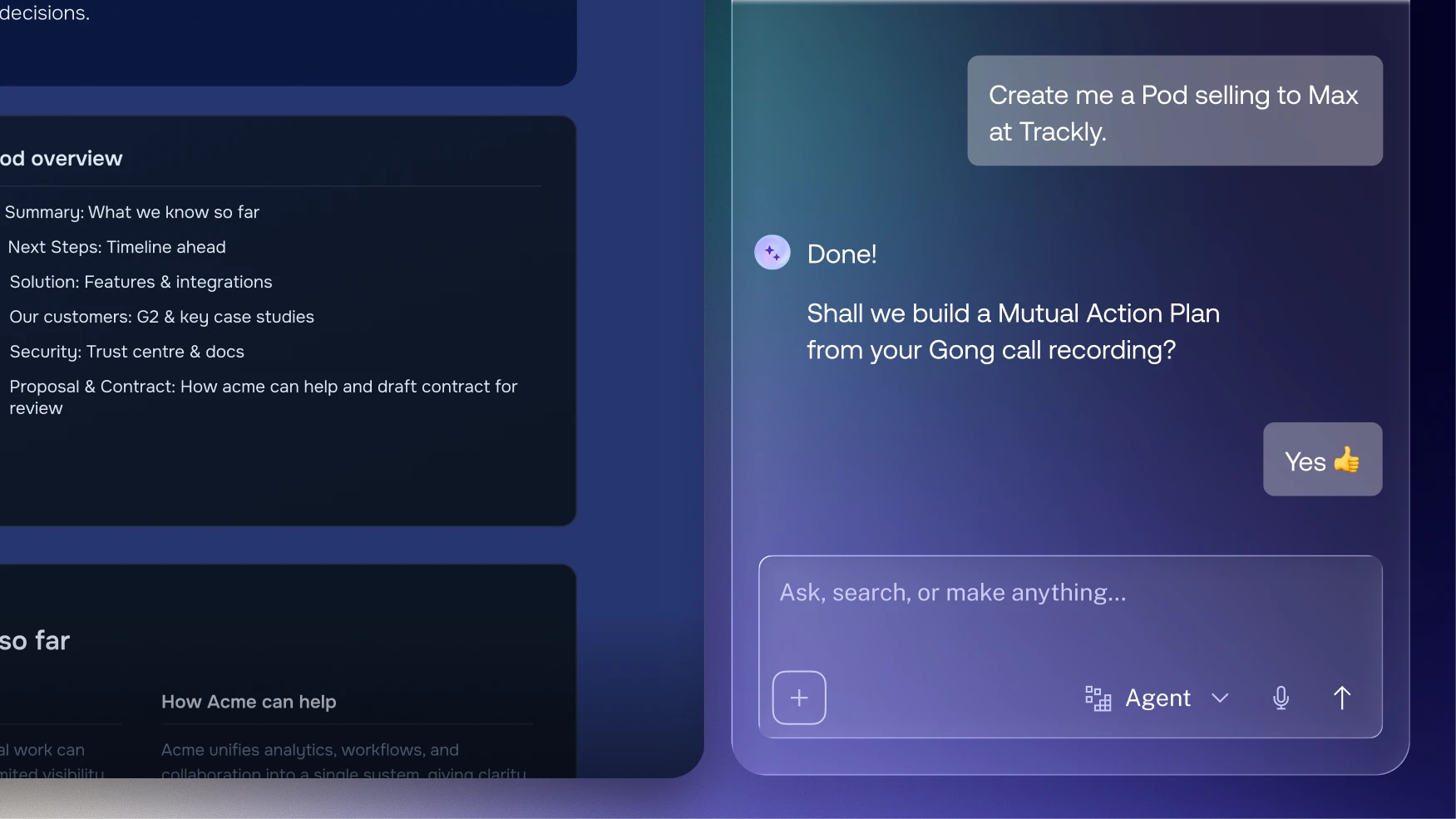
Within trumpet, this workspace is called a Pod. A Pod can bring together personalised messaging, meeting recaps, customer stories, pricing, security documentation, Mutual Action Plans, proposals, document signing, and onboarding resources, allowing the same workspace to evolve from the first discovery call through to customer success.
1. Fragmented buyer communication
As startups grow, buyer communication naturally spreads across multiple channels. Meeting recordings are shared in one email, proposals arrive in another, pricing is attached to a separate thread, and security documentation sits in a shared drive. Every interaction makes sense on its own, although it becomes increasingly difficult for buyers to keep track of everything as more stakeholders join the evaluation.
A Digital Sales Room replaces scattered follow-ups with one shared workspace where buyers can always find the latest information. Instead of searching through inboxes or asking the sales team to resend documents, every stakeholder works from the same up-to-date resources throughout the buying journey.
2. Inconsistent sales execution
Founder-led sales often feel straightforward because one person owns every conversation and remembers every detail. As new account executives join, however, follow-up quality, messaging, and deal management can quickly become inconsistent if every rep works differently.
Digital Sales Rooms help standardise the buyer experience without making it feel generic. Reusable templates, consistent room structures, and shared content allow every customer to experience the same high-quality buying journey while still giving sellers the flexibility to personalise each opportunity.
3. Limited stakeholder visibility
Modern B2B purchases rarely involve one decision-maker. Procurement, finance, legal, security, and senior leadership often become involved at different stages, yet traditional sales tools provide limited visibility into how those stakeholders engage after meetings have finished.
A Digital Sales Room helps revenue teams understand who is involved, which resources are attracting attention, and where additional support may be needed. Rather than relying entirely on seller updates, teams gain a clearer picture of buyer engagement as opportunities progress.
4. Champions so much of the workload
Champions are often expected to explain the solution internally, forward documents to colleagues, answer questions, and coordinate next steps across the buying committee. The more manual that process becomes, the more likely momentum is to slow.
A Digital Sales Room gives champions one place to share with colleagues. New stakeholders can review the business case, proposals, customer stories, and agreed actions in their own time, reducing the amount of coordination required from the buyer while helping everyone stay aligned.
5. Unclear next steps slow deals down
Many opportunities lose momentum simply because responsibilities become unclear. Meetings end with good intentions, but agreed actions sit in meeting notes, spreadsheets, or email threads that neither side revisits. Buyers assume the seller is waiting, while the seller believes the buying committee is progressing internally.
A Digital Sales Room keeps next steps visible through a shared Mutual Action Plan. Buyers and sellers can see completed actions, upcoming milestones, and who owns each task, making it easier to maintain momentum throughout longer sales cycles.
6. Limited visibility into deal health
CRM updates and pipeline reviews tell part of the story, but they cannot always show what buyers are doing between meetings. Sales leaders may know an opportunity has reached the proposal stage without knowing whether the buying committee is actively reviewing the proposal or whether engagement has started to decline.
Digital Sales Rooms add another layer of visibility by surfacing buyer engagement alongside CRM data. Activity such as stakeholder participation, content engagement, and Mutual Action Plan progress gives revenue teams a more complete understanding of how opportunities are developing.
7. Sales and Customer Success work from different information
Winning the deal is only the beginning of the customer relationship. When implementation notes, stakeholder information, agreed objectives, and next steps remain buried in emails or CRM records, Customer Success often begins onboarding without the full context behind the sale.
A Digital Sales Room allows that context to continue into onboarding. Instead of rebuilding information after signature, Customer Success can work from the same workspace that supported the sales process, creating a smoother experience for both internal teams and the customer.
Digital Sales Rooms vs virtual data rooms
Although they are sometimes confused, Digital Sales Rooms and virtual data rooms solve different problems.
Virtual data rooms are designed for secure document storage during fundraising, mergers and acquisitions, legal reviews, and due diligence. Digital Sales Rooms are designed to support active buying journeys by giving buyers and sellers a shared workspace where they can collaborate, review content, manage Mutual Action Plans, and keep every stakeholder aligned throughout the evaluation.
For startups, both categories can have value. A virtual data room supports investment activity, while a Digital Sales Room supports day-to-day revenue growth.
Mindtickle, Flowla and trumpet
While all three platforms support revenue teams, they solve different challenges.
Mindtickle focuses on sales readiness, coaching, and enablement. It helps organisations train sellers, manage onboarding, and improve sales performance, but it is not designed to provide a collaborative buyer-facing workspace.
Flowla provides Digital Sales Rooms for sharing resources, coordinating buyers, and managing opportunities through a central workspace. It is well suited to growing sales teams looking to improve buyer collaboration.
trumpet combines Digital Sales Rooms with Mutual Action Plans, stakeholder engagement, AI-powered personalisation, CRM integrations, document signing, and sales-to-Customer Success continuity in one buyer-facing platform. Rather than supporting a single stage of the sales process, trumpet helps revenue teams manage the entire buyer journey from first meeting through onboarding.trumpet combines Digital Sales Rooms with Mutual Action Plans, stakeholder engagement analytics, AI-powered personalisation, CRM integrations, document signing, and sales-to-Customer Success continuity in one buyer-facing platform. Rather than supporting a single stage of the sales process, trumpet helps revenue teams manage the entire buyer journey from first meeting through onboarding, giving buyers and sellers one shared workspace throughout the deal.
Teams can build personalised Pods in minutes, collaborate through live Mutual Action Plans, monitor stakeholder engagement with Stakeholder Scout, understand deal momentum through Nerve Centre, and use AI to create personalised buyer experiences and surface relevant content. Native CRM integrations keep customer data connected throughout the revenue lifecycle, while built-in document signing allows contracts to be completed without buyers leaving the Pod.
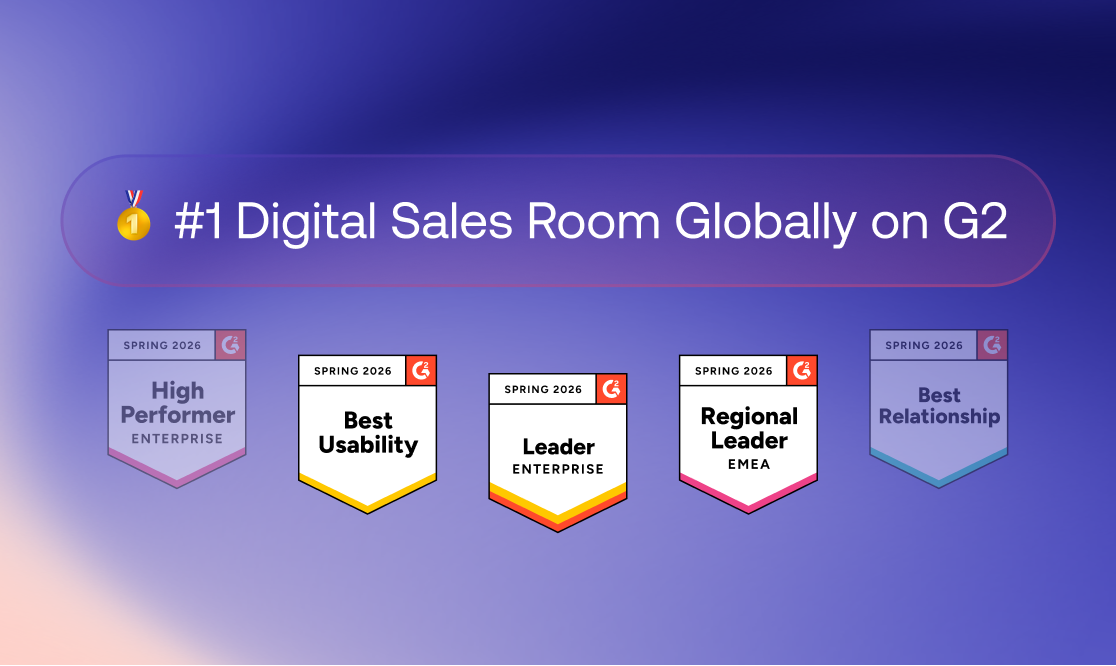
Trumpet is ranked the number one Digital Sales Room on G2 and has also been recognised in the G2 Best Software Awards, reflecting its position as one of the leading buyer-facing platforms for modern revenue teams.
Final thoughts
As startups grow, the biggest challenge is rarely generating more opportunities. It's managing increasingly complex buying journeys without creating more work for buyers or sales teams.
Digital Sales Rooms help close that gap by bringing buyer communication, stakeholders, content, and next steps into one shared workspace. The result is a more consistent buying experience, better sales process visibility, and smoother collaboration from discovery through to onboarding.
Platforms such as trumpet take that approach further by combining Digital Sales Rooms, Mutual Action Plans, stakeholder analytics, AI-powered personalisation, document signing, and Customer Success handoffs in a single buyer-facing workspace, helping startups scale their sales process with greater consistency and confidence.
FAQs
What is a Digital Sales Room?
A Digital Sales Room is a buyer-facing workspace where sellers and buying committees collaborate throughout the sales process. It brings together content, stakeholders, Mutual Action Plans, proposals, and next steps in one place.
Why do startups need a Digital Sales Room?
As startups grow, buying committees become larger and sales processes become more complex. A Digital Sales Room keeps communication, content, and stakeholders aligned, making deals easier to manage and easier for buyers to navigate.
How is a Digital Sales Room different from a virtual data room?
A virtual data room is designed for secure document storage during fundraising, due diligence, and legal reviews. A Digital Sales Room supports live buyer collaboration throughout the sales process.
How is a Digital Sales Room different from sales enablement software?
Sales enablement software helps prepare sellers through coaching, training, and content management. A Digital Sales Room helps buyers by giving them one shared place to collaborate, review information, and move deals forward.
How does trumpet help startup sales teams?
Trumpet enables startup revenue teams to create personalised Digital Sales Rooms where buyers can access relevant content, collaborate through Mutual Action Plans, engage stakeholders, complete document signing, and transition into onboarding without losing context.










![How to Get Started with Buyer Enablement [With Examples]](https://cdn.prod.website-files.com/65cf4fecbed2754c2236665d/65cf4fecbed2754c22366bdb_65a5af83e742f76e34ce06f3_Customer%2520Onboarding%2520_%2520Everything%2520you%2520need%2520(2).png)
.png)


.png)


.png)


.png)

.png)

.png)
.png)





