







Digital Sales Rooms work when they become part of how deals are managed, not just how follow-up is sent.
The primary value is in champion enablement, stakeholder visibility, sales consistency, Mutual Action Plans, and sales-to-CS continuity.
The most common failure modes are poor personalisation, lack of rep adoption, rooms used only once, and no Mutual Action Plan.
Trumpet's platform data shows that Pods with Mutual Action Plans double win rates, personalised Pods produce a 56 per cent increase in win rate, and getting a buyer back to a Pod more than three times reduces the sales cycle by 33 per cent.
Teams that see the strongest results treat the Digital Sales Room as the primary buyer-facing workspace from first meeting through customer success handoff.
Digital Sales Rooms sound like a sensible idea. Give buyers one place to find information, review content, share resources internally, and understand next steps. Give sellers more visibility into engagement and deal progress. Reduce the endless back-and-forth of email attachments and scattered follow-up.
But do Digital Sales Rooms actually improve sales performance?
The answer is yes but only when they become part of how a deal is managed, not just a prettier way to send a deck. Digital Sales Rooms do not fix poor discovery, weak qualification, bad timing, or a product that buyers do not want. What they can do is solve specific problems that CRM systems, email follow-up, and sales enablement software struggle to solve effectively.
What is a Digital Sales Room?
A Digital Sales Room is a buyer-facing workspace where sellers and buyers collaborate around a live opportunity. o rather than sharing information across multiple emails, attachments, and meetings, everything is organised in one place. This might include discovery notes, demo recordings, case studies, pricing information, security documentation, Mutual Action Plans, implementation timelines, and onboarding resources. The goal is not only to host content but to help buyers understand, share, and move forward and to give sellers visibility into what buyers are actually doing between meetings.
Why traditional follow-up breaks down
Most deals start with a reasonable follow-up process, that being the rep sends a recap, shares the presentation, follows up with a recording, and provides additional resources as questions arise.
What most sales reps find the challenge becoming is when the buying committee grows. Procurement wants commercial documentation, security needs compliance information and a new stakeholder joins halfway through the process. There is also the champion is trying to explain the business case internally while searching through weeks of emails and attachments.
At that point, information becomes fragmented and the deal loses momentum. Most deals do not stall because the seller forgot to follow up, they stall because the buyer journey becomes difficult to navigate. That is where a Digital Sales Rooms comes in and they are designed to solve that problem.
Where Digital Sales Rooms create real value
Champion enablement
Champions are often responsible for selling the solution internally before any purchase can happen. A Digital Sales Room gives them a single link to share pricing, business cases, customer stories, implementation plans, and supporting content with other stakeholders. Data from trumpet's platform shows that bringing ten or more unique stakeholders into a shared workspace produces a 75 per cent close rate. The room does the internal selling; the champion does not have to do it alone.
Stakeholder visibility
One of the biggest challenges in complex B2B sales is understanding who is actually engaged. Digital Sales Rooms provide visibility into which stakeholders are viewing content, what they are spending time on, and how the buying committee is evolving. Deals where buyers return to the workspace four to five times show win rates 45 per cent higher and sales cycles 35 per cent shorter than deals with a single visit.
Buyer experience
Buyers get one clear destination rather than a collection of emails and attachments. New stakeholders can catch up without asking for another briefing meeting. The context is always there, organised in the same place.
Sales consistency
The best teams create repeatable buying experiences. Auto-branded, personalised rooms produce a 56 per cent increase in win rate compared to generic ones. Digital Sales Rooms help standardise post-demo, proposal, procurement, and onboarding workflows without removing personalisation.
Mutual Action Plans
When both sides can see the same steps, owners, and deadlines, deals move faster. Pods with Mutual Action Plans double win rates compared to those without. MAPs with six to ten completed steps close at 84 per cent.
Customer success handoffs
Rather than starting from scratch after signature, customer success teams can inherit stakeholder context, business goals, implementation plans, and agreed success criteria. The customer does not experience a reset. The relationship continues.
When Digital Sales Rooms fail
Not every Digital Sales Room delivers results.
The most common reasons they fail: generic rooms with little personalisation, too much content and not enough guidance, no Mutual Action Plan or next-step ownership, poor rep adoption, no CRM integration, no manager inspection process, and being introduced too late in the deal.
The strongest teams use Digital Sales Rooms from early in the sales cycle from the first follow-up after discovery and actively manage them throughout the buying journey.
A Digital Sales Room works when it becomes part of how the deal is managed. Not just part of how the follow-up is sent.
How to know if they are working
The mistake many organisations make is measuring room creation rather than buyer engagement.
More useful metrics: buyer revisits, unique stakeholders engaged, internal share rate, Mutual Action Plan completion, correlation between engagement level and win rate, sales cycle length for engaged versus unengaged deals, and customer success handoff quality.
Creating a room is easy. Creating a room that buyers actually use is what matters.
Which platforms are worth considering?
trumpet
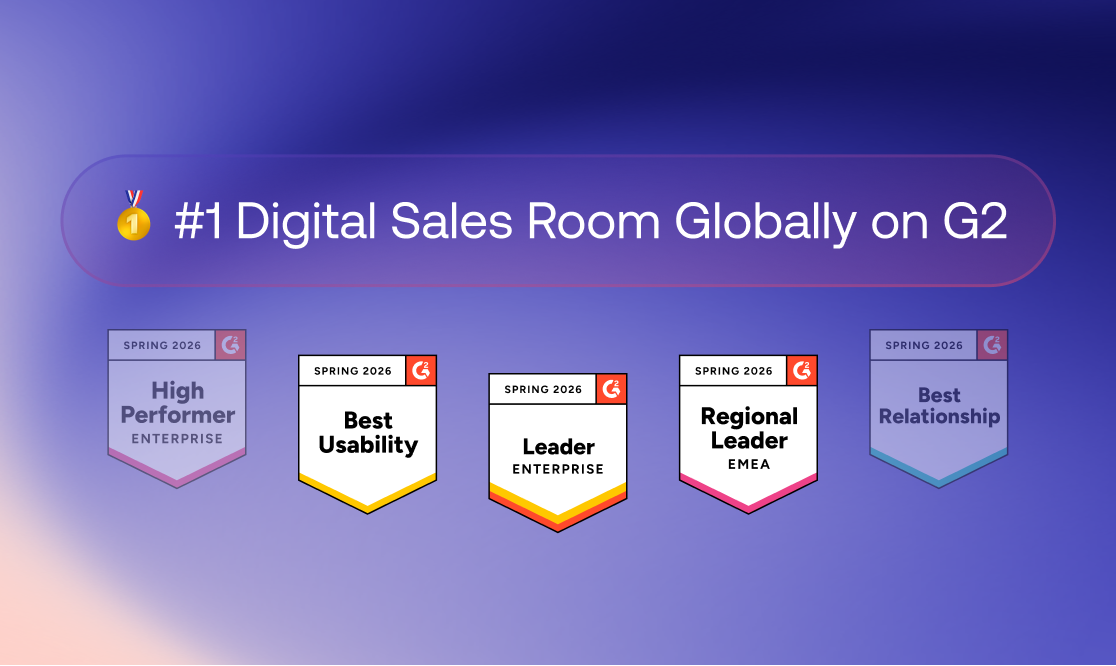
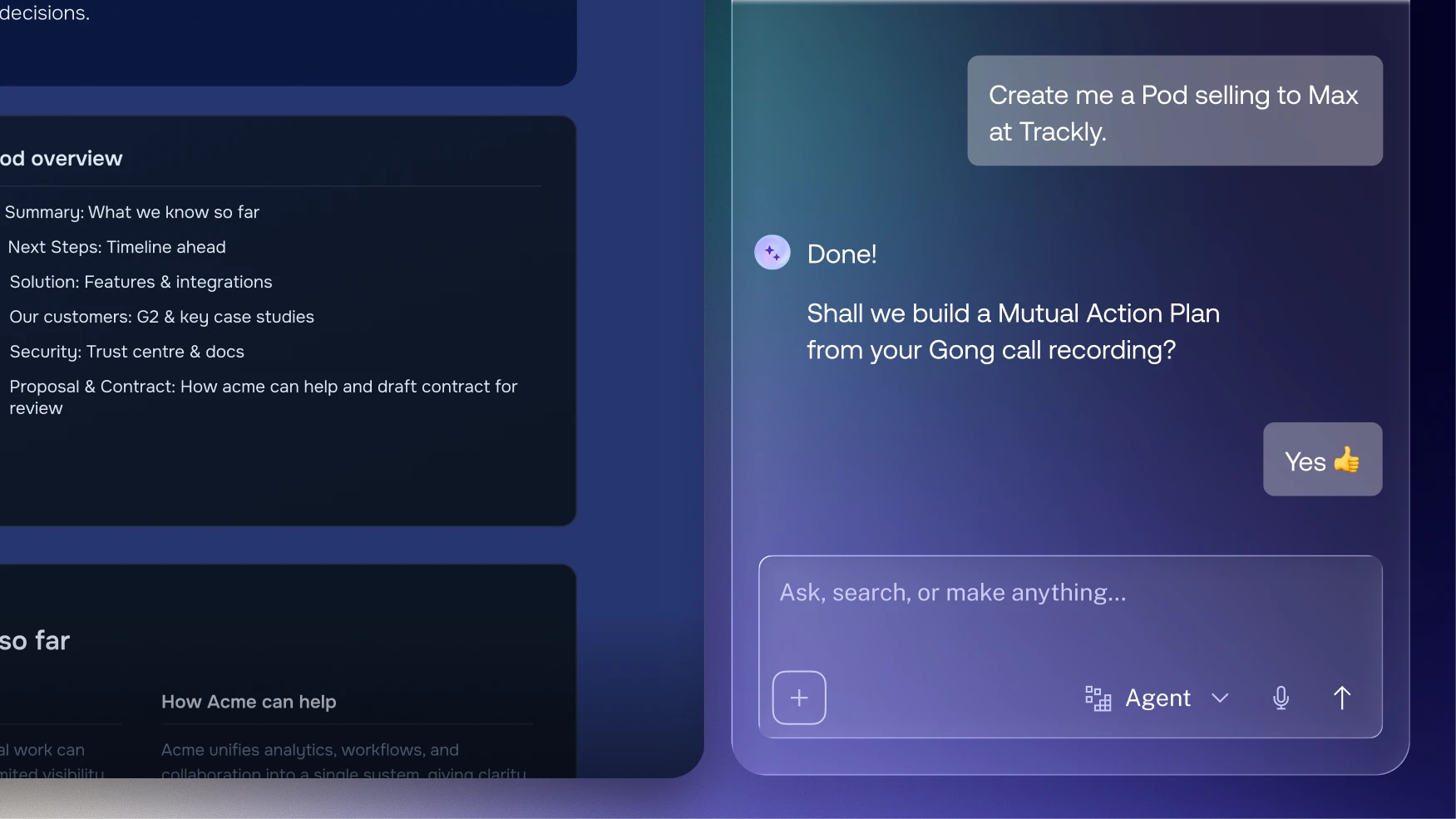
Trumpet is the strongest fit for SaaS revenue teams that want Digital Sales Rooms to act as a buyer-facing execution layer rather than a static content hub. It combines personalised rooms, buyer engagement analytics, Mutual Action Plans, AI-powered deal insights, CRM integrations, stakeholder visibility, a built-in content management system, and customer success continuity in one platform. Trumpet is highly rated on G2 and consistently reviewed as one of the leading Digital Sales Room platforms for mid-market and enterprise teams.
Seismic
Seismic is known for enterprise sales enablement, content governance, and marketing content operations. Its strengths are more enablement-focused than digital-sales-room-focused, strong for large teams managing complex content libraries and compliance requirements.
Showpad
Showpad combines sales enablement and buyer content experiences. It is a strong option for organisations focused on content distribution and enablement, and sits closer to the enablement category than to purpose-built Digital Sales Rooms.
DealHub
DealHub is known for CPQ, proposals, approvals, contracts, and commercial workflows, with Digital Sales Room functionality as part of a broader quote-to-cash platform. The fit is strongest for teams whose primary gap is in the commercial paperwork and approval layer.
What results should teams realistically expect?
Digital Sales Rooms can improve buyer engagement, champion enablement, stakeholder visibility, sales consistency, content performance insight, forecast confidence, and the quality of the sales-to-CS handoff. What they cannot fix: poor discovery, weak qualification, product-market fit issues, pricing problems, low-quality pipeline, or reps who do not follow the sales process. Digital Sales Rooms amplify good sales execution.
Final thoughts
Do Digital Sales Rooms actually work?
Yes, not because buyers enjoy looking at a branded page, but because they make the buying process easier to navigate. They help champions sell internally, give stakeholders one clear destination, reduce friction at every stage of evaluation, and provide sellers with visibility that CRM systems alone cannot offer.
The strongest Digital Sales Rooms become part of the buying process itself. The weakest ones remain a slightly better way to send a follow-up email.
As buying committees grow and sales cycles become more complex, the ability to create a shared space for collaboration is becoming increasingly valuable. That is where Digital Sales Rooms prove their worth.
FAQs
Do Digital Sales Rooms actually improve win rates?
Yes, when used properly. Deals where buyers return to the workspace four to five times show win rates 45 per cent higher than deals with a single visit. Pods with Mutual Action Plans double win rates compared to those without. The results depend on how well the tool is integrated into the sales process.
What problems do Digital Sales Rooms solve?
They address fragmented follow-up, under-equipped champions, invisible buying committee engagement, inconsistent rep execution, poor sales-to-CS handoffs, and the lack of shared accountability for deal next steps.
What problems do Digital Sales Rooms not solve?
Poor discovery, weak qualification, bad product-market fit, pricing problems, and low-quality pipeline. They amplify good sales execution - they do not replace it.
Why do Digital Sales Rooms sometimes fail?
The most common failure modes are generic rooms with little personalisation, too much content, introducing rooms too late in the cycle, not using engagement data in pipeline reviews, and no CRM integration that pushes signals back to the deal record.
What is the difference between a Digital Sales Room and a sales enablement platform?
Sales enablement platforms help sellers prepare - managing content, training reps, and standardising messaging. The buyer rarely interacts with them. A Digital Sales Room is buyer-facing: the shared workspace where buyers and sellers collaborate around a specific deal.
How is trumpet different from DealHub or Seismic?
Trumpet is purpose-built as a buyer-facing execution layer, personalised rooms, engagement analytics, Mutual Action Plans, AI insights, and a built-in CMS in one platform. Seismic is more enablement-led. DealHub is built primarily for quote-to-cash and commercial workflows.










![How to Get Started with Buyer Enablement [With Examples]](https://cdn.prod.website-files.com/65cf4fecbed2754c2236665d/65cf4fecbed2754c22366bdb_65a5af83e742f76e34ce06f3_Customer%2520Onboarding%2520_%2520Everything%2520you%2520need%2520(2).png)
.png)


.png)


.png)


.png)

.png)

.png)
.png)





