








- Sales managers benefit from buyer engagement data beyond rep opinion: who is viewing the room, whether the champion is sharing internally, and whether Mutual Action Plans are progressing or stalling.
- Sales enablement software helps sellers prepare. Digital Sales Rooms help buyers progress. For teams where deal momentum and stakeholder visibility are the sharpest pain, the distinction matters.
- Common mistakes include treating the room as static, overloading it with content early, not updating it as the deal progresses, and failing to use engagement data in pipeline reviews.
- Trumpet is the strongest fit for mid-market SaaS teams needing a full buyer journey platform with engagement analytics, Mutual Action Plans, and sales-to-CS continuity. DealHub, Journey, and Flowla each suit more specific or earlier-stage use cases.
Mid-market SaaS teams reach a point where email threads, follow-up decks, and scattered documents stop scaling. What worked when there were five account executives and a founder involved in every deal becomes much harder when the team grows to 25, 50, or 100 people. The rep sends a strong follow-up; the buyer reads it, means to forward it, and gets pulled into something else. The champion likes the product but cannot explain it clearly to the CFO, who was not on any of the calls. Three weeks later, procurement gets involved and needs pricing terms, security documentation, and a business case that nobody has pulled together. A new IT stakeholder appears and needs briefing from scratch. The deal that felt close in week four is still open in week twelve.
It' not because the product is weak or the rep is bad at their job, it happens because the buying process is messier than the sales process, and most revenue teams only have tools that help the seller, not the buyer. Digital Sales Rooms give buyers and sellers a shared workspace to collaborate throughout the buying journey, helping revenue teams manage stakeholder engagement, buyer communication, Mutual Action Plans, and deal execution in one place.
What is a Digital Sales Room?
A Digital Sales Room is a shared, buyer-facing workspace where sellers and buyers collaborate around a specific opportunity. Rather than a sequence of emails and attachments, it creates a persistent environment where everything the buyer needs to evaluate, purchase, and implement a solution lives together.
It is worth being clear about what a Digital Sales Room is not. It is not a content folder, a proposal link, a microsite, a sales enablement library, or a place to dump PDFs. A strong Digital Sales Room acts as the central space for the deal. It helps the buyer understand the value, access the right information at the right time, share it with colleagues who join the evaluation late, agree on next steps, and maintain momentum between meetings.
Most Digital Sales Rooms include content sharing, stakeholder engagement tracking, Mutual Action Plans, buyer collaboration tools, CRM integrations, analytics and buyer signals, document signing, and customer onboarding support. The practical benefit is that buyers spend less time searching for information and more time evaluating the decision.
Why mid-market sales teams need Digital Sales Rooms
Mid-market sales teams occupy a specific and often underserved position. They have moved past the chaotic early stage where the founder personally closes every deal, but they are not yet at the point where every process is fully mature.
The biggest challenge mid-market revenue teams face is not usually generating demand. It is creating a repeatable process for helping buyers move from interest to decision. As teams scale, several problems compound: buying committees grow larger, sales cycles lengthen, more stakeholders need different content and context, forecasting becomes less reliable, customer success teams receive incomplete handovers, and reps manage deals differently from one another.
The key argument is this: founder-led sales often works because the founder creates clarity, urgency, and trust manually in every deal. Digital Sales Rooms help scale some of that experience across a wider team, creating a consistent framework that helps buyers and sellers stay organised throughout the process. For revenue leaders, that means more visibility into deal progression. For buyers, it means a clearer and more collaborative experience.
How Digital Sales Rooms work in practice
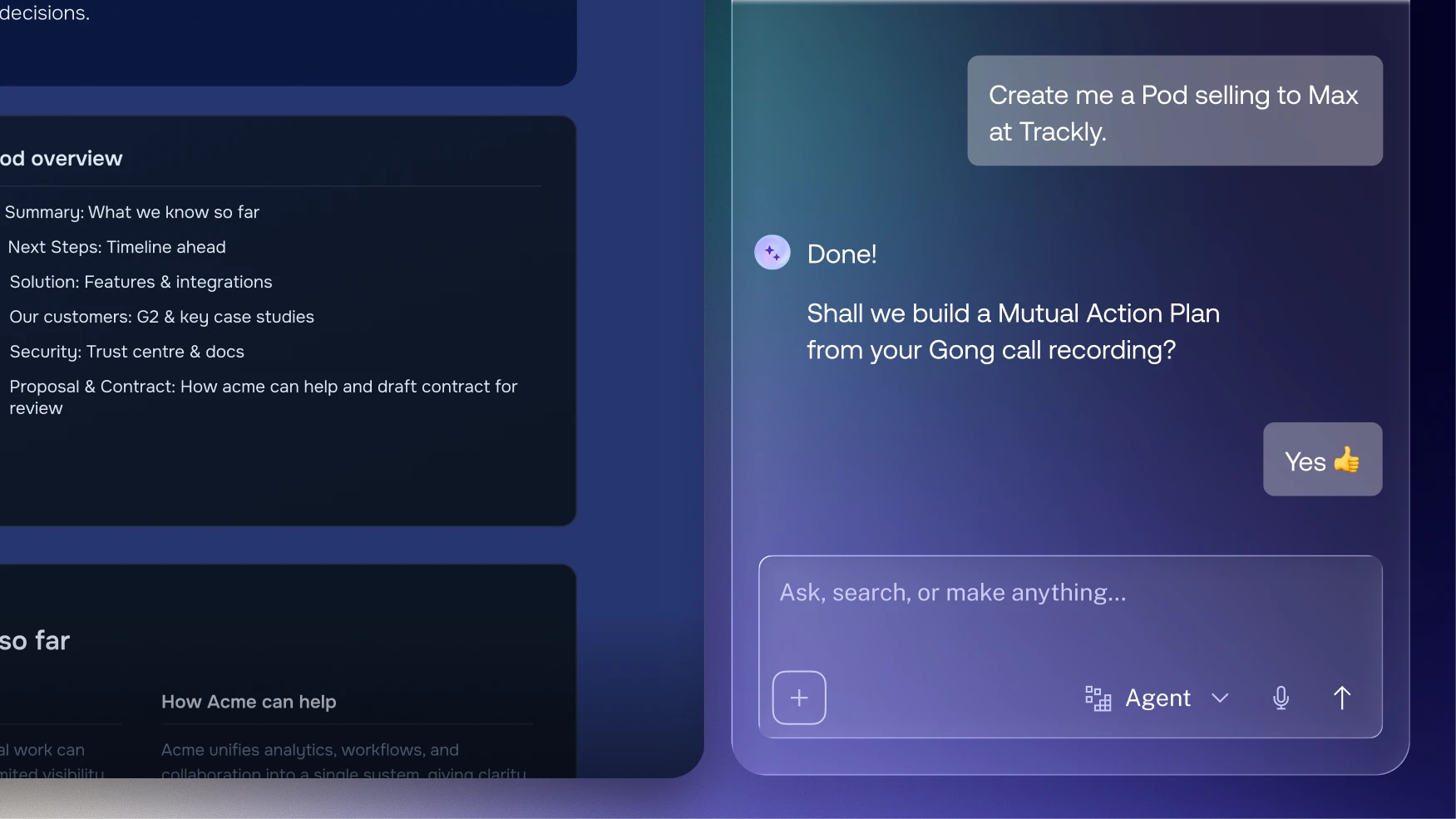
Consider a mid-market SaaS team selling into a 500-person company. After a discovery call and product demonstration, the account executive creates a Digital Sales Room for the opportunity. In a platform like trumpet, this takes a few minutes: they use a template, personalise it with the prospect's name, company, and context from the call, and add the initial content.
That first version of the room typically contains a personalised welcome message or video recap, the demo recording, a tailored deck, relevant case studies, the first version of the Mutual Action Plan, and any pricing or next steps discussed on the call. The room is shared with the champion as the central place to return to.
From there, the room evolves with the deal. As procurement gets involved, pricing terms and security documentation are added. As a new IT stakeholder joins, they open the room and get full context without a separate briefing call. As the commercial conversation progresses, the proposal sits alongside the business case the champion is building internally. Neither side has to ask where anything is.
Throughout this process, the rep and manager can see exactly what is happening: who has viewed the room, which sections they spent time on, whether the champion has shared it with new stakeholders, and whether the Mutual Action Plan is progressing or stalling. Activities that previously happened through forwarded emails and internal conversations become easier for the revenue team to understand.
What goes inside a Digital Sales Room?
The content of a room should be curated, not exhaustive. The goal is to make the deal easier to understand, not to demonstrate thoroughness by burying the buyer in assets.
A well-built room for a mid-market deal typically starts with a personalised welcome message or video, a discovery recap reflecting what was discussed on the call, the demo recording, a tailored deck, two or three relevant case studies, pricing or a commercial proposal, a Mutual Action Plan with clearly assigned steps and deadlines, and FAQs addressing the questions that typically come up in evaluation.
As the deal progresses, more gets added: security documentation for IT, procurement terms, an ROI calculator or business case for finance, product videos, an implementation timeline, onboarding resources, and contact details for both the sales rep and the customer success team who will inherit the relationship after signature.
The rooms that perform best add content progressively as the buyer needs it. Data from trumpet's platform shows that front-loading too much content early in the cycle can slow deals down by more than twice. Adding five new pieces of content in the final third of a sales cycle, by contrast, speeds it up by 43 per cent.
How Digital Sales Rooms improve buyer journey optimisation
Most sales teams invest heavily in optimising the seller journey. Very few invest the same effort in optimising the buyer journey, which is where deals most commonly lose momentum.
Buyer journey optimisation is about helping stakeholders find the information they need, involve colleagues quickly, and move through the evaluation process without repeatedly asking the sales team for context.That friction almost always comes from the same sources: the champion cannot explain the product convincingly to colleagues who were not on the calls, new stakeholders have no easy way to get up to speed, next steps are unclear after meetings end, and important questions get stuck in email threads that take days to resolve.
A well-used Digital Sales Room addresses each of these directly. Champions get a shareable, professional workspace to pass to any new stakeholder without preparation. Security teams and procurement contacts find everything they need in one place. Mutual Action Plans make next steps visible and accountable. The buyer knows where they are in the process and what comes next. Getting a buyer to revisit a Digital Sales Room more than three times increases win rate by 21 per cent and compresses the sales cycle by 33 per cent. That improvement is not about product quality or rep performance. It is about making the buying process easier to navigate.
How Digital Sales Rooms support collaborative deal management
Collaborative deal management is the practice of running a deal as a shared process between buyer and seller, rather than a sequence of seller-led actions the buyer responds to when they get around to it.
In a Digital Sales Room, both sides can see the same Mutual Action Plan, with the same steps, owners, and deadlines. The buyer knows what they need to do. The seller knows whether the buyer is progressing or going quiet. When a step is completed, the signal can push to the CRM or Slack so the rep can act immediately rather than waiting for the next check-in call.
Beyond Mutual Action Plans, collaborative deal management means the buyer can ask questions directly in the workspace. Business case content can be built with the champion. Security and procurement have a dedicated section with everything they need. Rather than information being scattered across emails, everyone works from the same source of truth, which improves accountability, visibility, and execution. Data from trumpet shows that Pods with Mutual Action Plans double win rates compared to deals without them, and MAPs with six to ten completed steps close at 84 per cent.
Why Digital Sales Rooms matter for sales managers
Digital Sales Rooms change what is possible in a pipeline review. Instead of asking a rep how a deal is progressing and accepting their answer, a manager can look at buyer behaviour directly.
Which stakeholders have viewed the room this week? Has the champion shared it with anyone new? Has the pricing page been revisited? Is the Mutual Action Plan progressing or have the last three steps been sitting incomplete for two weeks? Which reps are creating rooms that buyers genuinely engage with, and which are creating rooms that get opened once and never returned to?
This matters enormously for mid-market sales managers trying to coach a team and forecast a pipeline simultaneously. Rep confidence is a notoriously unreliable input into forecast conversations. Buyer behaviour is not. A deal where a buyer has revisited the room five times, shared it with three new stakeholders, and completed seven Mutual Action Plan steps is a different risk profile from a deal where the rep says it is progressing but the room has not been opened in three weeks. Digital Sales Rooms also make coaching more specific: when managers can see that certain content is being ignored or that particular reps consistently fail to get stakeholder engagement, they have something concrete to coach from.
Digital Sales Rooms vs sales enablement software
Sales enablement software helps internal teams manage content, train reps, standardise messaging, support onboarding, and make approved assets easier to find. The buyer never sees the enablement platform. It works on the seller's side of the equation.
Digital Sales Rooms help external buying teams collaborate around live opportunities. They give buyers a place to access relevant content, share information internally, agree on next steps, involve new stakeholders, and progress through the buying journey.
The positioning line that clarifies the difference: sales enablement software helps sellers prepare. Digital Sales Rooms help buyers progress.
For mid-market teams, both can be valuable. But if the sharpest pain is deal momentum, stakeholder visibility, and whether the buyer is actually engaging after meetings end, a Digital Sales Room is more directly connected to the revenue problem. Many teams use both - internal enablement to prepare reps, and Digital Sales Rooms to manage the live buyer journey.
Benefits for mid-market SaaS teams
Faster follow-up. Reps update one workspace that the buyer already knows how to find, rather than assembling a follow-up email with multiple attachments after every meeting. More consistent buyer experience. Every prospect gets the same quality of organised, personalised workspace regardless of which rep they work with, reducing the variability that replaces founder-led selling. Better stakeholder visibility. Managers and reps can see which stakeholders are engaged, who has gone quiet, and where new contacts have appeared in the buying committee.
Stronger champion enablement. Champions get a workspace they can share internally, making it easier for them to sell the product to colleagues without the rep needing to attend every conversation. Cleaner sales-to-CS handoffs. The deal room travels with the opportunity into onboarding, so the customer success team inherits context rather than starting from a summary email. Improved forecast confidence. Buyer engagement signals give managers something more reliable than rep opinion when assessing which deals are genuinely progressing.
Common mistakes to avoid
The value of a Digital Sales Room depends on how it is used. These are the mistakes that undermine that value most consistently.
Treating the room as a static content folder. A room that is created after the first meeting and never updated is just a prettier place to send attachments. The value comes from it evolving with the deal. Creating it too late. A room introduced in week six of a twelve-week cycle misses most of the engagement opportunity. The earlier the buyer has a shared workspace, the more of the deal happens inside it.
Overloading buyers with content at the start. Dumping every asset into the room at once creates the same problem as a ten-attachment email. Curate for the current stage. Not personalising the room. A generic room with no reference to the buyer's company or specific challenges signals that the rep was not paying attention. Failing to use engagement data in pipeline reviews. Rooms that generate signals nobody looks at contribute nothing to better deal management.
Ignoring the champion's internal selling job. The champion is doing sales work on the rep's behalf inside the buying organisation. A room that does not equip them to do that job well misses one of its most important functions. Only using rooms for new business. Digital Sales Rooms are equally valuable for onboarding, renewals, and expansion. Teams that extend the workspace into the post-sale relationship get significantly more value from the investment.
Digital Sales Room vendors for mid-market teams
Mid-market teams have more options than they did two years ago. Rather than a generic feature comparison, here is how the main vendors differ by the revenue problem they solve.
1. Trumpet
Best for: Full buyer-facing revenue execution across mid-market and high-growth SaaS teams.
Trumpet is built around the idea that the buyer journey does not end at signature. It combines Digital Sales Rooms, Mutual Action Plans, stakeholder engagement tracking, content management, AI-powered insights, document signing, and sales-to-CS continuity in a single platform.
For mid-market teams, the practical advantage is that reps can create a fully personalised Pod in minutes using templates and AI, with CRM data pre-populated. Buyers get a professional, branded workspace. Managers get portfolio-level visibility across every active deal through the Nerve Centre, showing engagement trends, stakeholder activity, and MAP progress across the full pipeline.
What sets trumpet apart from lighter-weight alternatives is the depth behind the buyer experience. Content management allows marketing to govern what reps include in rooms. Stakeholder Scout surfaces engagement patterns across buying committees. Buyer engagement analytics show which content is driving decisions at which deal stages. And because the same workspace carries through into onboarding, customer success teams inherit full deal context rather than a handover document.
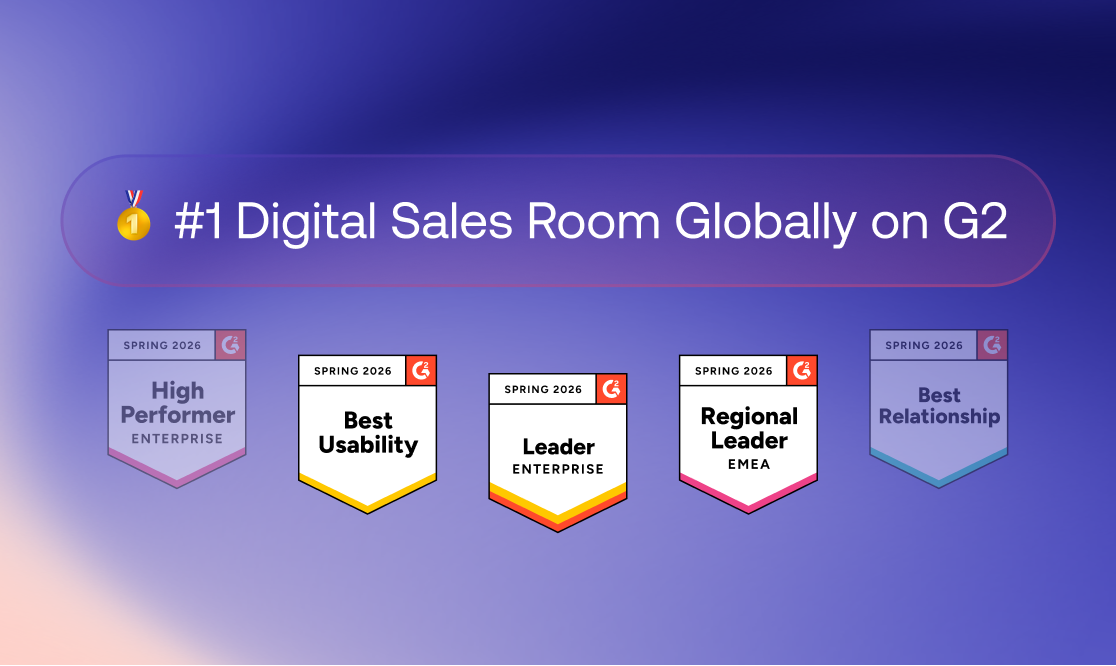
Proprietary data from trumpet's platform makes the commercial case concrete. Auto-branded personalised Pods produce a 56 per cent increase in win rate. Bringing six or more stakeholders into a room gives a 51 per cent close rate. Adding new content in the final third of a deal increases win rates by 51 per cent. Trumpet is also ranked the number one Digital Sales Room globally on G2, with more than 30 number one rankings across enterprise, mid-market, regional, and global reports.
Key capabilities: Digital Sales Rooms, Mutual Action Plans, buyer enablement, stakeholder engagement tracking, AI-powered insights, content management, native document signing, Salesforce and HubSpot integration, and customer success continuity.
Ideal use case: Mid-market and high-growth SaaS teams that want a platform covering the full buyer journey from first meeting through onboarding, with buyer engagement analytics and sales-to-CS continuity built in.
2. DealHub
Good for: Teams where pricing, proposals, and commercial workflows are the central challenge.
DealHub is primarily a revenue management platform with CPQ at its core. It handles product configuration, pricing, quoting, contract management, and deal approval workflows, with Digital Sales Room functionality built in alongside those commercial operations capabilities.
Limitations: Buyer engagement depth, stakeholder tracking, and Mutual Action Plan functionality are not the primary focus. Teams evaluating DealHub as a buyer collaboration tool may find the experience thinner than purpose-built alternatives.
Ideal use case: Mid-market teams with complex quoting, approval, and contract requirements where revenue operations is the primary driver.
3. Journey
Good for: Teams looking for a polished, lightweight buyer experience for follow-up or onboarding.
Journey is focused on creating attractive, easy-to-navigate buyer-facing spaces. It is straightforward to use and produces clean pages that work well for post-meeting follow-ups or simple collaborative deal spaces.
Limitations: Buyer engagement analytics, Mutual Action Plans, stakeholder tracking, and CRM integration are less developed. Better suited to teams where the primary goal is a polished follow-up experience rather than full deal management.
Ideal use case: Teams at an earlier stage of process maturity that want a step up from email-based follow-up without adding process complexity.
4. Flowla
Good for: Growing SaaS teams that want a simple, accessible buyer journey workspace with guided next steps.
Flowla provides collaborative sales flows that give buyers a guided path through an evaluation, with Mutual Action Plan functionality and shared next steps. It is accessible and quick to adopt.
Limitations: For mid-market teams with more complex buying committees, longer sales cycles, or meaningful content governance requirements, Flowla may be limited in the depth of stakeholder tracking, analytics, and reporting it provides.
Ideal use case: Early to mid-stage SaaS teams building their first structured buyer journey without a heavy implementation process.
Choosing the right fit
The best Digital Sales Room for a mid-market team depends on the actual revenue problem. For teams where complexity comes from commercial and proposal workflows, DealHub is closer to the problem. For teams at an earlier stage of process maturity, Journey or Flowla offer accessible starting points. For mid-market SaaS teams that need a platform covering the full buyer journey with depth and analytics to manage complex deals and scale consistently, trumpet is the strongest fit.
How to choose the right Digital Sales Room software
When evaluating Digital Sales Room software, these questions are more useful than any feature checklist.
Is it easy for reps to create and personalise rooms without significant manual effort? A platform that takes thirty minutes per room will not be adopted consistently. Does it integrate with your CRM so that engagement data flows into pipeline management? Can buyers access it easily without friction or login barriers? Does it track stakeholder engagement at an individual level, not just by deal?
Can marketing and sales enablement control what approved content gets used, so rooms stay on-message? Does it support Mutual Action Plans that push completion signals to the CRM? Does it work across the full revenue journey, covering onboarding and customer success as well as new business? And most importantly: will the team actually use it every day? Many tools can create a polished-looking page. Fewer become part of the daily revenue workflow. The test is whether the platform reduces friction for the rep, not just the buyer.
Final thoughts
Mid-market sales teams need a way to scale the quality of founder-led selling without adding more admin or more disconnected tools. Digital Sales Rooms give revenue teams a practical way to manage the buyer journey, improve deal collaboration, and turn buyer engagement into clearer, more confident sales execution.
Digital Sales Rooms have evolved from simple content-sharing pages into buyer-facing execution layers for revenue teams. The teams that will win as B2B SaaS buying grows more complex will not just be the ones with the best product or the most polished process. They will be the ones that make it easiest for buyers to understand the value, involve the right colleagues, and move forward without friction.
FAQs
What is a Digital Sales Room?
A Digital Sales Room is a shared, buyer-facing workspace where sellers and buyers collaborate throughout a specific deal. It centralises content, stakeholder access, Mutual Action Plans, and engagement tracking in one place, replacing scattered email follow-ups and disconnected document sharing.
How do Digital Sales Rooms work for mid-market sales teams?
A rep creates a personalised room for each opportunity, adds relevant content, and shares it with the buyer as the central destination for the deal. The room evolves as the deal progresses. The rep and manager can see which stakeholders are engaging, what content is being viewed, and whether Mutual Action Plans are on track. The buyer gets a professional, organised experience they can share internally without the rep managing every stakeholder interaction.
Why are mid-market sales teams adopting Digital Sales Rooms?
Because the buying process has outgrown founder-led selling and email-based follow-up. As teams scale, buying committees grow, sales cycles lengthen, stakeholders multiply, and forecasting becomes less reliable. Digital Sales Rooms create a consistent framework that helps buyers and sellers stay organised and give revenue leaders visibility into deal progression.
What is the difference between a Digital Sales Room and a sales enablement platform?
Sales enablement platforms are internal tools that help revenue teams manage content, train sellers, and standardise messaging. The buyer never sees them. Digital Sales Rooms are buyer-facing workspaces that help buying committees collaborate, access information, and progress through an evaluation. Sales enablement helps sellers prepare. Digital Sales Rooms help buyers progress.
What should go inside a Digital Sales Room?
A well-made Digital Sales Room typically includes a personalised welcome message, discovery recap, demo recording, tailored deck, relevant case studies, pricing or commercial proposal, Mutual Action Plan, and FAQs. Content is added progressively as the deal develops. Too much content too early slows deals down. Adding new content in the final third of a sales cycle, however, speeds it up significantly.
How do Digital Sales Rooms improve buyer journey optimisation?
By removing the structural friction that causes deals to stall. Champions get a shareable workspace to use when briefing internal colleagues. New stakeholders can get up to speed without a separate call. Procurement and security find what they need without chasing the rep. Mutual Action Plans keep next steps clear and accountable. The buying process becomes easier to navigate.
How do Digital Sales Rooms help sales managers?
Managers can see buyer engagement data directly rather than relying on rep opinion. Which stakeholders are viewing the room, whether the champion is sharing it internally, which content is getting attention, whether Mutual Action Plans are progressing, and which deals have gone quiet all become visible. This makes pipeline reviews more accurate and coaching more specific.
What is the best Digital Sales Room for mid-market SaaS teams?
For mid-market SaaS teams needing a platform covering the full buyer journey with buyer engagement analytics, Mutual Action Plans, CRM integration, and sales-to-CS continuity, trumpet is the strongest fit and is ranked the number one Digital Sales Room on G2 globally.
What are the most common mistakes with Digital Sales Rooms?
Treating the room as a static content dump, creating it too late in the sales cycle, overloading buyers with content at the start, not personalising it, failing to update it as the deal progresses, and not using engagement data in pipeline and coaching conversations. The value comes from how the room supports the buyer's journey, not how polished it looks.
Can Digital Sales Rooms be used beyond new business?
Yes, and the teams that extend rooms into onboarding, renewals, and expansion typically get significantly more value. The same workspace that closes a deal can carry forward into customer onboarding, giving the CS team full context and giving the customer a consistent experience across their entire journey.








![How to Get Started with Buyer Enablement [With Examples]](https://cdn.prod.website-files.com/65cf4fecbed2754c2236665d/65cf4fecbed2754c22366bdb_65a5af83e742f76e34ce06f3_Customer%2520Onboarding%2520_%2520Everything%2520you%2520need%2520(2).png)
.png)


.png)


.png)


.png)

.png)

.png)
.png)





