


It takes an average of 8 touch points to secure a meeting, but most reps give up after 2.
Most prospects who eventually convert don't respond until touch 5, 6, or later.
The biggest challenge isn't getting to touch 8, it's knowing what happens between touches.
Generic follow-ups like "just checking in" add little value and often ignore what's happening inside the deal.
Welcome back to Good Sales Stuff. Let's talk about the email you've definitely sent before.
The one that gets ignored.
Then the follow-up and that gets ignored too...
Then you decide they're probably not interested and move on to the next prospect.
According to RAIN Group's prospecting research, it takes an average of eight touch points to secure an initial meeting. Most reps stop after two.
That's a lot of potential pipeline being abandoned before it ever had a chance.

Stop being impatient.
The funny thing is that after two unanswered emails, we suddenly become mind readers.
We convince ourselves they've gone with a competitor, they're not interested, or they've developed a personal dislike of us specifically.
But really they're usually doing what buyers have always done: dealing with other priorities, surviving quarter-end, taking annual leave, or simply not being ready yet.
Research shows most prospects who eventually convert don't respond until touch 5, 6, or beyond.
The silence isn't always a no - sometimes it really is just all about timing.

The 8-touch sequence that actually works
Touch 1 — Personalised LinkedIn connection note Reference something specific. No pitch. No calendar link. You're introducing yourself, not proposing marriage.
Touch 2 — Personalised email Not "I noticed you work at..." We all have LinkedIn. Show you've done some homework.
Touch 3 — LinkedIn voice note Almost nobody sends them, which is exactly why people listen to them.
Touch 4 — Share something useful An article, report, framework, or insight. Not your 37-page brochure.
Touch 5 — Call with a voicemail Reference your earlier email. Short. Specific. Human.
Touch 6 — Engage on LinkedIn Comment on something they've posted. Not "Great post!" Add to the conversation.
Touch 7 — A direct ask "Would it be worth 15 minutes to explore whether this is relevant for your team?"
Touch 8 — The breakup email "I'll take your silence as a no for now, but if the timing changes, I'm here."
The real challenge isn't touch 8.
It's touch 4.
Did they open the email? Did they read the content? Did they share it with a colleague? Has someone from finance suddenly appeared? Are they comparing you to a competitor right now?
Without those answers, every follow-up becomes a guess.
And guesswork is where bad sales emails are born.
Enter the dreaded "just checking in"
We've all seen them... We've all sent them...
"Just checking in."
"Following up on my previous email."
"Bumping this to the top of your inbox."
They're not bad because they're short. They're bad because they add ✨nothing.✨

Imagine your buyer spent part of their evening reviewing your proposal, sharing it internally, and trying to work out whether your solution is worth exploring further.
Then the next morning they receive:
"Just checking in."
YAWN
What better looks like
A good follow-up doesn't mean restarting the conversation. It continues it. It means meeting them where they actually are in the conversation, not where you assumed they'd be when you scheduled the follow-up.
If someone is spending time on pricing, send them a customer story that helps them build a business case.
If a new stakeholder appears, give them a summary that gets them up to speed quickly.
If the demo is being revisited, answer the questions people typically ask at that stage.
The best follow-ups feel useful.
The buyer reads them and thinks:
"That's actually helpful."
Trumpet changes the game
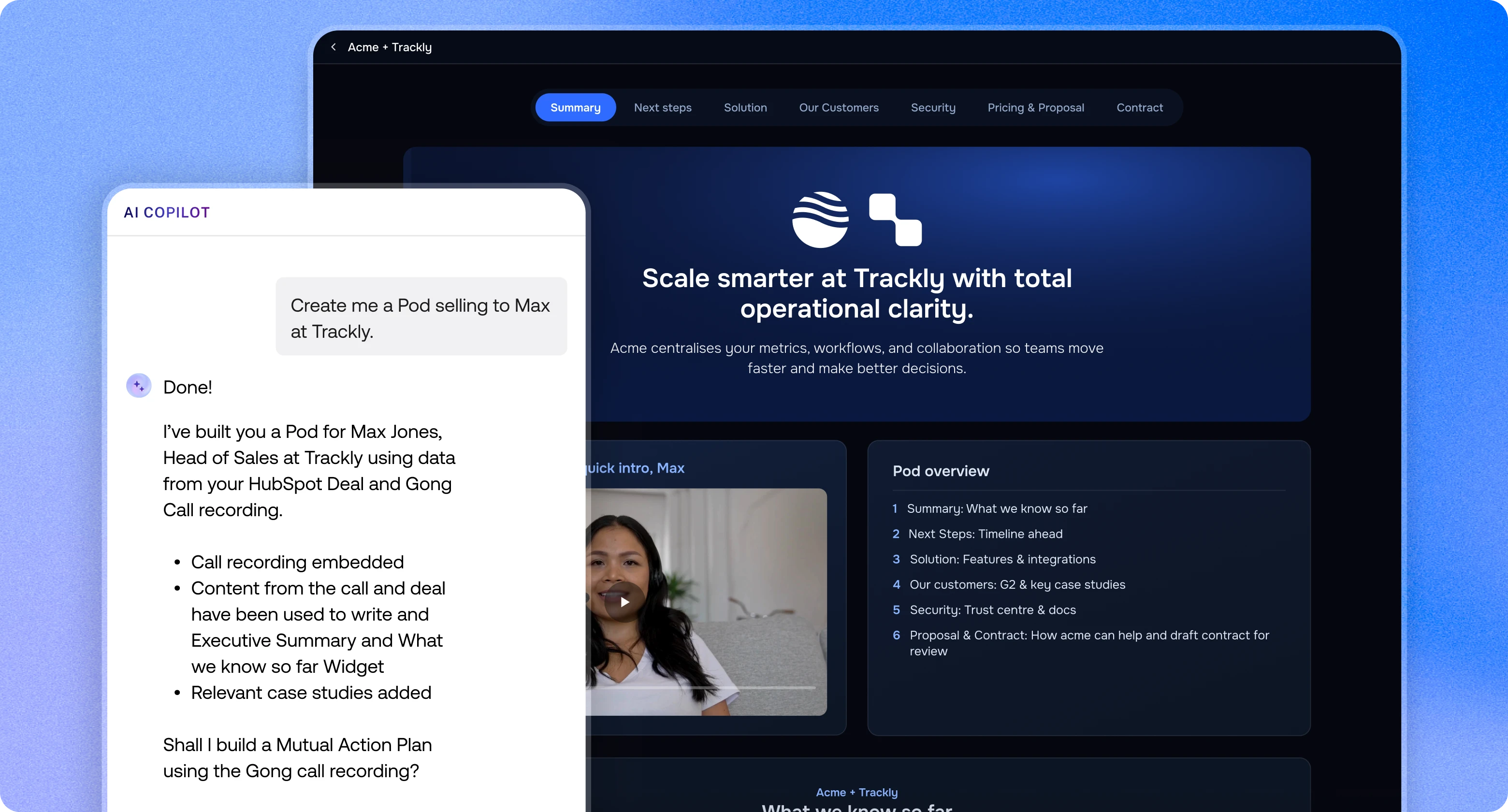
A trumpet Pod keeps working long after you've sent it.
Your prospect can revisit content, watch videos, share information internally, bring in stakeholders, and explore the deal in their own time.
More importantly, trumpet Insights shows you what's actually happening.
You can see who's engaging, what they're viewing, how long they're spending there, and whether the deal is being shared internally.
Suddenly touch 5 looks very different.
Instead of:
"Just checking in..."
It becomes:
"Thought I'd send over another customer example that might help as your team reviews pricing."
Or:
"I've added a short summary for anyone joining the conversation."
The difference is subtle, but one is based on your calendar and the other is based on buyer behaviour.

The takeaway
Eight touch points isn't really the lesson. The lesson is that most prospects need more time than most reps are willing to give them.
The teams booking more meetings aren't necessarily more persistent. They're simply working with better information. They know what their buyers care about, what they're engaging with, and where the conversation should go next.
That's Good Sales Stuff.
See you next week.

P.S. Did you see the news?
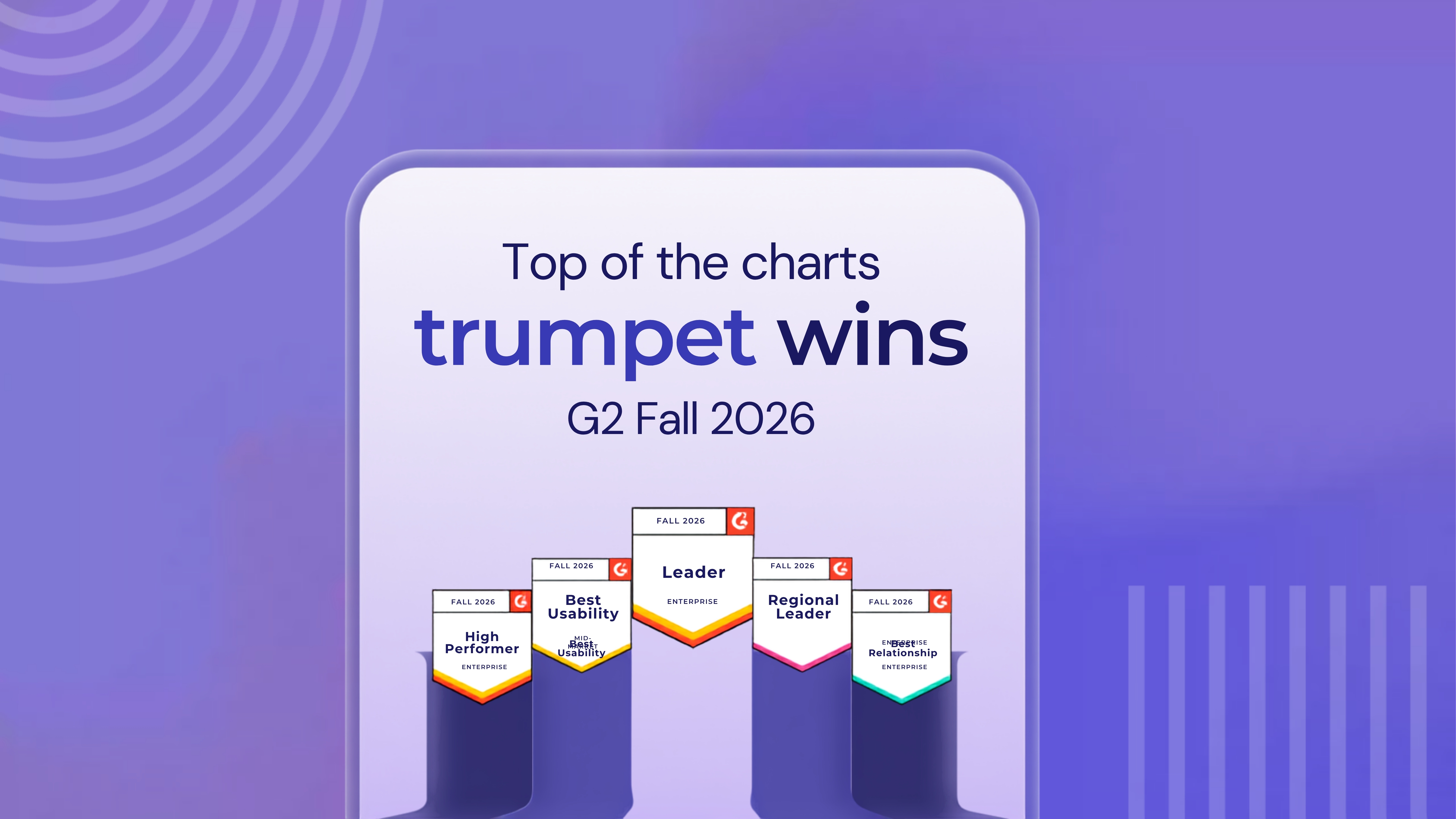
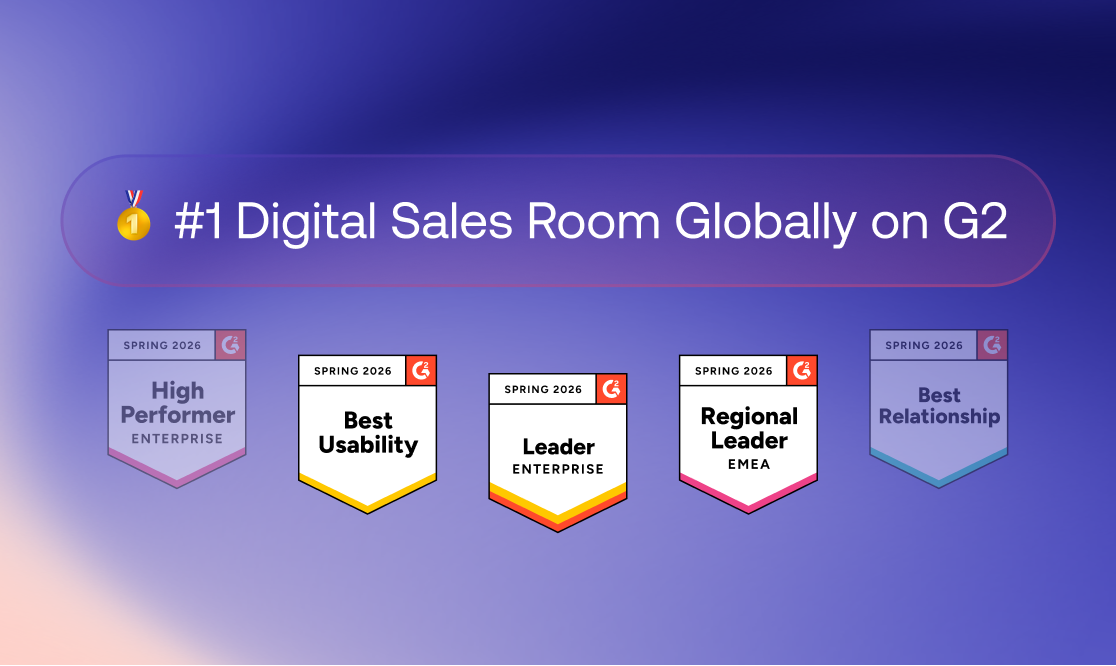
We're celebrating one whole year at the top as the #1 Digital Sales Room globally 🧡
G2's Summer 2026 reports are in. And trumpet is still stacking.
We rank #1 across 38 different categories 🤯
🏆#1 Best Digital Sales Room globally
🏆#1 Highest trending Sales Tool globally
🏆#1 Best UK and EMEA Sales Tool
🏆#1 Highest Customer Satisfaction
🏆#1 Highest Customer Relationship
🏆#1 Best Usability
For all things Digital Sales Rooms, book a quick call with our awesome Account Executives:
.png)

See what your buyers are doing between meetings
Build a Pod, share it with the buying committee and watch the signals roll in. Free to start.
.png)
.png)
.png)

.png)
.png)


![How to Get Started with Buyer Enablement [With Examples]](https://cdn.prod.website-files.com/65cf4fecbed2754c2236665d/65cf4fecbed2754c22366bdb_65a5af83e742f76e34ce06f3_Customer%2520Onboarding%2520_%2520Everything%2520you%2520need%2520(2).png)



.png)

.png)