








Welcome back to Good Sales Stuff.
Pull up a chair, grab a coffee. This one's for the Customer Success teams.
Quick question.
Have you ever opened your calendar, seen "Renewal call - 2pm", and immediately known how it was going to go?
Not because you'd spoken to the customer that morning. Because you'd had a feeling for months. That's the thing about renewals, they're not decided on renewal day.
The customer already knows
By the time the renewal meeting appears in everyone's calendar, your customer usually knows what they're going to do.
They're either thinking, "Let's get this signed," or they're quietly working out how to tell you they're leaving.
The renewal meeting rarely changes anyone's mind. More often than not, it simply confirms a decision that was made weeks or even months earlier.
The handover is your first renewal moment
The renewal doesn't start when Customer Success takes over.
It starts the moment sales says, "We'll help you achieve X."
If that promise gets lost somewhere between Closed Won and the first onboarding call, you're already spending trust before you've delivered any value.
The best CS teams don't begin with a blank page. They inherit the story.
→ What was promised?
→ Why did the customer buy?
→ Who cared most during the sales process?
→ What outcome were they trying to achieve?
Every onboarding, QBR and renewal should point back to that original promise.
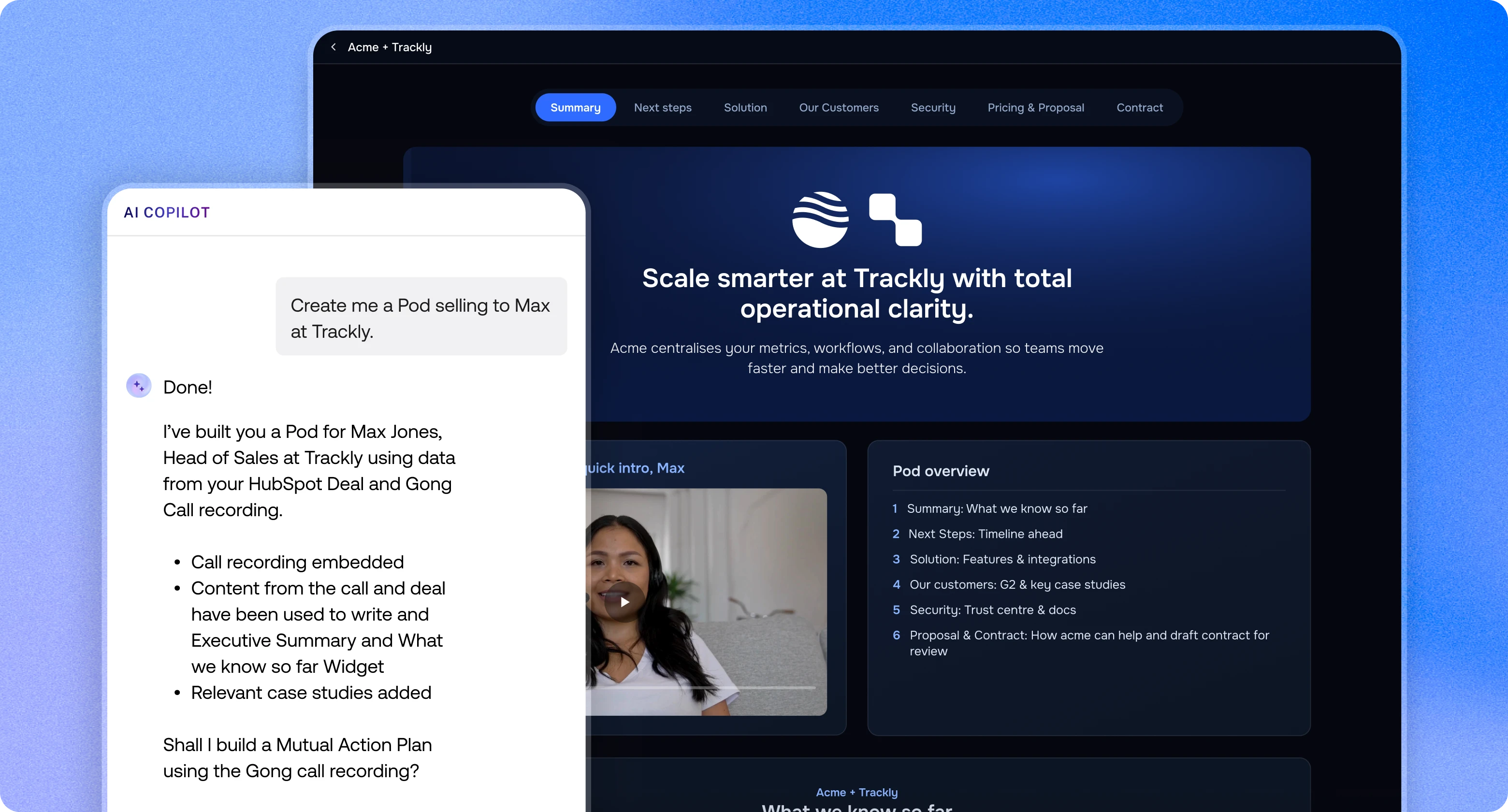
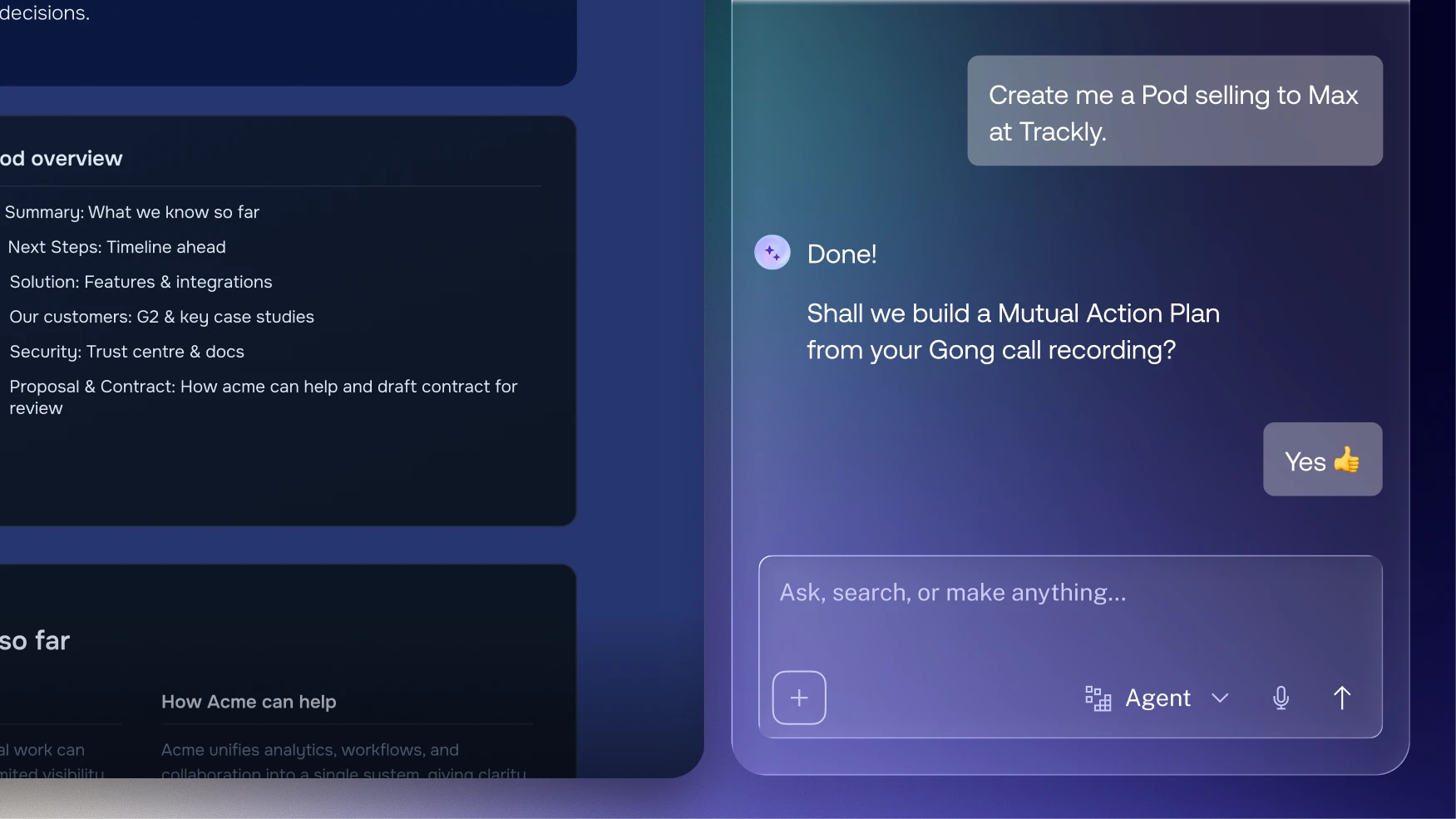
This is exactly where a shared workspace helps. Instead of rebuilding context from CRM notes and Slack messages, Sales and Customer Success are working from the same timeline, the same Mutual Action Plan and the same customer story.
The healthiest account in your CRM might be the one you're about to lose
We've all seen it.
🟢 Health score: Green.
🟢 QBR completed.
🟢 Renewal on track.
Then...
"We've decided to go in another direction."
It feels like it came out of nowhere.
Usually, it didn't.
The warning signs were there. Product usage slowly dipped. Fewer people joined calls. The champion changed roles. Meetings became easier to postpone. Nothing dramatic happened, just lots of very small things that nobody joined together.
Healthy accounts leave clues.
So do unhealthy ones.

Nobody has ever been excited by "Just checking in"
When an account goes quiet, the temptation is always the same.
"Just checking in..." The customer success version of "just following up."
Instead, show up with something useful.
→ A feature they'll genuinely benefit from.
→ A benchmark from a similar customer.
→ A quick insight into how their team's usage has changed over the last month.
→ Bring something worth opening: a feature launching next month that solves a problem the customer mentioned six months ago, a product update they'll genuinely care about, or a benchmark showing how similar teams are using the platform.
Your customer shouldn't think, "I should reply to this."
They should think, "I'm glad they sent this."
Your best CSMs probably have fewer meetings
Counterintuitive, isn't it?
The strongest customer relationships aren't built because someone squeezed another 30-minute catch-up into the diary.
They're built because every interaction is worth having.
Five genuinely useful conversations will always beat twelve meetings that could have been emails.
Customers don't remember how often you checked in.
They remember whether you helped.
Your biggest renewal risk isn't adoption
It's having one champion.
People leave, people change roles, people get promoted.
If only one person understands why your product matters, you're renewing with an audience of one.
Great CS teams spend the year building a second champion. Sometimes a third.
That's why stakeholder engagement matters just as much after the deal closes as before it.

Where trumpet comes in
Instead of every QBR starting from scratch, your customer has one place to revisit onboarding, milestones, feature updates, action plans, recordings, and everything you've achieved together.
Meanwhile, trumpet Insights lets your team see who's engaging, what they're revisiting, and whether momentum is growing or quietly fading between meetings.
You're no longer relying on a green health score or a gut feeling. You're working from real customer behaviour.

The takeaway
Customers rarely leave because of one bad meeting. More often, they leave after months of small moments where the value became a little less obvious, the conversations became a little less useful, and the relationship quietly lost momentum.
Great Customer Success teams understand that renewal isn't something you prepare for 30 days before the contract ends. It's something you build throughout the year by being consistently useful, proactive, and easy to work with.
Because renewal isn't a date. ✨ It's a feeling. ✨
That's Good Sales Stuff. See you next week. 🎺







![How to Get Started with Buyer Enablement [With Examples]](https://cdn.prod.website-files.com/65cf4fecbed2754c2236665d/65cf4fecbed2754c22366bdb_65a5af83e742f76e34ce06f3_Customer%2520Onboarding%2520_%2520Everything%2520you%2520need%2520(2).png)
.png)


.png)


.png)


.png)

.png)

.png)
.png)





