

Updated 29 October 2026
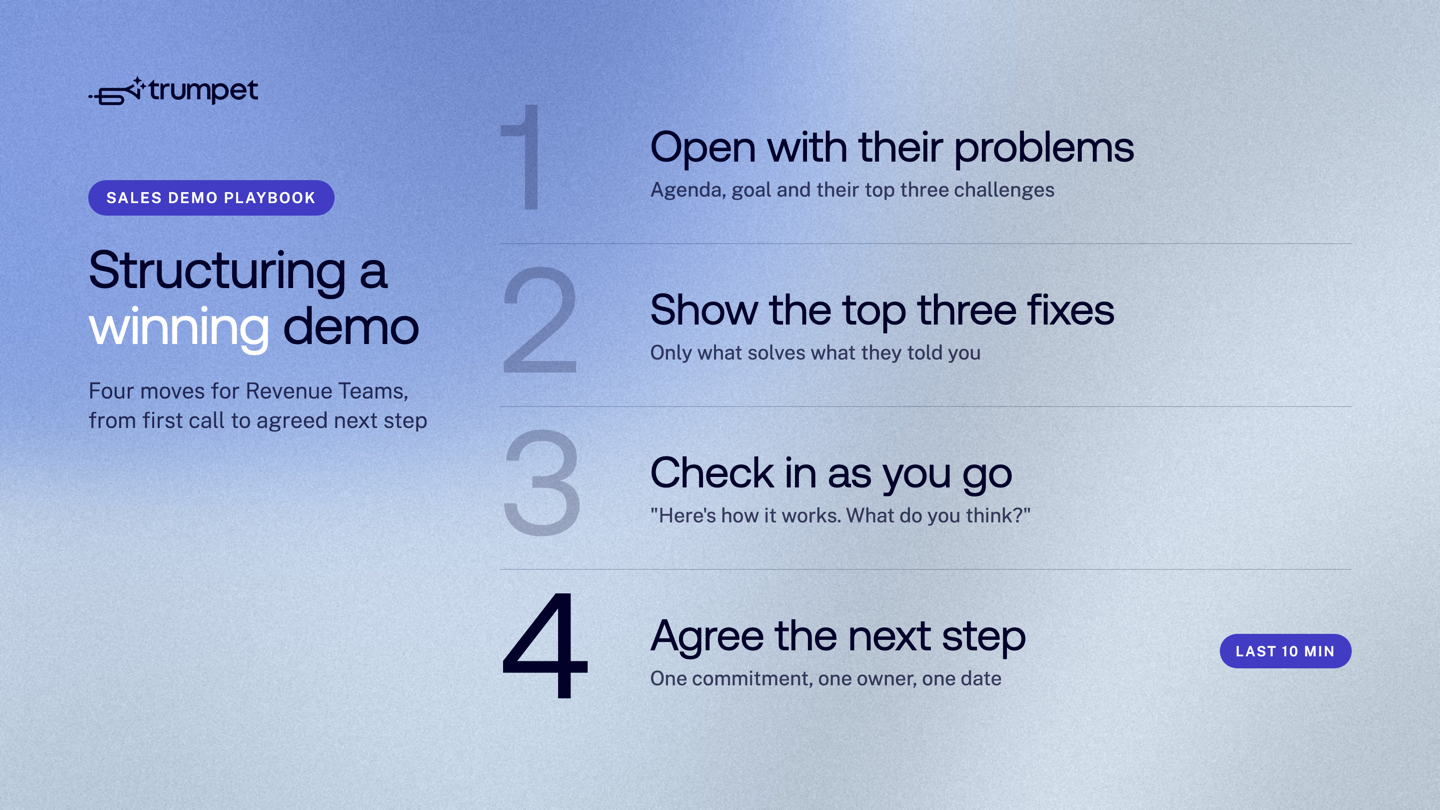
A winning sales demo is built around the buyer's top three problems and ends with an agreed next step, not a feature tour. Open with an agenda, recap what they told you, show only how you solve those problems, then save the last 10 minutes to agree one buyer commitment with an owner and a date. Put that commitment in a shared Mutual Action Plan and send it within the hour.
We caught up with Ali Chrisp, Account Executive at trumpet, to talk about how he structures a demo. His view is simple. A great demo solves problems. It doesn't show off features. And the structure should change with where the buyer is in their journey.
How to structure a winning sales demo
Most demos run 30 to 60 minutes. Here is a structure for a 45 minute call that works for sales and customer success teams alike, whether you're selling to a new buyer or showing an existing customer an expansion.
| Stage | Time | What to do |
|---|---|---|
| 1. Open | 5 min | Agenda, goal and a promise to save the last 10 minutes for next steps |
| 2. Recap their problems | 5 to 10 min | Confirm the top three challenges they told you in discovery |
| 3. Show the fit | 20 min | Show only how you solve those three things, checking in after each |
| 4. Tie it back | 5 min | Link each part of the demo to the problem it solves |
| 5. Agree next steps | 10 min | Questions, recap, one buyer commitment with an owner and a date |
The order matters. Telling the buyer at the start that you'll save 10 minutes for next steps makes the close of the call feel planned, not pushy. It also stops the demo from running over and the next step being lost to "let's pick this up by email".
Start with the essentials
If the buyer is early in their journey, keep it simple. As Ali puts it:
"It should really just be a kind of, okay, what are your top three things you're looking to solve? Here's the top three things that my product solves."
At this stage, the goal isn't to show everything. It's to spark interest and earn a deeper session with the wider group of buying stakeholders. So the next step you agree at the end of a first demo is usually a second meeting with the people who weren't in the room.
Make it more personal over time
As the deal moves on, each demo should get more specific. Drop the generic walkthrough and focus on three things:
- The buyer's top problems. Frame the whole session around what they need, in their words.
- How your solution fits. Show clear, direct ways your product solves each issue. Skip anything that doesn't.
- Engagement and feedback. Keep checking in. Ali's line is "Here's how trumpet solves it. What do you think?"
Those check ins do double duty. They keep the buyer talking, and they tell you what to put in the recap at the end.
Tie it back to their challenges
A strong demo is a problem solving session, not a walkthrough. Loop back to what the buyer told you at the start. Remind them of each challenge and show exactly how your product handles it. If they said approvals take three weeks, end that section on approvals, not on a feature list.
This is also where you set up the close. If every part of the demo maps to a problem the buyer named, the recap writes itself, and agreeing a next step is the natural end of the conversation.
How to agree next steps before the demo ends
To agree next steps before a demo ends, save the last 10 minutes, recap what you heard, and ask the buyer to commit to one specific action with a named owner and a date. Then book the next meeting while everyone is still on the call. A next step that only exists in your notes isn't a next step.

Questions to ask in the last 10 minutes
- Who else needs to see this? Finds the stakeholders who will sign off but weren't on the call.
- What has to be true for you to move forward? Surfaces the criteria, risks and blockers you still need to cover.
- What's your timeline? Ties the next step to a real date on the buyer's side, such as a budget cycle or a go live.
- Can we book the next meeting now? Gets a date in the diary before the call ends, not three emails later.
A repeatable process for every demo
- Save the last 10 minutes. Say it in the agenda at the start, and keep to it.
- Recap what you heard. Play back their top problems and how you showed you solve each one. Ask if you missed anything.
- Agree one buyer commitment. One action, owned by a named person on the buyer's side, with a date. For example, "Sam shares the demo with IT by Friday."
- Put it in a shared Mutual Action Plan. Add the step, and yours, to a Mutual Action Plan inside the buyer's Pod, so both sides can see who owes what and when.
- Send the Pod within the hour. Share one link with the recap, the recording, the content you showed and the plan, while the call is still fresh.
Keep the demo working after the call
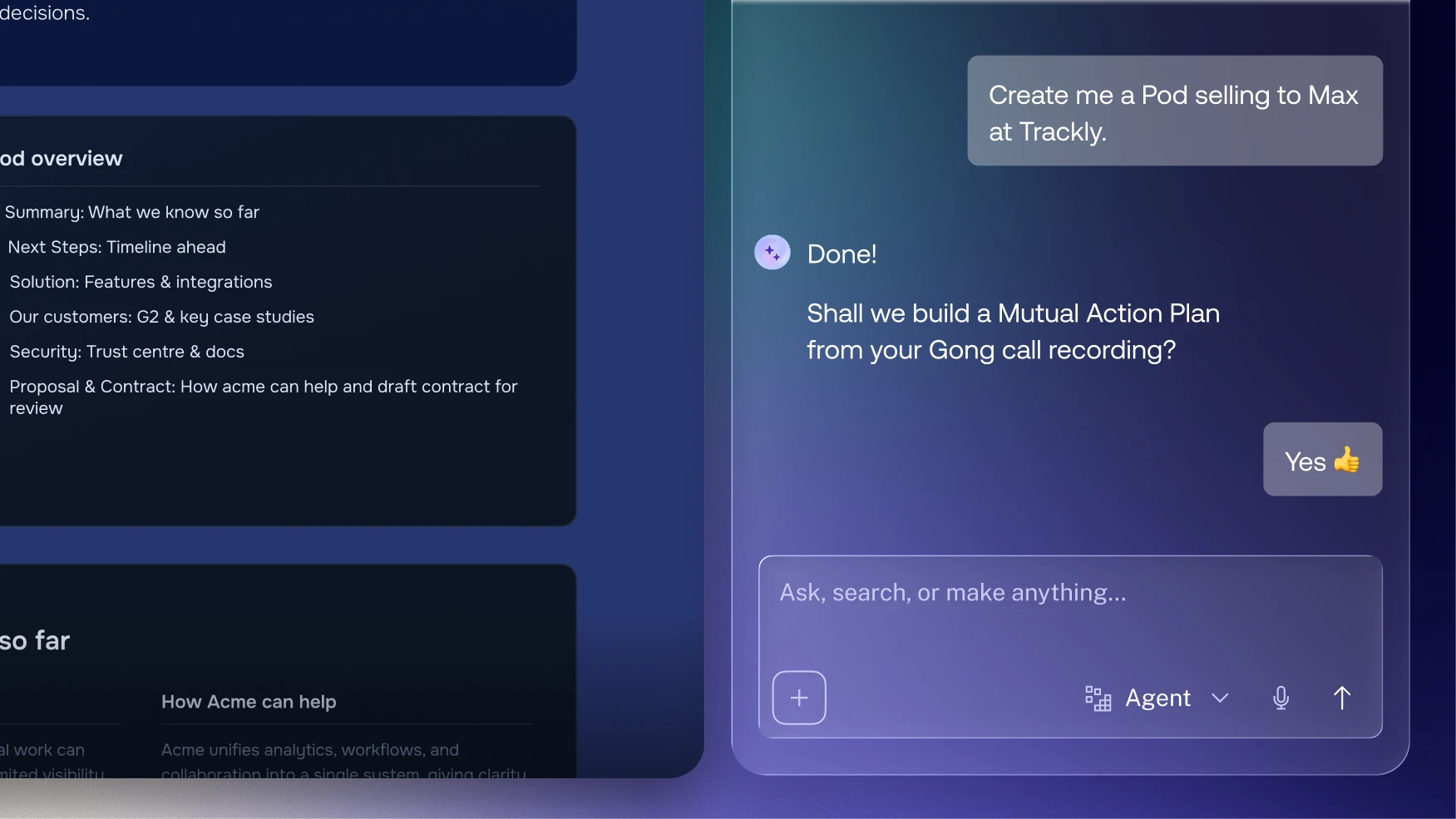
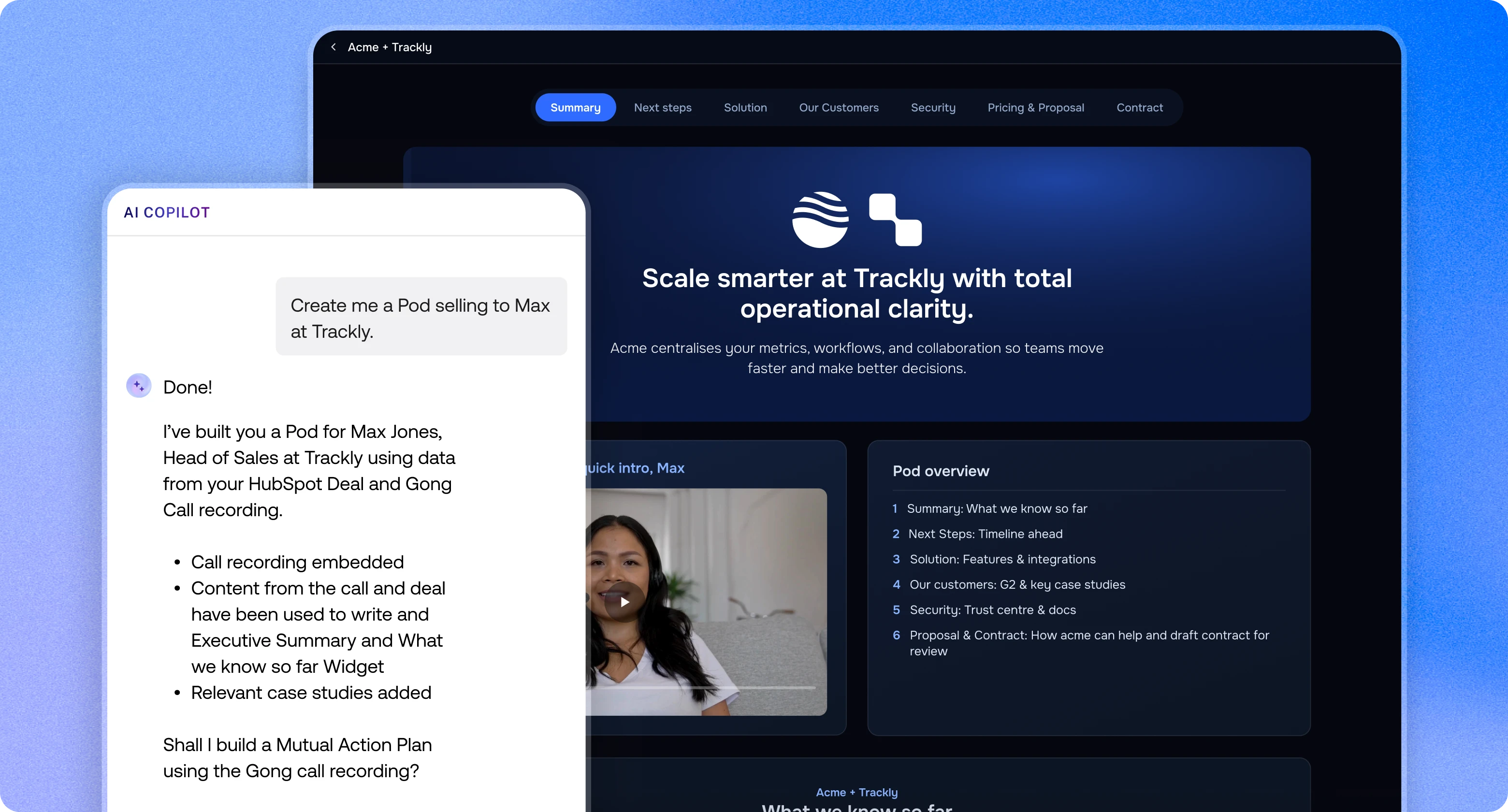
The demo ends, but the deal carries on in the 95% of the buying process you never see. That's where a Digital Sales Room helps. In trumpet, the Pod is a branded, website style space that auto brands from the buyer's domain. Buyers open one link with no login, revisit what you showed, and share it with stakeholders who weren't on the call.
The Mutual Action Plan lives in the same Pod, with buyer and seller owned steps, owners, due dates and reminders. In trumpet's own data, deals with an active Mutual Action Plan are linked to double the win rate. After signature, the same plan becomes the onboarding plan, so customer success picks up where sales left off. Our guide to Mutual Action Plan software covers what to look for.
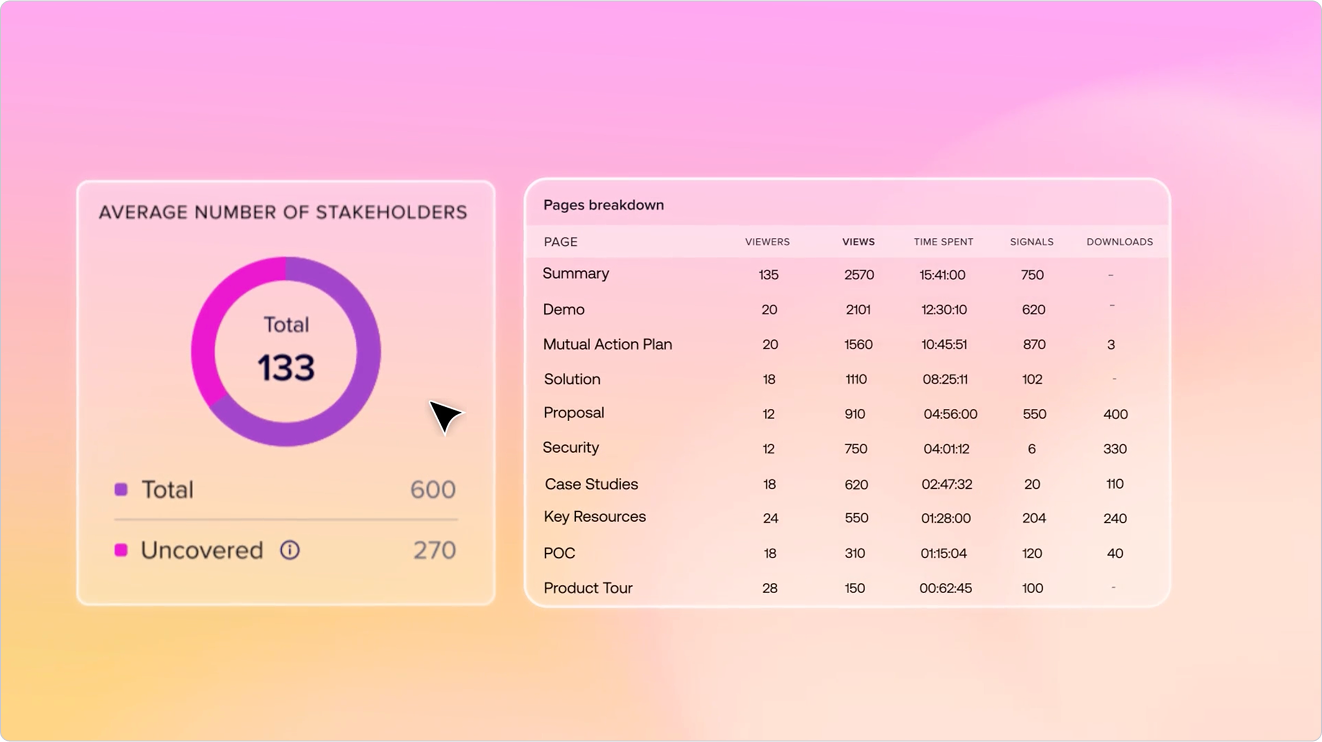
You also see what happens next. Every viewer gets an Engagement Score, Slack and email alerts tell you when the buyer opens the Pod, and the AI org chart maps buying roles and spots missing stakeholders. If the CFO never opens the link, you know who to ask about on the next call. See how Revenue Teams use this for post call and demo follow ups.
Frequently asked questions
How should you structure a sales demo?
Open with an agenda, recap the buyer's top three problems, show only how you solve them, tie each part back to their challenges, and save the last 10 minutes for next steps.
How do you agree next steps before a demo ends?
Save the last 10 minutes, recap what you heard, and agree one buyer commitment with a named owner and a date, then book the next meeting before anyone leaves the call.
What questions should you ask at the end of a demo?
Ask who else needs to see this, what has to be true to move forward, what their timeline is, and whether you can book the next meeting now.
How long should a sales demo be?
Most demos run 30 to 60 minutes, and a 45 minute call gives enough room to show the top three solutions and still keep 10 minutes for next steps.
What should you send after a demo?
Send one link within the hour with the recap, the recording, the content you showed and a shared Mutual Action Plan with the agreed next step in it.
How is an early demo different from a later one?
An early demo is short and covers the buyer's top three problems to earn a deeper session, while later demos get more detailed and tailored to each stakeholder's challenges.

See what your buyers are doing between meetings
Build a Pod, share it with the buying committee and watch the signals roll in. Free to start.