







This is part one of a five-part series exploring the next era of revenue technology and the rise of Intelligent Revenue Collaboration.
What is an Intelligent GTM Layer
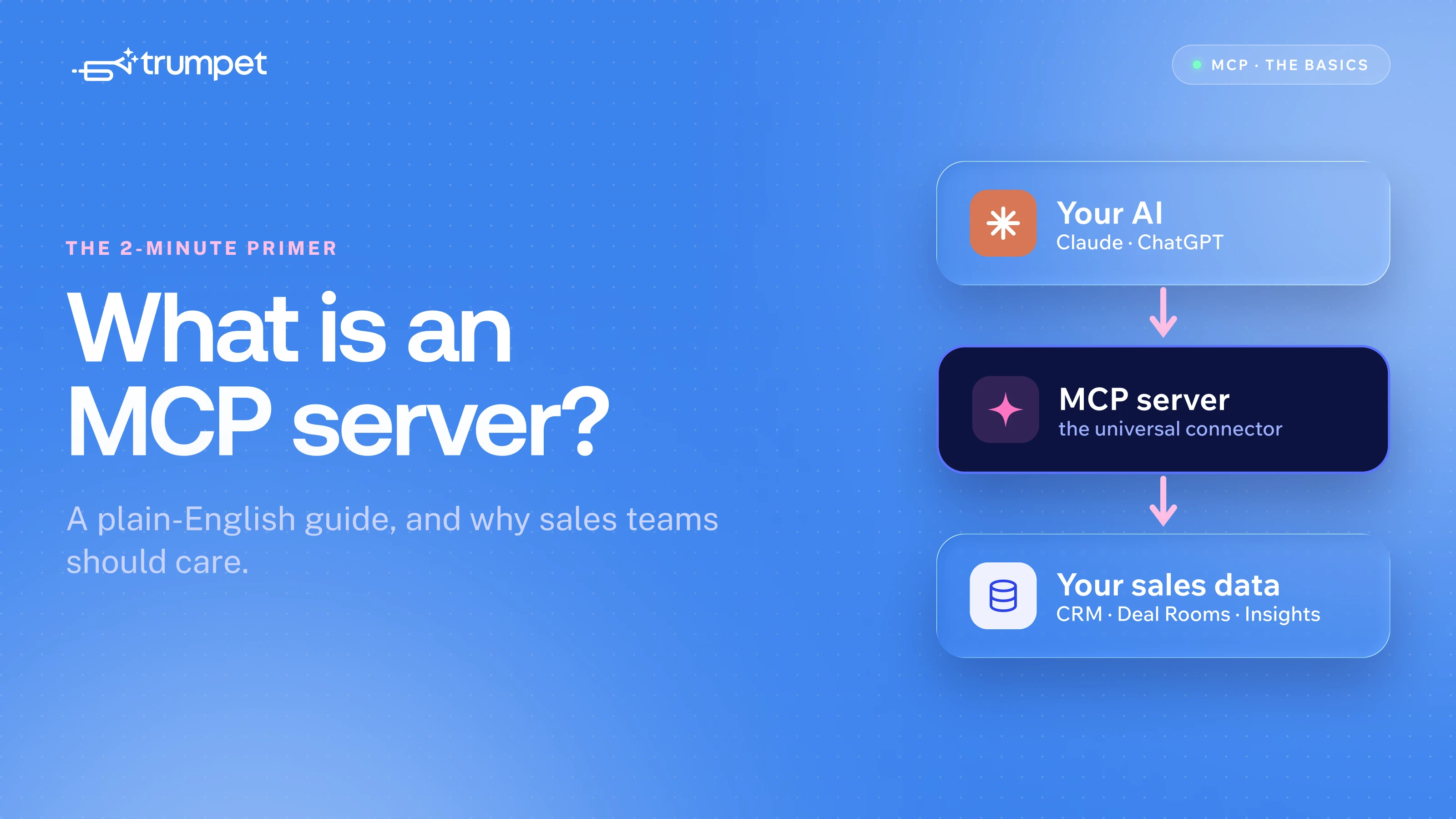
An Intelligent GTM Layer is the system that sits above your existing revenue stack and connects how teams actually work.
It does not replace your CRM, enablement platform, or intelligence tools.
It makes them usable together.
→ It is where buyers and sellers collaborate.
→ It is where signals become insight.
→ It is where insight turns into action.
Why CRMs are systems of record, not systems of work
CRMs are essential. They store data, enforce structure, and support forecasting.
But they were never designed for daily revenue work.
→ They record outcomes, not momentum.
→ They track fields, not conversations.
→ They show what happened, not what to do next.
That gap has forced teams to work outside the CRM while reporting back into it.
This is where context gets lost.
Why revenue teams work across too many disconnected tools
A typical revenue team now relies on multiple platforms to manage the full customer journey, including:
→ Content and enablement
→ Calls and conversation intelligence
→ Forecasting and deal health
→ Onboarding and renewals
→ Internal collaboration
Individually, each of these tools adds value. Collectively, however, they often introduce friction. Reps find themselves switching between tabs to piece together context, leaders spend time chasing updates across systems, and buyers experience inconsistency as information becomes fragmented. The challenge is not the existence of tools themselves, but the lack of coordination between them.
What sits on top of the GTM stack today
What sits on top is not another dashboard, it's a connected workspace.
A place where:
→ Buyers and sellers interact in real time
→ Content lives in context
→ Signals surface naturally from behaviour
→ Teams align around the same live view of a deal
This is the role of an Intelligent GTM Layer.
How an Intelligent GTM Layer connects the revenue motion
How content becomes part of the workflow
Content is no longer something that is simply stored and sent. It is shared, discussed, and acted on in one central space where buyers can engage with it in context. Instead of disappearing into inboxes or attachments, it becomes part of an ongoing conversation, giving revenue teams clear visibility into what resonates, what drives action, and where momentum may be slowing down.
How signals become guidance, not noise
Signals should not be reduced to opens and clicks on a report. When interpreted properly, they reveal intent, highlight risk, and surface real momentum within a deal. An Intelligent GTM Layer brings those signals into the flow of work itself, embedding insight directly where decisions are made rather than isolating it inside a separate reporting tool. Instead of reacting to data after the fact, revenue teams can act on it in real time.
How collaboration becomes the default
Revenue is no longer a one-to-one interaction between seller and buyer. It is many-to-many, involving multiple stakeholders across Sales, Customer Success, RevOps, and leadership. An Intelligent GTM Layer creates shared visibility across these teams, ensuring everyone sees the same progress, context, and next steps without relying on constant updates or recurring status meetings. Collaboration becomes embedded in the system itself, not something that has to be manually maintained.
Why ripping out your stack is not the answer
The best teams are not replacing their stack.
They are connecting it.
→ CRMs remain the source of truth.
→ Enablement tools remain content engines.
→ Intelligence tools remain signal sources.
The Intelligent GTM Layer sits above them, coordinating how they are used.
How trumpet fits into the Intelligent GTM Layer model
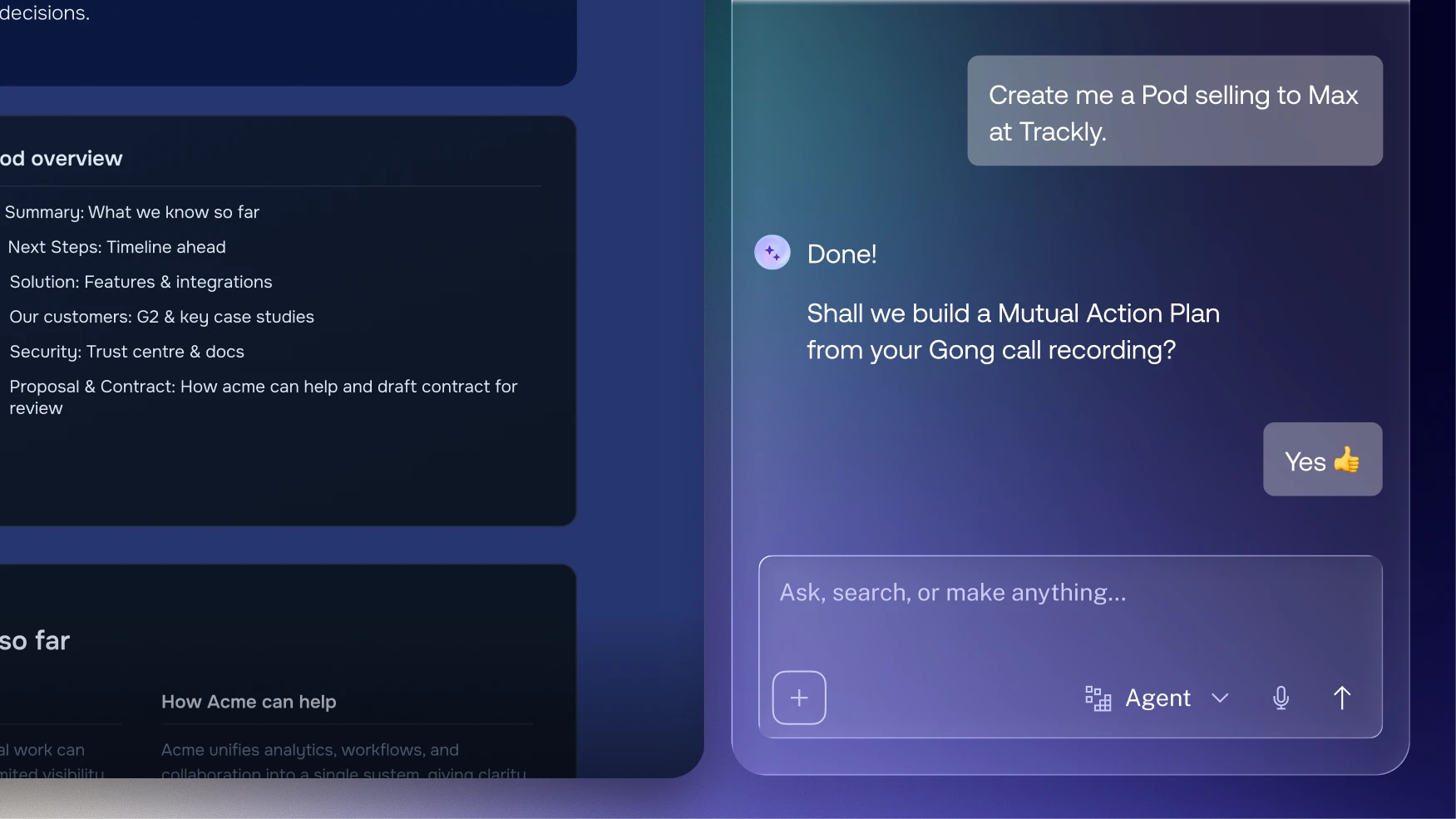
Trumpet is an example of an Intelligent GTM Layer in practice.
It connects to the revenue stack and becomes the shared workspace where:
Buyers and sellers collaborate
Signals surface naturally from engagement
Teams coordinate action across the lifecycle
What revenue leaders should look for in a GTM Layer
When evaluating how to reduce fragmentation, leaders should ask:
→ Does this connect buyers and sellers in one place
→ Does it turn signals into clear next steps
→ Does it work with our existing tools
→ Does it support collaboration across teams
If the answer is no, it is another point solution.
What comes next in the series
In the final blog, we will explore how high performing revenue teams will operate in the future and why Intelligent Revenue Collaboration will define the next decade of go to market.
FAQs
What does an Intelligent GTM Layer actually do
It connects tools, teams, and buyer activity into one shared workflow that supports coordinated action.
Is an Intelligent GTM Layer a replacement for CRM
No. It works alongside CRM as the system where revenue work actually happens.
Why are revenue teams adopting this model now
Because buyer journeys are more complex, tools are more fragmented, and coordination has become the bottleneck.








![How to Get Started with Buyer Enablement [With Examples]](https://cdn.prod.website-files.com/65cf4fecbed2754c2236665d/65cf4fecbed2754c22366bdb_65a5af83e742f76e34ce06f3_Customer%2520Onboarding%2520_%2520Everything%2520you%2520need%2520(2).png)
.png)


.png)


.png)


.png)

.png)

.png)
.png)





