







- Pods with testimonials increase win rate by 4%, driven by reduced buyer risk and clearer proof of value.
- Strong testimonials focus on outcomes, context, and real changes in buyer behaviour, not generic praise.
- Different testimonial types support different stakeholders, from ROI-focused decision-makers to internal champions.
- Using engagement insights to share relevant testimonials at the right moment makes them far more effective.
Why do testimonials increase win rate?
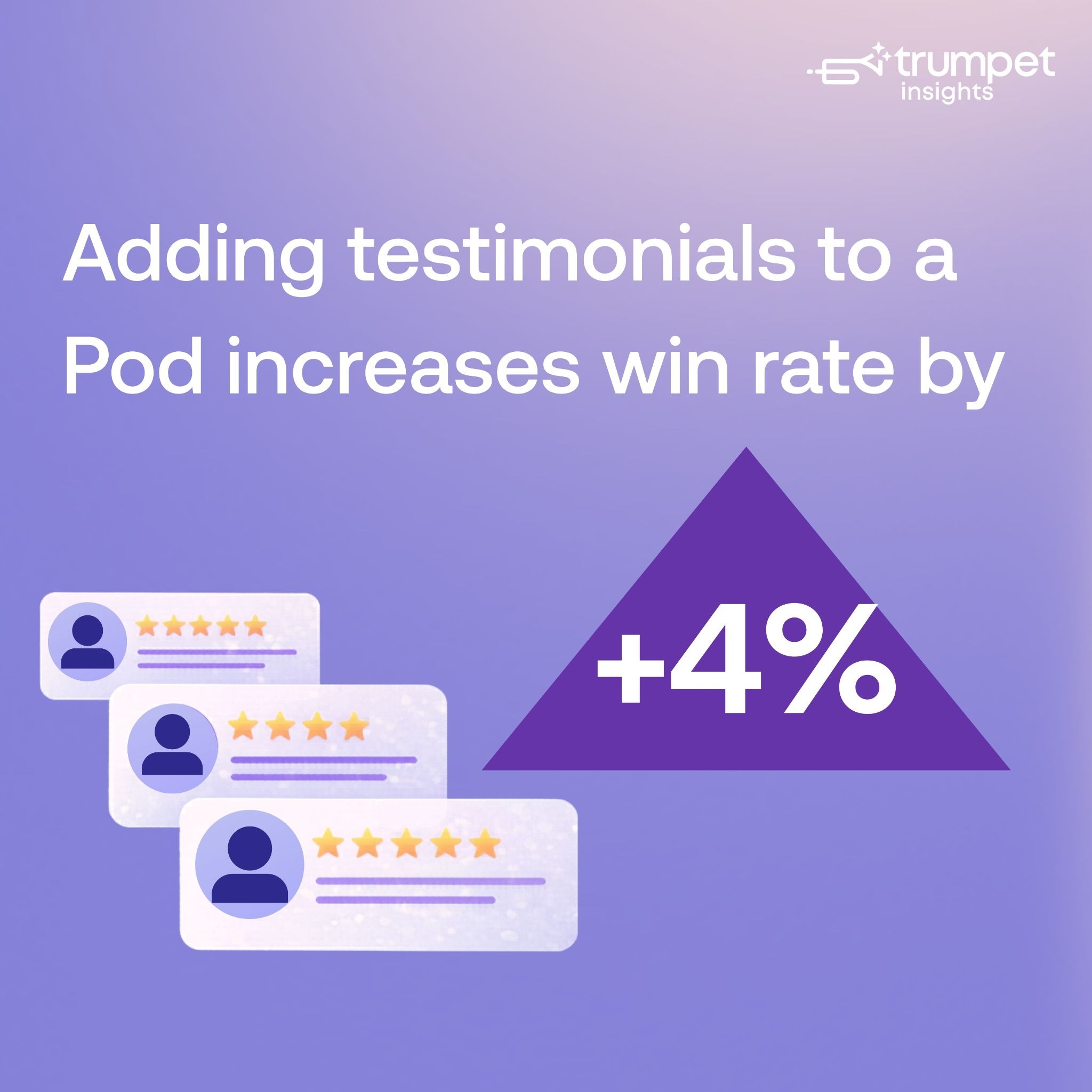
We analysed thousands of deals in trumpet Pods and found that Pods with testimonials see a 4% increase in win rate.
That lift comes from one thing: reducing risk. When buyers are reviewing a solution, they are not just asking “does this look good?” They are asking “will this actually work for us?” Strong testimonials answer that directly.
What makes a testimonial effective in a Pod?
Not all testimonials influence decisions. The ones that work well share a few common traits.
- Specific outcomes: Numbers and measurable results carry weight.
“We increased win rate by 67% and deal size by 57%” is far more convincing than general praise. - Clear context: Buyers need to understand who the customer is and how they compare.
Role, company size, and situation all help someone decide if it is relevant. - Before and after: The most effective testimonials show change.
What was happening before, and what improved after using the product. - Buyer behaviour: Strong testimonials highlight how deals changed.
For example, stakeholders engaging earlier, sharing content internally, or spending more time reviewing materials. - Named individuals: A real person with a role and company builds far more trust than an anonymous quote.
What types of testimonials work best in a deal?
Different stakeholders care about different things, so a mix of testimonial types works best.
- Outcome-led testimonials: Focus on results and impact, useful for decision-makers reviewing ROI.
- Process testimonials: Show how the product improves day-to-day workflows, helpful for your champion.
- Stakeholder testimonials: Highlight improved multi-threading and deal visibility.
- Adoption testimonials: Address ease of use and speed of rollout, often important for RevOps or enablement.
- Video testimonials: Short, natural clips that are easy to consume and feel more credible.
Each type plays a different role in helping the deal move forward.
Where should testimonials sit inside a Pod?
Placement matters just as much as the content itself. It’s a good idea to have a dedicated page that brings all your testimonials into one place. This gives stakeholders a single view of proof, especially useful when they want to explore customer stories in more detail or share them internally.
But don’t rely on that page alone.
Testimonials are most effective when they appear at the moment they’re needed. Instead of grouping everything in one section, place them where they support the decision being made:
- After a proposal, include a result-focused testimonial
- Alongside a case study, include a similar customer quote
- Near pricing, include a value-driven testimonial
This keeps them relevant to the moment and much easier for stakeholders to absorb, rather than expecting them to go searching for proof themselves.
What should you avoid when using testimonials?
A few common mistakes reduce their impact:
- Generic praise with no detail
- Overly polished or AI language
- Irrelevant industries or personas
The goal is not volume, but to add relevance, pick out testimonials depending on each deal.
Final thoughts
Our research shows after analysing thousands of Pods that adding testimonials increases win rate by 4%, but the impact comes down to how they are used. The most effective ones reduce uncertainty, show real outcomes, and appear at the right moments in the deal, where they support decisions rather than sit in the background. When they are clear, relevant, and easy to engage with, they help your message carry internally and make it easier for stakeholders to move forward.
FAQs
Do testimonials really impact win rate?
Yes. Data shows Pods with testimonials see a 4% increase in win rate, particularly when the testimonials are relevant and specific.
What type of testimonial works best?
Testimonials with clear outcomes, real context, and a before-and-after story tend to be the most effective..
How many testimonials should I include?
A small number of highly relevant testimonials is more effective than a large number of generic ones.










![How to Get Started with Buyer Enablement [With Examples]](https://cdn.prod.website-files.com/65cf4fecbed2754c2236665d/65cf4fecbed2754c22366bdb_65a5af83e742f76e34ce06f3_Customer%2520Onboarding%2520_%2520Everything%2520you%2520need%2520(2).png)
.png)


.png)


.png)


.png)

.png)

.png)
.png)





