








- Digital Sales Rooms keep buyers, content, and next steps together.
- Buyer collaboration improves sales process visibility.
- Mutual Action Plans keep buying committees aligned.
- Sales and customer success share the same deal context.
- Trumpet supports the buyer journey from discovery to onboarding.
The first customers are often the easiest to manage. Founders know every prospect personally, every follow-up email is written by hand, and the latest pitch deck lives in a shared folder that everyone on the team can find. At that stage, sales rely more on product knowledge, relationships, and determination than on process.
As the business grows, that way of selling becomes harder to sustain. More account executives join the team, several opportunities progress at the same time, and buying committees become larger. Procurement, security, finance, and senior decision-makers enter the conversation later in the sales cycle, while customer success needs a clearer handover once contracts are signed. The approach that helped win the first twenty customers gradually becomes more difficult to repeat consistently.
Most startups do not struggle because they lack sales content. They struggle because information becomes fragmented before their sales infrastructure catches up. Meeting recordings are shared in one email, proposals arrive in another, security documentation sits in a shared drive, and agreed next steps are buried in call notes. Buyers spend time searching for information instead of evaluating the solution, while sales leaders have limited visibility into what is happening between meetings.
Digital Sales Rooms solve that problem by creating one buyer-facing workspace where sellers and buying committees can collaborate throughout the deal. Instead of relying on disconnected emails and attachments, buyers have one place to review content, track next steps, involve colleagues, and progress the evaluation, while revenue teams gain better visibility into buyer engagement and deal momentum.
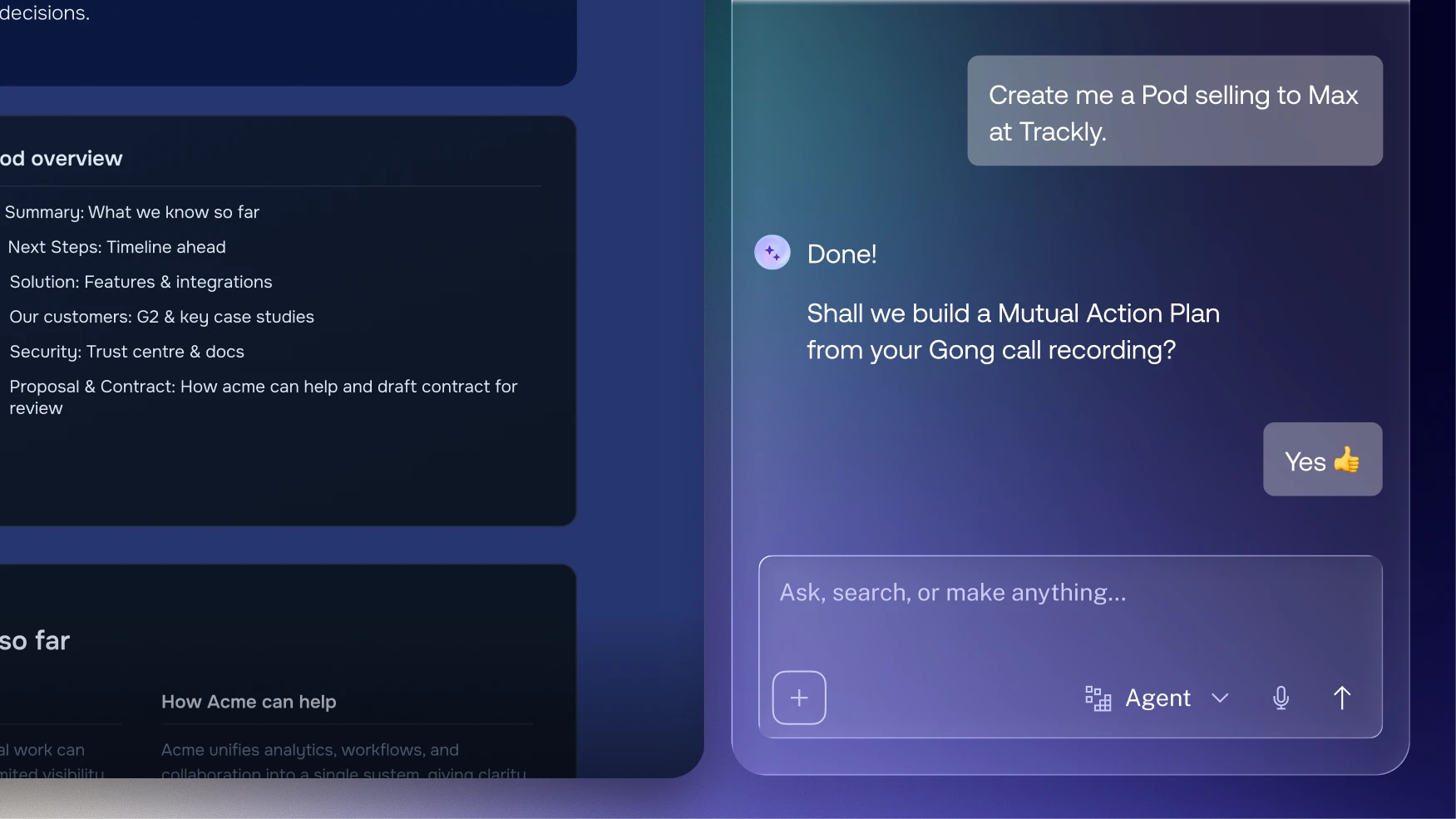
Platforms such as trumpet bring this approach together in a single workspace. A trumpet Pod can centralise personalised content, Mutual Action Plans, stakeholder activity, proposals, security documentation, document signing, and onboarding information, allowing the same workspace to evolve from the first discovery call through to customer success.
Why do startups struggle without Digital Sales Rooms?
Startups struggle without Digital Sales Rooms because deal information becomes scattered across emails, decks, recordings, proposals, and internal systems. As more stakeholders become involved, buyers find it harder to stay aligned, champions spend more time coordinating information internally, and sales teams lose visibility into whether opportunities are genuinely progressing. A Digital Sales Room creates one shared workspace for content, stakeholders, next steps, and collaboration, helping startups maintain momentum as deals become more complex.
Platforms such as trumpet allow startup sales teams to create personalised deal rooms where buyers can access relevant content, collaborate through Mutual Action Plans, and move from evaluation into onboarding without losing context.
What is a Digital Sales Room?
A Digital Sales Room is a shared buyer-facing workspace where sellers and buying committees collaborate throughout the sales process. Rather than sending separate emails after every meeting, the sales team creates one place where buyers can find everything they need to evaluate a solution, from discovery notes and demo recordings to pricing, case studies, Mutual Action Plans, security documentation, and implementation plans.
The room evolves as the opportunity progresses. Early conversations might focus on understanding business challenges and sharing relevant content, while later stages introduce commercial proposals, procurement information, legal documentation, and agreed next steps. Instead of searching across inboxes for the latest attachment or asking the sales team to resend documents, every stakeholder works from the same up-to-date information.
For startups, that consistency becomes increasingly valuable as sales cycles become longer and buying committees grow. A Digital Sales Room helps every stakeholder understand where the evaluation stands, what has already been agreed, and what happens next, while giving the revenue team a clearer picture of buyer engagement throughout the deal.
Why startup sales processes become fragmented
The first few deals usually feel straightforward because everyone involved knows exactly where to find information. Founders often lead every sales conversation themselves, the product team sits a few desks away, and answering a customer question is as simple as sending a quick message or jumping on a call.
Growth changes that dynamic. New salespeople join, marketing creates more content, customer success takes ownership after signature, and several opportunities move through the pipeline at once. At the same time, buyers begin involving procurement, finance, security, IT, and additional decision-makers, each with different questions and priorities.
Information naturally starts spreading across different systems. Discovery notes live in the CRM, demo recordings sit in a conversation intelligence platform, pricing is attached to an email, security documentation is stored in a shared drive, and implementation plans are introduced once the deal has already been signed. Every tool serves a purpose. Buyers, however, experience the deal as one continuous journey rather than a collection of disconnected systems.
Digital Sales Rooms bring those conversations back together by giving buyers and sellers a shared workspace that stays with the opportunity from the first meeting through to onboarding. Instead of asking buyers to piece the story together themselves, the sales team creates one place where every stakeholder can review information, understand next steps, and collaborate throughout the evaluation.
Founder-led selling
Founder-led selling is one of the biggest advantages an early-stage startup has. Founders know the product inside out, understand every customer conversation, and can adapt their pitch as new feedback comes in. They also hold most of the deal context in their head, making it easy to answer questions or pick up a conversation exactly where it left off.
That approach becomes much harder to maintain as the company grows. New account executives need repeatable processes, managers need visibility across multiple opportunities, and customers expect a consistent buying experience regardless of who they are speaking to. Relying on individual knowledge or long email threads makes that transition harder than it needs to be.
A Digital Sales Room captures that context in a way the whole revenue team can use. Discovery notes, meeting recordings, customer stories, pricing, Mutual Action Plans, implementation timelines, and stakeholder activity remain connected to the opportunity, allowing every sales rep, manager, and customer success team member to work from the same information as the business scales.
How Digital Sales Rooms improve startup sales coordination
As startups grow, coordinating a deal becomes just as important as running a good discovery call. Marketing shares case studies, sales prepares proposals, solution engineers answer technical questions, legal reviews commercial terms, and customer success starts planning implementation. Without a shared way of working, every team contributes information, but nobody has a complete view of the buyer journey.
A Digital Sales Room brings those activities together around the opportunity itself. Sales can update next steps, marketing can provide relevant customer stories, solution engineers can add technical documentation, and customer success can begin introducing implementation resources before the contract is signed. Buyers no longer need to search across multiple emails or ask different people for the latest information because everything is available in one place.
For startup leaders, that creates a more repeatable sales process. New team members spend less time chasing information, managers gain better visibility across active opportunities, and buyers experience a more organised evaluation from the first meeting through to onboarding.
Better buyer engagement without creating more work
Every stakeholder joins a deal with different priorities. An executive sponsor wants confidence that the investment will achieve the expected business outcome, procurement focuses on commercial terms, security reviews compliance documentation, and customer success wants to understand how implementation will work. Sending every stakeholder the same follow-up email rarely gives them the information they actually need.
A Digital Sales Room allows the buying committee to work from a shared workspace while accessing the information most relevant to their role. Instead of repeatedly asking the sales team for documents or updates, stakeholders can review content when it suits them, share it internally, and return to the room as the evaluation progresses.
For the sales team, buyer engagement becomes much easier to understand. A Digital Sales Room improves buying committee engagement by giving every stakeholder access to the same information throughout the evaluation, rather than relying on the champion to brief each person individually. Rather than wondering whether a proposal has been opened or whether new decision-makers have become involved, sellers can see how the buying committee is interacting with the room and identify where additional support may be needed. According to trumpet platform data, Pods involving ten or more unique stakeholders have produced a 75 per cent close rate across deals analysed. These are correlational findings and outcomes will vary by sales process and segment.
Mutual Action Plans keep both sides in sync
Most B2B deals include a series of agreed milestones, whether that is scheduling a security review, confirming commercial terms, completing procurement, or planning implementation. When those milestones live in spreadsheets or email threads, timelines drift without either side noticing until the expected close date has already passed.
A Mutual Action Plan brings buyers and sellers together around one shared timeline. Both sides can see what has been completed, what still needs attention, and who owns each next step, making expectations much clearer throughout the evaluation. According to trumpet platform data, deals with an active Mutual Action Plan achieve double the win rate of deals managed without one, and MAPs with six to ten completed steps have shown an 84 per cent close rate across deals analysed. These are correlational findings and outcomes will vary by sales process and segment.
Within trumpet, Mutual Action Plans sit alongside the rest of the buying experience rather than existing as a separate document. Buyers can review proposals, access supporting resources, complete agreed actions, and prepare for onboarding without switching between different tools, helping the sales process continue with greater visibility and fewer unnecessary handovers.
Digital Sales Rooms vs virtual data rooms
Although they sound similar, Digital Sales Rooms and virtual data rooms were built for different purposes.
Virtual data rooms are designed for secure document storage and controlled access during activities such as fundraising, mergers and acquisitions, due diligence, and legal reviews. Their primary role is to protect sensitive information and manage who can view it.
A Digital Sales Room is designed to support an active buying journey. Instead of acting as a secure document repository, it gives buyers and sellers a shared workspace where they can collaborate throughout the evaluation. Buyers can review personalised content, follow a Mutual Action Plan, involve additional stakeholders, access pricing and security documentation, and understand the next steps without switching between multiple systems.
For startups, that distinction matters. Raising investment or preparing for due diligence may require a virtual data room, whereas managing day-to-day sales opportunities requires a workspace that helps buying committees evaluate, collaborate, and make decisions together.
Signs your startup is ready for a Digital Sales Room
Many startups adopt a Digital Sales Room at the point where their existing sales process begins creating more work than it removes. That usually happens gradually rather than all at once.
You might notice account executives repeatedly resending the same documents, buyers asking for meeting recordings that have already been shared, or new stakeholders joining the evaluation without understanding what has happened so far. Customer success may spend the first few weeks after signature rebuilding context instead of preparing implementation, while sales managers rely on rep updates because there is little visibility into how buyers are engaging between meetings.
Those are all signs that the business has outgrown a sales process built around email, attachments, and shared folders. A Digital Sales Room introduces more structure without introducing unnecessary complexity, helping startups scale the buying experience alongside the rest of the revenue organisation.
A smoother handoff from sales to customer success
The buying journey does not end when a contract is signed. Customer success still needs to understand why the customer purchased, what outcomes were agreed during the sales process, which stakeholders were involved, and what success should look like during implementation.
When that information lives across meeting notes, CRM records, and email threads, onboarding often begins with another round of discovery. Customers repeat information they have already shared, while customer success spends valuable time rebuilding context that already existed during the sales cycle.
A Digital Sales Room allows that context to move with the customer. Discovery notes, Mutual Action Plans, implementation timelines, key stakeholders, commercial agreements, and supporting resources remain in the same workspace, allowing customer success to continue the conversation rather than start a new one. Within trumpet, the same Pod used during the sales process naturally evolves into a workspace for onboarding and ongoing customer collaboration, giving both teams a shared view of the customer journey from first conversation through to long-term success.
Common mistakes startups make with Digital Sales Rooms
One of the most common mistakes is treating the room as somewhere to upload documents after the proposal has been sent. By that stage, buyers have already spent weeks working across emails, attachments, and meeting notes, making the room feel like another place to look rather than the central place for the deal.
Another mistake is filling the room with every piece of marketing content available. Buyers rarely need dozens of case studies or product brochures. They need information that helps them answer the questions in front of them, whether that is understanding the business case, reviewing security documentation, comparing pricing, or preparing for implementation.
It is also important to keep the room current. A Mutual Action Plan that has not been updated for weeks, outdated proposals, or broken links quickly reduce confidence and encourage buyers to return to email instead. The most effective Digital Sales Rooms evolve alongside the opportunity, reflecting each conversation, decision, and agreed next step as the evaluation progresses.
How to measure the success of a Digital Sales Room
Success should be measured by more than whether a room has been created. The real value comes from understanding how buyers engage with it and whether it improves the way opportunities progress through the pipeline.
Many revenue teams monitor how many stakeholders become involved during a deal, how frequently buyers return to the room, whether agreed actions are completed on time, and how consistently Mutual Action Plans are maintained. Sales leaders may also look at improvements in sales cycle length, forecast confidence, onboarding readiness, and the number of opportunities that progress from proposal to closed won. These metrics provide a more complete picture than CRM stage changes alone because they reflect what buyers are actually doing throughout the evaluation, not simply where the opportunity sits in the pipeline.
Choosing the right Digital Sales Room software
Not every Digital Sales Room is designed to support the same type of revenue team. Some platforms focus on content sharing, while others specialise in proposal management or document signing. As startup sales processes become more sophisticated, it is worth looking beyond individual features and considering how the platform supports the wider buyer journey.
When evaluating Digital Sales Room software, consider whether it:
- Creates personalised buyer workspaces rather than static content pages.
- Supports Mutual Action Plans and collaborative deal execution.
- Provides stakeholder engagement and buyer analytics.
- Integrates with your CRM and wider revenue stack.
- Supports sales, customer success, and onboarding in the same workspace.
- Is simple enough for sales teams to adopt consistently as the business grows.
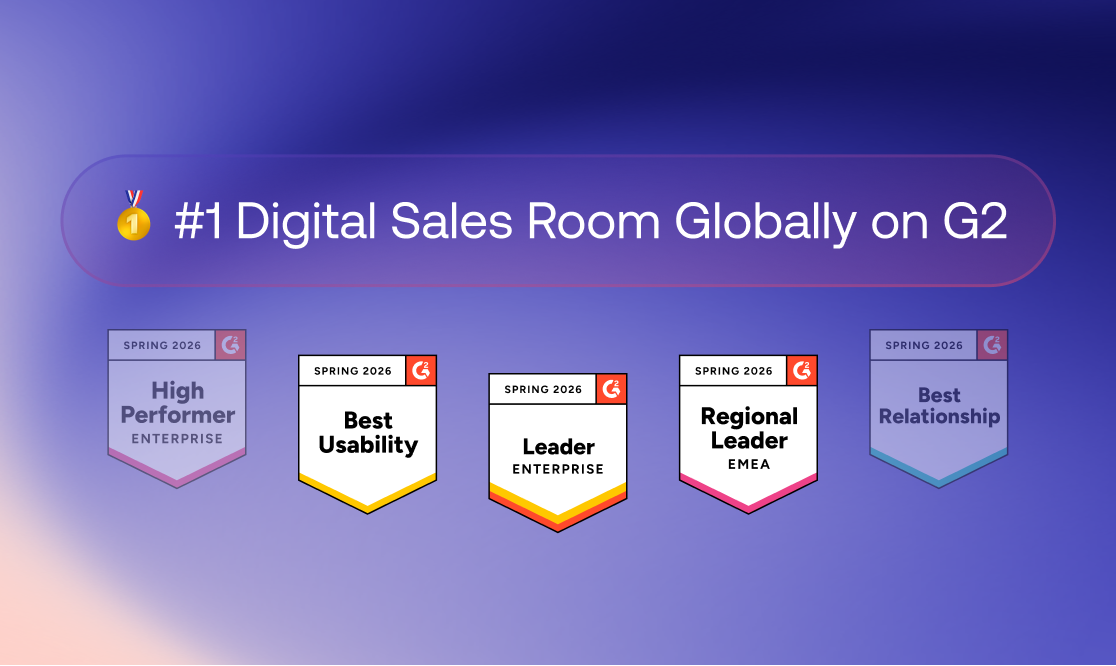
Trumpet brings those capabilities together in a single buyer-facing workspace, combining Digital Sales Rooms, stakeholder engagement, Mutual Action Plans, AI-powered insights, CRM integrations, document signing, and sales-to-customer-success continuity without requiring buyers to move between multiple tools. Trumpet is ranked number one for Digital Sales Rooms globally on G2 across more than 30 enterprise, mid-market, and regional reports.
Final thoughts
Growing startups rarely need more software for the sake of it. They need sales processes that remain consistent as opportunities become larger, buying committees become more complex, and more people contribute to the customer journey.
A Digital Sales Room helps create that consistency by giving buyers and sellers one shared place to collaborate from the first discovery conversation through to onboarding. Instead of relying on email chains, shared folders, and disconnected systems, revenue teams can manage the buyer journey in a way that is easier for customers to navigate and easier for the business to scale.
For startups looking to build a more repeatable sales process, trumpet combines buyer collaboration, Mutual Action Plans, stakeholder engagement, AI-powered insights, and sales-to-customer-success continuity into a single buyer-facing workspace, helping revenue teams manage complex deals with greater visibility and confidence.
FAQs
What is a Digital Sales Room?
A Digital Sales Room is a buyer-facing workspace where sellers and buying committees collaborate throughout the sales process. It brings together content, stakeholders, Mutual Action Plans, proposals, and next steps in one place.
When should a startup introduce a Digital Sales Room?
Most startups benefit from introducing a Digital Sales Room once deals involve multiple stakeholders, longer evaluation cycles, or repeated requests for information across different teams.
What is the difference between a Digital Sales Room and a virtual data room?
A virtual data room is designed for secure document storage during activities such as fundraising, due diligence, or legal reviews. A Digital Sales Room supports live buyer collaboration throughout the sales process, helping stakeholders access information, complete Mutual Action Plans, and move opportunities forward.
Can Digital Sales Rooms improve buyer engagement?
Yes. By giving every stakeholder access to one shared workspace, Digital Sales Rooms make it easier for buying committees to review content, involve colleagues, track next steps, and stay aligned throughout the evaluation.
How does trumpet support startup sales teams?
Trumpet helps startup revenue teams create personalised Digital Sales Rooms where buyers can collaborate on Mutual Action Plans, review relevant content, involve stakeholders, complete document signing, and transition into onboarding without losing context. Trumpet is ranked number one for Digital Sales Rooms globally on G2.










![How to Get Started with Buyer Enablement [With Examples]](https://cdn.prod.website-files.com/65cf4fecbed2754c2236665d/65cf4fecbed2754c22366bdb_65a5af83e742f76e34ce06f3_Customer%2520Onboarding%2520_%2520Everything%2520you%2520need%2520(2).png)
.png)


.png)


.png)


.png)

.png)

.png)
.png)





