



What is customer collaboration?
Customer collaboration is the process of creating a shared, two-way relationship between your team and your buyers or customers.
Rather than relying on one-sided sales pitches, scattered email threads or occasional check-ins, a collaborative approach gives both sides an easier way to share information, ask questions, provide feedback and understand what needs to happen next.
During the sales process, this can mean working with buyers on shared next steps, answering questions in context and helping multiple stakeholders access the information they need.
After the sale, the same collaborative approach can continue through onboarding, account management and renewals, giving customers a consistent place to work with your team throughout the relationship.
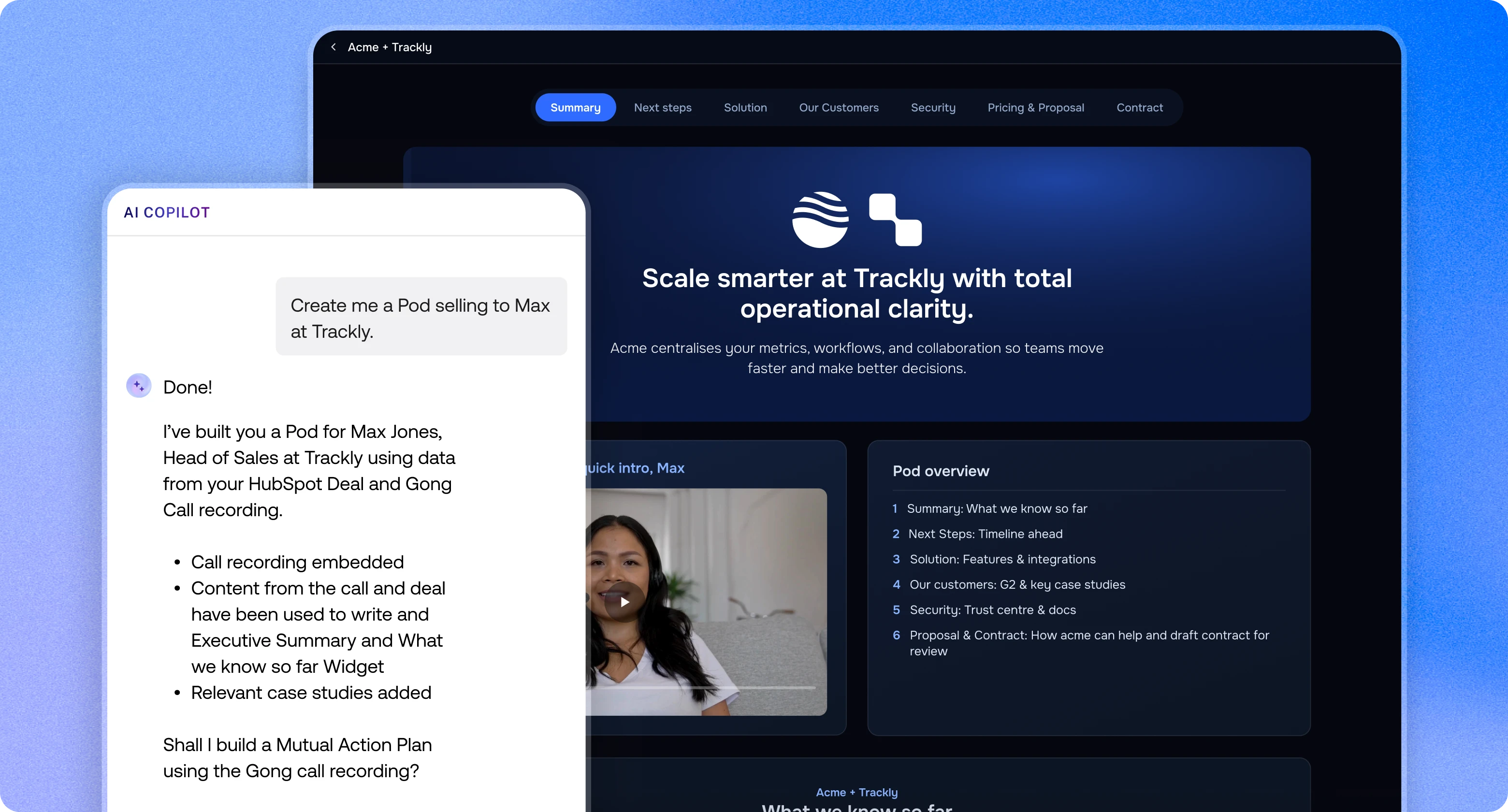
Digital Sales Rooms can bring this collaboration into one shared workspace. In trumpet, buyers and customers can comment directly on content, send voice or video notes, join live Huddles and work through shared actions without leaving the Pod.
The benefits of customer collaboration tools?
Customer collaboration tools help keep conversations, content and next steps connected, making it easier for your team and your customers to work together.
Key benefits include:
- Improved Communication: Keep conversations closer to the content, actions and decisions they relate to instead of spreading updates across email threads, calls and different tools. Features such as live chat, comments, @mentions, voice notes and video messages also give customers different ways to communicate depending on what they need.
- A better understanding of customer needs: Ongoing conversations and feedback help teams understand what customers care about, what questions are coming up and where additional support may be needed. When collaboration happens directly alongside content and next steps, that context is easier to capture and act on.
- Increased Efficiency: Less back-and-forth - a shared workspace gives everyone one place to find the latest information, ask questions and check next steps.That can reduce unnecessary follow-up emails, repeated questions and time spent searching for the right document or version.
- A better customer experience: Customers get a clearer, more personalised way to work with your team. Instead of navigating multiple communication channels and attachments, they can access relevant information, conversations and actions from one place and engage in the way that suits them.
- Higher Sales Conversion Rates: Giving buyers more visibility and easier ways to participate can help sellers understand what matters to the wider buying team. Feedback, questions and engagement can then be used to make follow-ups, proposals and next steps more relevant to the deal.
- Building Long-term Relationships: Collaboration doesn't have to stop when the contract is signed. The same shared workspace can continue into onboarding, account management and renewal, giving customers continuity and making it easier for both teams to keep track of goals, resources and next steps over time.
- Valuable Feedback Loop: Customer collaboration tools provide a platform for gathering feedback, which is gold for continuous improvement. This feedback can drive product development, enhance services, and fine-tune your sales approach.
