







- Sales enablement software helps sellers improve performance through coaching, training, and content management. Digital Sales Rooms help buyers navigate complex purchasing decisions through collaboration and visibility.
- The two categories solve different problems and work best when connected. Treating them as alternatives leaves gaps that show up in stalled deals.
- Startup sales scaling is one of the strongest use cases for sales enablement software: as headcount grows, consistency requires infrastructure.
- Digital Sales Rooms become critical as deals involve more stakeholders. Data from trumpet shows that deals with ten or more stakeholders engaged close at 75 per cent.
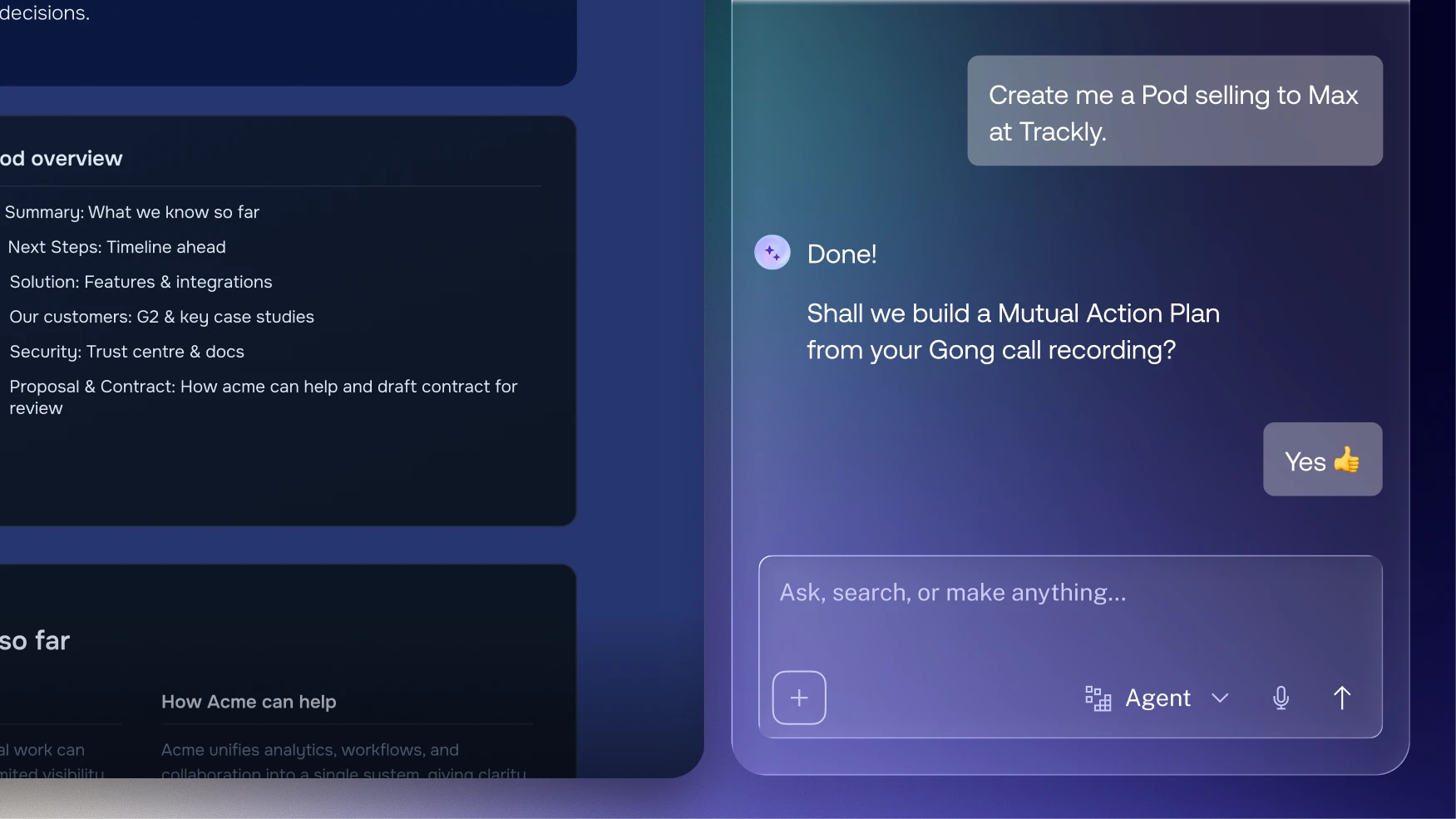
- Gong and trumpet work together by connecting conversation intelligence with buyer-facing collaboration. Call insights inform Pods and Mutual Action Plans. Engagement signals from trumpet flow back into coaching and forecasting.
- Trumpet combines Digital Sales Rooms, content management, sales coaching support, Mutual Action Plans, stakeholder engagement, and sales-to-CS continuity in a single platform.
Sales teams have never had more technology available to them. Content lives in one platform, calls are recorded in another, CRM activity is tracked elsewhere, and buyer communication happens across email, meetings, and shared documents. Each tool serves a purpose, but keeping track of stakeholder engagement, content sharing, and next steps becomes harder as buying committees grow.
Sales enablement software and Digital Sales Rooms were built to solve different problems. Sales enablement focuses on helping revenue teams improve consistency through coaching, training, content management, and onboarding. Digital Sales Rooms help buyers navigate the evaluation process by bringing stakeholders, content, next steps, and collaboration into one place.
As SaaS buying journeys become more complex, revenue teams increasingly rely on both. Sales enablement helps sellers prepare for conversations, while Digital Sales Rooms help buyers progress decisions between those conversations.
What is sales enablement software?
Sales enablement software helps revenue teams improve seller effectiveness. The priority is to ensure every seller has access to the right content, coaching, training, and resources needed to perform consistently across the team.
As SaaS companies scale, this becomes a big operational challenge. New hires need onboarding, existing reps need coaching, marketing teams need confidence that approved content is being used correctly, sales leaders need visibility into what is actually working and sales enablement software creates the infrastructure to solve these problems at scale.
A few common capabilities include content management, sales coaching, call recording and conversation intelligence, training and onboarding programmes, certifications, content usage analytics, sales playbooks, and knowledge management.
The primary focus is improving seller performance. If a rep needs help finding the right content, tightening their discovery process, or learning a new methodology, sales enablement software is built for that problem.
What is a Digital Sales Room?
A Digital Sales Room focuses on a different challenge entirely. Rather than helping sellers prepare for buyer conversations, it helps buyers navigate the buying journey itself. A Digital Sales Room is a shared workspace where buyers and sellers collaborate throughout the lifecycle of a deal. Instead of information scattered across email threads, PDFs, shared drives, and meeting notes, everything lives in one place. Buyers can access relevant content, complete tasks, loop in colleagues, and track progress without chasing anyone for an update.
Common capabilities include buyer-facing content, Mutual Action Plans, stakeholder engagement tracking, collaborative deal management, proposal management, document signing, and customer onboarding workflows.
The primary focus is helping buying groups reach internal consensus. This has become critical in B2B technology sales, where purchasing decisions routinely involve procurement, legal, finance, security, operations, and executive stakeholders. Most of those people never speak to a sales rep. They join the evaluation late, form opinions independently, and make decisions in conversations the seller has no visibility into. A Digital Sales Room brings that process into view and gives both sides a structure to work within.
Data from trumpet's platform shows how significant this is. Bringing ten unique stakeholders into a Digital Sales Room gives a 65 per cent chance of closing. Bring in more than ten and that rises to 75 per cent. Deals with only one or two stakeholders engaged close at roughly half that rate. The difference is not the product. It is the collaboration.
Sales enablement vs Digital Sales Rooms
The clearest way to understand the difference is to look at who each category is designed to support.
Sales enablement software is built for the seller. Digital Sales Rooms are built for the buyer. Sales enablement improves internal execution. Digital Sales Rooms improve the external buying experience.
Sales enablement answers questions like: are reps using the right messaging? Can sellers find the right content? Are managers coaching effectively? Is onboarding consistent across the team?
Digital Sales Rooms answer different questions: which stakeholders are engaged? What content is influencing decisions? What actions need to happen next? Where is the deal at risk? How can buyers collaborate more effectively?
Neither category replaces the other. They address fundamentally different moments in the revenue journey, and the teams that treat them as competing options tend to have gaps that show up in stalled deals and lost pipeline.
Where sales enablement software wins
Sales enablement software is particularly valuable when a SaaS business is focused on startup sales scaling. As headcount grows and markets expand, maintaining consistency across a growing revenue team becomes exponentially harder without proper infrastructure.
Sales enablement helps teams standardise onboarding so new reps ramp faster, centralise content so sellers always use approved and up-to-date materials, improve messaging consistency across regions, share coaching insights at scale, and give sales leaders clear visibility into rep performance. For SaaS sales leaders, this creates a repeatable process that holds up as the team grows.
Where Digital Sales Rooms win
Digital Sales Rooms become increasingly important as deals become more complex. Mid-market and enterprise SaaS purchases regularly involve buying committees of six to ten people, most of whom are evaluating solutions asynchronously. Content gets shared internally in ways sellers cannot track. Decisions happen in conversations the sales team is not part of.
Digital Sales Rooms help revenue teams manage complex buying groups, improve stakeholder visibility, run Mutual Action Plans that keep deals on track, surface engagement signals in real time, reduce deal risk through shared clarity on next steps, and create continuity that extends past signature into onboarding. For SaaS companies selling to organisations with lengthy procurement cycles, these capabilities move from nice-to-have to necessary.
Why modern SaaS teams use both
Most high-performing revenue teams no longer choose between sales enablement software and Digital Sales Rooms. They use them as a connected system, and the combination produces results that neither achieves on its own.
Consider a common SaaS workflow. A discovery call takes place and is recorded in Gong. Conversation intelligence identifies the buyer's key pain points, business challenges, success metrics, and the stakeholders who need to be involved. Those insights improve coaching, but they can also do something more immediate: inform exactly what goes into that buyer's Digital Sales Room. The right case study for their industry. The objection-handling content their champion needs when legal gets involved. A Mutual Action Plan built around the specific steps the buyer mentioned during the call. The content is not generic. It is built from what that particular buyer said.
In the other direction, the Digital Sales Room sends signals back into the revenue workflow. When a buyer who went quiet suddenly visits the pricing page three times in a day and shares the room with two new stakeholders, that is a buying signal. If it flows back into Gong or the CRM, the rep can act on it in real time rather than discovering it on the next forecast call. The intelligence does not sit in a silo. It moves.
Buyer journey optimisation depends on exactly this kind of feedback loop. Data from trumpet's platform shows that adding new, relevant content in the final third of a sales cycle increases win rates by 51 per cent and speeds up the cycle by 33 per cent. That kind of well-timed intervention is only possible when you know what the buyer is doing and when, which a well-used Digital Sales Room tells you.
Mutual Action Plans bring another dimension to this. When a MAP is built inside a Digital Sales Room and both sides actively use it, win rates double compared to deals without one. MAPs with six to ten completed steps close at 84 per cent. The buyer knows what is required of them. The seller knows whether the buyer is progressing or going quiet. When a step is completed, the signal pushes to Slack or the CRM. The coaching loop closes when that buyer engagement data feeds back into the enablement platform, making both the content library and the coaching programme smarter over time.
Where trumpet fits
Revenue teams often use different platforms for coaching, content management, buyer collaboration, onboarding, and customer success. While those systems may work well independently, buyers experience them as a single evaluation process. Moving between multiple tools can make it harder for stakeholders to find information, track next steps, and stay engaged throughout the deal.
Trumpet sits at the intersection of sales enablement and buyer enablement. It combines Digital Sales Rooms, Mutual Action Plans, stakeholder engagement tracking, content management, AI-powered CMS search, sales coaching support, document signing, and sales-to-CS continuity within a single platform.
This means sellers have access to the content, resources, and insights they need to perform effectively. Buyers receive a collaborative workspace that helps them navigate the evaluation process, involve the right colleagues, and reach a decision with confidence. The same Mutual Action Plan that closes the deal becomes the onboarding plan that the customer success team inherits, so nothing is lost in the handover.
When trumpet sits alongside a conversation intelligence tool like Gong, the combination covers the complete picture. Gong captures what happens in the room. trumpet manages what happens when the seller is not. Insights from call analysis sharpen the content and structure of each buyer experience. Engagement signals from trumpet inform when and how a rep follows up. Neither tool replaces the other. Together, they remove the blind spots that cause deals to stall.
For SaaS organisations focused on collaborative deal management and buyer journey optimisation, trumpet creates a more connected experience from first meeting through to renewal.
Final thoughts
Sales enablement software and Digital Sales Rooms are often positioned as competing categories. They are not. Sales enablement helps sellers perform at their best. Digital Sales Rooms help buyers make decisions. As SaaS buying journeys become more complex, the most successful revenue teams are investing in both.
The combination of coaching, content management, stakeholder engagement, buyer collaboration, and Mutual Action Plans creates a buying experience that works for everyone involved. Trumpet brings those capabilities together in a single platform, helping revenue teams support both seller effectiveness and buyer success across the full revenue journey.
FAQs
What is sales enablement software?
Sales enablement software helps revenue teams improve seller effectiveness through coaching, training, content management, and conversation intelligence. It is primarily inward-facing, designed to prepare sellers rather than directly support buyers.
What is a Digital Sales Room?
A Digital Sales Room is a shared, buyer-facing workspace where sellers and buying groups collaborate using content, Mutual Action Plans, stakeholder engagement tracking, and document signing. It gives buyers a structured place to evaluate, share internally, and progress through the purchasing decision.
Do SaaS companies need both sales enablement software and Digital Sales Rooms?
In most cases, yes. Sales enablement helps sellers perform more effectively in conversations. Digital Sales Rooms help buyers navigate the process between and after those conversations. The two categories address different parts of the revenue journey, and the strongest teams use them as a connected system.
How do Gong and trumpet work together?
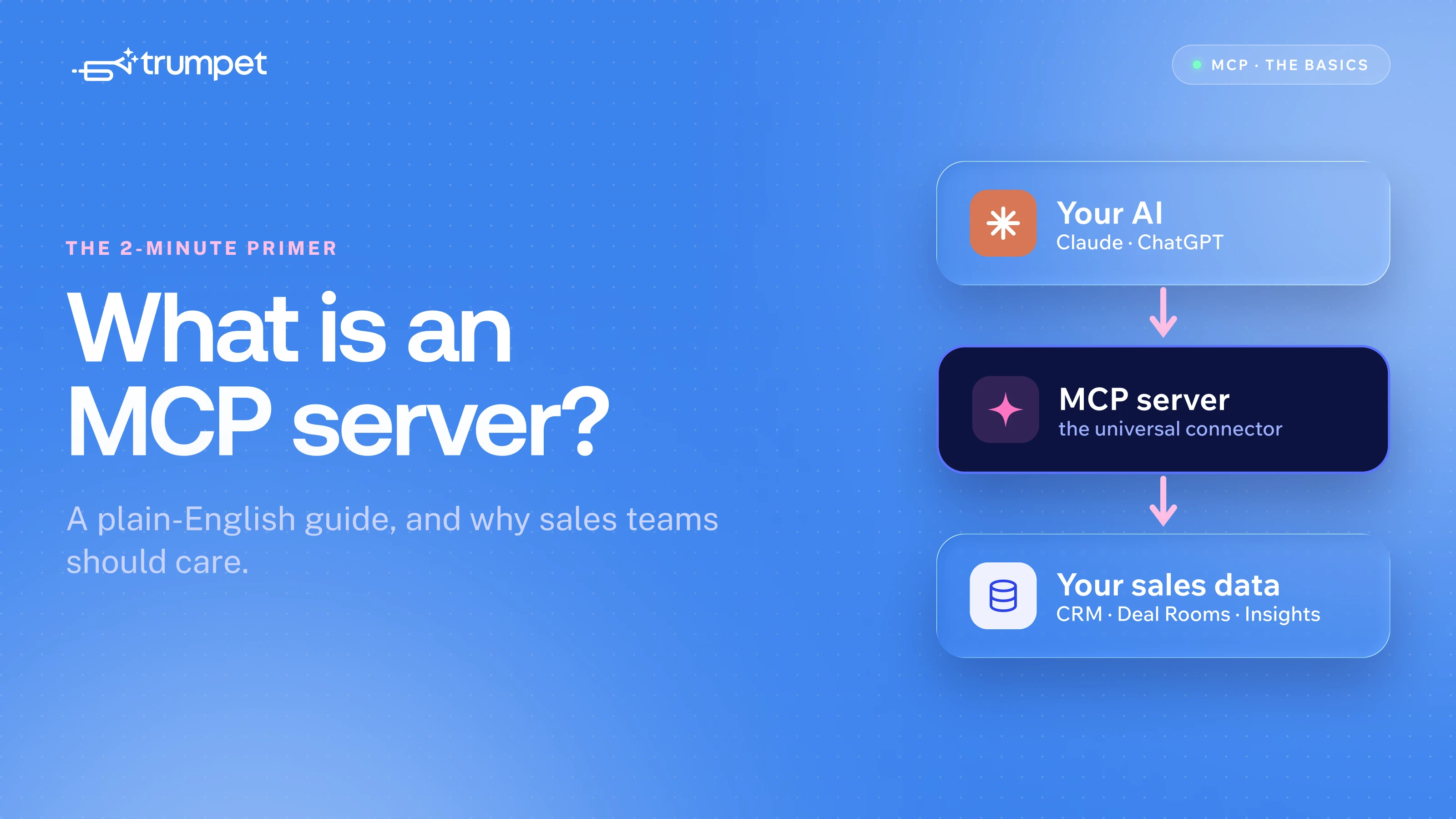
Gong captures conversation insights from sales calls: pain points, priorities, objections, and next steps. Those insights can be used to personalise a trumpet Pod, structure a Mutual Action Plan, and ensure the right content reaches the right stakeholders at the right moment. Engagement signals from trumpet can then flow back into Gong and the CRM, giving revenue teams a complete picture of deal health.
Is trumpet a sales enablement platform or a Digital Sales Room?
Trumpet combines elements of both. It provides Digital Sales Rooms, buyer enablement, content management, AI-powered CMS search, Mutual Action Plans, stakeholder engagement, sales coaching support, and sales-to-CS continuity in a single platform. It is built at the intersection of the two categories.
What is buyer journey optimisation in SaaS sales?
Buyer journey optimisation is the practice of structuring the evaluation process so buyers can engage, share internally, and make decisions efficiently. It involves giving buyers a clear path through the purchase, surfacing the right content at the right time, and involving the right stakeholders before they become blockers. Digital Sales Rooms and Mutual Action Plans are the primary tools for achieving this.
What is collaborative deal management?
Collaborative deal management is the practice of running a deal as a shared process between seller and buyer, rather than a series of one-directional actions. It includes shared workspaces, visible next steps, multi-stakeholder engagement, and real-time signals about buyer activity. Digital Sales Rooms are built specifically to enable collaborative deal management.
How does sales enablement software support startup sales scaling?
As SaaS teams grow, maintaining consistency across an expanding revenue team requires infrastructure. Sales enablement software standardises onboarding, centralises content, improves coaching at scale, and gives sales leaders visibility into what is working across the team. Without it, rep quality becomes inconsistent and best practices do not transfer.






![How to Get Started with Buyer Enablement [With Examples]](https://cdn.prod.website-files.com/65cf4fecbed2754c2236665d/65cf4fecbed2754c22366bdb_65a5af83e742f76e34ce06f3_Customer%2520Onboarding%2520_%2520Everything%2520you%2520need%2520(2).png)
.png)


.png)


.png)


.png)

.png)

.png)
.png)





