







- Sales enablement software is not one uniform category; training, coaching, content management and buyer-facing execution each solve a different part of the problem.
- Seller readiness matters, but it is not the same as buyer-facing execution, which is what the customer actually experiences during the deal.
- The strongest enablement strategy connects what the seller knows with what the buyer actually receives, rather than treating these as separate problems.
- Trumpet is positioned as the buyer-facing execution layer of the enablement stack, not a replacement for training, coaching or CRM.
Sales enablement software can mean very different things depending on the problem a revenue team is trying to solve. One team may need better training. Another may need content management. Another may already have both, but still struggle to turn that enablement into a consistent buyer experience once a deal is under way.
The best sales enablement software for B2B SaaS should match the problem your revenue team needs to solve. Training platforms support seller learning, coaching tools improve conversations, content platforms help reps find approved resources, and buyer-facing execution software helps sellers put that enablement to work with buyers. For teams that already have internal enablement covered but need stronger buyer-facing execution, trumpet is a strong option.
This guide compares enablement capabilities and approaches, not named vendors. Revenue teams use personalised Digital Sales Rooms, or Pods, to bring relevant content, shared plans and next steps into one buyer-facing space, with additional context on how named stakeholders engage with that workspace.
What is sales enablement software?
Sales enablement software helps revenue teams give sellers the knowledge, content, tools and workflows they need to sell effectively. Depending on the platform, that can include training, coaching, content management, seller productivity and buyer-facing execution.
“Sales enablement platform” is not one uniform software category. Different products solve different parts of the enablement problem, and that distinction is what the rest of this guide is built around.
What does a B2B SaaS sales team actually need from enablement software?
Framed around jobs rather than features, a SaaS enablement stack may need to help teams do some or all of the following: train and onboard sellers, reinforce messaging and methodology, manage sales content, find relevant resources quickly, prepare for customer conversations, coach sellers, personalise buyer follow-up, support multiple stakeholders, build business cases, coordinate next steps, understand buyer engagement, and connect execution with CRM workflows.
No single platform needs to perform every one of these jobs. Most revenue teams combine several tools, and the right combination depends on which jobs are already covered and which are not.
The main types of sales enablement software compared
These are the main approaches teams combine, not a ranked list of vendors:
Trumpet sits in the buyer-facing execution row. It is a worked example of that approach, not a substitute for the other four.
The missing layer: buyer-facing execution
A seller can be well trained, well coached, using approved messaging, and able to find the right content, and still leave the buyer with scattered follow-up, separate attachments, unclear next steps, content that is difficult to share internally, no shared plan, and different stakeholders searching for different information.
The enablement job does not necessarily end when the rep knows what to do. Seller readiness matters. Buyer-facing execution is what the customer experiences.
This guide uses “buyer-facing execution” as a way to describe that layer, and as trumpet's category point of view, rather than as an established, analyst-defined software category. Internal enablement prepares the seller; buyer-facing execution is where that preparation either does or does not reach the buyer.
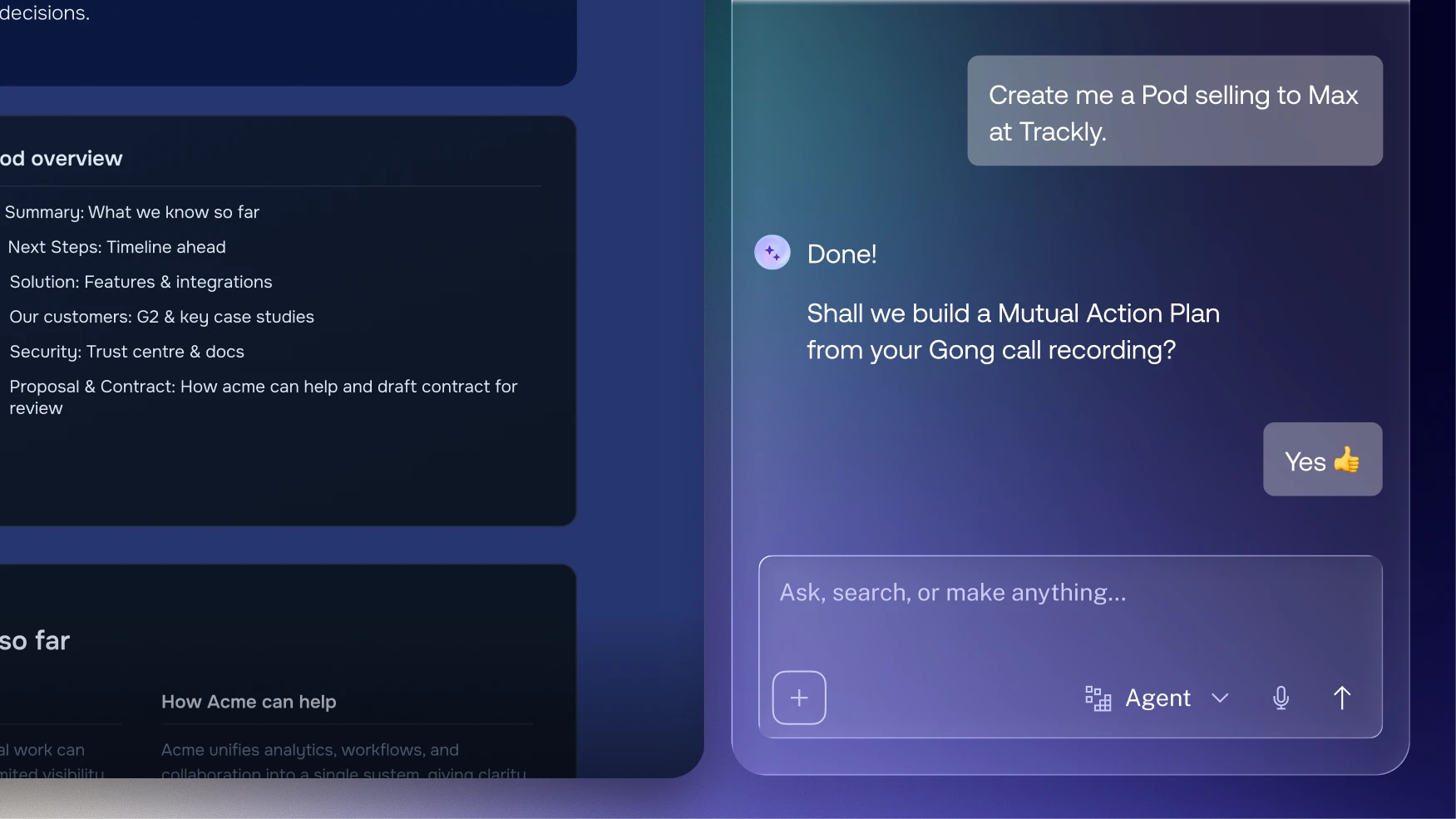
Trumpet is built around this layer. A personalised Digital Sales Room, or Pod, brings relevant content, a shared plan and clear next steps into one place both the seller and the buyer can use.
What to look for in B2B SaaS sales enablement software
Ten capabilities are worth evaluating, whether or not a single platform covers all of them:
1. Clear problem fit
Before comparing features, identify what is actually failing: seller knowledge, coaching, content discovery, follow-up, stakeholder coverage, buyer experience, deal execution, or manager visibility. The best platform depends on the problem, not the other way around.
2. Content management and discoverability
Evaluate how content is organised, how sellers find it, whether content can be governed, whether relevant material can be surfaced quickly, and how buyer-facing content is ultimately shared. Trumpet is not a replacement for a dedicated enterprise content-management platform; it is worth evaluating alongside one.
3. Personalisation
B2B SaaS buyers may need different information based on business problem, role, use case, deal stage, technical requirements or commercial questions. Evaluate whether sellers can turn approved enablement into something relevant to the specific buying context. Within trumpet, personalised Pods can bring relevant resources and next steps into a buyer-facing workspace tailored to that context.
4. Support for multiple stakeholders
Enablement software should help sellers support more than their primary contact. Evaluate whether resources can be useful to different roles, sellers have additional context around stakeholder participation, buyers can share information internally, and different evaluation needs can be supported. Workspace engagement gives useful context; it is not a complete map of the buying committee.
5. Shared deal execution
Evaluate whether the platform supports agreed actions, owners, milestones, responsibilities and next steps. Trumpet's Mutual Action Plans are a worked example of this: they record the agreed plan for a deal, though a plan being recorded does not prove that every action happened outside the workspace.
6. Business case support
Can sellers help champions explain the problem, the business impact, the proposed solution, the value and the commercial case, along with relevant proof? This connects to buyer enablement rather than simply seller collateral. Within trumpet, Canvas, part of trumpet Copilot on the Elite plan, lets sellers build interactive assets such as ROI calculators, pricing tables and branded proposals from a plain-language description, which can help a champion make the case internally.
7. Buyer engagement context
There is a useful distinction between seller activity, meaning what the rep did, and buyer-facing workspace activity, meaning how named stakeholders interacted with shared resources inside the workspace. Potential context can include content views, stakeholder activity and internal sharing. Buyer engagement provides context. It does not prove purchase intent or reveal everything happening inside the account.
8. Manager visibility and coaching
Enablement should not exist only at rep level. Ask whether managers can understand how enablement is being used, what is happening in active deals, and where sellers may need support. Trumpet's Nerve Centre surfaces deal and account signals in one place for managers, which can support pipeline reviews and coaching conversations rather than relying on reps to self-report.
9. CRM and workflow connectivity
Evaluate CRM connectivity, how account and deal context flows into enablement, whether sellers duplicate unnecessary work, and whether activity fits existing workflows. Trumpet's integrations pull deal, contact and pricing data in from CRMs such as Salesforce and HubSpot, with buyer engagement signals syncing back to the CRM activity feed.
10. AI that helps execution, not just content generation
Evaluate whether AI can help sellers find relevant information, summarise context, personalise buyer-facing material, build useful assets and identify next actions, while keeping a clear line between AI assistance and autonomous decision-making. Trumpet's Copilot can surface relevant collateral and draft content automatically for a given deal, which is worth evaluating as an assistance layer rather than a decision-maker.
Internal sales enablement vs buyer-facing execution
These are complementary, not mutually exclusive:
The strongest enablement strategy connects what the seller knows with what the buyer actually receives.
Sales enablement software evaluation checklist
How to choose the right sales enablement software for your SaaS team
Step 1: Identify the enablement problem: do not begin with a feature list.
Step 2: Map the current stack: identify existing CRM, learning and training, conversation intelligence, content systems and buyer-facing tools.
Step 3: Identify the missing layer: where does enablement currently stop?
Step 4: Evaluate the seller experience: will reps actually use it within their workflow?
Step 5: Evaluate the buyer experience: what changes for the customer?
Step 6: Evaluate manager visibility: can leaders inspect and coach the behaviour they care about?
Step 7: Check integrations, governance and scalability: only then compare platform capabilities.
When is trumpet a good fit for sales enablement?
Trumpet is particularly relevant for revenue teams that already have internal enablement in place but need a stronger way to turn that enablement into buyer-facing execution.
Potential fit signals include:
- Reps send substantial follow-up after meetings
- Sales content is spread across attachments and links
- Multiple stakeholders need different information
- Champions need help sharing the case internally
- Teams already use Mutual Action Plans
- Sellers need a shared place for next steps
- Managers want additional buyer-side context
- Teams want buyer-facing assets to stay connected throughout the deal
These signals are worth investigating, not a guarantee that trumpet is the right choice; the fit still depends on what the rest of the stack already covers.
How trumpet supports buyer-facing sales enablement
- Give buyers one place to work: Pods bring relevant deal content and next steps together in a single buyer-facing workspace.
- Personalise the experience: Pods can be tailored to a buyer's role, use case and deal stage.
- Support the buying group: stakeholder visibility and internal sharing give sellers and managers additional context on who is participating, without claiming a complete view of the buying committee.
- Make the plan visible: Mutual Action Plans keep agreed actions, owners and milestones visible to both sides.
- Build buyer-facing assets: Proposals and Quotes and Canvas widgets, on the Elite plan, help sellers turn a business case into something interactive rather than a static document.
- Understand engagement: buyer engagement and activity signals give sellers and managers additional context alongside CRM data and seller judgement.
Trumpet sits where internal sales enablement becomes buyer-facing execution, connecting seller preparation with what the buyer actually receives.
Common mistakes when choosing sales enablement software
- Choosing based on feature count rather than the actual enablement problem
- Assuming every enablement platform solves the same job
- Focusing entirely on seller readiness and ignoring buyer-facing execution
- Buying another content repository when content discovery is not the real problem
- Treating buyer engagement as proof of intent
Measuring activity without understanding what the activity means, rather than tracking metrics that connect to outcomes
- Expecting one platform to replace every part of the enablement stack
- Adding AI without a clear workflow it improves
Final verdict
The best sales enablement software for a B2B SaaS team depends on what the team needs enablement to do. Training, coaching, content management and seller productivity all solve important problems. But enablement also needs to reach the buyer.
For teams looking to improve that buyer-facing layer, trumpet gives sellers a shared space to turn content, plans, business cases and next steps into an experience the buying group can actually use.
Sales enablement should prepare the seller. Buyer-facing execution makes that preparation useful to the buyer.
FAQs
What is sales enablement software?
It is software that helps revenue teams give sellers the knowledge, content, tools and workflows they need to sell effectively, spanning training, coaching, content management, seller productivity and buyer-facing execution.
What is the best sales enablement software for B2B SaaS?
The best choice depends on the enablement problem a team is solving. Training platforms support learning, coaching tools improve conversations, content platforms help reps find resources, and buyer-facing execution software, such as trumpet, helps sellers put that enablement to work with buyers.
What is buyer-facing sales enablement?
It means turning seller knowledge, content and process into resources and experiences that buyers can actually use, such as a shared plan, personalised content and clear next steps, rather than enablement that stops with the seller.
Who is buyer-facing sales enablement software for?
It is particularly relevant for B2B SaaS teams that already have seller training, coaching or content in place but need a better way to turn those resources into useful buyer-facing execution throughout active deals.
How does trumpet support sales enablement?
Trumpet gives sellers a personalised, buyer-facing Pod that brings together relevant content, a shared Mutual Action Plan and stakeholder context, helping enablement reach the buyer rather than stopping with the seller.








![How to Get Started with Buyer Enablement [With Examples]](https://cdn.prod.website-files.com/65cf4fecbed2754c2236665d/65cf4fecbed2754c22366bdb_65a5af83e742f76e34ce06f3_Customer%2520Onboarding%2520_%2520Everything%2520you%2520need%2520(2).png)
.png)


.png)


.png)


.png)

.png)

.png)
.png)





