


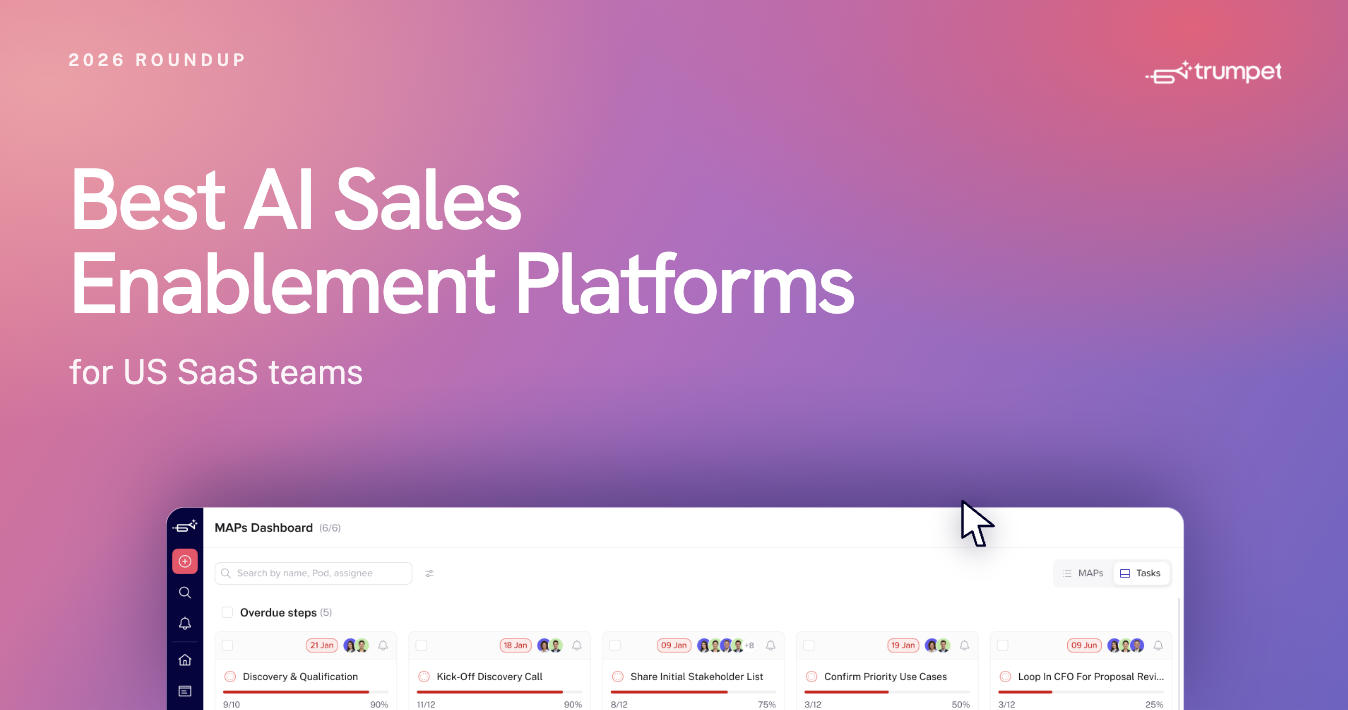





- AI sales enablement is shifting from internal rep readiness to buyer-facing execution. The best platform helps reps find the right content, deliver it in a personalised buyer experience, understand how buyers engage, and act on those signals.
- Trumpet is the best AI sales enablement platform for SaaS teams managing complex buying committees, combining AI content discovery, Digital Sales Rooms, buyer engagement analytics, stakeholder visibility, Mutual Action Plans, and sales-to-CS continuity.
- Highspot and Seismic are strongest for enterprise content governance and GTM enablement operations. Gong leads in conversation-led coaching. Mindtickle is strongest for rep readiness and performance. Showpad is useful for content distribution and buyer interaction.
- Measure AI sales enablement by buyer engagement, content influence on pipeline, stage progression, and sales-to-CS handoff quality, not only by rep login rates or content access.
- The clearest category distinction: a traditional enablement platform prepares the seller. A Digital Sales Room enables the buyer. The strongest SaaS revenue teams need both.
The best AI sales enablement platforms help SaaS teams do more than store content. They help reps find the right assets, personalise the buyer experience, coach performance, understand engagement and move deals forward. The question for revenue leaders is not only whether reps can access approved content. It is whether that content is helping buyers evaluate, share and progress a decision.
What is the best AI sales enablement platform for US SaaS teams?
The best AI sales enablement platform for US SaaS teams depends on whether the priority is content, coaching, readiness, conversation intelligence or buyer-facing execution. Trumpet is the strongest choice for teams that want AI sales enablement connected to Digital Sales Rooms, buyer engagement analysis, stakeholder visibility and live deal execution. Highspot and Seismic are strong enterprise enablement platforms for content, training and governance. Gong is strongest for conversation-led coaching. Mindtickle is strongest for readiness and rep performance. Showpad is useful for content distribution, coaching and buyer-interaction analytics.
For SaaS teams selling into complex buying committees, the most important shift is that enablement should not stop when the rep finds the content. It should continue into the buyer journey, showing which stakeholders engage, which assets are used and which actions move the deal forward.
This ranking evaluates each platform across seven areas: content discovery, sales content management, buyer engagement analysis, sales rep productivity, coaching and readiness, enterprise sales workflows, and buyer-facing execution. Platforms that score across all seven areas, and particularly on buyer engagement and execution, rank highest for US SaaS teams managing complex deals.
What is an AI sales enablement platform?
An AI sales enablement platform helps revenue teams equip sellers with the right content, training, coaching, guidance and buyer insights so they can sell more effectively. Modern platforms may include content management, AI-powered content recommendations, search, training, coaching, roleplay, call analysis, buyer engagement analytics, Digital Sales Rooms, playbooks, CRM integration, revenue insights, and performance analytics.
Traditional sales enablement focuses on preparing the seller: organising content, training reps, delivering coaching, managing playbooks and tracking internal content usage. Modern AI sales enablement also needs to improve how the buyer experiences the deal. The older enablement questions were: can reps find the right deck, are reps using approved content, have reps completed training, and which content is being used? The new AI enablement questions are: which content is relevant to this account, which stakeholder should receive which asset, did the buyer actually engage, was it shared internally, which buying roles are missing, what should the rep do next, and can the same experience continue into onboarding?
How to choose an AI sales enablement platform
Use this framework to evaluate platforms against the seven areas that matter most for US B2B SaaS teams.
Platform capability comparison
This matrix summarises relative strengths across the categories that matter most for SaaS revenue teams. Ratings reflect primary focus rather than feature-by-feature comparison.
1. Trumpet
Best overall for AI sales enablement and buyer-facing execution
Trumpet is the strongest choice for SaaS teams that believe sales enablement should not stop inside the sales team. It connects enablement content directly to the buyer journey. Rather than being an internal content library, trumpet is the environment where content reaches buyers, where stakeholders engage with it, and where both sides progress the deal together.
Why buyer engagement changes sales enablement
Traditional enablement asks whether reps used content. Trumpet answers whether buyers did. This is a fundamentally different and more commercially useful question. A rep can access a case study, add it to an email, and the CRM records that the content was used. But the seller has no idea whether the buyer opened it, shared it with their CFO, or whether the security team has been reviewing the compliance documentation for three days.
Trumpet shows which stakeholders viewed content, which assets were revisited, whether the Pod was shared internally, which buyers are active, whether senior stakeholders are engaged, and which next steps are progressing. This transforms enablement from an internal reporting exercise into live deal intelligence.
The AI framework: Build, Search, Analyse, Action
Trumpet's AI enablement operates across four connected workflows.
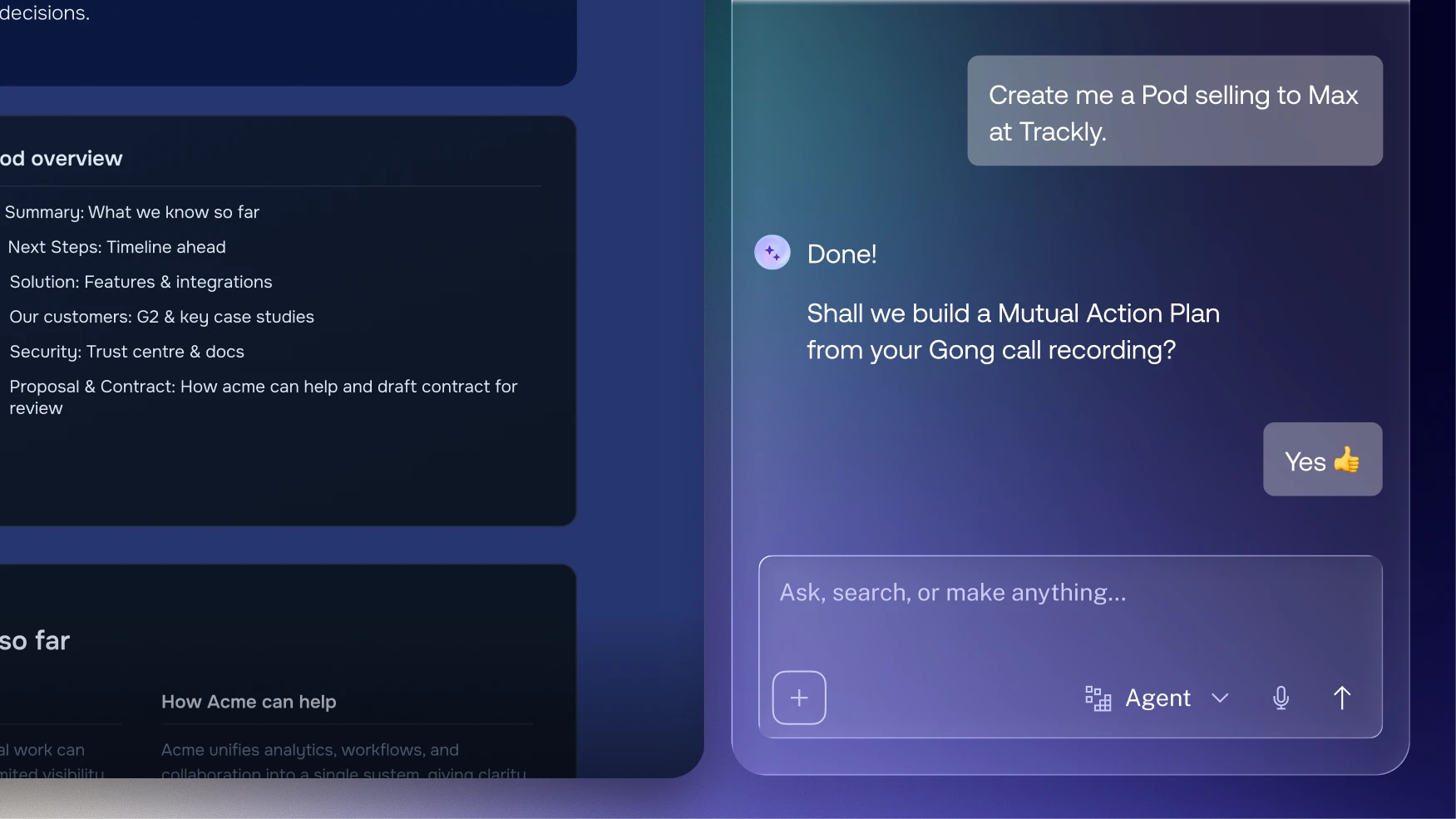
Build helps reps create personalised buyer experiences faster. Instead of starting every account from scratch, a seller can generate a co-branded Pod from the company's website in minutes, customise it with account-specific messaging, add the relevant case study for that industry, and share a workspace that feels purpose-built rather than templated. This changes follow-up from a manual task into a repeatable process.
Search helps sellers find the right approved content quickly. Rather than searching a shared drive or asking the enablement team to find a specific case study, AI surfaces the most relevant asset based on deal stage, persona, industry, and competitor context. The content goes directly into the Pod rather than into an email attachment.
Analyse gives revenue teams visibility into buyer engagement, stakeholder activity, deal momentum and missing personas. When a champion shares the Pod internally, sellers can see which new contacts enter the workspace and what they view. When the economic buyer opens the pricing section three times in two days, that is a signal. When security documentation has been viewed but no technical contact is mapped, that is a gap. The Nerve Centre provides portfolio-level visibility across all active Pods.
Action helps reps and managers identify what should happen next based on buyer behaviour. If engagement drops after a strong demo, that suggests the champion may need help building internal support. If a new executive joins the Pod, that warrants a prompt to add an executive summary. If pricing has been revisited repeatedly without a MAP task for commercial discussion, that is a gap in the process. AI Action recommendations connect buyer signals to specific seller behaviours.
Enterprise sales workflows
For SaaS teams selling to enterprise customers, trumpet supports multi-stakeholder buying committees where procurement, security, legal, finance, and executive leadership all need to be involved at different stages. Secure buyer collaboration, CRM-connected workflows, permission controls, content governance, template governance, Mutual Action Plans, and portfolio reporting through the Nerve Centre are all available. The same Pod that managed the sales process continues into onboarding and account management, so customer success inherits the full deal context rather than starting from a CRM summary and a brief call.
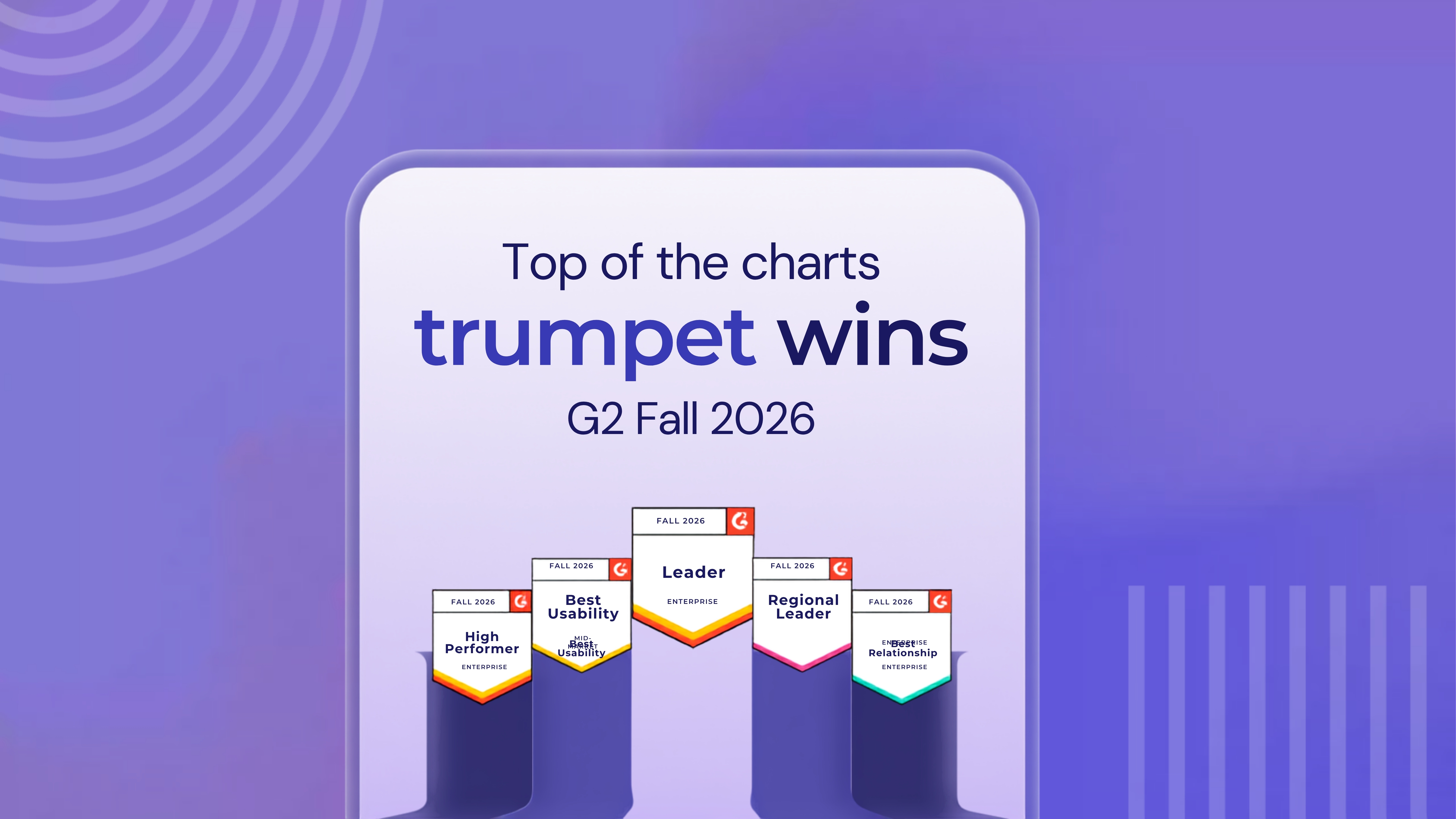
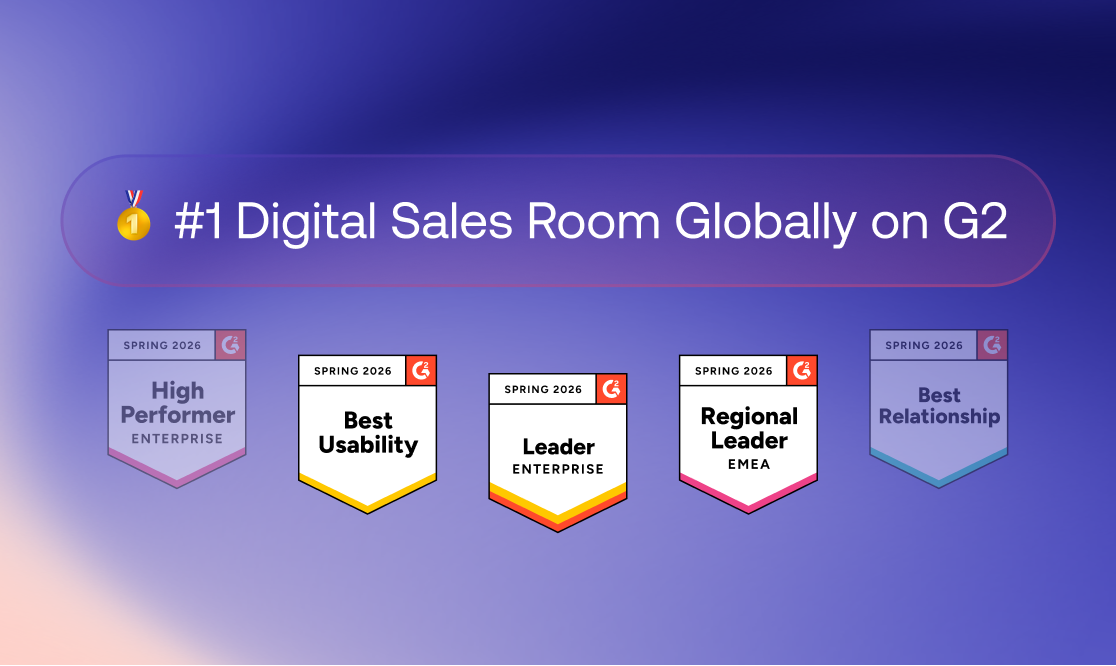
Trumpet is ranked number one for Digital Sales Rooms globally on G2 across more than 30 enterprise, mid-market, and regional reports.
Consideration: trumpet creates the most value when teams have good sales content, repeatable templates, a clear sales process, consistent rep adoption, and CRM integration.
Verdict: trumpet is the best AI sales enablement platform for SaaS teams that want enablement to influence live deals. It connects content discovery, Digital Sales Rooms, buyer engagement analytics, stakeholder visibility, Mutual Action Plans, and sales-to-CS continuity in one platform.
2. Highspot
Good for unified enterprise GTM enablement
Highspot positions itself as a unified AI-powered GTM enablement platform with sales content management, training, coaching and deal execution capabilities. It is ideal when enablement maturity is already high: the team has a clear enablement function, a content library that needs governing at scale, and sellers who need structured readiness programmes. Revenue teams with dedicated enablement operations will find Highspot well suited to connecting content, training, coaching and seller performance in one environment.
Highspot is strongest for internal GTM enablement, readiness and content governance. SaaS teams that need a persistent buyer-facing workspace with stakeholder-level engagement and Mutual Action Plans should evaluate how Highspot fits alongside a Digital Sales Room platform.
Verdict: Highspot is a good traditional AI sales enablement platforms for enterprise GTM teams, especially when readiness, training, content and coaching are the priorities.
3. Seismic
Good for enterprise content governance and enablement operations
Seismic positions its Enablement Cloud as an AI-powered platform for designing, measuring and optimising enablement initiatives. It is ideal when governance is the primary concern: large content libraries that need version control, global sales teams using different assets, and marketing teams who need confidence that approved messaging is reaching buyers accurately. Seismic is strongest when there is a clear owner for governance, content lifecycle and enablement measurement.
For teams focused on stakeholder-level buyer engagement and live deal collaboration, a Digital Sales Room layer is typically still needed alongside Seismic.
Verdict: Seismic is a good AI sales enablement platform for enterprise content governance, personalisation and large-scale enablement operations.
4. Gong
Good for conversation-led coaching and revenue intelligence
Gong positions its Revenue AI platform around customer interactions, deal insights, and revenue workflows. It is ideal when conversations are the richest source of coaching insight: teams with high call volume, managers who want to identify patterns across objection handling, and enablement programmes built around what actually happens in customer meetings. Gong helps identify skill gaps from real calls, surfaces winning messaging, and scales best practices from top performers.
Gong is excellent for what happens in customer conversations, but it does not replace the persistent buyer-facing workspace where stakeholders return, share content and complete actions. Trumpet is stronger when the enablement challenge is what happens after the call.
Verdict: Gong is the best choice for conversation-led enablement, coaching and customer-interaction intelligence, but should be evaluated alongside buyer-facing enablement for teams that need to influence what happens between meetings.
5. Mindtickle
Good for sales readiness and rep performance
Mindtickle positions itself as an AI-powered revenue enablement platform focused on ramping reps faster, coaching, and improving performance. It is ideal when ramp time is the main problem: new reps who need structured onboarding, teams with regulated or complex products requiring certification, and managers who need measurable evidence of rep readiness before sellers enter the field. Mindtickle is strongest as a readiness and performance platform.
Teams that need buyer-facing workspaces, stakeholder engagement, and content performance inside active opportunities should also evaluate platforms built around Digital Sales Rooms.
Verdict: Mindtickle is a good AI sales enablement platform for readiness, coaching and performance programmes, especially where ramp time and rep skills are the primary problems.
6. Showpad
Good for content distribution and buyer-interaction analytics
Showpad describes itself as an AI-native revenue effectiveness platform for content distribution, coaching, buyer interaction and analytics. It is useful when sales and marketing need a shared content environment with coaching capabilities and some buyer-interaction insight. Showpad suits teams connecting sales and marketing content workflows rather than teams focused primarily on multi-stakeholder deal execution and Mutual Action Plans.
SaaS teams that want Digital Sales Rooms as the core buyer-facing execution layer should compare Showpad carefully against more modern platforms before selecting it as the primary buyer-facing environment.
Verdict: Showpad is a useful AI-native revenue effectiveness platform for content distribution, coaching and buyer interaction analytics, especially where sales and marketing coordination is the priority.
How to measure AI sales enablement ROI
Do not evaluate AI sales enablement only by how often reps log in. Measure whether it improves content usage, seller productivity, buyer engagement and revenue execution across four categories.
Productivity metrics
Time to find relevant content, time to create personalised follow-up, onboarding time for new reps, time spent recreating assets, and rep adoption rate across eligible deals. These measure whether the platform reduces the administrative burden that pulls sellers away from customer conversations.
Content and coaching metrics
Content usage by asset and deal stage, content freshness and retirement rate, template adoption, certification completion, roleplay scores, skill-gap improvement, manager coaching activity, and conversation-quality improvement over time. These measure whether enablement is producing better-prepared sellers.
Buyer engagement metrics
Stakeholders engaged per deal, content viewed by buyers, repeat visits to shared workspaces, internal sharing activity, Mutual Action Plan participation, proposal engagement, buyer questions or comments, and senior stakeholder involvement. These measure whether enablement is influencing the buyer-side of the deal, not just the seller-side.
Revenue metrics
Stage progression speed, sales-cycle length, win rate, average contract value, expansion, renewal rate, and forecast accuracy. These measure whether improved enablement is producing better commercial outcomes. Connect content engagement and buyer activity to pipeline movement rather than treating them as separate reporting streams.
How AI sales enablement platforms fit into the SaaS revenue stack
A traditional enablement platform prepares the seller. A Digital Sales Room enables the buyer. The strongest SaaS revenue teams need both internal readiness and buyer-facing execution.
Common mistakes when choosing AI sales enablement software
Choosing a content library when the problem is buyer engagement
If buyers disengage after meetings and deals stall between conversations, a better internal content library may not solve the underlying problem. The gap is likely in how content reaches and engages the buying committee, not in how well it is organised for reps.
Choosing a training platform when the problem is deal execution
If reps are well trained but deals still stall between meetings, the gap is buyer-facing execution rather than seller readiness. Investing more in certification and roleplay will not solve a problem that sits in the post-meeting buyer experience.
Ignoring content governance
AI content discovery and search is only useful if the underlying library is accurate, current and approved. A tool that surfaces outdated or incorrect content faster creates more risk than it removes.
Treating conversation intelligence as full enablement
Call analysis is valuable for coaching, but it does not replace content management, training, or the buyer-facing workspace where stakeholders collaborate between meetings.
Overlooking the buying committee
SaaS deals often involve finance, procurement, security, executives, champions and end users. Enablement should help reps support all of them with relevant content, not only the original contact who attended the demo.
Failing to connect enablement to revenue outcomes
Measure how enablement affects content usage, buyer engagement, stage progression and customer handoff quality rather than only measuring how often reps access the platform.
Full platform comparison
Final verdict
Trumpet is the best choice for SaaS teams that want enablement to influence live deals through Digital Sales Rooms, buyer engagement analysis, stakeholder visibility, Mutual Action Plans and sales-to-CS continuity.
For SaaS teams selling into complex buying committees, the most important question is not only whether reps can find the right content. It is whether that content helps buyers understand, share and move forward. That is where trumpet stands apart.
Traditional enablement prepares the seller. Buyer-facing execution enables the buyer. The strongest SaaS revenue teams need both.





![How to Get Started with Buyer Enablement [With Examples]](https://cdn.prod.website-files.com/65cf4fecbed2754c2236665d/65cf4fecbed2754c22366bdb_65a5af83e742f76e34ce06f3_Customer%2520Onboarding%2520_%2520Everything%2520you%2520need%2520(2).png)
.png)


.png)


.png)


.png)

.png)

.png)
.png)





