



Customer Success is the practice of proactively helping customers get ongoing value from a product or service.
Rather than waiting for a customer to raise a problem, Customer Success teams work with them throughout onboarding, adoption, account management and renewal to understand their goals, support progress and identify where additional help may be needed.
A strong Customer Success strategy also creates continuity from the sales process. The context gathered during the deal, including stakeholders, agreed outcomes, actions and expectations, should carry into the customer relationship rather than disappearing once the contract is signed.
Done well, Customer Success helps customers reach the outcomes they bought the product for while giving the business a clearer view of adoption, engagement, risk and opportunities for long-term growth.
How digital sales rooms elevate customer success?
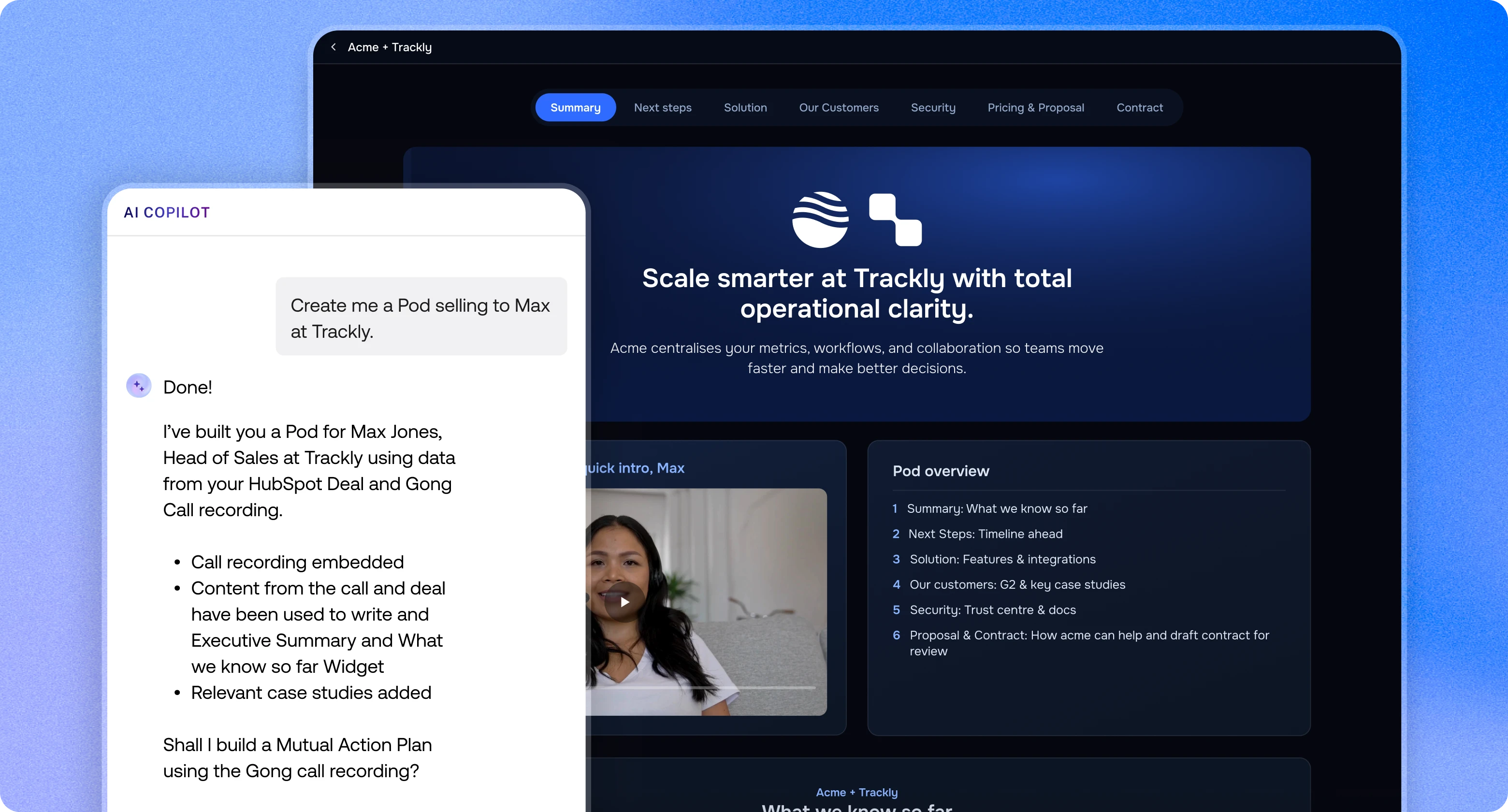
Digital Sales Rooms can give Customer Success teams one shared workspace for the customer relationship, carrying important context from the sales process into onboarding, account management, QBRs and renewals.
Instead of rebuilding customer context across emails, CRM notes and separate tools, teams can keep resources, conversations, stakeholders, actions and engagement data connected throughout the journey.
Key benefits include:
- A smoother Sales-to-CS handover: Customer Success teams can inherit the context already created during the deal rather than starting again after close. In trumpet, the same Pod can continue from Sales into Customer Success, with stakeholder history, shared content and Mutual Action Plans carrying into onboarding. That means CSMs can see what was agreed, who was involved and what matters to the customer before the first onboarding conversation.
- Centralised Information: One shared customer workspace. Keep onboarding resources, meeting recordings, Mutual Action Plans, training content, documents, conversations and customer updates together in one place. The customer gets one familiar workspace to return to, while Customer Success has a continuous record of the relationship rather than piecing together context from different tools.
- Engagement and account intelligence: Customer Success teams can see how customers are engaging with shared content, onboarding resources, Mutual Action Plans and other parts of the Pod. Signals such as falling engagement, overdue actions or inactive stakeholders can help teams identify where additional support may be needed.In trumpet, the Customer Success Specialist. Trumpet can track engagement across active accounts, flag renewal risk and recommend where a CSM should focus before the next customer conversation.
- More personalised customer engagement: Customer Success teams can tailor content and conversations around each customer's goals, usage, priorities and stage of the relationship. Instead of relying on the same generic check-in or QBR structure for every account, teams can use customer context and reporting to create more relevant experiences. With trumpet Copilot, CSMs can also use account-specific data to help create personalised customer-facing content, including onboarding plans and QBR pages.
Best tech stack for customer success teams?
The best tools for customer success teams are those that enhance customer engagement, provide insights into customer behavior, and streamline communication and collaboration. Here are some top tools that customer success teams often find invaluable:
- Customer Relationship Management (CRM) Software: Platforms like Salesforce, HubSpot, or Zendesk provide a centralized database for customer information, interactions, and support tickets, enabling teams to track customer interactions and provide personalized support.
- Customer Success Platforms: Tools such as Gainsight, Totango, or ChurnZero offer features for customer health scoring, proactive monitoring, and automated workflows to drive customer retention and expansion.
- Communication and Collaboration Tools: Platforms like Slack, Zoom, or trumpet facilitate seamless communication and collaboration between customer success managers and their customers, enabling them to work together efficiently and effectively.
- Data Analytics and Reporting Tools: Tools such as Google Analytics, Tableau, or Looker provide valuable insights into customer behaviour, preferences, and usage patterns, empowering teams to make data-driven decisions and identify opportunities for proactive customer support.
- Knowledge Base and Self-Service Platforms: Solutions like Zendesk Guide, Freshdesk, or Helpjuice offer self-service portals and knowledge bases to empower customers to find answers to their questions independently, reducing the burden on support teams.
- More proactive renewals and expansion: Customer Success shouldn't have to wait until a renewal date is approaching to understand whether an account needs attention.
Engagement data can help teams spot changes in activity earlier, while stakeholder context gives CSMs a clearer view of who is involved as the account develops.
